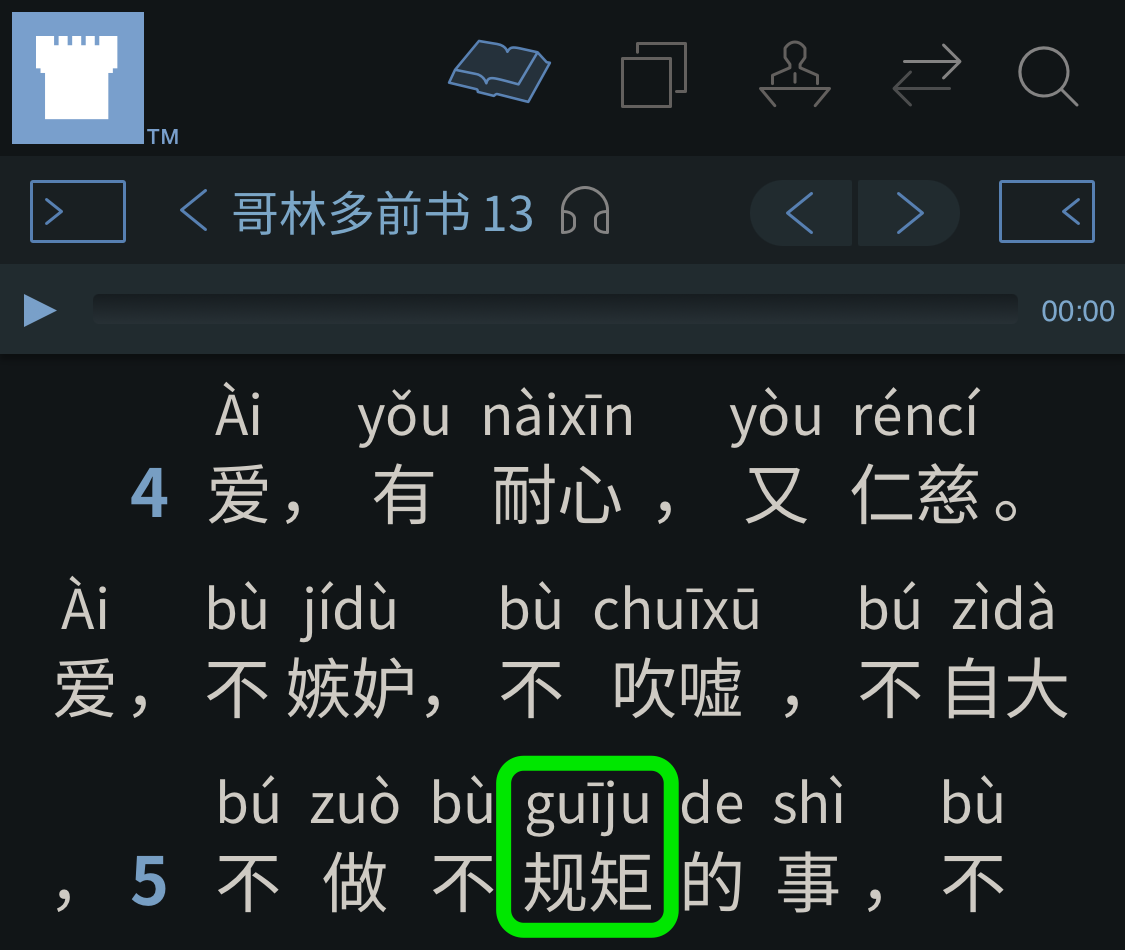
zìmǎn+ (zì·mǎn self · {full → [satisfied]} → [complacent; self-satisfied; smug] 自满 自滿) 👈🏼 Tap/click to show/hide the “flashcard”
As a Chinese person who grew up in a Western country, and who came to serve in Chinese language fields, I sometimes pondered a question that I eventually learned is called the Needham Question:
“Needham’s Grand Question”, also known as “The Needham Question”, is this: why had China been overtaken by the West in science and technology, despite their earlier successes? In Needham’s words,
“Why did modern science, the mathematization of hypotheses about Nature, with all its implications for advanced technology, take its meteoric rise only in the West at the time of Galileo?”, and why it “had not developed in Chinese civilization” which, in the previous many centuries “was much more efficient than occidental in applying” natural knowledge to practical needs.[source][source]
Indeed, China long ago gave us the Four Great Inventions (the compass, gunpowder, papermaking, and printing), so why did it stop inventing such great things, and leave it to the West to invent digital computers, go to the moon first, etc.?
The Wikipedia page linked to above, and also this page that I found on the web, mention many possible factors that scholars have proposed relating to the Needham Question. It may be said that since this question focuses on scientific and technological progress in the context of human political and cultural systems, it is not quite the number one question that we Mandarin field language learners need to be concerned with. However, gaining some understanding of factors relating to this question can help us develop a balanced view of how and how much we should allow traditional Chinese political and cultural views to influence how we apply science and technology to our God-honouring and life-saving work in the Mandarin field. At the very least, the very fact that many have pondered the Needham Question over the years demonstrates that no, worldly Chinese culture is not so perfect and accomplished that we should just unquestioningly adopt worldly Chinese ways of doing things in the Mandarin field.
While the web pages linked to above discuss many sociological, cultural, technical, etc. factors that may have played a role in how China developed, or failed to develop, scientifically and technologically compared to the West, going over this information brought to mind some principles mentioned in the Bible.
“By Their Fruits”
Regarding what really matters in our lives and in our work, Jesus said this at Matthew 7:16–18:
By their fruits you will recognize them. Never do people gather grapes from thorns or figs from thistles, do they? Likewise, every good tree produces fine fruit, but every rotten tree produces worthless fruit. A good tree cannot bear worthless fruit, nor can a rotten tree produce fine fruit.
I remember in years past seeing ads for job openings that required candidates to be “results-oriented”. When I saw such ads, I would wonder, “Why bother saying that? Isn’t every worker of course supposed to be results-oriented?” It turns out that actually, many people are more focused on appearing to be working, on procedures for their own sake, on climbing the corporate ladder, on office politics, etc., than on actually doing the work and getting results.
What Jesus said in the above-quoted scripture emphasizes to us that in our lives and in our work as his disciples, we should be focused on producing “fine fruit”, getting good results for Jehovah, not just on unthinkingly following whatever traditions or procedures we inherited from the worldly human culture we grew up with. Also, we should not be focused on appearing to others who also grew up with such traditions, procedures, and ways of doing things that we are following them, so as to get “glory from men”.—John 5:39–44.
“Never, never, never in this office say, ‘But we’ve always done it that way.’”
—Admiral Grace Hopper, computer programming pioneerRe writing Mandarin with Chinese characters, many say, “But we’ve always done it that way.”
However, as _Lǔ Xùn_ asked, does that make it right? pic.twitter.com/eFCN6fPYtY
— Troubadour WW (@troubadourww) September 10, 2024
“Pride Is Before a Crash”
As someone who has studied and worked with technology for decades, one thing I have observed regarding the march of changing computing technologies—e.g., impressive IBM mainframes being eclipsed by “toy” personal computers running Microsoft and Apple operating systems, Microsoft’s then-CEO ridiculing the iPhone when it came out, Microsoft prioritizing its Windows legacy and becoming largely irrelevant in the mobile and tablet spaces, etc.—is that the Bible principle at Proverbs 16:18 holds true:
Pride is before a crash,
And a haughty spirit before stumbling.
This basic factor of the progress-limiting effects of being proud and self-satisfied is well expressed in this week’s MEotW, “zìmǎn+ (zì·mǎn self · {full → [satisfied]} → [complacent; self-satisfied; smug] 自满 自滿)”. As is often discussed on this blog, in the Mandarin field, one area in which progress-limiting pride and self-satisfaction play huge roles is the attitude of many towards the archaic, cumbersome human-invented technology that is the Chinese characters. And yes, a writing system like the Chinese characters is indeed a technology:
[Writing] really is a technology. It’s a thing you do on top of language to do stuff with language, but it’s not the language itself. There are thousands and possibly millions of languages that have never been written down in the history of humanity. We have no idea. We’ve never met a society of humans, or heard of a society of humans, without language. But those are spoken and signed languages, which are just kind of there. Writing, by contrast, was invented somewhere between 3 and 4 times in the history of humanity.
Since writing systems like the Chinese characters are technologies, we should expect writing systems to change and progress like other technologies do, no matter how proud and self-satisfied some people are when it comes to traditional, long-established writing systems like the Chinese characters.
If we generally no longer use punched cards to control computers because we now have keyboards, mice, trackpads, touchscreens, etc., then why use the archaic Chinese characters when the more modern simple and elegant Pīnyīn (Pīn·yīn {Piecing Together of} · Sounds → [Pinyin] 拼音) system is available? Is “‘everyone’ still uses Chinese characters” really a good reason? What if “everyone” still used punched cards? What would you do, as someone who knows about way better and easier-to-use alternatives?
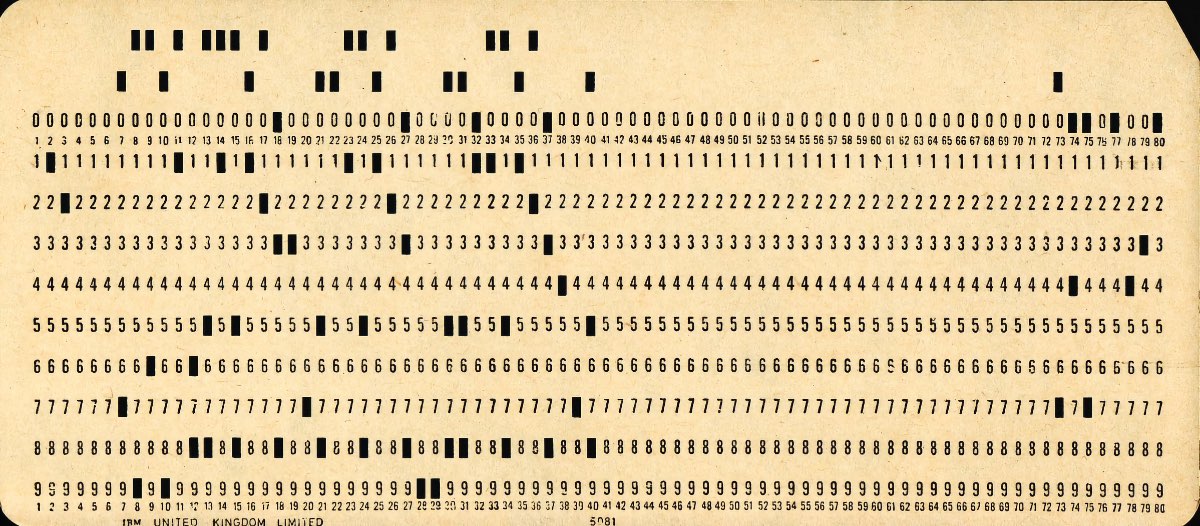

Chinese characters are the punched cards of writing systems. Punched cards were not totally impossible to use, but there are now much better and easier-to-use ways to control computers.
Of course, in situations in which we need to share information with people who still use computers controlled by punched cards, we would probably need to use punched cards, but how about other situations? Similarly, when producing publications for or writing to people who only read Chinese characters, we need to use Chinese characters, but how about other situations? For example, we Mandarin field language learners usually read and write Mandarin so that we ourselves can be helped to say something good in Mandarin at the right time. Can we make advantageous use of Pīnyīn (Pīn·yīn {Piecing Together of} · Sounds → [Pinyin] 拼音) in such situations?
Avoid Unbalanced Admiration
Both Western and Eastern human worldly cultures have their strong points and successes, but they also both have their problematic aspects and failures. So, we should not oversimplify things and jump to the conclusion that either culture is all good or all bad. I myself have found it advantageous to have had the opportunity to be exposed to both Western and Eastern ways of doing things, and to be able to select useful aspects of both to apply in my own life and work. Yes, balanced appreciation of the possibly useful differences between East and West can be beneficial. However, especially since we have the privilege of being taught by Jehovah himself, we need to avoid unbalanced admiration of either Eastern or Western worldly human cultures. (Isaiah 54:13; John 6:45; 1 Corinthians 1:18–31) We Mandarin field language learners particularly need to avoid having what sinologist and linguist John DeFrancis called “Exotic East Syndrome”:
The belief that in the Orient things strange and mysterious replace the mundane truths applicable to the West.
Yes, spiritual and scientific truths remain true for China and Chinese people, such as the basic linguistic truth that speech is primary and writing is secondary.
Commendably, many Chinese individuals have shown themselves to be humble lovers of truth. Unfortunately, though, as I have studied the worldly Chinese culture, I have found that it is in many ways a proud, self-satisfied culture, as described by this week’s MEotW. As has been discussed before on this blog, China is the only nation that routinely calls itself the “Central Nation (Zhōngguó (Zhōng·guó Central · Nation → [China | Chinese] 中国 中國))”. Also, the whole concept of “losing/saving face” is based on the worldly Chinese concept of miànzi (miàn·zi face · [suf for nouns] [→ [reputation; prestige; esteem; honor]] 面子).
As for the worldly Chinese/Eastern cultural practice that “the nail that sticks out gets hammered down”, this really shows pride and self-satisfaction on a systemic or cultural level—while enforcing humility (humiliation?) among individuals, it shows that there is a proud and self-satisfied assumption that the system or culture overall is so good already that it is above being improved upon by “mere” individuals. Really, though, the only One who has demonstrated that he is truly at that level is Jehovah God himself, and the Bible shows that still, he is willing to invite individuals to provide their ideas and input, and to empower them to follow through on them. (1 Kings 22:19–23) Unlike many proud, self-satisfied humans and their systems and cultures, Jehovah has shown that he does not suffer from “not invented here” syndrome, the zìmǎn (zì·mǎn self · {full → [satisfied]} → [self-satisfied] 自满 自滿) belief that only he could possibly have a good idea or make or do something useful. This is so even though he himself is the Almighty Creator of the whole universe.
“Throw Off Every Weight”
Regarding the Needham Question, another Bible scripture that comes to mind for me is Hebrews 12:1, which says, in part:
Let us also throw off every weight…, and let us run with endurance the race that is set before us,
As is widely known, Chinese characters are a huge part of worldly Chinese culture, and with their inhuman number and complexity, they are also abnormally difficult for us imperfect humans to learn and remember. So, naturally, some wonder if Chinese characters have had the effect of weighing China down, or holding China back. In fact, as my article “Pīnyīn (Pīn·yīn {Piecing Together of} · Sounds → [Pinyin] 拼音) Was Plan A” says:
Concerning the obstacles presented by Chinese characters, the great Chinese writer Lǔ Xùn, who passed away in 1936, reportedly said, “Hànzì bú miè, Zhōngguó bì wáng.” (“汉字不灭,中国必亡。/ 漢字不滅,中國必亡。” “If Chinese characters are not abolished, China will certainly die.”)
Of course, since the time of Lǔ Xùn ((Lǔ {Stupid; Rash (surname)} 鲁 魯) (Xùn Fast; Quick; Swift 迅) (pen name of Zhōu Shùrén, the greatest Chinese writer of the 20th cent. and a strong advocate of alphabetic writing)), China has not died, but has instead gone on to much worldly success, so at least so far, it seems that Chinese characters are not quite fatal to China. However, even a rudimentary technical analysis, along with real-world phenomema like tíbǐ (tí·bǐ {carry (hanging down from the hand) → [raise; lift]} · pen; pencil; {writing brush} [→ [start writing; write]] 提笔 提筆)‐wàng (forget 忘)‐zì (character 字) (character amnesia), makes it obvious that the extraordinary unnecessary complexities and vagaries of Chinese characters impose great costs and difficulties on those using them—who knows, if China had long ago moved on from the characters to use alphabetic writing, maybe it could have gotten to the moon first. True, some athletes purposely train while wearing additional weights, but the way traditional Chinese culture insists on pervasive use of the unnecessarily extraordinarily complex characters, it’s like requiring those athletes to actually run marathons, etc., for real while wearing heavy unnecessary weights.
In the Mandarin field, it seems quite possible that the unnecessary costs and difficulties imposed by characters could actually be fatal in some cases, barring extraordinary intervention from Jehovah God. As the article “Pīnyīn (Pīn·yīn {Piecing Together of} · Sounds → [Pinyin] 拼音) Was Plan A” goes on to say:
True, with the simplification of the characters, the assistance of Pīnyīn, and the extra hard work put forth by the Chinese people to “tough out” the extra technical burdens presented by the characters, it now seems unlikely from a worldly viewpoint that the use of characters will cause the nation of China to die (although we know it will die at Armageddon, and its culture’s influence will eventually fade away completely after that). However, how sad it would be if many Chinese people died unnecessarily because the ongoing obstacles presented by Chinese characters hindered our efforts to reach their hearts with the life-saving message from God’s Word.
So, as Hebrews 12:1 says, let us Mandarin field language learners “throw off every weight”, and whenever possible, not allow the unnecessary heavy cultural baggage of the Chinese characters to weigh us down in our vital God-honouring and life-saving work. Even if Jehovah makes special arrangements to make sure that none of his Chinese sheep ultimately get left behind, what will he think of us if we fail to make every reasonable effort to avoid unnecessary difficulties as we do this life-saving work that he has assigned to us?—Ezekiel 3:17–19.