Categories
Culture History Language Learning Science Technology Theocratic

shēngjī‐bóbó

shēngjī+ (shēng·jī life · {mechanism → [being organic]} → [life] 生机 生機)bóbó+ (bó·bó flourishing; thriving; vigorous · flourishing; thriving; vigorous 勃勃) 👈🏼 Tap/click to show/hide the “flashcard”

[Notes: Tap/click on a Pīnyīn (Pīn·yīn {Piecing Together of} · Sounds → [Pinyin] 拼音) expression to reveal its “flashcard”; tap/click on a “flashcard” or its Pīnyīn (Pīn·yīn {Piecing Together of} · Sounds → [Pinyin] 拼音) expression to hide the “flashcard”. 📖 📄 ➕ icons mean 📖 Reveal All, 📄 Reveal Advanced, and ➕ Reveal + Symbols re all the “flashcards” in the heading, paragraph, etc. that they are placed at the beginning of.]

The Shēngmìng Láizì Chuàngzào Ma? ((Shēngmìng Life 生命) (Lái·zì Came · From 来自 來自) (Chuàng·zào Initiating · {Making, Creating} → [Creating] 创造 創造) (Ma [? ptcl for “yes/no” questions])? [Was Life Created? (lc)]) (Was Life Created? (lc)) brochure and the Shēngmìng de Qǐyuán—Zhíde Sīkǎo de Wǔ Ge Wèntí ((Shēngmìng Life 生命) (de ’s 的) (Qǐ·yuán {Rising → [Starting]} · Source → [Origin] 起源/原)—(Zhí·de Worth · Getting → [Worth] 值得) (Sī·kǎo {Thinking About} · Examining 思考) (de ’s 的) (Wǔ Five 五) (Ge [mw]個/个) (Wèn·tí Asking · Subjects → [Questions] 问题 問題) [The Origin of Life—Five Questions Worth Asking (lf)]) (The Origin of Life—Five Questions Worth Asking (lf)) brochure were originally published back in 2010, but relatively recently, the English version of the Was Life Created? brochure was updated to the December 2022 Printing, and the Mandarin version of it was updated to the February 2023 Printing. Also, the Was Life Created? brochure and the Origin of Life brochure are now in the Teaching Toolbox section in the JW Library app. So, it would be good to consider some of the expressions used in the Mandarin versions of these publications that can be so helpful when discussing whether life was created.

“Living”

This week’s MEotW, which appears in the title of one of the sections of the Mandarin Was Life Created? brochure, is “shēngjī (shēng·jī life · {mechanism → [being organic]} → [life] 生机 生機)bóbó (bó·bó flourishing; thriving; vigorous · flourishing; thriving; vigorous 勃勃)”:

English:

The Living Planet

Mandarin (WOL; Pīnyīn (Pīn·yīn {Piecing Together of} · Sounds → [Pinyin] 拼音) Plus)

📖 📄 Shēngjī+ (Shēng·jī Life · {Mechanism → [Being Organic]} → [Life] 生机 生機)Bóbó (Bó·bó Flourishing · Flourishing 勃勃) de (’s 的) Dìqiú (Dì·qiú Earth · Globe 地球)

As can be seen from the above quotes, the Mandarin Was Life Created? brochure uses “shēngjī (shēng·jī life · {mechanism → [being organic]} → [life] 生机 生機)bóbó (bó·bó flourishing; thriving; vigorous · flourishing; thriving; vigorous 勃勃) to effectively mean “living”. Considering the morphemes in it, this expression could also be translated as “brimming with life”, or something similar.

Mechanisms, Organisms, and Crises

The “jī ({machine; mechanism [→ [airplane; aircraft | being organic]]} | {incipient moment; crucial point} | chance; opportunity; occasion | intention; idea機/机) in “shēngjī (shēng·jī life · {mechanism → [being organic]} → [life] 生机 生機)bóbó (bó·bó flourishing; thriving; vigorous · flourishing; thriving; vigorous 勃勃) is a particularly polysemous morpheme, meaning that it has many possible related meanings. For example, it can literally mean “mechanism”, and it can effectively mean “organic”. This seems to indicate that worldly Chinese culture recognizes that living things contain what are effectively mechanisms. Indeed, scientists (and Jehovah’s organization) speak of the molecular machines inside living cells.

A computer-animated visualization of how tiny molecular machines inside our cells copy DNA

The “jī ({machine; mechanism [→ [airplane; aircraft | being organic]]} | {incipient moment; crucial point} | chance; opportunity; occasion | intention; idea機/机) in “shēngjī (shēng·jī life · {mechanism → [being organic]} → [life] 生机 生機)bóbó (bó·bó flourishing; thriving; vigorous · flourishing; thriving; vigorous 勃勃) also appears in the Mandarin expression for “crisis”, “wēijī (wēi·jī {ridge of a roof → [dangerous | endangering]} · {incipient moment; crucial point | occasion} | {(for) ridge of a roof → [(for) danger]} · occasion; opportunity → [crisis] 危机 危機)”, which some have misconstrued as meaning that there is positive opportunity in danger. For more information about that, check out the MEotW post discussing that expression.

Reduplications and Idioms

The latter half of “shēngjī (shēng·jī life · {mechanism → [being organic]} → [life] 生机 生機)bóbó (bó·bó flourishing; thriving; vigorous · flourishing; thriving; vigorous 勃勃) is an example of reduplication, which is quite common in Mandarin. Another expression which features reduplication is past MEotW “rénxīn (rén·xīn people’s · hearts → [popular/public feeling] 人心)huánghuáng (huáng·huáng {being afraid; fearful; scared; frightened [→ [being anxious; uneasy; nervous]]} · {being afraid; fearful; scared; frightened [→ [being anxious; uneasy; nervous]]} 惶惶)”, which has a similar structure to that of “shēngjī (shēng·jī life · {mechanism → [being organic]} → [life] 生机 生機)bóbó (bó·bó flourishing; thriving; vigorous · flourishing; thriving; vigorous 勃勃)”.

Speaking of structure, the MEotW post on “rénxīn (rén·xīn people’s · hearts → [popular/public feeling] 人心)huánghuáng (huáng·huáng {being afraid; fearful; scared; frightened [→ [being anxious; uneasy; nervous]]} · {being afraid; fearful; scared; frightened [→ [being anxious; uneasy; nervous]]} 惶惶) said the following about whether expressions like “rénxīn (rén·xīn people’s · hearts → [popular/public feeling] 人心)huánghuáng (huáng·huáng {being afraid; fearful; scared; frightened [→ [being anxious; uneasy; nervous]]} · {being afraid; fearful; scared; frightened [→ [being anxious; uneasy; nervous]]} 惶惶) and “shēngjī (shēng·jī life · {mechanism → [being organic]} → [life] 生机 生機)bóbó (bó·bó flourishing; thriving; vigorous · flourishing; thriving; vigorous 勃勃) qualify as chéngyǔ+ (chéng·yǔ {(things that) have become} · sayings → [set phrases (typically of 4 characters)] 成语 成語):

Considering its structure, we can say that “rénxīn (rén·xīn people’s · hearts → [popular/public feeling] 人心)huánghuáng (huáng·huáng {being afraid; fearful; scared; frightened [→ [being anxious; uneasy; nervous]]} · {being afraid; fearful; scared; frightened [→ [being anxious; uneasy; nervous]]} 惶惶) is an idiom. However, it does not seem to be a chéngyǔ (chéng·yǔ {(sth. that) has become} · saying → [set phrase (typically of 4 characters); idiom] 成语 成語). This excerpt from the MEotW post on “chéngyǔ (chéng·yǔ {(sth. that) has become} · saying → [set phrase (typically of 4 characters); idiom] 成语 成語) discusses the difference:

So, it appears that while chéngyǔ (chéng·yǔ {(things that) have become} · sayings → [set phrases (typically of 4 characters); idioms] 成语 成語) can be called idioms in English, not all Chinese idioms are chéngyǔ (chéng·yǔ {(things that) have become} · sayings → [set phrases (typically of 4 characters); idioms] 成语 成語). It seems that “chéngyǔ (chéng·yǔ {(things that) have become} · sayings → [set phrases (typically of 4 characters); idioms] 成语 成語)” specifically refers to Chinese idioms that originated in Classical Chinese, or Literary Chinese. This writing style has largely been replaced by written vernacular Chinese, which has been the standard style of writing for Modern Standard Mandarin for about a century now.

Since they originated in Classical Chinese, which hasn’t been current for about a century, chéngyǔ (chéng·yǔ {(things that) have become} · sayings → [set phrases (typically of 4 characters); idioms] 成语 成語) often cannot be fully understood by modern speakers and readers of Mandarin, since knowledge about the source material for chéngyǔ (chéng·yǔ {(things that) have become} · sayings → [set phrases (typically of 4 characters); idioms] 成语 成語) has naturally been fading with the passing of time.

Lots and Lots of Life

Whether or not “shēngjī (shēng·jī life · {mechanism → [being organic]} → [life] 生机 生機)bóbó (bó·bó flourishing; thriving; vigorous · flourishing; thriving; vigorous 勃勃) is a chéngyǔ (chéng·yǔ {(sth. that) has become} · saying → [set phrase (typically of 4 characters); idiom] 成语 成語), it’s certainly appropriate for describing an earth that is well-suited for, and that is filled with, a huge variety of exquisitely designed living things. It is fitting that the Was Life Created? brochure quotes Psalm 104:24 in this regard:

How many your works are, O Jehovah!
You have made all of them in wisdom.
The earth is full of what you have made.


For convenience:

The direct link for the current-generation Pīnyīn (Pīn·yīn {Piecing Together of} · Sounds → [Pinyin] 拼音) Plus resource for the Was Life Created? brochure is:

The short link for Chinese field language-learning links for the Was Life Created? brochure is:

More Pīnyīn (Pīn·yīn {Piecing Together of} · Sounds → [Pinyin] 拼音) and Pīnyīn (Pīn·yīn {Piecing Together of} · Sounds → [Pinyin] 拼音) Plus web material based on the Mandarin Was Life Created? brochure will be made available in the Pīnyīn (Pīn·yīn {Piecing Together of} · Sounds → [Pinyin] 拼音) Plus web resource as time allows.
Categories
Culture History Language Learning Languages Science

fāngyán

fāngyán+ (fāng·yán {direction → [place]} · speech → [topolect; dialect (common but misleading translation)] 方言) ← Tap/click to show/hide the “flashcard”

[This reposting of a post that was originally posted on November 16, 2020 seems to be a fitting companion to the recent repostings of the posts on “yǔxì (yǔ·xì language · {tied (things) → [system; family]} 语系 語系) and “yǔzú (yǔ·zú language · {ethnic group → [group of things with common characteristics] → [group]} 语族 語族)”. It discusses the important basic issue of whether Mandarin is just a dialect of “Chinese”, a subject about which much political and cultural propaganda has unfortunately been spread.]

The term “fāngyán (fāng·yán {direction → [place]} · speech → [topolect; dialect (common but misleading translation)] 方言)” has been used in the Chinese-speaking world in various ways, but the literal meanings of the words that make it up indicate that it refers to the speech pattern of a place, even a place as small as a village. For reference, the “fāng+ (direction [→ [side; party | place; region | method; way [→ [prescription; recipe]] | power (math.)]] | {[is] square} [→ [[is] upright; honest]] | [mw for square things] 方)” in “fāngyán (fāng·yán {direction → [place]} · speech → [topolect; dialect (common but misleading translation)] 方言)” is the “fāng (direction [→ [side; party | place; region | method; way [→ [prescription; recipe]] | power (math.)]] | {[is] square} [→ [[is] upright; honest]] | [mw for square things] 方)” in “dìfang (dì·fang {(section of) earth → [place]} · {direction → [place]} → [place] 地方)”, and the “yán+ (speech; word; talk; language | say; talk; speak | character; syllable; word 言)” in “fāngyán (fāng·yán {direction → [place]} · speech → [topolect; dialect (common but misleading translation)] 方言)” is the “yán (speech; word; talk; language | say; talk; speak | character; syllable; word 言)” in “yǔyán (yǔ·yán language · {(type of) speech} 语言 語言)”.

Fāngyán (Fāng·yán {direction → [place]} · speech → [topolect; dialect (common but misleading translation)] 方言)” has customarily been translated into English as “dialect”, but this practice can be misleading and confusing, because while “fāngyán (fāng·yán {direction → [place]} · speech → [topolect; dialect (common but misleading translation)] 方言)” and “dialect” can sometimes both be applied to a particular speech pattern, the two terms don’t mean exactly the same thing.

What is a Chinese “Dialect”?

American sinologist and University of Pennsylvania Professor of East Asian Languages and Civilizations Victor H. Mair wrote an extensive article on this subject, “What Is a Chinese ‘Dialect/Topolect’? Reflections on Some Key Sino-English Linguistic Terms”, which can be found here (PDF) and here (web page) on his website Sino-Platonic Papers.

It has been said that “a language is a dialect with an army and navy”, but in his article Professor Mair gives us a more linguistically correct and useful way to distinguish between a language and a dialect:

Regardless of the imprecision of lay usage, we should strive for a consistent means of distinguishing between language and dialect. Otherwise we might as well use the two terms interchangeably. That way lies chaos and the collapse of rational discourse. Mutual intelligibility [emphasis added] is normally accepted by most linguists as the only plausible criterion for making the distinction between language and dialect in the vast majority of cases. Put differently, no more suitable, workable device for distinguishing these two levels of speech has yet been proposed. If there are to be exceptions to the useful principle of mutual intelligibility, there should be compelling reasons for them. Above all, exceptions should not be made the rule.

What is mutual intelligibility? Simply put, in linguistics, two or more speech varieties are said to be mutually intelligible if they are “able to be understood by one another’s speakers”. For example, if one person only knows English, and another person only knows Spanish, they can’t really understand each other if they try to talk to each other—English and Spanish are not mutually intelligible, and are suitably recognized as being different languages, not just different dialects of “European”.

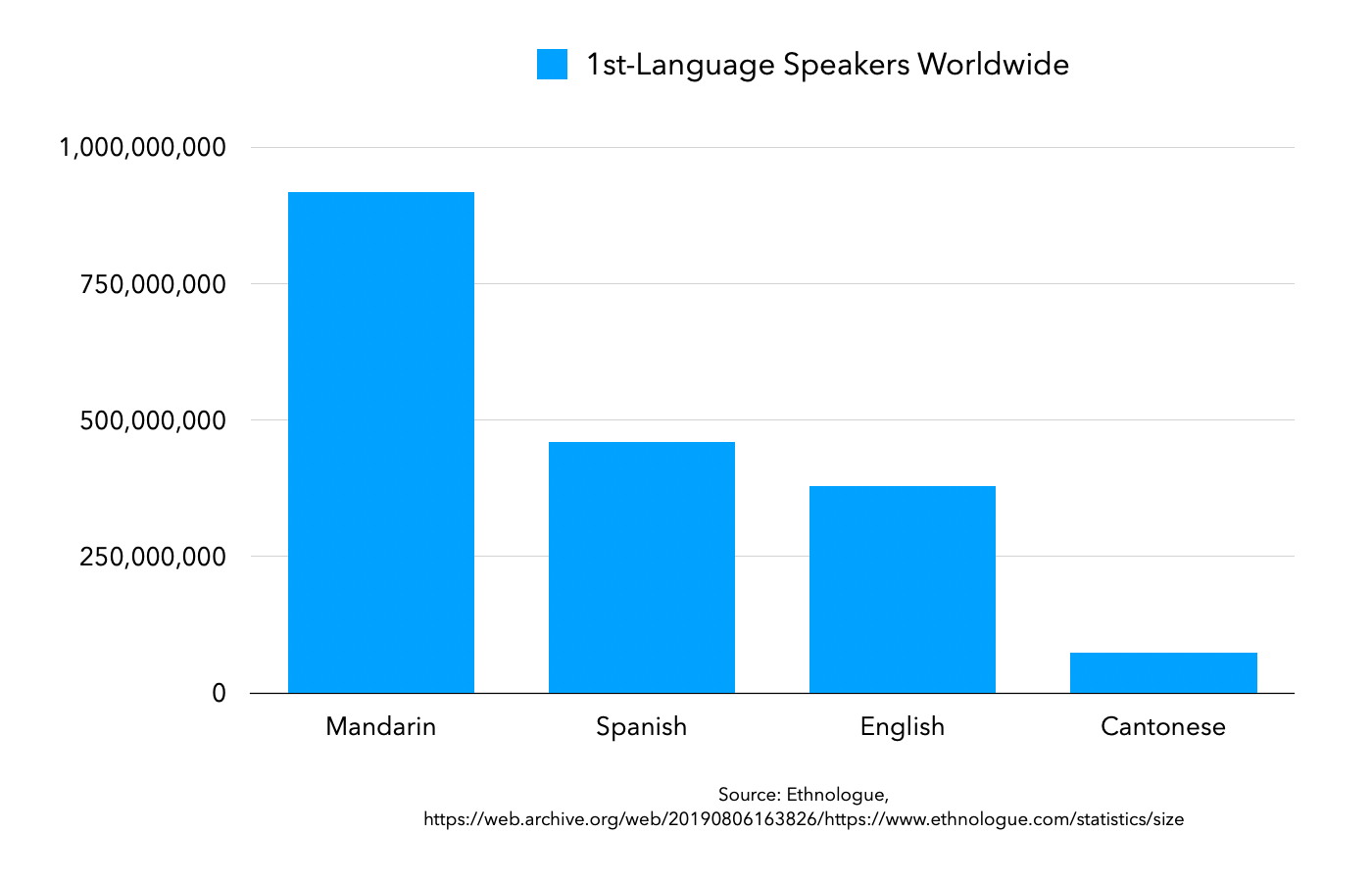
Similarly, if one person only knows Mandarin, and another person only knows Cantonese, they can’t really understand each other if they try to talk to each other—Mandarin and Cantonese are not mutually intelligible. So, while they may be “fāngyán+ (fāng·yán {direction → [place]} · {(patterns of) speech} 方言)”, linguistically, Mandarin and Cantonese should really be considered to be different languages, not just different dialects of “Chinese”.

If many of the varieties of speech in China are really different languages, as linguists would refer to them, why have so many people come to think that they are just dialects of a single Chinese language? China’s central government is highly motivated to convince people that China is one unified political and cultural entity which should thus be governed by one central government—them—so they have promoted this idea. In other words, it’s basically political propaganda!

Being Clear on What’s What

Why is it especially important for language-learners in a language field like the Mandarin field to recognize, in spite of the commonly accepted political propaganda, that Chinese varieties of speech like Mandarin and Cantonese really function like different languages, and not different dialects of the same language? Well, as someone who along with many others has come to the Mandarin field from the Cantonese field, I have had the dubious pleasure of observing how some have tried to speak Mandarin by just taking the Cantonese they knew and twisting it a little, since they were relying on the conventional wisdom that Mandarin and Cantonese are just different dialects of the same language. As well-meaning as they may have been, the results were often just as bad as when someone sings badly off-key, or as Star Trek fans may say, they often sounded like the language equivalent of a transporter accident 🙀. Even after decades in the Mandarin field, some publishers who had come over from the Cantonese field still say some Mandarin words with Cantonese-y pronunciations.

In contrast, when one recognizes, for example, that Cantonese is Cantonese and Mandarin is Mandarin, and that neither one is just a slightly mutated version of the other, then that paves the way for language-learning progress that is free of being distorted by untruthful and misleading beliefs. Yes, by recognizing and accepting a variety of speech for what it really is, we can go on to freely learn to speak it well and properly, so that we can be as effective as possible at helping people whose mother tongue is that variety of speech.

As with everything else in life, in language-learning too, the truth matters. As Jehovah’s people, we especially want to “worship the Father with spirit and truth”, and when we seek to do so as we learn a language to use it in Jehovah’s service, we will find that ‘the truth will set us free’ from the distortions and burdens of untruthful and misleading beliefs.—John 4:23; 8:32.

Some Official Recognition

The organization has recently demonstrated that it recognizes the truth about how different many of the Chinese varieties of speech are from one another. For example, whereas before there was one Chinese edition of each publication (using Mandarin wording), now, some publications are available in different Chinese editions for different Chinese languages (including Cantonese), each with different wording.

List of different Chinese languages in which publications are available on jw.org as of 2025-06-02
jw.org now has publications in different Chinese languages.

To help reduce the confusion around the inappropriate use of the English word “dialect” to translate “fāngyán (fāng·yán {direction → [place]} · speech → [topolect; dialect (common but misleading translation)] 方言)”, Professor Mair proposed that the word “topolect” (topo- (“place”) + -lect (“[language] variety”)) be used instead as an exact, neutral English translation of “fāngyán (fāng·yán {direction → [place]} · speech → [topolect; dialect (common but misleading translation)] 方言)”. While not as well-known as “dialect”, the word “topolect” has gained a certain amount of recognition, and it can now be found in several dictionaries, e.g., The American Heritage Dictionary of the English Language, Wordnik, and Wiktionary.

Categories
Culture Experiences History Language Learning Technology Theocratic

zìxué‐chéngcái

zìxué‐chéngcái+ ((zì·xué self · learned; studied 自学 自學)‐(chéng·cái became · {capable person} 成才) [[be] self-taught]) 👈🏼 Tap/click to show/hide the “flashcard”

[Notes: Tap/click on a Pīnyīn (Pīn·yīn {Piecing Together of} · Sounds → [Pinyin] 拼音) expression to reveal its “flashcard”; tap/click on a “flashcard” or its Pīnyīn (Pīn·yīn {Piecing Together of} · Sounds → [Pinyin] 拼音) expression to hide the “flashcard”. 📖 📄 ➕ icons mean 📖 Reveal All, 📄 Reveal Advanced, and ➕ Reveal + Symbols re all the “flashcards” in the heading, paragraph, etc. that they are placed at the beginning of.]

Recently, jw.org featured the video “Benjamin Boothroyd—A Self-Taught Bible Scholar”. Where the English title of this video uses the expression “self-taught”, the title of the Mandarin version uses this week’s MEotW, “zìxué‐chéngcái ((zì·xué self · learned; studied 自学 自學)‐(chéng·cái became · {capable person} 成才) [[be] self-taught])”:

English:

Benjamin Boothroyd—A Self-Taught Bible Scholar

Mandarin:

📖 📄 Běnjiémíng (Benjamin 本杰明 本傑明) Bùsīluóyīdé (Boothroyd 布思罗伊德 布思羅伊德): Zìxué‐Chéngcái+ ((Zì·xué Self · Learned 自学 自學)‐(Chéng·cái Became · {Capable Person} 成才) [Self-Taught]) de (’s 的) Shèngjīng (Shèng·jīng Holy · Scriptures → [Bible] 圣经 聖經) Xuézhě (Xué·zhě Studying · Person → [Scholar] 学者 學者)

The Morphemes

The first morpheme in this week’s MEotW, “zì (self | from; since 自)”, here means “self”, as it does in “zìjǐ (self[’s] 自己)”. The next morpheme, “xué (learn/learning | study [→ [imitate]])”, here means “learned; studied”. Another expression in which it appears is “xuésheng (xué·sheng learning · {growing (one) → [student]} → [student; pupil] 学生 學生)”, which means “student”. These first two morphemes, when put together to form “zìxué (zì·xué self · learn; study 自学 自學)”, refer to learning or studying by oneself.

The third morpheme in this week’s MEotW, “chéng (become; {come to be}; {to turn into}; {to complete}; accomplish; succeed; {fully developed/grown}; {assume [the shape of]}; {to fill} | {to completion} 成)”, here means “became”. It also appears in many other expressions, including “chéngwéi (chéng·wéi become · {to be} 成为 成為) and “chénggōng+ (chéng·gōng {becoming [of]}; {accomplishing [of]} · {meritorious service/deed}; achievement → [succeed | success | successful[ly]] 成功)”. The final morpheme “cái ({only then} | {only (before a number)} | actually; really; very | talent; ability; gift | {capable person} | {person of a certain type}才/纔) in this context means “capable person”. So, “chéngcái (chéng·cái become · {capable person} 成才) here means “became capable person”, and the entire expression “zìxué‐chéngcái ((zì·xué self · learned; studied 自学 自學)‐(chéng·cái became · {capable person} 成才) [[be] self-taught]) literally means “self-learned/studied, became capable person”, and effectively means “self-taught”.

Being Self-Taught in the Mandarin Field

Apart from the introductory organization-sponsored language classes that many of us took, we Mandarin field language learners are pretty much all self-taught with regard to Mandarin, especially when it comes to the somewhat specialized Mandarin that we must use in the Mandarin field. But does being largely self-taught mean that none of us can really be any good at Mandarin? Are we doomed to plateau at a mediocre level at best?

One thing I appreciated from the video mentioned above is that Benjamin Boothroyd, who was self-taught but became a world-class Bible scholar and translator, was motivated only to pursue the truth. As he wrote (as mentioned in the English video starting at the 6:38 mark):

I have no interest to serve but that of truth.

Regarding those with such a focus on the truth, at John 18:37, Jesus said:

For this I have been born, and for this I have come into the world, that I should bear witness to the truth. Everyone who is on the side of the truth listens to my voice.

Those who are “on the side of the truth” and who listen to Jesus’ voice open themselves up to receiving the most important education we can get. This best possible education comes from Jehovah God himself, not any worldly or human source. As Isaiah 54:13 says:

And all your sons will be taught by Jehovah,
And the peace of your sons will be abundant.

Even when it comes to nontrivial technical matters, Jehovah can help certain ones develop the technical knowledge, skills, and expertise that are needed to accomplish his will. For example, as Exodus 35:30–35 tells us, he did so when some specialized technical work needed to be done when Moses and the Israelites were in the wilderness:

30 Then Moses said to the Israelites: “See, Jehovah has chosen Bezʹal·el the son of Uʹri the son of Hur of the tribe of Judah. 31 He has filled him with the spirit of God, giving him wisdom, understanding, and knowledge of every sort of craftsmanship 32 for making artistic designs, for working with gold, silver, and copper, 33 for cutting and setting stones, and for making all kinds of artistic wood products. 34 And he has put it into his heart to teach, he and O·hoʹli·ab the son of A·hisʹa·mach of the tribe of Dan. 35 He has filled them with skill to do all the work of a craftsman, an embroiderer, and a weaver using blue thread, purple wool, scarlet material, and fine linen, and of a loom worker. These men will do every sort of work and prepare every sort of design.

Yes, if we focus on the truth and stay open to Jehovah’s direction, we can make “self-taught” also mean “taught by Jehovah”! And since Jehovah created this universe that human scientists, technicians, artists, musicians, etc. are just trying to figure out and work in, he can, if he wants to, even potentially teach us to become more knowledgeable and skilled in certain fields than many worldly humans are, as he may have done with Bezʹal·el and O·hoʹli·ab.—Psalm 119:98–100.

Modern Resources for Mandarin Self-Learning

In support of our efforts to be successfully self-taught in effectively using Mandarin to praise and serve Jehovah, we today are blessed with many available resources, the likes of which Bezʹal·el, O·hoʹli·ab, and Mr. Boothroyd would undoubtedly have loved to have had access to. For example, one of the basic things that teaching and learning require is the transfer of information to those seeking to learn, and in that regard, we humans today generally have access to, at reasonable cost, computing—i.e., information-processing—devices that can easily be carried by hand, but that are, in some ways, millions of times more capable than the Apollo Guidance Computer (AGC) that guided the Apollo 11 spacecraft to the moon.

In addition to these mobile devices themselves, we should also consider the apps and the text, audio, video, etc. content that they enable us to use to help us learn Mandarin. These include the JW Language app, as well as the JW Library app that now allows for content that displays Pīnyīn (Pīn·yīn {Piecing Together of} · Sounds → [Pinyin] 拼音). Here are a couple of short links listing some of the resources available for Mandarin field language learners:

No Need to Have Impostor Syndrome in the Mandarin Field

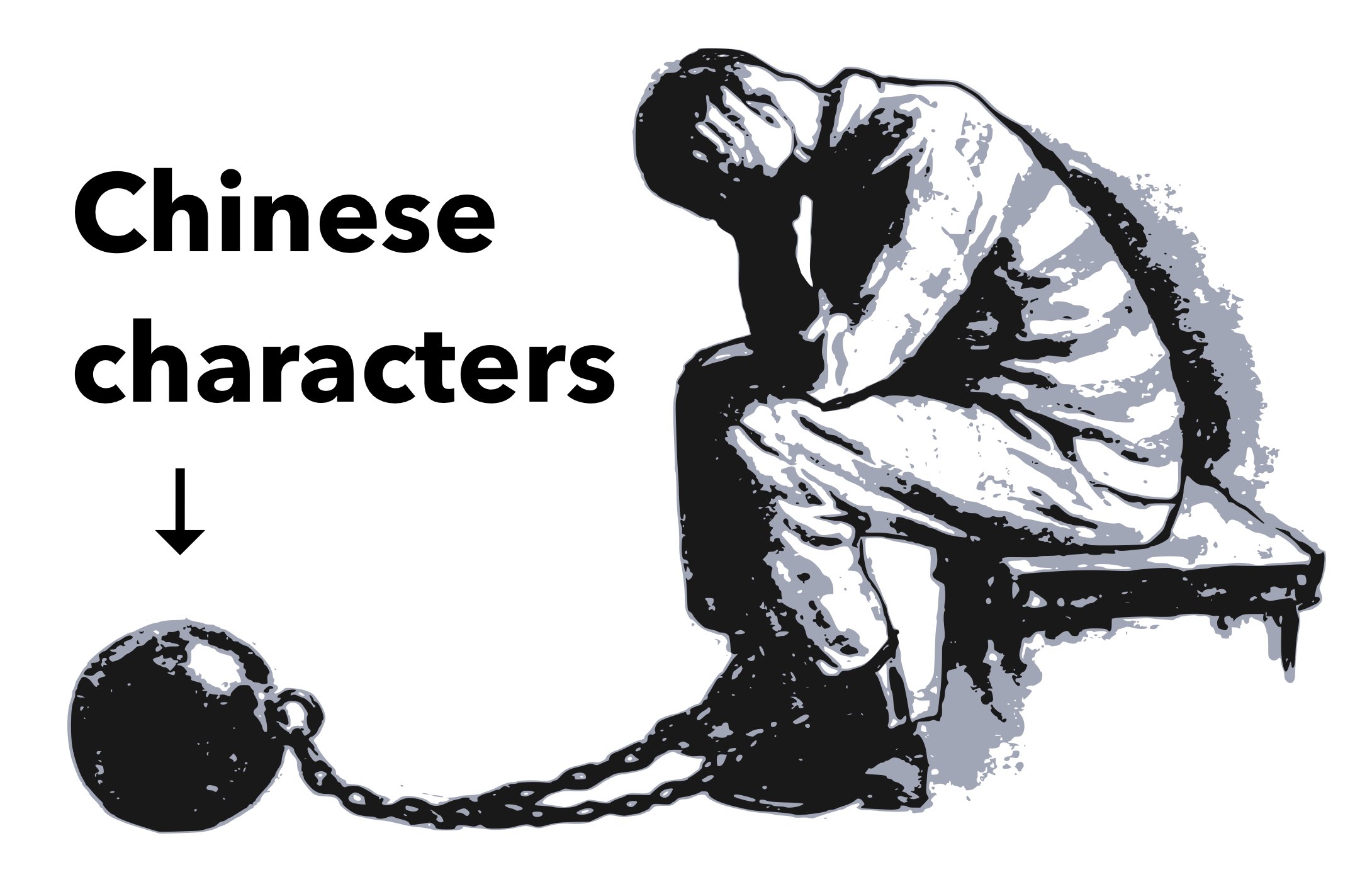
In view of the above, if Jehovah has guided us to serve in the Mandarin field, we need not allow ourselves to be burdened with impostor syndrome, even if we haven’t received extensive worldly training in the Mandarin language. If we let ourselves be “taught by Jehovah” instead of just relying on our own talent or abilities or on mere worldly knowledge or human traditions, and if we resolutely make good use of the available resources and apply ourselves to learn whatever we need to learn in order to do Jehovah’s work well, Jehovah can and will bless our efforts and help us succeed. Also, if we follow Boothroyd’s example and pursue truth rather than “glory from men”, then the truth will be able to set us free from the unnecessary burdens imposed by proud but fallacious human traditions such as those involving Chinese characters. (John 5:41–44; 8:32) As the apostle Paul said at 1 Corinthians 1:26–31:

26 For you see his calling of you, brothers, that there are not many wise in a fleshly way, not many powerful, not many of noble birth, 27 but God chose the foolish things of the world to put the wise men to shame; and God chose the weak things of the world to put the strong things to shame; 28 and God chose the insignificant things of the world and the things looked down on, the things that are not, to bring to nothing the things that are, 29 so that no one might boast in the sight of God. 30 But it is due to him that you are in union with Christ Jesus, who has become to us wisdom from God, also righteousness and sanctification and release by ransom, 31 so that it may be just as it is written: “The one who boasts, let him boast in Jehovah.”