zháole huǒ+
((zháo·le
{having caught} · {to completion}
着了
著了)
(huǒ
fire
火)
→[having caught fire; burning; being on fire]) 👈🏼 Tap/click to show/hide the “flashcard”
[Notes:Tap/click on a Pīnyīn
(Pīn·yīn
{Piecing Together of} · Sounds →[Pinyin]
拼音) expression to reveal its “flashcard”; tap/click on a “flashcard”or its Pīnyīn
(Pīn·yīn
{Piecing Together of} · Sounds →[Pinyin]
拼音) expression to hide the“flashcard”. 📖📄 ➕ icons mean 📖Reveal All, 📄Reveal Advanced, and ➕ Reveal + Symbols re all the “flashcards” in the heading, paragraph, etc. that they are placed at the beginning of.]
A few years back, I wrote up a brief web page listing reasons for producing Pīnyīn
(Pīn·yīn
{Piecing Together of} · Sounds →[Pinyin]
拼音), etc. material for the Imitate (ia) book. Some, especially some who grew up in the West, may have felt that this book is made up of “just stories”, and ones that they were already quite familiar with, at that. However, we must remember that Chinese Bible students may often have a different perspective regarding the Bible accounts that are made to come to life in the Imitate book. As that web page said:
Many Chinese people in the world have not been exposed to Bible accounts the way many Westerners have.
Also, I have heard that some, perhaps many, Chinese Bible students tend to approach their Bible studies like intellectual exercises for accumulating chōuxiàng (abstract) head knowledge as if for a school exam, rather than as training for their hearts for their own real lives.
The actress Natalie Portman once said, “I love acting. I think it’s the most amazing thing to be able to do. Your job is practicing empathy. You walk down the street imagining every person’s life.”
The Imitate book helps build Bible students’ empathy towards Bible characters, which in turn helps Bible students realize that others would feel empathy towards them as well if they imitated these Bible characters—not everyone will just think they’re crazy, like many worldly friends or family members might think.
While even fictional stories can have the benefits described in the links and the quote above, true stories from the Bible can have even greater benefits, including spiritual ones.
Besides the Imitate book, another book from Jehovah’s organization that relates Bible accounts is the Learn From the Bible (lfb) book. The letter from the Governing Body in this book says that, similarly to the Imitate book, the Learn From the Bible book also “brings the Bible accounts to life and captures the feelings of those depicted”, while, unlike the Imitate book, it “tells the story of the human family from creation onward”. While the Learn From the Bible book is especially suitable for children, the letter from the Governing Body in this book says that “it can also be used to help adults who desire to learn more about the Bible”. So, it would be good to consider on this blog some of the expressions used in the Mandarin Learn From the Bible book.
On Fire 🔥
This week’s MEotW, “zháole huǒ
((zháo·le
{having caught} · {to completion}
着了
著了)
(huǒ
fire
火)
→[having caught fire; burning; being on fire])”, appears in the first paragraph of Lesson 18 of the Mandarin Learn From the Bible book, which is entitled “Ránshāo
(Rán·shāo
Ignited · {to Be Burning}
燃烧
燃燒)de
(’s
的)Jīngjí‐Cóng+
((Jīng·jí
Brambles · Thorns
荆棘
荊棘)‐(Cóng
Clump
丛
叢)
→[Bush])” (“The Burning Bush”):
English:
A thornbush was on fire, but it was not burning up!
Mandarin:
📖📄➕Móxī
(Moses
摩西)kànjian
(kàn·jian
{looked at} · {to be seeing} →[saw]
看见
看見)jīngjí‐cóng+
((jīng·jí
brambles · thorns
荆棘
荊棘)‐(cóng
clump
丛
叢)
→[bush])zháole huǒ
((zháo·le
{having caught} · {to completion}
着了
著了)
(huǒ
fire
火)
→[being on fire]),
dàn
(but
但)yìzhí
(yì·zhí
one · {being straight} →[all the while]
一直)méiyǒu
(méi·yǒu
(it) not · {was having → [was]} → [(it) was not]
没有
沒有)shāodiào
(shāo·diào
{being burned} · {to be falling → [up]}
烧掉
燒掉).
The Mandarin Learn From the Bible book here uses “zháole huǒ
((zháo·le
{having caught} · {to completion}
着了
著了)
(huǒ
fire
火)
→[having caught fire; burning; being on fire])” to correspond with the English expression “on fire”. “Zháole huǒ
((zháo·le
{having caught} · {to completion}
着了
著了)
(huǒ
fire
火)
→[having caught fire; burning; being on fire])” is the past participle of “zháohuǒ
(zháo·huǒ
catch; ignite; light · fire
着火
著火)”, which corresponds to “catch fire” in English.
Morphemic Breakdown
Going in reverse order, the “huǒ
(fire [→ [fiery anger/temper | get fiery with anger]] | fiery; flaming
火)” in “zháole huǒ
((zháo·le
{having caught} · {to completion}
着了
著了)
(huǒ
fire
火)
→[having caught fire; burning; being on fire])” is a well-known expression that means “fire”. As for “le
(-ed | {to completion} | [(at the end of a phrase/sentence) indicates a change]
了)”, when it’s used as it is in this week’s MEotW, it’s considered an aspect marker, as was discussed extensively in the MEotW post for “jiéle hūn
((jié·le
{tied (a knot of)} · {to completion}
结了
結了)
(hūn
marrying → [marriage]
婚)
→[[got] married])”. That brings us to “zháo+
({touch; come in contact with} [→ [feel; be affected by]] | {catch; ignite; light (fire)}; burn | {hitting the mark}; accomplishing; succeeding
着
著)”, the pronunciation and meaning of which are obvious in Pīnyīn
(Pīn·yīn
{Piecing Together of} · Sounds →[Pinyin]
拼音), but not so much when one just sees “着” (Simplified) or “著” (Traditional), the characters used to write it.
The Many Faces of “着/著”
According to the dictionaries loaded in my Pleco app, the characters “着/著” can represent 5 different expressions, each with its own pronunciation and set of meanings:
zhāo – add; put in | measure word for tricks, devices, moves in chess or martial arts, etc.
zháo – touch; come in contact with [→ [feel; be affected by]] | catch; ignite; light (fire); burn | hitting the mark; accomplishing; succeeding (This is the one used in this week’s MEotW.)
zhe – being (indicating continuing progress/state)
zhù – prominent; outstanding | book; work
zhuó – apply | put on/wear (clothes)
While advocates of characters complain about the homophones (different words with the same pronunciation) in Mandarin that Pīnyīn
(Pīn·yīn
{Piecing Together of} · Sounds →[Pinyin]
拼音) would write the same way, the above illustrates the corresponding problem of homographs (different words that are written the same way) that plagues the characters.
Don’t Fall For the FUD!
How can we deal with homophones and homographs? For both of these contrasting linguistic challenges, the best solution is that which is used in speech, the original, primary aspect of human language, as created by Jehovah God: Use sufficient clarifying context. Contrary to the unjustified FUD (Fear, Uncertainty, and Doubt) spread by many advocates of characters, many millions of people have been speaking modern Mandarin to each other for decades, homophones and all, and because people have learned to use sufficient clarifying context when speaking it, it’s been fine! Similarly, so long as one gives oneself a chance to get used to it, using Pīnyīn
(Pīn·yīn
{Piecing Together of} · Sounds →[Pinyin]
拼音) to write Mandarin is also fine, since Pīnyīn
(Pīn·yīn
{Piecing Together of} · Sounds →[Pinyin]
拼音) is just a simple way to represent Mandarin speech.
Many claim that _Pīnyīn_ shouldn’t be used as a writing system because characters are required to avoid confusion from all the homophones (different words that sound the same) in Mandarin.
If that’s true, then people shouldn’t SPEAK Mandarin either! But many do, and it’s fine. pic.twitter.com/1MK0ERuFjc
Of course, if one has a poor understanding of Mandarin speech, then one will thus also have a poor understanding of Pīnyīn
(Pīn·yīn
{Piecing Together of} · Sounds →[Pinyin]
拼音). Unfortunately, experience has shown that Mandarin learners who just go along with traditional imperfect human culture and focus on the visible, visually elaborate characters often end up neglecting invisible Mandarin speech. The thing is, though, according to both the science of linguistics and the Bible itself, speech is actually the primary aspect of human language, and no matter how exceptional worldly Chinese people may think they are, that applies to Mandarin and all the other Chinese languages as well.—1 Corinthians 14:8–11.
For convenience:
The direct link for the Pīnyīn
(Pīn·yīn
{Piecing Together of} · Sounds →[Pinyin]
拼音) Plus resource for the Learn From the Bible book is:
More Pīnyīn
(Pīn·yīn
{Piecing Together of} · Sounds →[Pinyin]
拼音) and Pīnyīn
(Pīn·yīn
{Piecing Together of} · Sounds →[Pinyin]
拼音) Plus web material based on the Mandarin Learn From the Bible book will be made available in the Pīnyīn
(Pīn·yīn
{Piecing Together of} · Sounds →[Pinyin]
拼音)Plus web resource as time allows.
zhǐyǐn+
(zhǐ·yǐn
{(pointing with) finger → [pointing]} · guiding; leading
指引) 👈🏼 Tap/click to show/hide the “flashcard”
[Notes:Tap/click on a Pīnyīn
(Pīn·yīn
{Piecing Together of} · Sounds →[Pinyin]
拼音) expression to reveal its “flashcard”; tap/click on a “flashcard”or its Pīnyīn
(Pīn·yīn
{Piecing Together of} · Sounds →[Pinyin]
拼音) expression to hide the“flashcard”. 📖📄 ➕ icons mean 📖Reveal All, 📄Reveal Advanced, and ➕ Reveal + Symbols re all the “flashcards” in the heading, paragraph, etc. that they are placed at the beginning of.]
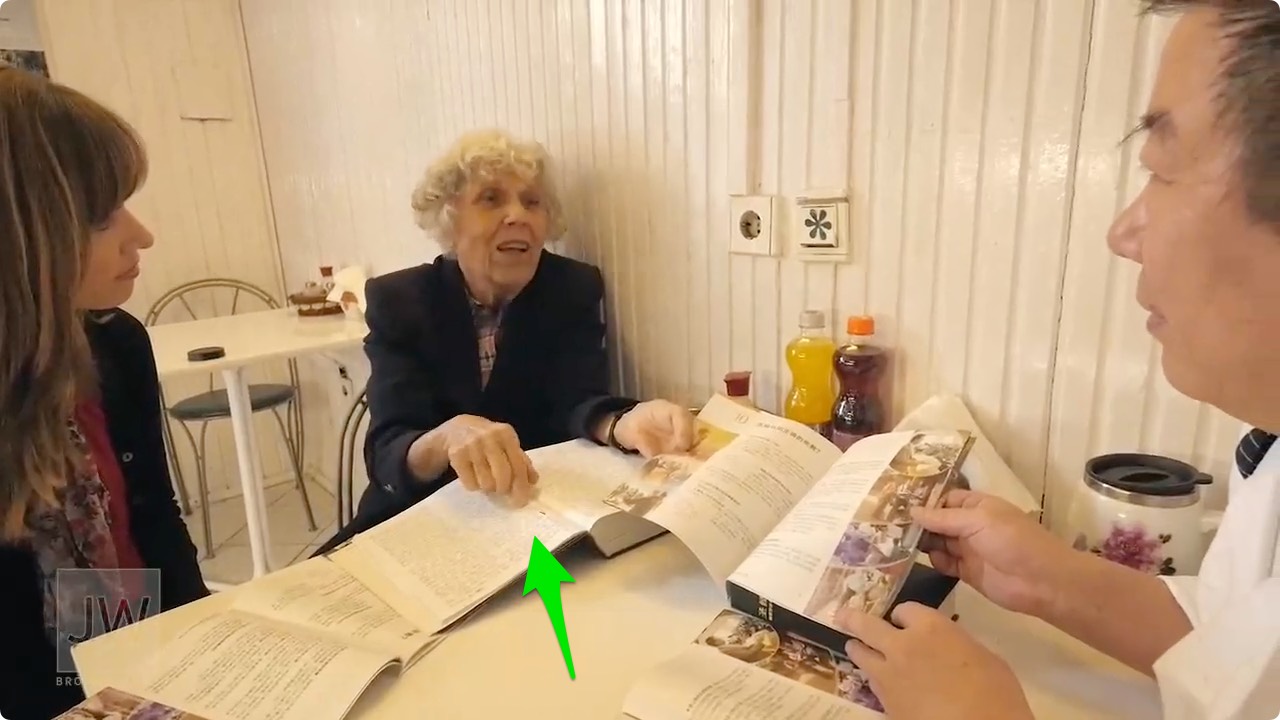
Recently, I came across a video entitled “Margarita Königer: Glad I Chose This Career”. (This Watchtower article briefly discusses Sis. Königer’s experience coming into the truth, and her service up to about 1995. The video, which has a copyright date of 2016, is more up-to-date. In the video, we learn that Sis. Königer began serving as a missionary in 1966, and that at the time of her video interview, she had been a missionary in the Chinese field in Budapest, Hungary for nine years.)
Because of what I have seen and experienced in the Mandarin field for over three decades, what Sis. Königer said starting at about the 5:10 mark of the video really resonates with me:
English:
If you are in the full-time service, I think it’s like you are travelling and Jehovah is directing you.
As can be seen above, this week’s MEotW, “zhǐyǐn
(zhǐ·yǐn
{(pointing with) finger → [pointing]} · guiding; leading
指引)”, is used in the Mandarin version of the above-mentioned video to correspond to the English word “directing”.
I have often felt like a fly on the wall observing Jehovah’s hand at work in the establishment and development of several Mandarin groups and congregations in my local area, and I have also seen much evidence that Jehovah has been directing things in the worldwide Mandarin field.
Photocopies and Handwriting
Specifically with regard to the development of material based on the organization’s official Chinese publications, but that includes Pīnyīn
(Pīn·yīn
{Piecing Together of} · Sounds →[Pinyin]
拼音) or Zhùyīn
(Zhù·yīn
{Annotating of} · Sounds →[Zhuyin]
注音
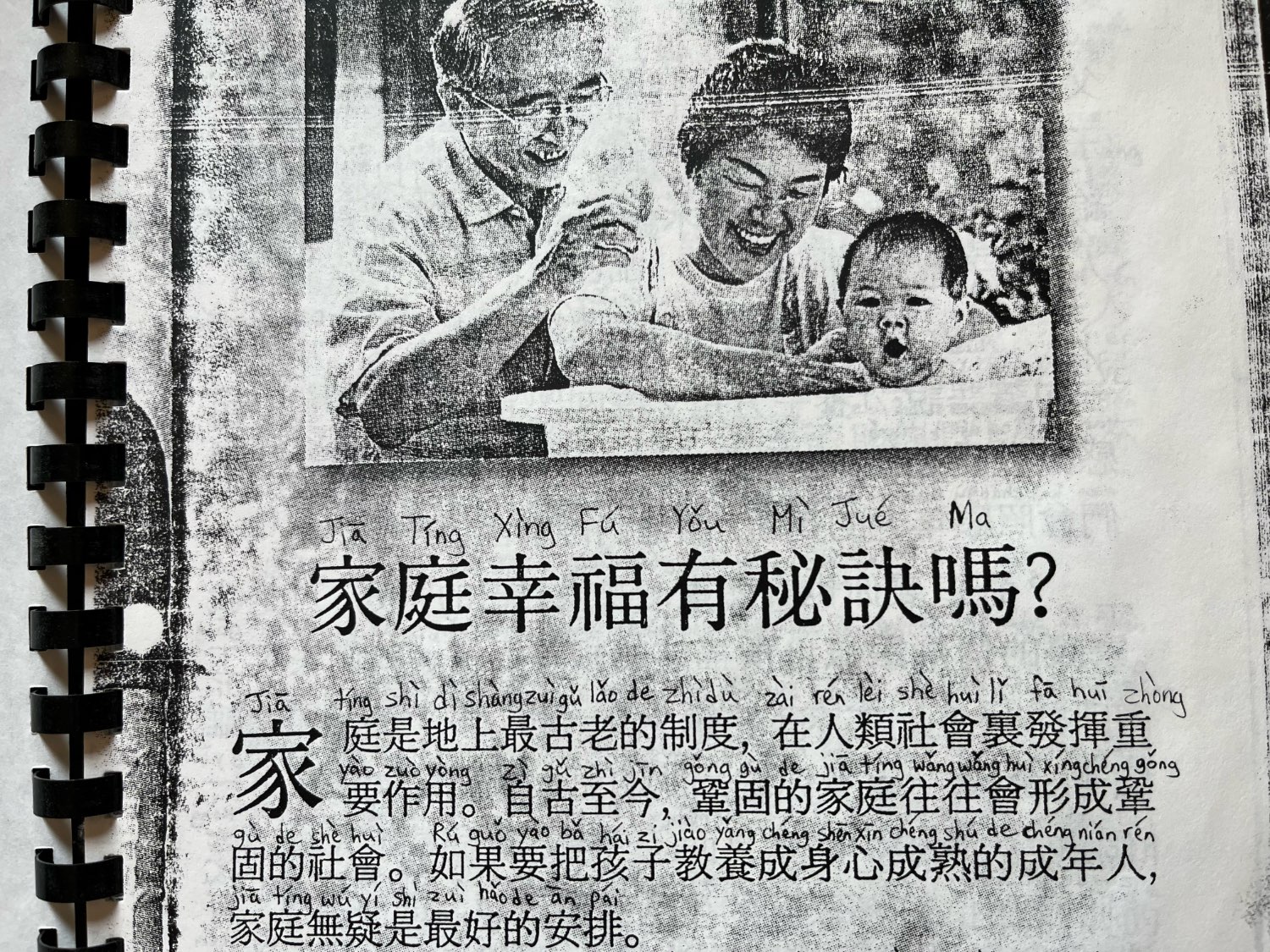
註/注音) to help Mandarin field language learners get past the imposing Great Wall of Chinese characters, I saw how things started in the 1980s or 1990s. Somewhere around that time, Chinese congregation elders on the West Coast of North America began directing teams of publishers who would make enlarged photocopies of official Chinese publications, and then painstakingly handwrite Pīnyīn
(Pīn·yīn
{Piecing Together of} · Sounds →[Pinyin]
拼音) or Zhùyīn
(Zhù·yīn
{Annotating of} · Sounds →[Zhuyin]
注音
註/注音)ruby text between the lines of characters. (In those days, many of the publishers involved were from Taiwan, where they were taught Zhùyīn
(Zhù·yīn
{Annotating of} · Sounds →[Zhuyin]
注音
註/注音) in school.) Photocopies would then be made of these handwritten “originals”, for distribution to hungry Mandarin field language learners at the local meetings and to be sent via snail mail, etc. to those in other places.
Photocopied and handwritten Pīnyīn
(Pīn·yīn
{Piecing Together of} · Sounds →[Pinyin]
拼音) material from 1997, based on the book The Secret of Family Happiness
PCs, Email, and Printers
A few years afterwards, in the early 2000s, I was serving where the need was great in the burgeoning Mandarin field in Calgary, where I was assigned by an unusually pragmatic and open-minded Chinese elder to develop similar Pīnyīn
(Pīn·yīn
{Piecing Together of} · Sounds →[Pinyin]
拼音)-containing material for the local Mandarin field language learners—the brothers in Calgary at the time felt far from the West Coast, and had decided that they would be more comfortable with a local supply of such material.
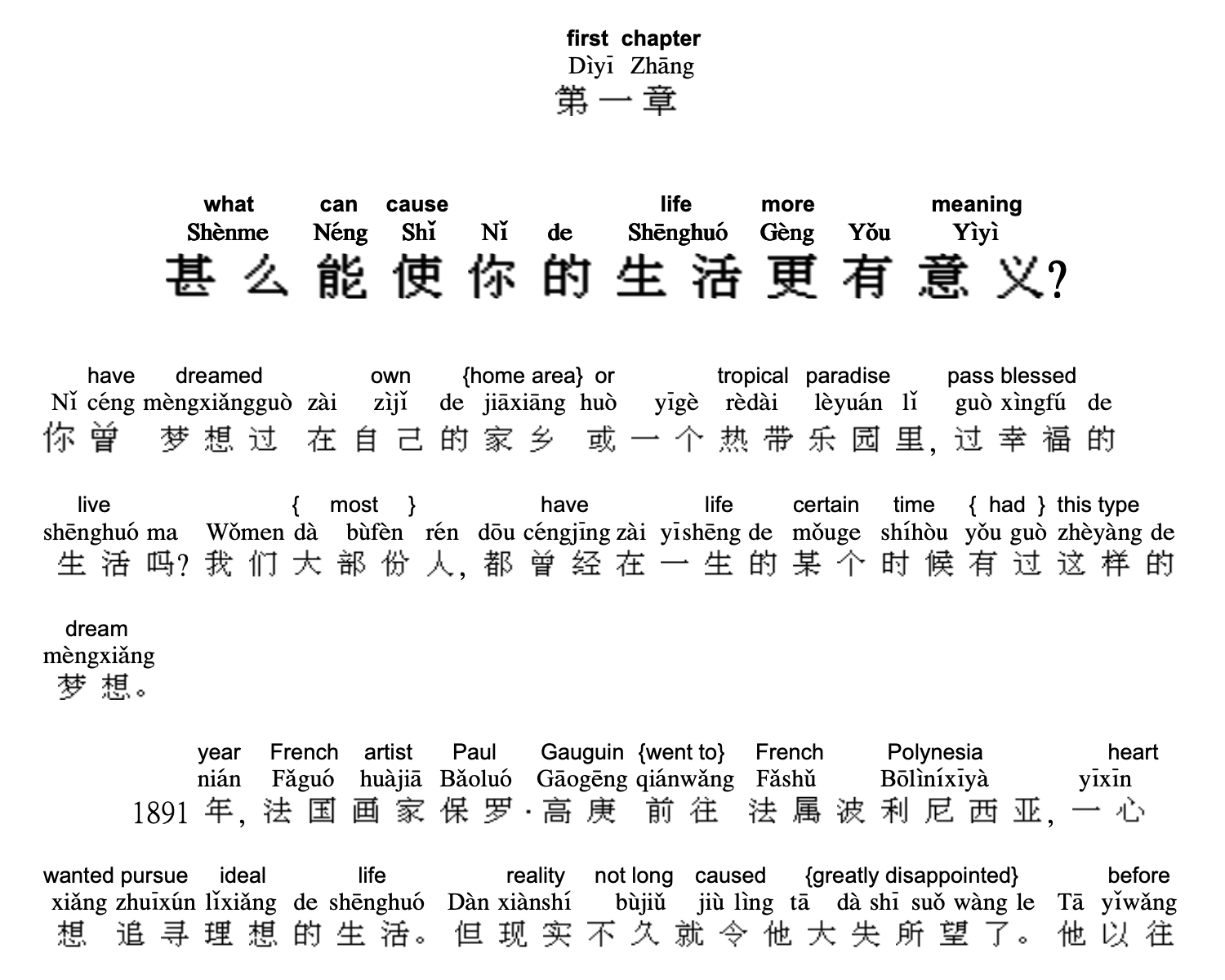
Starting with a “clean sheet of paper” and using the personal computer technology that had become available and reasonably inexpensive at the time, I designed and started producing what was evidently the first material of the kind that eventually came to be commonly known as 3-line material. When the above-mentioned elder suggested adding English to the material that had up to this point only contained characters and Pīnyīn
(Pīn·yīn
{Piecing Together of} · Sounds →[Pinyin]
拼音), I balked at first—it was already going to be so much work just to enter the characters and add the Pīnyīn
(Pīn·yīn
{Piecing Together of} · Sounds →[Pinyin]
拼音)! However, I decided to make some prototype material that included English, and when one of the local brothers who was learning Mandarin saw a printout of it, his eyes seemed to pop out of his head, and he practically grabbed the printout out of my hands to get a closer look at it! That helped me to decide that the additional time and work needed for me to add the English translations would be a worthwhile investment that would greatly benefit the multiple people who would use the material to help them learn the Mandarin they need in the Mandarin field.
Whereas the photocopied material mentioned above that was produced starting in the 1980s or 1990s was produced and distributed entirely in the paper realm, this new material was produced in the digital realm in word processing programs, and distributed as digital files (albeit ones still meant to be printed out on paper). Thus, I was able to email the files to whoever asked for them, after I emailed a few acquaintances I had in the nearby Canadian and American Mandarin fields about them.
A screenshot of early 3-line PDF material from 2001, based on the book Is There a Creator Who Cares About You?
And boy, did people start asking for them! Amazingly, people in the Mandarin field began telling their friends and fellow workers about the files, and I began to get emails from all around the world—from every continent except Antarctica—requesting them. I remember getting a bit emotional after getting an email from the UK requesting the files and telling me about the growing Chinese fields there—it felt like finding out about a part of your family that before, you had no idea existed. I also remember feeling amazed and doing a double take after seeing that I had gotten an email from someone in the Chinese group in Budapest, Hungary, where the above-mentioned Sis. Königer later served for a long time.
For those who weren’t around then, let me provide a bit more background information about the situation in the worldwide Mandarin field at the time, to help put this enthusiastic worldwide response in perspective. At the time, jw.org was still many years away from coming online and becoming a place on the web where one could just go and view or download abundant material based on official publications and containing Pīnyīn
(Pīn·yīn
{Piecing Together of} · Sounds →[Pinyin]
拼音). This was also before the iPhone came out in 2007, before Android was introduced in 2008, and before the iPad came out in 2010. What many people in the worldwide Mandarin field did have at that time, though, were personal computers (PCs and Macs), email, printers, and an organizationally existentially urgent situation caused by the frustratingly complex and difficult-to-learn-and-remember Chinese characters, which can take years, even decades, for a language learner to get functionally proficient with.
Pinyin Material or Bust
Many of the Mandarin pregroups, groups, and congregations around the world at that time were quite new, with zero or very few publishers who were native Mandarin-speakers, and thus zero or very few people, especially brothers, who could function effectively in the Mandarin field with publications that contained only Chinese characters. So, they really, really needed material like that early 3-line material. Especially for many Mandarin pregroups and groups around the world at that time, getting the Pīnyīn
(Pīn·yīn
{Piecing Together of} · Sounds →[Pinyin]
拼音)-containing material or not literally meant the difference between being able to conduct their Mandarin meetings or not being able to do so.
And so, email requests came pouring in from around the world for the early 3-line unofficial material that I was producing, with only a few occasional helpers, in my little rented basement suite in a territory far from the home where I grew up. That was a hard time to go through—the material, while no longer having to be painstakingly handwritten, still took a lot of time and effort to produce, week after week, and many of those around me did not understand or appreciate this highly unusual, pressure-filled, high-stakes situation that I found myself in. During that time, I learned and lived the Mandarin saying “qí+
({(if one) rides}
骑
騎)‐hǔ+
(tiger
虎)‐nán+
({(it) is difficult}
难
難)‐xià+
({to get down}
下)”. However, like Sis. Königer said, ultimately I could feel Jehovah directing things and helping me through it all.
3lines.org and Official Pinyin Resources
After about two and a half years in Calgary, difficulty in finding secular work caused me to move back to the city I grew up in, where, on reflection, the project in Calgary that produced that early 3-line material would probably never have gotten going, due to the relatively complacent—and, perhaps, proud—acceptance of the status quo among those in the local Mandarin field, which by then had become relatively well-established. (Actually, on reflection, the development and distribution of unofficial and official Pīnyīn
(Pīn·yīn
{Piecing Together of} · Sounds →[Pinyin]
拼音)-containing material for the Mandarin field seems, as a whole, like what in physical warfare is known as a flanking manoeuvre, as opposed to a conventional frontal assault on the status quo of the world’s Mandarin language situation that we Mandarin field language learners must deal with, i.e., just having everyone learn Mandarin the established hard way, focusing exclusively on the traditionally mandated Chinese characters.) Eventually, I was invited to work with the international team of publishers that ran the 3lines.org website, and that began producing 3-line material on an industrial scale.
Meanwhile, on the official side of things, the organization eventually started to produce official printed Pīnyīn
(Pīn·yīn
{Piecing Together of} · Sounds →[Pinyin]
拼音) versions of a few selected publications. These contained Simplified Chinese characters with Pīnyīn
(Pīn·yīn
{Piecing Together of} · Sounds →[Pinyin]
拼音) ruby text—no English. (I suppose the official team[s] involved decided that it was not worthwhile to include English translations, due to the tremendous additional ongoing investments in time, effort, and contributed funds that would be required to produce them on an ongoing basis to the quality level required of official material, which after all is primarily spiritual food, not language-learning material like the unofficial 3-line, etc. material is.)
Being printed on paper, though, these official Pīnyīn
(Pīn·yīn
{Piecing Together of} · Sounds →[Pinyin]
拼音) publications had to be physically printed and trucked/moved by rail/flown/literally shipped/etc. to the various Mandarin pregroups, groups, and congregations around the world that needed them. Generally these shipments would arrive in time for them to be used at the meetings in which they were scheduled to be used, but unfortunately, in spite of the best efforts of those involved, sometimes they would not—that was just the challenging nature at the time of producing and distributing paper publications on an ongoing tight schedule.
Over time, the organization got better at producing and delivering paper Pīnyīn
(Pīn·yīn
{Piecing Together of} · Sounds →[Pinyin]
拼音) publications on time, and it also eventually began to make digital Pīnyīn
(Pīn·yīn
{Piecing Together of} · Sounds →[Pinyin]
拼音)-containing material widely available for viewing on the web and downloading. Thanks to reader SB, here is some information on when these official resources became available:
Official Pinyin Watchtower started in 2002.
Other dates: jw.org with PDFs was 2010, WOL was 2012…, WOL expanded to pre-2000 publications in 2018
(English in April, Trad. Chinese in August, Simplified in November)
and official pinyin added in 2019. Official pinyin then came
to the JW Library app in 2024.
These developments, along with the collective Brobdingnagian efforts of others on the 3lines.org team, helped a lot to provide numerous powerfully enabling resources for Mandarin field language learners. Meanwhile, there continued to be a lot of work for me to do in this regard as well.
Mobile Devices, the Web, and Linguistics
In the early-2010s, with the post-PC mobile revolution in full swing after the iPad was introduced and became “the most quickly adopted non-phone electronic product” ever, I found myself working on my iPhone/iPad app Pinyin Typist, and doing deep research on Pīnyīn
(Pīn·yīn
{Piecing Together of} · Sounds →[Pinyin]
拼音), Chinese characters, and writing systems and linguistics in general. After all that I had gone through trying to learn characters and trying to help others to deal with the difficulties caused by characters, when I figured out from my research that actually, Pīnyīn
(Pīn·yīn
{Piecing Together of} · Sounds →[Pinyin]
拼音) is a good, workable writing system on its own for Mandarin, and that characters are thus not a technical necessity, but rather, just an unusually deeply rooted cultural tradition, that was a mind-blowing moment for me.
To share the potentially game-changing things I had learned with my fellow Mandarin field language learners, I eventually wrote and posted articles including “Pīnyīn
(Pīn·yīn
{Piecing Together of} · Sounds →[Pinyin]
拼音)Was Plan A”, which it seems many in the Mandarin field have read and benefitted from. Also, I eventually took the learnings from my experience in the Mandarin field and from my research into linguistics and into web and mobile technologies and began producing Pīnyīn
(Pīn·yīn
{Piecing Together of} · Sounds →[Pinyin]
拼音) Plus material. This new generation of mobile-first, speech-first material works well on the mobile devices so prevalent now among Mandarin field language learners. Also, rather than going along with the common practice in Satan’s world of diverting Mandarin learners into the deep, dark rabbit hole that is the Chinese characters, Pīnyīn
(Pīn·yīn
{Piecing Together of} · Sounds →[Pinyin]
拼音) Plus material focuses on helping Mandarin field language learners to learn to speak understandably and persuasively in Mandarin so that they can reach the hearts of Mandarin-speaking people with Bible truth.—1 Corinthians 14:8–11.
After a few years, in the late 2010s, as the official Pīnyīn
(Pīn·yīn
{Piecing Together of} · Sounds →[Pinyin]
拼音)-containing resources became established, the unofficial team of publishers running 3lines.org was directed by the organization to fundamentally change their unofficial operation, resulting in that website scaling down drastically. However, even though I know the organization is aware of my activities—outside of 3lines.org—producing materials for Mandarin field language learners, I have not received any similar direction from it. So, I have continued doing what I can to provide resources for Mandarin field language learners, including several Pīnyīn
(Pīn·yīn
{Piecing Together of} · Sounds →[Pinyin]
拼音)Plus resources based on official publications (with deeply researched and extensive disclaimers about them not being spiritual food, but rather, Mandarin field language-learning resources), and this MEotW blog that you are now reading.
“It’s Like You Are Travelling and Jehovah Is Directing You”
Looking back now in 2025, it is evident that in spite of temporarily limited technology and the ongoing traditional cultural inertia and disdainful dismissiveness of those brainwashed by a world that glamourizes and practically idolizes Chinese characters, abundant official (and unofficial) Pīnyīn
(Pīn·yīn
{Piecing Together of} · Sounds →[Pinyin]
拼音)-containing resources have become widely and easily available to Mandarin field language learners around the world. Besides those already mentioned above, other significant Pīnyīn
(Pīn·yīn
{Piecing Together of} · Sounds →[Pinyin]
拼音)-containing Mandarin field resources that many have found helpful include theocratic Mandarin courses, such as that included in the official JW Language app, and also the various resources mentioned on the Referenced Theo. Expressions (RTE) website, such as the phonetic WOL apps. The Pīnyīn
(Pīn·yīn
{Piecing Together of} · Sounds →[Pinyin]
拼音)-containing resources that are available for Mandarin field language learners help them to be able to powerfully and effectively glorify Jehovah and save lives in the vast worldwide Mandarin field, without being egregiously obstructed by burdensome unnecessary difficulties imposed by the human traditions surrounding Chinese characters.
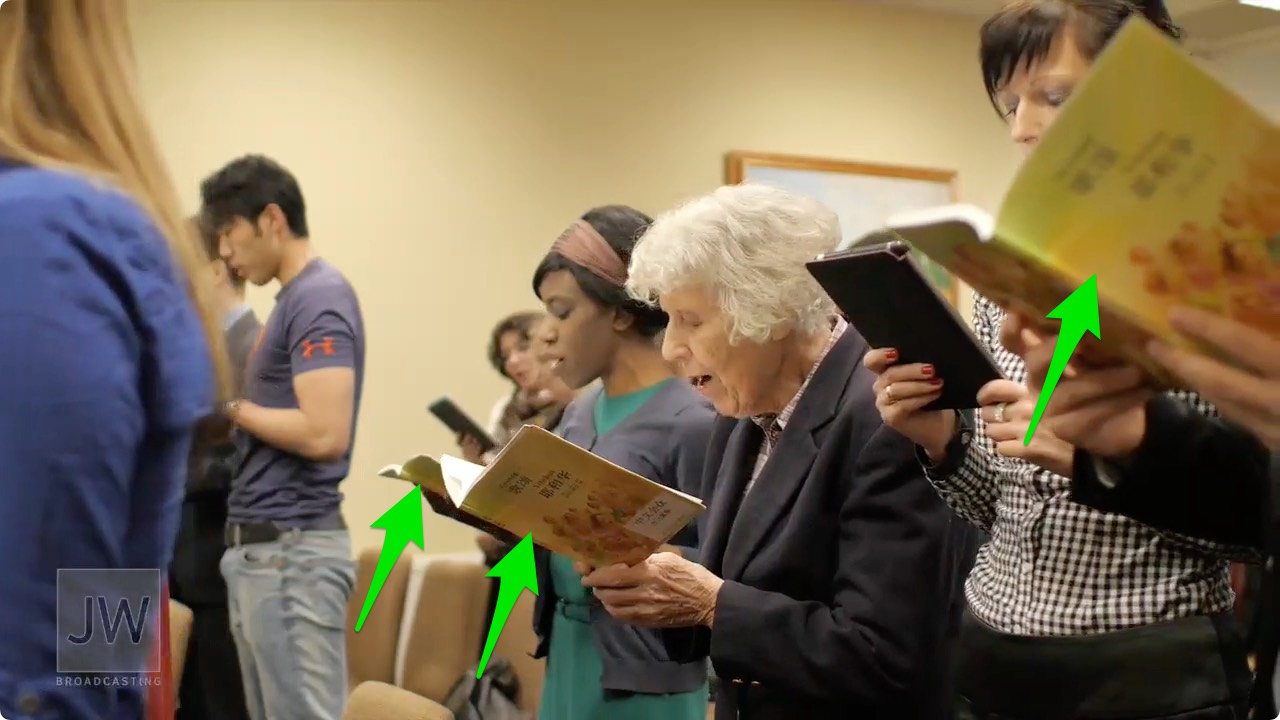
Also, starting at about the 4:43 mark, she and others can be seen using the old printed Pīnyīn
(Pīn·yīn
{Piecing Together of} · Sounds →[Pinyin]
拼音)Sing to Jehovah songbook, which included musical notation:
Yes, in view of what I have witnessed and experienced in the Mandarin field, I heartily agree with Sis. Königer’s conclusion that she states starting at about the above video’s 5:10 mark, that ultimately, Jehovah directs the work of his faithful servants:
If you are in the full-time service, I think it’s like you are travelling and Jehovah is directing you. So I don’t worry. The responsibility is with Jehovah. I mean, we have to be faithful. That is our responsibility. But, what is happening is: Jehovah knows what he lets happen. It’s OK. And I hope everybody who is young, they will do the same because they will miss something, because it’s very satisfying. And working with Jehovah, you cannot compare it to anything else.
Citing national security concerns, the American government recently passed a law banning the popular social media app TikTok. Ironically (some would say hilariously), many American TikTok users, whom many are calling “TikTok refugees” (“TikTok nànmín+
(nàn·mín
calamity · {persons of a certain occupation} →[refugees]
难民
難民)”), have defiantly responded in protest by migrating to an even more overtly Chinese social media app, Xiǎohóngshū
(Xiǎo·hóng·shū
Little · Red · Book →[a Chinese social networking platform, commonly known in English as RedNote]
小红书
小紅書) (also called RedNote), in such numbers (more than 700,000 in just two days) that Xiǎohóngshū
(Xiǎo·hóng·shū
Little · Red · Book →[a Chinese social networking platform, commonly known in English as RedNote]
小红书
小紅書) became the most-downloaded free app on Apple’s US App Store for a while.
On Xiǎohóngshū
(Xiǎo·hóng·shū
Little · Red · Book →[a Chinese social networking platform, commonly known in English as RedNote]
小红书
小紅書), many regular Chinese people have found it moving and rewarding to be able to make friends with regular American people, and vice versa. Many Americans have even expressed and shown interest in learning Mandarin to better connect with their new Chinese wǎngyǒu+
(wǎng·yǒu
{net → [network] → [Internet]} · friends
网友
網/网友) (Internet friends).
With all this happening on Xiǎohóngshū
(Xiǎo·hóng·shū
Little · Red · Book →[a Chinese social networking platform, commonly known in English as RedNote]
小红书
小紅書), the topic of “Lǐ
({Plum (surname)}
李)Huá
(Flower →[Magnificence; Glory; Splendour; Florescence | Best Part; Cream | Times; Years | China] | Flowery →[Magnificent; Splendid; Glorious; Florescent | Prosperous; Flourishing | Flashy; Extravagant | Chinese]
华
華)”, this week’s MEotW, has come up. This expression is a person’s name, with “Lǐ
({Plum (surname)}
李)”, which literally means “Plum”, being the surname, and a very common one at that. “Huá
(Flower →[Magnificence; Glory; Splendour; Florescence | Best Part; Cream | Times; Years | China] | Flowery →[Magnificent; Splendid; Glorious; Florescent | Prosperous; Flourishing | Flashy; Extravagant | Chinese]
华
華)” is an interesting expression that is discussed in the MEotW post on “Huáyǔ
(Huá·yǔ
{Magnificent; Splendid; Flowery; Florescent → [Chinese]} · Language →[(Modern Standard) Mandarin (term commonly used in Singapore)]
华语
華語)”.
So, why are people on Xiǎohóngshū
(Xiǎo·hóng·shū
Little · Red · Book →[a Chinese social networking platform, commonly known in English as RedNote]
小红书
小紅書) talking about Lǐ
({Plum (surname)}
李)Huá
(Flower →[Magnificence; Glory; Splendour; Florescence | Best Part; Cream | Times; Years | China] | Flowery →[Magnificent; Splendid; Glorious; Florescent | Prosperous; Flourishing | Flashy; Extravagant | Chinese]
华
華)?
Imaginary Pen Pals Magically Coming to Life
Here is a TikTok video containing this week’s MEotW, that explains how many Chinese Xiǎohóngshū
(Xiǎo·hóng·shū
Little · Red · Book →[a Chinese social networking platform, commonly known in English as RedNote]
小红书
小紅書) users feel about all the American people who have recently joined the app:
(For any who cannot access this video, the gist is that when taking exams, students in China often encounter a question that asks them to assume the role of Lǐ
({Plum (surname)}
李)Huá
(Flower →[Magnificence; Glory; Splendour; Florescence | Best Part; Cream | Times; Years | China] | Flowery →[Magnificent; Splendid; Glorious; Florescent | Prosperous; Flourishing | Flashy; Extravagant | Chinese]
华
華) and write a letter in English to an imaginary foreign pen pal, perhaps about Chinese cuisine or some other topic related to China. So, for many Chinese people, encountering so many Americans and their comments on Xiǎohóngshū
(Xiǎo·hóng·shū
Little · Red · Book →[a Chinese social networking platform, commonly known in English as RedNote]
小红书
小紅書) recently feels like the imaginary foreign pen pals they wrote to so many times over the years as Lǐ
({Plum (surname)}
李)Huá
(Flower →[Magnificence; Glory; Splendour; Florescence | Best Part; Cream | Times; Years | China] | Flowery →[Magnificent; Splendid; Glorious; Florescent | Prosperous; Flourishing | Flashy; Extravagant | Chinese]
华
華) magically came to life and finally wrote back. She concludes by saying, “Thank you for coming over, trying to post in our language, talking to us, interacting with everyone. It makes us feel like we’re not alone in this world. After all, we’re all human, and deep down, humans are more alike than we’re different.”)
After a while, I was also able to find the same video on Xiǎohóngshū
(Xiǎo·hóng·shū
Little · Red · Book →[a Chinese social networking platform, commonly known in English as RedNote]
小红书
小紅書), so here it is coming from there, as a backup in case TikTok really ends up going away and not coming back for users in America or other places:
Here are some of the comments on TikTok in response to this video:
Many of us spent our childhoods “digging to China” in sandboxes, on beaches and in backyards. We were always meant to be friends, Li Hua. 🩵 so much love from all of us
Dear Li Hua, sorry we couldn’t write back sooner! Our bosses are kinda jerks. But we’re working on that! We’re all really happy to see your lives and pets and culture! Love, your American pen pal ❤️
Why am I crying so much at this story 🤧 I felt it would be disrespectful to invade your space but hearing this other side of things, I’m gonna join rednote now and start learning mandarin.
I’m learning mandarin on Duolingo. So far, I can only order hot water and soup. I’m so excited to one day be able to speak your language as beautifully as you speak mine. 🥲
Here is a video I found on Xiǎohóngshū
(Xiǎo·hóng·shū
Little · Red · Book →[a Chinese social networking platform, commonly known in English as RedNote]
小红书
小紅書), with a reply from the American side to Lǐ
({Plum (surname)}
李)Huá
(Flower →[Magnificence; Glory; Splendour; Florescence | Best Part; Cream | Times; Years | China] | Flowery →[Magnificent; Splendid; Glorious; Florescent | Prosperous; Flourishing | Flashy; Extravagant | Chinese]
华
華):
As an example of the cross-cultural exchange taking place, here is another video that I found on Xiǎohóngshū
(Xiǎo·hóng·shū
Little · Red · Book →[a Chinese social networking platform, commonly known in English as RedNote]
小红书
小紅書), by a fellow who very likely had often written letters as Lǐ
({Plum (surname)}
李)Huá
(Flower →[Magnificence; Glory; Splendour; Florescence | Best Part; Cream | Times; Years | China] | Flowery →[Magnificent; Splendid; Glorious; Florescent | Prosperous; Flourishing | Flashy; Extravagant | Chinese]
华
華) when he was in school:
[The original post can be found here. Here is a rough translation of the introductory blurb: “40-year-old middle-aged retired military officer’s only post-retirement joy; among family members who understands?”]
Wild Beasts and a Great Wall
Unfortunately, as alluded to above, the politics of this Devil-ruled world, with its bitter and sometimes murderous power struggles, work to divide people, in spite of how people naturally desire to make friends and live in peace (and enjoy music). While many Chinese people on Xiǎohóngshū
(Xiǎo·hóng·shū
Little · Red · Book →[a Chinese social networking platform, commonly known in English as RedNote]
小红书
小紅書) feel like a Lǐ
({Plum (surname)}
李)Huá
(Flower →[Magnificence; Glory; Splendour; Florescence | Best Part; Cream | Times; Years | China] | Flowery →[Magnificent; Splendid; Glorious; Florescent | Prosperous; Flourishing | Flashy; Extravagant | Chinese]
华
華) who after many years actually got replies from foreign pen pals, and while many American people who just joined Xiǎohóngshū
(Xiǎo·hóng·shū
Little · Red · Book →[a Chinese social networking platform, commonly known in English as RedNote]
小红书
小紅書) feel like they finally got to China and met some really nice, friendly people after digging holes to China as kids, their respective governments are in God’s eyes like wild beasts competing for territory and influence, warily circling each other, and preparing for vicious, bloody battle. (Indeed, even in the world, the USA is often symbolically portrayed as an eagle, and China is often symbolically portrayed as a dragon.)
The proud human cultural tradition mandating the use of the abnormally difficult-to-learn-and-remember Chinese characters to write Mandarin also puts a Great Wall between Chinese people and Mandarin learners in other nations who would like to write text messages to each other, leave comments on social media posts, etc. Many turn to tools like Google Translate for help, but these are really just coping mechanisms, band-aid solutions, while the basic problem of the characters remains.
Chinese characters continue to act as a Great Wall dividing people who naturally want to be friends.
Pīnyīn
(Pīn·yīn
{Piecing Together of} · Sounds →[Pinyin]
拼音) technically works as a simple, easy-to-learn full writing system for reading and writing Mandarin, so it is technically ideally suited for texting, commenting, etc. Unfortunately, though, the stubbornly embedded traditional cultural primacy of characters and the related cultural prejudice against Pīnyīn
(Pīn·yīn
{Piecing Together of} · Sounds →[Pinyin]
拼音) will dissuade most people from beneficially using Pīnyīn
(Pīn·yīn
{Piecing Together of} · Sounds →[Pinyin]
拼音) in these ways. (Question: As Mandarin field language learners who are trying to walk on the narrow road to life, and who are doing a life-saving work to help other people also get on this narrow road, should we always limit ourselves to being like most people?—Matthew 7:13, 14.)
(In my limited time so far on Xiǎohóngshū
(Xiǎo·hóng·shū
Little · Red · Book →[a Chinese social networking platform, commonly known in English as RedNote]
小红书
小紅書), I have happened to come across a couple of comments containing Pīnyīn
(Pīn·yīn
{Piecing Together of} · Sounds →[Pinyin]
拼音). One of these comments (from a user in the United States) renders the same message in English on one line, in simplified Chinese characters on another line, and then in Pīnyīn
(Pīn·yīn
{Piecing Together of} · Sounds →[Pinyin]
拼音) on yet another line, Rosetta Stone-style. The Pīnyīn
(Pīn·yīn
{Piecing Together of} · Sounds →[Pinyin]
拼音) is even well-formatted, not just as with a pronunciation aid, but as with a full writing system, with tone marks, word separation, and punctuation.)
As shown above, audio and video technology also now enable people to just talk (and sing!) to communicate across distance and time. However, even in this regard, many Mandarin learners have allowed the visually intricate characters to stunt their Mandarin speech skills by distracting them from properly focusing on invisible sound, which is what Mandarin speech (and singing!) is actually made of. As discussed in other MEotW posts, this is effectively linguistic idolatry.
Spiritual Family in the Mandarin Field
As Mandarin field language learners, this whole situation with regular Chinese and American people enjoying meeting and making friends with each other on Xiǎohóngshū
(Xiǎo·hóng·shū
Little · Red · Book →[a Chinese social networking platform, commonly known in English as RedNote]
小红书
小紅書) may remind us of all the wonderful new friends we made when we joined the Mandarin field. As Jehovah’s people serving in the Mandarin field, or in any congregation or group with people from different cultural backgrounds, we are not only aware of the possibility of making friends with people of other nations and cultures, we also know that every human being is really part of the one human family descended from the same ancestors and created by God. Additionally, we know that Jehovah has assigned us to help people from all the nations to join us in his spiritual paradise, in which they can become our spiritual brothers and sisters and live in peace with us forever on a paradise earth. (Matthew 28:19, 20) Let us, then, not let the world’s politics or human traditions prevent us from doing this life-saving, uniting, God-assigned work as well as we ought to.