Categories
Culture Experiences Language Learning Science Technology Theocratic

wūdú

wūdú (voodoo 巫毒) 👈🏼 Tap/click to show/hide the “flashcard”

[Notes: Tap/click on a Pīnyīn (Pīn·yīn {Piecing Together of} · Sounds → [Pinyin] 拼音) expression to reveal its “flashcard”; tap/click on a “flashcard” or its Pīnyīn (Pīn·yīn {Piecing Together of} · Sounds → [Pinyin] 拼音) expression to hide the “flashcard”. 📖 📄 📘 icons mean 📖 Reveal All, 📄 Reveal Advanced, and 📘 Reveal None re all the “flashcards” in the heading, paragraph, etc. that they are placed at the beginning of.]

One of the publications that is now recommended to be used on Bible studies is the Yǒngyuǎn Xiǎngshòu Měihǎo de Shēngmìng—Hùdòng Shì Shèngjīng Kèchéng ((Yǒng·yuǎn Eternally · {Far (in Time)} 永远 永遠) (Xiǎng·shòu Enjoy · Receive 享受) (Měi·hǎo Beautiful · Good 美好) (de ’s 的) (Shēngmìng Life 生命)—(Hù·dòng {Each Other} · Moving → [Interactive] 互动 互動) (Shì (Type 式) (Shèng·jīng Holy · Scriptures → [Bible] 圣经 聖經) (Kè·chéng Lessons · Procedure → [Course] 课程 課程) [Enjoy Life Forever!—An Interactive Bible Course (lff)]) (Enjoy Life Forever! (lff)) book. An outstanding feature of this book is its extensive use of the post-paper technology of video, which enables information to be presented much more vividly than could be done with paper. Also, at this time, one of the unique features of Pīnyīn (Pīn·yīn {Piecing Together of} · Sounds → [Pinyin] 拼音) Plus material is Pīnyīn (Pīn·yīn {Piecing Together of} · Sounds → [Pinyin] 拼音) Plus video transcripts. These can help us Mandarin field language learners to analyze and understand the Mandarin speech used in the many videos referenced in the Mandarin Enjoy Life Forever! book. This in turn can help us make more effective use of these videos while participating in Mandarin Bible discussions using this book.

This week’s MEotW, “wūdú (voodoo 巫毒)”, occurs in subtitle 3 of the transcript for the video for lesson 14, point 5 of the Mandarin Enjoy Life Forever! book:

English:

At a tender age, I had a troubled mind

as to how I would be pleasing to God

and also at the same time be pleasing in the eyes of the voodoo.

Mandarin:

1
00:00:02,952 → 00:00:06,556
📖 📄 📘 Cóngxiǎo (Cóng·xiǎo from · {being little → [being young]} → [from childhood] 从小 從小) (I 我) jiù (then 就) yìzhí (yì·zhí one · {being straight} → [all the while] 一直) zài ({had been in} → [had then been] 在) xiǎng (thinking 想)

2
00:00:06,556 → 00:00:11,461
📖 📄 📘 (I 我) zěnyàng (zěn·yàng (in) what · {pattern → [way]} → [how] 怎样 怎樣) zuò ({would do} 做) kěyǐ (kě·yǐ {to be able} · [suf] 可以) tóngshí (tóng·shí {(at the) same} · {(particular) time} 同时 同時) ràng ({to make}) Shàngdì (Shàng·dì Above’s · {Emperor → [God]} → [God] 上帝) xǐyuè ({to be pleased} 喜悦 喜悅),

3
00:00:11,461 → 00:00:14,964
📖 📄 📘 yòu (also 又) ràng ({to make}) wūdú (voodoo 巫毒) de (’s 的) shénlíng (shén·líng gods · spirits 神灵 神靈) xǐyuè ({to be pleased} 喜悦 喜悅).

Speech Is Primary!

The individual morphemes of “wūdú (voodoo 巫毒) have interesting meanings (“witch/wizard/shaman” and “poison”), but ultimately, “wūdú (voodoo 巫毒) is a loanword from the English word “voodoo”, which in turn comes, via Louisiana French, from the Fon word “vodun”, meaning “god; deity”.

How similar these loanwords sound reminds us that, as linguists say, speech, with its invisible sounds to represent meaning, is actually the primary aspect of language, as opposed to writing, which is secondary, no matter how intricate its visual symbols are.

Power-Hungry?

As Jehovah’s people, we have been taught to seek to imitate him and cultivate and display a healthy balance and combination of Jehovah’s four cardinal attributes: power, justice, wisdom, and love. (Ephesians 5:1, 2) However, those who are devoted to voodoo and other forms of spiritism seek power over all else. This unbalanced thirst for power over all else, ignoring and even actively fighting against wisdom, justice, and love, is common in Satan’s world, which is made in Satan’s deformed spiritual image.

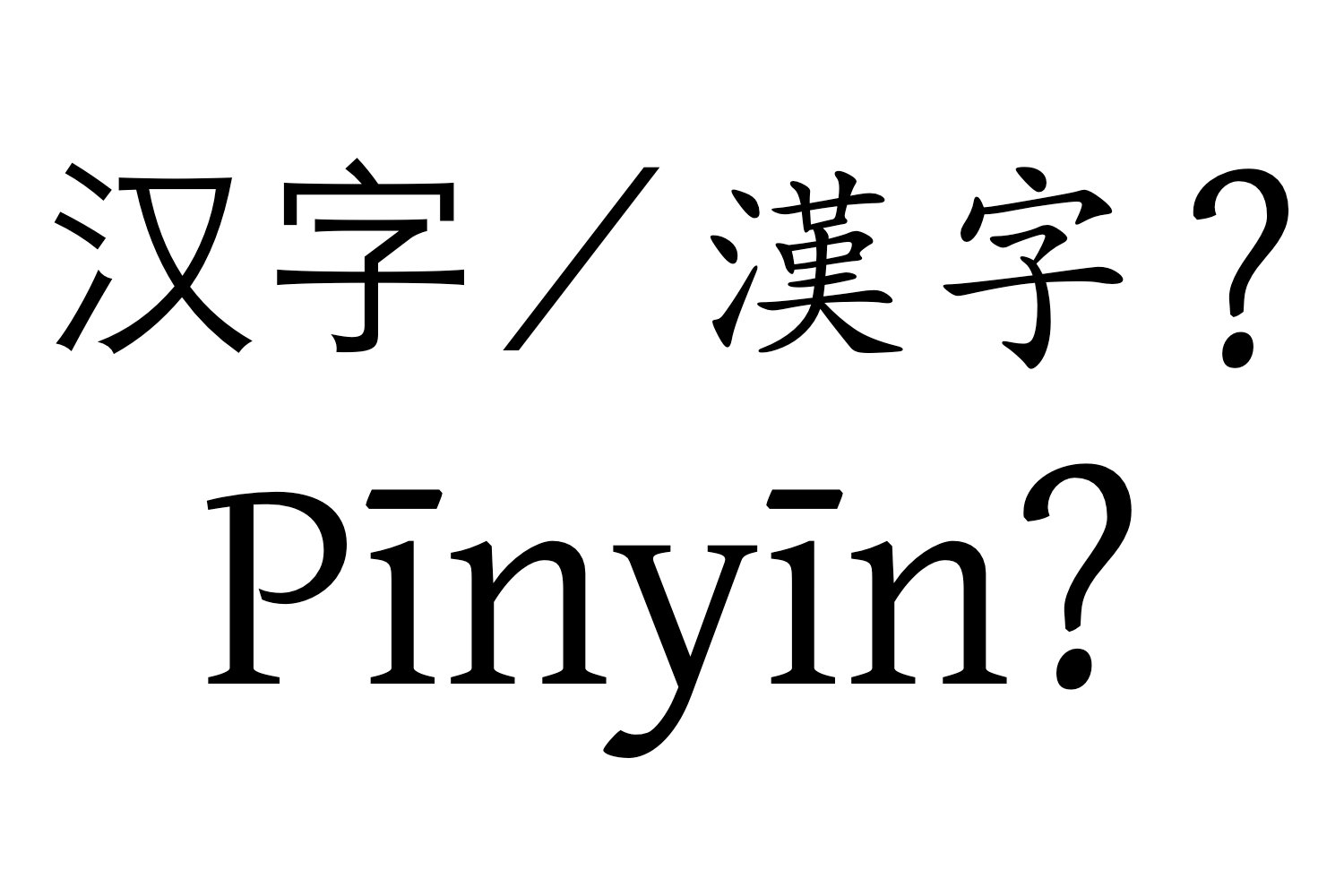
The perceived voodooesque power of characters—including their mythical idol-like power to represent invisible meaning with their mesmerizing visual designs, and also the cultural power, social status, and glamour associated with them—is of course appealing to those who conform to the power-hungry template of those infected with the spirit of Satan’s world.

When such ones are presented with the simple, humble effectiveness of Pīnyīn (Pīn·yīn {Piecing Together of} · Sounds → [Pinyin] 拼音), they recoil at this this threat to their precious characters-based power, much as the Pharisees, etc. recoiled at the threat Jesus and his back-to-spiritual-basics teachings posed to their traditions-based power. On the other hand, Mandarin field language learners who are truly motivated by love for God and neighbour see in Pīnyīn (Pīn·yīn {Piecing Together of} · Sounds → [Pinyin] 拼音) an excellent tool for helping them to effectively use Mandarin speech—the actual primary aspect of the Mandarin language—to help them praise and glorify Jehovah and give spiritual assistance to honest-hearted people in the Mandarin field.
汉字 / 漢字? Pīnyīn?

Indeed, whereas some feel that characters present a test of our determination to serve God in the face of difficulties, it is evident that characters can actually present a test of our motivations as Mandarin field language learners, especially when Pīnyīn (Pīn·yīn {Piecing Together of} · Sounds → [Pinyin] 拼音) is available (as it often is now). Are we in our pride hungry for the voodooesque power often associated with the characters? Or are we truly motivated by love of God and neighbour to look for ways to get past the unnecessarily obstructive Great Wall of characters, and to make good use of Pīnyīn (Pīn·yīn {Piecing Together of} · Sounds → [Pinyin] 拼音), in many situations the evidently better tool for glorifying God and helping our Mandarin-speaking neighbours, when it is available?—1 Corinthians 13.

The Great Wall of China

How do we respond to the seemingly powerful Great Wall of characters?


For convenience:

The direct link for the Pīnyīn (Pīn·yīn {Piecing Together of} · Sounds → [Pinyin] 拼音) Plus resource for the Enjoy Life Forever! book is:

The short link for Chinese field language-learning links for the Enjoy Life Forever! book is:

More Pīnyīn (Pīn·yīn {Piecing Together of} · Sounds → [Pinyin] 拼音) and Pīnyīn (Pīn·yīn {Piecing Together of} · Sounds → [Pinyin] 拼音) Plus web material based on the Mandarin Enjoy Life Forever! book will be made available in the Pīnyīn (Pīn·yīn {Piecing Together of} · Sounds → [Pinyin] 拼音) Plus web resource as time allows.
Categories
Current Events Experiences History Language Learning Technology Theocratic

lìliang

lìliang (lì·liang power; strength; force · quantity 力量) 👈🏼 Tap/click to show/hide the “flashcard”

[Notes: Tap/click on a Pīnyīn (Pīn·yīn {Piecing Together of} · Sounds → [Pinyin] 拼音) expression to reveal its “flashcard”; tap/click on a “flashcard” or its Pīnyīn (Pīn·yīn {Piecing Together of} · Sounds → [Pinyin] 拼音) expression to hide the “flashcard”. 📖 📄 📘 icons mean 📖 Reveal All, 📄 Reveal Advanced, and 📘 Reveal None re all the “flashcards” in the heading, paragraph, etc. that they are placed at the beginning of.]

One of the publications that is now recommended to be used on Bible studies is the Yǒngyuǎn Xiǎngshòu Měihǎo de Shēngmìng—Hùdòng Shì Shèngjīng Kèchéng ((Yǒng·yuǎn Eternally · {Far (in Time)} 永远 永遠) (Xiǎng·shòu Enjoy · Receive 享受) (Měi·hǎo Beautiful · Good 美好) (de ’s 的) (Shēngmìng Life 生命)—(Hù·dòng {Each Other} · Moving → [Interactive] 互动 互動) (Shì (Type 式) (Shèng·jīng Holy · Scriptures → [Bible] 圣经 聖經) (Kè·chéng Lessons · Procedure → [Course] 课程 課程) [Enjoy Life Forever!—An Interactive Bible Course (lff)]) (Enjoy Life Forever! (lff)) book. An outstanding feature of this book is its extensive use of the post-paper technology of video, which enables information to be presented much more vividly than could be done with paper. Also, at this time, one of the unique features of Pīnyīn (Pīn·yīn {Piecing Together of} · Sounds → [Pinyin] 拼音) Plus material is Pīnyīn (Pīn·yīn {Piecing Together of} · Sounds → [Pinyin] 拼音) Plus video transcripts. These can help us Mandarin field language learners to analyze and understand the Mandarin speech used in the many videos referenced in the Mandarin Enjoy Life Forever! book. This in turn can help us make more effective use of these videos while participating in Mandarin Bible discussions using this book.

This week’s MEotW, “lìliang (lì·liang power; strength; force · quantity 力量)”, occurs in subtitle 69 of the transcript for the video for lesson 16, point 6 of the Mandarin Enjoy Life Forever! book:

English:

Someone touched me,

for I know that power went out of me.

Mandarin:

68
00:03:30,620 → 00:03:32,038
📖 📄 📘 Yídìng (Yí·dìng {(with) one} · {setting fixedly} → [definitely] 一定) yǒurén (yǒu·rén {(there) was having → [(there) was]} · person (who) 有人) (touched 摸) (me 我)

69
00:03:32,038 → 00:03:34,207
📖 📄 📘 (I 我) juéde (jué·de {to wake to → [to feel]} · got → [got to feel] 觉得 覺得) yǒu ({(there) was having} → [(there) was] 有) lìliang (lì·liang power · quantity 力量) cóng (from) (me 我) shēnshang (shēn·shang {body → [self]} · upon 身上) chūqu (chū·qu {having gone out} · {to go} 出去).

Here, “lìliang (lì·liang power; strength; force · quantity 力量) is used as the Mandarin word for “power”. Speaking of God’s power and the vocabulary used to talk about it in Mandarin, “lìliang (lì·liang power; strength; force · quantity 力量) appears in “shénshèng lìliang ((shén·shèng godly · holy 神圣 神聖) (lì·liang force · quantity 力量) [holy spirit])”, the expression currently used in the publications of Jehovah’s organization to translate “holy spirit”. (Interestingly, comparing the English and Mandarin (WOL, Pīnyīn (Pīn·yīn {Piecing Together of} · Sounds → [Pinyin] 拼音) Plus) versions of song 112 in the “Sing Out Joyfully” book, we see that there, “we ask you for your spirit” is translated as “kěnqiú (kěn·qiú (we) earnestly · request 恳求 懇求) (you 你) cìyǔ ({to give} 赐予/与 賜予/與) lìliang (lì·liang force · quantity → [(as per the English lyrics, this may be an abbr. for shénshèng lìliang (holy spirit))] 力量)”. I suppose it’s possible, though, that this apparent abbreviation of “shénshèng lìliang ((shén·shèng godly · holy 神圣 神聖) (lì·liang force · quantity 力量) [holy spirit]) to “lìliang (lì·liang force · quantity → [(this may be an abbr. for shénshèng lìliang (holy spirit), e.g., in the lyrics for song 112)] 力量) was just something done to fit the song’s rhythm.)

“Power Had Gone Out of Him”

The above-mentioned video—and the Bible account it was based on—simply refers to “power”, translated into Mandarin as “lìliang (lì·liang power; strength; force · quantity 力量)”. However, considering the miraculously beneficial results of this flow of “power”, much more must have been involved than what humans typically think of when they think of power.

Power flowing out of Jesus may make some imagine something happening like what happens when contact is made that completes a circuit with a battery, like when one tries to jump-start a car. When that’s done properly and the power flows, the result can be the safe and gratifying starting up of the previously unstartable car. I once had an experience, though, that didn’t go as expected, when I helped to jump-start an old Nissan that for some reason had the colours on its battery posts reversed from the usual practice, such that the post that I thought was the negative post was actually the positive post, and vice versa. The result in that case was a runaway flow of power that caused the jumper cable to rapidly heat up and catch fire! (Fortunately, I was able to grab a long wooden stick I had in the trunk of my car for chipping away at road ice, and use it to forcibly break the cable, which by then had been weakened by the extreme heat.)

So, power alone is not enough to ensure good results. Indeed, power alone can destroy rather than make things better. Besides my misadventure with that confusingly designed car battery, another obvious example is what happened when huge amounts of power were released by the explosions of the atomic bombs dropped on Hiroshima and Nagasaki.

In the case of the sick woman who touched Jesus’ outer garments, Jesus only knew that “power had gone out of him”—he didn’t know this woman and didn’t understand her situation until she explained things to him after the fact. So, even without Jesus’ active participation and direction, the “power” that went out from him displayed

  • recognition of the woman’s faith and of the rightness of helping her, even if she was technically in violation of the Mosaic Law,
  • understanding of the nature of her sickness and of the technical process required to completely and immediately heal her of it,
  • and willingness to help her in this way.

Power, Beneficially Applied

It is evident from what happened in this situation that, as corroborated by the rest of God’s Word, God’s almighty power is always used along with his abundant justice, wisdom, and love—it never runs amok on its own, like a runaway electric current or an exploding bomb.

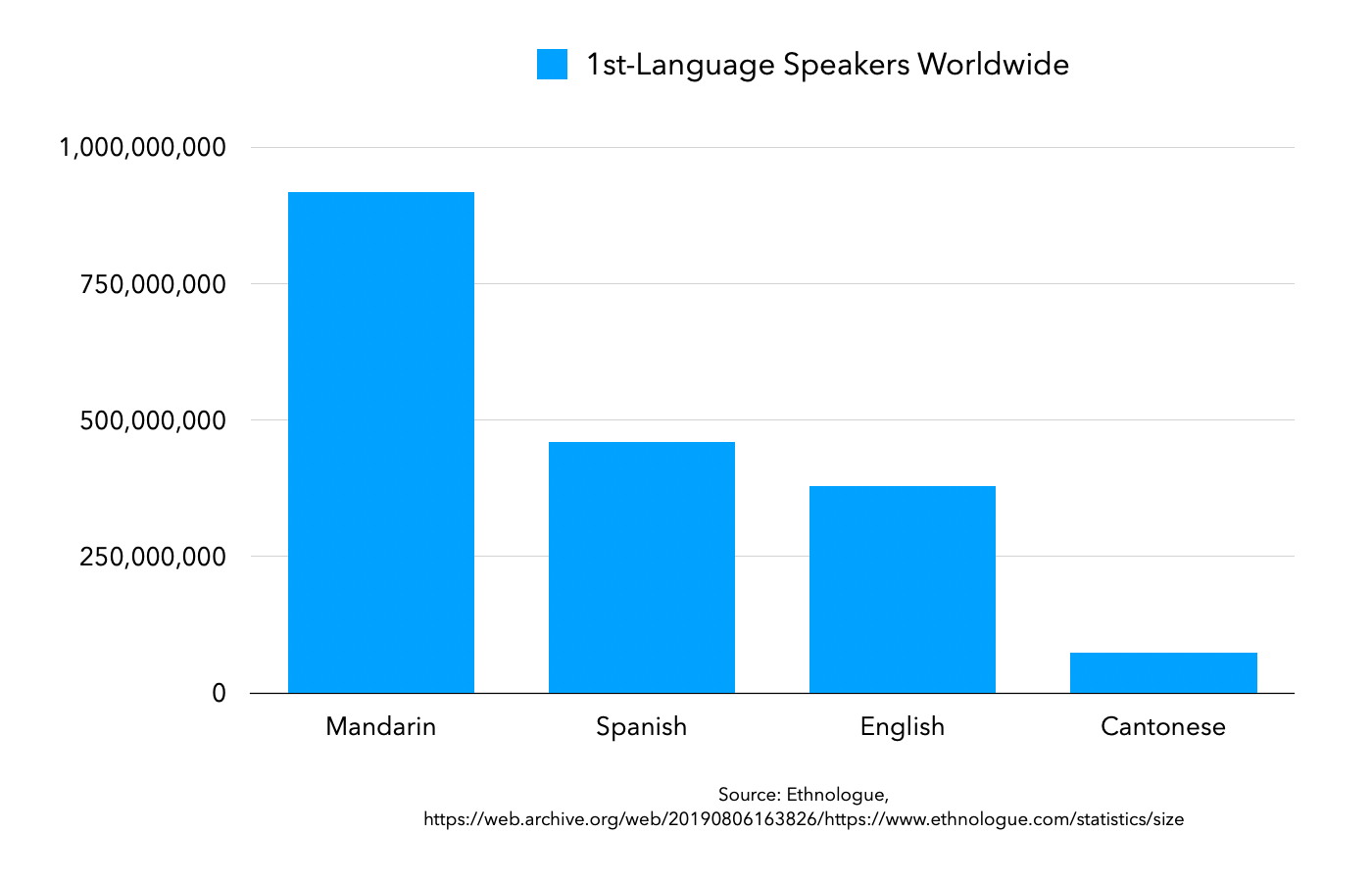
While humans in Satan’s world continue to fight wars and otherwise hungrily seek power for its own sake, it’s good to know of Jehovah God’s unmatched power, and of how he always uses it justly, wisely, and lovingly. In the Mandarin field, we have the privilege of helping people in what’s probably the largest language field ever to also come to an appreciation of the impressive and moving ways in which Jehovah God uses power.

Chart: Languages by First-Language Speakers—2019


For convenience:

The direct link for the Pīnyīn (Pīn·yīn {Piecing Together of} · Sounds → [Pinyin] 拼音) Plus resource for the Enjoy Life Forever! book is:

The short link for Chinese field language-learning links for the Enjoy Life Forever! book is:

More Pīnyīn (Pīn·yīn {Piecing Together of} · Sounds → [Pinyin] 拼音) and Pīnyīn (Pīn·yīn {Piecing Together of} · Sounds → [Pinyin] 拼音) Plus web material based on the Mandarin Enjoy Life Forever! book will be made available in the Pīnyīn (Pīn·yīn {Piecing Together of} · Sounds → [Pinyin] 拼音) Plus web resource as time allows.

Categories
Culture Current Events Experiences Language Learning Names Science Technology

Lǐ Huá

({Plum (surname)} 李)
Huá (Flower → [Magnificence; Glory; Splendour; Florescence | Best Part; Cream | Times; Years | China] | Flowery → [Magnificent; Splendid; Glorious; Florescent | Prosperous; Flourishing | Flashy; Extravagant | Chinese]) 👈🏼 Tap/click to show/hide the “flashcard”

Citing national security concerns, the American government recently passed a law banning the popular social media app TikTok. Ironically (some would say hilariously), many American TikTok users, whom many are calling “TikTok refugees” (“TikTok nànmín (nàn·mín calamity · {persons of a certain occupation} → [refugees] 难民 難民)”), have defiantly responded in protest by migrating to an even more overtly Chinese social media app, Xiǎohóngshū (Xiǎo·hóng·shū Little · Red · Book → [a Chinese social networking platform, commonly known in English as RedNote] 小红书 小紅書) (also called RedNote), in such numbers (more than 700,000 in just two days) that Xiǎohóngshū (Xiǎo·hóng·shū Little · Red · Book → [a Chinese social networking platform, commonly known in English as RedNote] 小红书 小紅書) became the most-downloaded free app on Apple’s US App Store for a while.

On Xiǎohóngshū (Xiǎo·hóng·shū Little · Red · Book → [a Chinese social networking platform, commonly known in English as RedNote] 小红书 小紅書), many regular Chinese people have found it moving and rewarding to be able to make friends with regular American people, and vice versa. Many Americans have even expressed and shown interest in learning Mandarin to better connect with their new Chinese wǎngyǒu (wǎng·yǒu {net → [network] → [Internet]} · friends 网友 網/网友) (Internet friends).

With all this happening on Xiǎohóngshū (Xiǎo·hóng·shū Little · Red · Book → [a Chinese social networking platform, commonly known in English as RedNote] 小红书 小紅書), the topic of “Lǐ ({Plum (surname)} 李) Huá (Flower → [Magnificence; Glory; Splendour; Florescence | Best Part; Cream | Times; Years | China] | Flowery → [Magnificent; Splendid; Glorious; Florescent | Prosperous; Flourishing | Flashy; Extravagant | Chinese])”, this week’s MEotW, has come up. This expression is a person’s name, with “Lǐ ({Plum (surname)} 李)”, which literally means “Plum”, being the surname, and a very common one at that. “Huá (Flower → [Magnificence; Glory; Splendour; Florescence | Best Part; Cream | Times; Years | China] | Flowery → [Magnificent; Splendid; Glorious; Florescent | Prosperous; Flourishing | Flashy; Extravagant | Chinese]) is an interesting expression that is discussed in the MEotW post on “Huáyǔ (Huá·yǔ {Magnificent; Splendid; Flowery; Florescent → [Chinese]} · Language → [(Modern Standard) Mandarin (term commonly used in Singapore)] 华语 華語)”.

So, why are people on Xiǎohóngshū (Xiǎo·hóng·shū Little · Red · Book → [a Chinese social networking platform, commonly known in English as RedNote] 小红书 小紅書) talking about ({Plum (surname)} 李) Huá (Flower → [Magnificence; Glory; Splendour; Florescence | Best Part; Cream | Times; Years | China] | Flowery → [Magnificent; Splendid; Glorious; Florescent | Prosperous; Flourishing | Flashy; Extravagant | Chinese])?

Imaginary Pen Pals Magically Coming to Life

Here is a TikTok video containing this week’s MEotW, that explains how many Chinese Xiǎohóngshū (Xiǎo·hóng·shū Little · Red · Book → [a Chinese social networking platform, commonly known in English as RedNote] 小红书 小紅書) users feel about all the American people who have recently joined the app:

@jasmeizhang As a Chinese, what do we feel about foreigners joining RedNote? #tiktokrefugee #rednote #xiaohongshu #chinese ♬ original sound – jasmeizhang

(For any who cannot access this video, the gist is that when taking exams, students in China often encounter a question that asks them to assume the role of ({Plum (surname)} 李) Huá (Flower → [Magnificence; Glory; Splendour; Florescence | Best Part; Cream | Times; Years | China] | Flowery → [Magnificent; Splendid; Glorious; Florescent | Prosperous; Flourishing | Flashy; Extravagant | Chinese]) and write a letter in English to an imaginary foreign pen pal, perhaps about Chinese cuisine or some other topic related to China. So, for many Chinese people, encountering so many Americans and their comments on Xiǎohóngshū (Xiǎo·hóng·shū Little · Red · Book → [a Chinese social networking platform, commonly known in English as RedNote] 小红书 小紅書) recently feels like the imaginary foreign pen pals they wrote to so many times over the years as ({Plum (surname)} 李) Huá (Flower → [Magnificence; Glory; Splendour; Florescence | Best Part; Cream | Times; Years | China] | Flowery → [Magnificent; Splendid; Glorious; Florescent | Prosperous; Flourishing | Flashy; Extravagant | Chinese]) magically came to life and finally wrote back. She concludes by saying, “Thank you for coming over, trying to post in our language, talking to us, interacting with everyone. It makes us feel like we’re not alone in this world. After all, we’re all human, and deep down, humans are more alike than we’re different.”)

After a while, I was also able to find the same video on Xiǎohóngshū (Xiǎo·hóng·shū Little · Red · Book → [a Chinese social networking platform, commonly known in English as RedNote] 小红书 小紅書), so here it is coming from there, as a backup in case TikTok really ends up going away and not coming back for users in America or other places:

Here are some of the comments on TikTok in response to this video:

Many of us spent our childhoods “digging to China” in sandboxes, on beaches and in backyards. We were always meant to be friends, Li Hua. 🩵 so much love from all of us

Dear Li Hua, sorry we couldn’t write back sooner! Our bosses are kinda jerks. But we’re working on that! We’re all really happy to see your lives and pets and culture! Love, your American pen pal ❤️

Why am I crying so much at this story 🤧 I felt it would be disrespectful to invade your space but hearing this other side of things, I’m gonna join rednote now and start learning mandarin.

I’m learning mandarin on Duolingo. So far, I can only order hot water and soup. I’m so excited to one day be able to speak your language as beautifully as you speak mine. 🥲

Here is a video I found on Xiǎohóngshū (Xiǎo·hóng·shū Little · Red · Book → [a Chinese social networking platform, commonly known in English as RedNote] 小红书 小紅書), with a reply from the American side to ({Plum (surname)} 李) Huá (Flower → [Magnificence; Glory; Splendour; Florescence | Best Part; Cream | Times; Years | China] | Flowery → [Magnificent; Splendid; Glorious; Florescent | Prosperous; Flourishing | Flashy; Extravagant | Chinese]):

[The original post can be found here.]

As an example of the cross-cultural exchange taking place, here is another video that I found on Xiǎohóngshū (Xiǎo·hóng·shū Little · Red · Book → [a Chinese social networking platform, commonly known in English as RedNote] 小红书 小紅書), by a fellow who very likely had often written letters as ({Plum (surname)} 李) Huá (Flower → [Magnificence; Glory; Splendour; Florescence | Best Part; Cream | Times; Years | China] | Flowery → [Magnificent; Splendid; Glorious; Florescent | Prosperous; Flourishing | Flashy; Extravagant | Chinese]) when he was in school:

[The original post can be found here. Here is a rough translation of the introductory blurb: “40-year-old middle-aged retired military officer’s only post-retirement joy; among family members who understands?”]

Wild Beasts and a Great Wall

Unfortunately, as alluded to above, the politics of this Devil-ruled world, with its bitter and sometimes murderous power struggles, work to divide people, in spite of how people naturally desire to make friends and live in peace (and enjoy music). While many Chinese people on Xiǎohóngshū (Xiǎo·hóng·shū Little · Red · Book → [a Chinese social networking platform, commonly known in English as RedNote] 小红书 小紅書) feel like a ({Plum (surname)} 李) Huá (Flower → [Magnificence; Glory; Splendour; Florescence | Best Part; Cream | Times; Years | China] | Flowery → [Magnificent; Splendid; Glorious; Florescent | Prosperous; Flourishing | Flashy; Extravagant | Chinese]) who after many years actually got replies from foreign pen pals, and while many American people who just joined Xiǎohóngshū (Xiǎo·hóng·shū Little · Red · Book → [a Chinese social networking platform, commonly known in English as RedNote] 小红书 小紅書) feel like they finally got to China and met some really nice, friendly people after digging holes to China as kids, their respective governments are in God’s eyes like wild beasts competing for territory and influence, warily circling each other, and preparing for vicious, bloody battle. (Indeed, even in the world, the USA is often symbolically portrayed as an eagle, and China is often symbolically portrayed as a dragon.)

The proud human cultural tradition mandating the use of the abnormally difficult-to-learn-and-remember Chinese characters to write Mandarin also puts a Great Wall between Chinese people and Mandarin learners in other nations who would like to write text messages to each other, leave comments on social media posts, etc. Many turn to tools like Google Translate for help, but these are really just coping mechanisms, band-aid solutions, while the basic problem of the characters remains.

The Great Wall of China

Chinese characters continue to act as a Great Wall dividing people who naturally want to be friends.

Pīnyīn (Pīn·yīn {Piecing Together of} · Sounds → [Pinyin] 拼音) technically works as a simple, easy-to-learn full writing system for reading and writing Mandarin, so it is technically ideally suited for texting, commenting, etc. Unfortunately, though, the stubbornly embedded traditional cultural primacy of characters and the related cultural prejudice against Pīnyīn (Pīn·yīn {Piecing Together of} · Sounds → [Pinyin] 拼音) will dissuade most people from beneficially using Pīnyīn (Pīn·yīn {Piecing Together of} · Sounds → [Pinyin] 拼音) in these ways. (Question: As Mandarin field language learners who are trying to walk on the narrow road to life, and who are doing a life-saving work to help other people also get on this narrow road, should we always limit ourselves to being like most people?—Matthew 7:13, 14.)

(In my limited time so far on Xiǎohóngshū (Xiǎo·hóng·shū Little · Red · Book → [a Chinese social networking platform, commonly known in English as RedNote] 小红书 小紅書), I have happened to come across a couple of comments containing Pīnyīn (Pīn·yīn {Piecing Together of} · Sounds → [Pinyin] 拼音). One of these comments (from a user in the United States) renders the same message in English on one line, in simplified Chinese characters on another line, and then in Pīnyīn (Pīn·yīn {Piecing Together of} · Sounds → [Pinyin] 拼音) on yet another line, Rosetta Stone-style. The Pīnyīn (Pīn·yīn {Piecing Together of} · Sounds → [Pinyin] 拼音) is even well-formatted, not just as with a pronunciation aid, but as with a full writing system, with tone marks, word separation, and punctuation.)

As shown above, audio and video technology also now enable people to just talk (and sing!) to communicate across distance and time. However, even in this regard, many Mandarin learners have allowed the visually intricate characters to stunt their Mandarin speech skills by distracting them from properly focusing on invisible sound, which is what Mandarin speech (and singing!) is actually made of. As discussed in other MEotW posts, this is effectively linguistic idolatry.

Spiritual Family in the Mandarin Field

As Mandarin field language learners, this whole situation with regular Chinese and American people enjoying meeting and making friends with each other on Xiǎohóngshū (Xiǎo·hóng·shū Little · Red · Book → [a Chinese social networking platform, commonly known in English as RedNote] 小红书 小紅書) may remind us of all the wonderful new friends we made when we joined the Mandarin field. As Jehovah’s people serving in the Mandarin field, or in any congregation or group with people from different cultural backgrounds, we are not only aware of the possibility of making friends with people of other nations and cultures, we also know that every human being is really part of the one human family descended from the same ancestors and created by God. Additionally, we know that Jehovah has assigned us to help people from all the nations to join us in his spiritual paradise, in which they can become our spiritual brothers and sisters and live in peace with us forever on a paradise earth. (Matthew 28:19, 20) Let us, then, not let the world’s politics or human traditions prevent us from doing this life-saving, uniting, God-assigned work as well as we ought to.