Categories
Culture Experiences History Language Learning Names Science Theocratic

Lǎhé

Lǎhé (Raʹhab 喇合) 👈🏼 Tap/click to show/hide the “flashcard”

[Notes: Tap/click on a Pīnyīn (Pīn·yīn {Piecing Together of} · Sounds → [Pinyin] 拼音) expression to reveal its “flashcard”; tap/click on a “flashcard” or its Pīnyīn (Pīn·yīn {Piecing Together of} · Sounds → [Pinyin] 拼音) expression to hide the “flashcard”. 📖 📄 📘 icons mean 📖 Reveal All, 📄 Reveal Advanced, and 📘 Reveal None re all the “flashcards” in the heading, paragraph, etc. that they are placed at the beginning of.]

A few years back, I wrote up a brief web page listing reasons for producing Pīnyīn (Pīn·yīn {Piecing Together of} · Sounds → [Pinyin] 拼音), etc. material for the Imitate (ia) book. Some, especially some who grew up in the West, may have felt that this book is made up of “just stories”, and ones that they were already quite familiar with, at that. However, we must remember that Chinese Bible students may often have a different perspective regarding the Bible accounts that are made to come to life in the Imitate book. As that web page said:

  • Many Chinese people in the world have not been exposed to Bible accounts the way many Westerners have.
  • Also, I have heard that some, perhaps many, Chinese Bible students tend to approach their Bible studies like intellectual exercises for accumulating chōuxiàng (abstract) head knowledge as if for a school exam, rather than as training for their hearts for their own real lives.

Later, the web page touches on how some of the real-world benefits of good storytelling like that found in the Imitate book involve empathy:

    • The actress Natalie Portman once said, “I love acting. I think it’s the most amazing thing to be able to do. Your job is practicing empathy. You walk down the street imagining every person’s life.”
  • The Imitate book helps build Bible students’ empathy towards Bible characters, which in turn helps Bible students realize that others would feel empathy towards them as well if they imitated these Bible characters—not everyone will just think they’re crazy, like many worldly friends or family members might think.

While even fictional stories can have the benefits described in the links and the quote above, true stories from the Bible can have even greater benefits, including spiritual ones.

Besides the Imitate book, another book from Jehovah’s organization that relates Bible accounts is the Learn From the Bible (lfb) book. The letter from the Governing Body in this book says that, similarly to the Imitate book, the Learn From the Bible book also “brings the Bible accounts to life and captures the feelings of those depicted”, while, unlike the Imitate book, it “tells the story of the human family from creation onward”. While the Learn From the Bible book is especially suitable for children, the letter from the Governing Body in this book says that “it can also be used to help adults who desire to learn more about the Bible”. So, it would be good to consider on this blog some of the expressions used in the Mandarin Learn From the Bible book.

Same Characters, Different Pronunciations

This week’s MEotW, “Lǎhé (Raʹhab 喇合)”, appears in the title of Lesson 30 of the Mandarin Learn From the Bible book:

English:

Rahab Hid the Spies

Mandarin (WOL, Pīnyīn (Pīn·yīn {Piecing Together of} · Sounds → [Pinyin] 拼音) Plus):

📖 📄 📘 Lǎhé (Raʹhab 喇合) Ràng (Made) Tànzi (Tàn·zi {(Ones) Trying to Find Sth. Out → [Spies]} · [suf for nouns] 探子) Cáng ({to Be Hidden} 藏) Qilai (Qi·lai Up · {to Come} 起来 起來)

The Mandarin Learn From the Bible book here uses “Lǎhé (Raʹhab 喇合) to correspond with “Rahab” in English. The current Mandarin version of the New World Translation Bible (Study Edition) also uses “Lǎhé (Raʹhab 喇合) this way. For example, here is how it renders Joshua 2:1, which mentions Rahab:
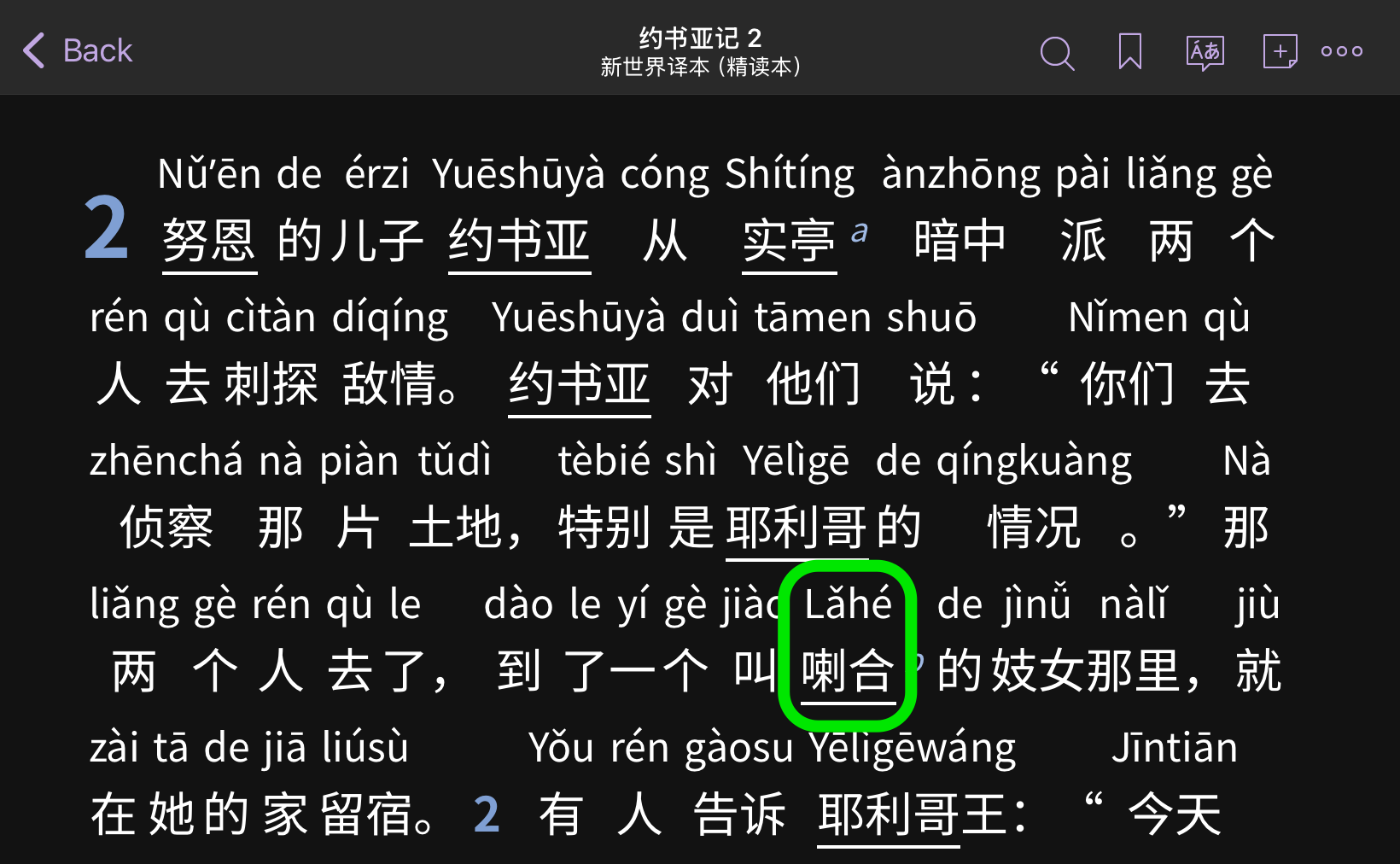
Joshua 2:1 in the Mandarin _NWT_ Study Bible, in the JW Library app

Joshua 2:1 in the Mandarin NWT Study Bible, in the JW Library app

Note, though, that the Pīnyīn (Pīn·yīn {Piecing Together of} · Sounds → [Pinyin] 拼音) for this used to be “Lāhé (Raʹhab (old pronunciation) 喇合)”, with the same characters, as can be seen in this screenshot of Joshua 2:1 in the PDF for the old printed Pīnyīn (Pīn·yīn {Piecing Together of} · Sounds → [Pinyin] 拼音) NWT Bible:
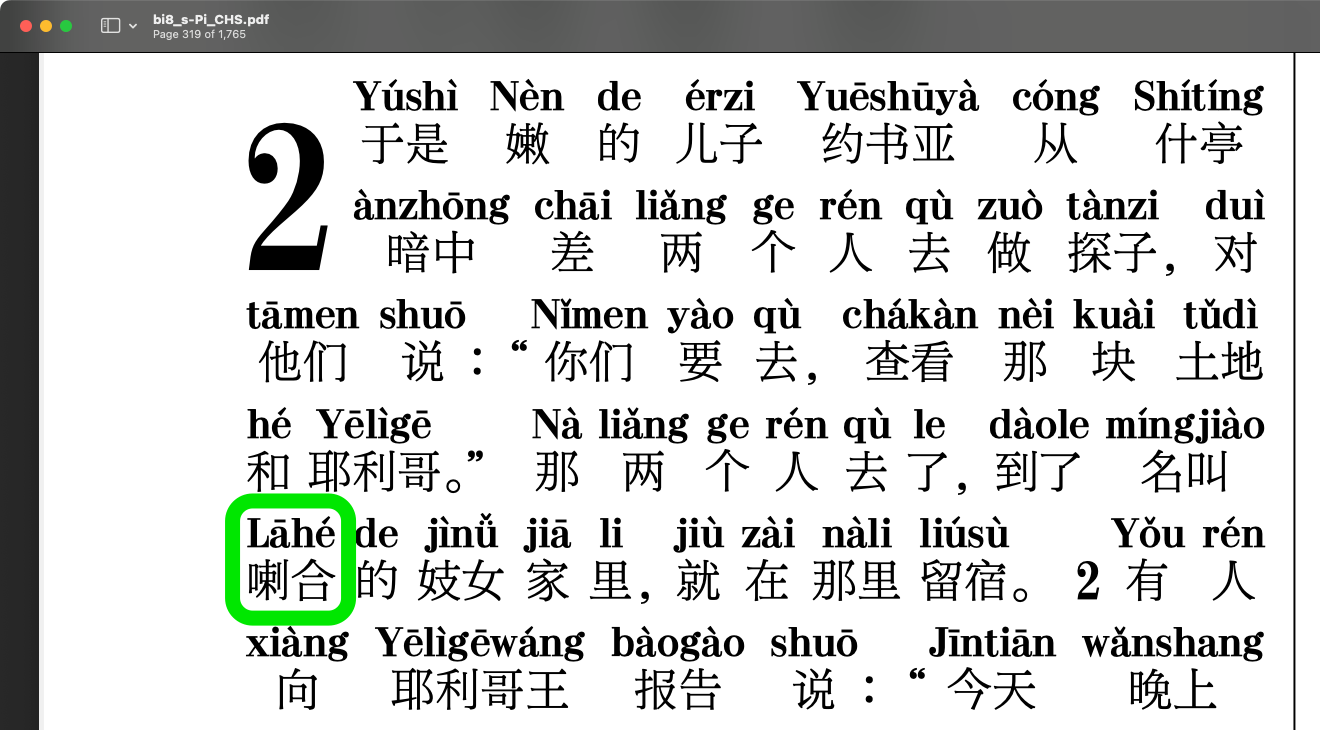
Joshua 2:1 in the PDF for the old printed _Pīnyīn_ _NWT_ Bible

Joshua 2:1 in the PDF for the old printed Pīnyīn (Pīn·yīn {Piecing Together of} · Sounds → [Pinyin] 拼音) NWT Bible

Why was this pronunciation changed, even though the same characters are used? Perhaps this was done to align with the common pronunciation of this name. For example, in CC-CEDICT, a public-domain Chinese-English dictionary, the entry for this expression says that the Pīnyīn (Pīn·yīn {Piecing Together of} · Sounds → [Pinyin] 拼音) for it is “Lǎhé (Raʹhab 喇合)”, and that the definition is “(Protestantism) Rahab, mother of Boaz”. In turn, perhaps there is some connection with the ABC Dictionary’s definition of “lǎ ({prostitute (slang)} | horn; bugle; trumpet; loudspeaker | lama 喇) as “(slang) prostitute”, which, as many know, is what Rahab worked as before she joined Jehovah’s people.

Context Is King, Not Characters

Anyway, what we have here are homographs, different expressions that are written the same way. In fact, my dictionaries say that the character “喇” that’s used in “Lǎhé (Raʹhab 喇合) can represent different expressions which can be pronounced “lā”, “lá”, “lǎ”, or “la”. If one encounters the character “喇” then, which of its multiple possible pronunciations is the right one? And, which of its multiple possible meanings is the right one? It depends on the context, which is the same as the situation with homophones written in Pīnyīn (Pīn·yīn {Piecing Together of} · Sounds → [Pinyin] 拼音). (Actually, in a way, a character like “喇” is more ambiguous than a Pīnyīn (Pīn·yīn {Piecing Together of} · Sounds → [Pinyin] 拼音) expression like “lǎ ({prostitute (slang)} | horn; bugle; trumpet; loudspeaker | lama 喇)”, because at least the Pīnyīn (Pīn·yīn {Piecing Together of} · Sounds → [Pinyin] 拼音) expression literally spells out its pronunciation, whereas with a character like “喇”, both its meaning and its pronunciation are ambiguous, even if one knows and can remember the character.)

So, while advocates of characters often make a fuss about the homophones in Mandarin that Pīnyīn (Pīn·yīn {Piecing Together of} · Sounds → [Pinyin] 拼音) would write the same way, the corresponding problem of homographs plagues the characters!


For convenience:

The direct link for the Pīnyīn (Pīn·yīn {Piecing Together of} · Sounds → [Pinyin] 拼音) Plus resource for the Learn From the Bible book is:

The short link for Chinese field language-learning links for the Learn From the Bible book is:

More Pīnyīn (Pīn·yīn {Piecing Together of} · Sounds → [Pinyin] 拼音) and Pīnyīn (Pīn·yīn {Piecing Together of} · Sounds → [Pinyin] 拼音) Plus web material based on the Mandarin Learn From the Bible book will be made available in the Pīnyīn (Pīn·yīn {Piecing Together of} · Sounds → [Pinyin] 拼音) Plus web resource as time allows.

Categories
Culture Language Learning Technology Theocratic

jìjiào

jìjiào (jì·jiào count; calculate · {dispute [about]} [→ [haggle over; fuss about; bother about; bicker]] 计较 計較) 👈🏼 Tap/click to show/hide the “flashcard”

[Notes: Tap/click on a Pīnyīn (Pīn·yīn {Piecing Together of} · Sounds → [Pinyin] 拼音) expression to reveal its “flashcard”; tap/click on a “flashcard” or its Pīnyīn (Pīn·yīn {Piecing Together of} · Sounds → [Pinyin] 拼音) expression to hide the “flashcard”. 📖 📄 📘 icons mean 📖 Reveal All, 📄 Reveal Advanced, and 📘 Reveal None re all the “flashcards” in the heading, paragraph, etc. that they are placed at the beginning of.]

I have long especially liked 1 Corinthians 13. It contains counsel on what really does and doesn’t matter in life, an extensive description and definition of the most important kind of love, and a sublime discussion about the need to become complete, mature, as a person. As these apply to life in general, so too do they apply to our lives as Mandarin field language learners.

As Mandarin field language learners, it can benefit us greatly to consider what we can learn from 1 Corinthians 13, and along the way, we can also consider some of the Mandarin expressions used in that chapter in the current version of the Mandarin New World Translation Bible (nwtsty).

‘Keeping Account of the Injury’

This week’s MEotW, “jìjiào (jì·jiào count; calculate · {dispute [about]} [→ [haggle over; fuss about; bother about; bicker]] 计较 計較)”, is used in verse 5 (WOL) of 1 Corinthians 13:

Screenshot of “_jìjiào_” in 1 Co. 13:5 (nwtsty, CHS+_Pīnyīn_ WOL)

(Dark mode for the Watchtower ONLINE LIBRARY (WOL) website, as shown in the above image, can be enabled in the Safari web browser by using the Noir Safari extension. Other web browsers may also have extensions with similar functionality.)

For comparison, here are the current English and Pīnyīn (Pīn·yīn {Piecing Together of} · Sounds → [Pinyin] 拼音) Plus renderings of 1 Corinthians 13:5:

English:

does not behave indecently, does not look for its own interests, does not become provoked. It does not keep account of the injury.

Pīnyīn (Pīn·yīn {Piecing Together of} · Sounds → [Pinyin] 拼音) Plus:

📖 📄 📘 (not 不) zuò ({does do} 做) (not 不) guīju (guī·ju (following) {dividers → [rules]} · {carpenter’s squares → [regulations]} → [following established standards] 规矩 規矩) de ( 的) shì (things 事), (not 不) qiú ({does seek} 求) zìjǐ (self 自己) de (’s 的) lìyì (lì·yì {sharpening → [advantage]} · benefit → [benefit] 利益), (not 不) qīngyì (qīng·yì lightly · easily 轻易 輕易) dòngnù (dòng·nù {does have moved} · anger → [does get angry] 动怒 動怒), (not 不) jìjiào (jì·jiào {does count} · {does dispute about} 计较 計較) biéren (bié·ren other · people 别人 別人) zàochéng (zào·chéng {have created} · {to come to be} 造成) de (’s 的) shānghài (injuring → [injury] 伤害 傷害),

The “jì (counting; computing; calculating; numbering [→ [plot; plan (n or v)]]) in “jìjiào (jì·jiào count; calculate · {dispute [about]} [→ [haggle over; fuss about; bother about; bicker]] 计较 計較) can mean “count; calculate”, and it also appears in “jìsuàn (jì·suàn counting; computing; calculating · computing; calculating; figuring 计算 計算)”. As for the “jiào (compare; contrast | dispute | {being compared} → [comparatively; relatively; fairly; quite; rather | clear[ly]; obvious[ly]]) in “jìjiào (jì·jiào count; calculate · {dispute [about]} [→ [haggle over; fuss about; bother about; bicker]] 计较 計較)”, while it means “compare; contrast” in “bǐjiào (compare; contrast | {being compared} → [comparatively; relatively; fairly; quite; rather] | comparing → [comparison] 比较 比較)”, in “jìjiào (jì·jiào count; calculate · {dispute [about]} [→ [haggle over; fuss about; bother about; bicker]] 计较 計較) it has its older meaning of “dispute”.

Interestingly, besides its morphemes’ literal meanings of “count; calculate · dispute”, “jìjiào (jì·jiào count; calculate · {dispute [about]} [→ [haggle over; fuss about; bother about; bicker]] 计较 計較) can also mean “haggle over; fuss about; bother about; bicker” in some settings. In 1 Corinthians 13:5 in the current English and Mandarin versions of the New World Translation Bible, it corresponds with the English expression “keep account of”.

Nitpicking…

Every human-designed system has its shortcomings and negative aspects, including Pīnyīn (Pīn·yīn {Piecing Together of} · Sounds → [Pinyin] 拼音). However, is it advantageous or helpful to harp on or “fuss about” its potentially negative aspects without considering the whole picture?

For example, some make a fuss about the many homophones (different words that sound the same) in Mandarin, saying that they make Pīnyīn (Pīn·yīn {Piecing Together of} · Sounds → [Pinyin] 拼音) unsuitable to be a full writing system for Mandarin. In the overall picture of reality, though, since Pīnyīn (Pīn·yīn {Piecing Together of} · Sounds → [Pinyin] 拼音) is just a relatively simple representation of Mandarin speech, homophones are no more a problem when people use Pīnyīn (Pīn·yīn {Piecing Together of} · Sounds → [Pinyin] 拼音) than they are when people speak Mandarin. People have learned to deal with the challenge of homophones when speaking Mandarin by using sufficient clarifying context, and so people can similarly understand Pīnyīn (Pīn·yīn {Piecing Together of} · Sounds → [Pinyin] 拼音), homophones and all.

(People who say they have trouble understanding Pīnyīn (Pīn·yīn {Piecing Together of} · Sounds → [Pinyin] 拼音) because of homophones may actually be showing that the texts they are reading were written without sufficient context, and were relying on characters as a crutch rather than accurately representing Mandarin speech like they should. Or, these people may be showing that they themselves don’t actually understand spoken Mandarin very well, rather than that Pīnyīn (Pīn·yīn {Piecing Together of} · Sounds → [Pinyin] 拼音) has some inherent shortcoming, when it just simply and directly represents spoken Mandarin.)

Conversely, in the overall picture, characters have the parallel problem of homographs, characters that could represent multiple different words. So, making an anti-Pīnyīn (Pīn·yīn {Piecing Together of} · Sounds → [Pinyin] 拼音) fuss over Mandarin homophones amounts to jìjiào (jì·jiào counting · {disputing about} (things) → [fussing about (things)] 计较 計較), nitpicking over a problem that’s being adequately handled, while offering a solution in the characters that has its own corresponding problem.

Another objection to Pīnyīn (Pīn·yīn {Piecing Together of} · Sounds → [Pinyin] 拼音) that I have heard is that it makes some English-speaking Mandarin learners think of English sounds, so the Mandarin they speak doesn’t sound like native Mandarin. For this reason, some say, it would be better to use Chinese characters or Zhùyīn (Zhù·yīn {Annotating of} · Sounds → [Zhuyin] 注音 註/注音), which would not similarly remind people of English. Is this a real thing? Or, is it just an excuse used by some who are infected by Exotic East Syndrome to focus on “exotic” Eastern systems rather than the “mundane” Latin alphabet used by English and Pīnyīn (Pīn·yīn {Piecing Together of} · Sounds → [Pinyin] 拼音)?

I do not doubt that some, even many, English-speaking Mandarin learners think of English sounds when they see Pīnyīn (Pīn·yīn {Piecing Together of} · Sounds → [Pinyin] 拼音), but this is actually not a shortcoming of Pīnyīn (Pīn·yīn {Piecing Together of} · Sounds → [Pinyin] 拼音) itself, but rather, a rookie mistake on the part of these English-speaking Mandarin learners, who have not yet trained themselves to recognize Pīnyīn (Pīn·yīn {Piecing Together of} · Sounds → [Pinyin] 拼音) as a system that actually represents Mandarin sounds, not English sounds. It may also indicate that these Mandarin learners still need to become more familiar with and used to the sounds of Mandarin in the first place. The article Pīnyīn Is a Good, Workable Writing System on Its Own has an entire section on this, part of which says:

As English-speaking Mandarin-learners get more familiar with the sounds of correct Mandarin speech, they can come to get used to correctly mentally connecting Pīnyīn to correct Mandarin sounds, rather than to English sounds. Then, they can regularly and reliably use Pīnyīn to help them speak Mandarin-sounding Mandarin, just like people regularly and reliably use written French to help them speak French-sounding French.

…While Ignoring White Elephants

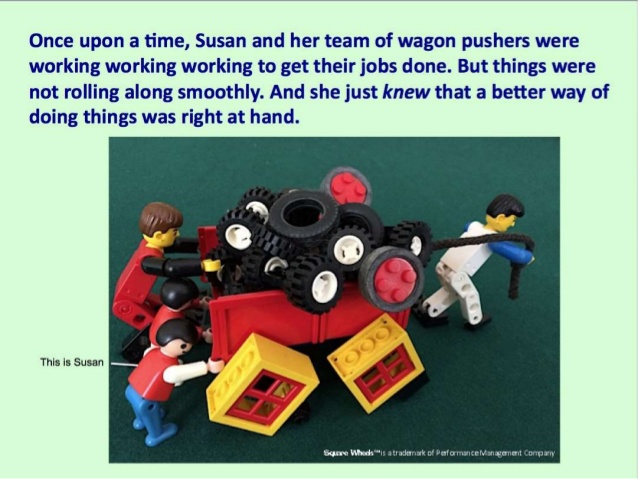
Rather than just nitpicking and harping on the real or perceived shortcomings of Pīnyīn (Pīn·yīn {Piecing Together of} · Sounds → [Pinyin] 拼音) in order to support the traditionally imposed Chinese characters, let us not overlook the white elephant in the room regarding the inhumanly and inhumanely complex characters—learning and remembering them is extremely difficult and costly in terms of time and effort, especially compared to comparatively simple and elegant Pīnyīn (Pīn·yīn {Piecing Together of} · Sounds → [Pinyin] 拼音). Let us not “strain out the gnat but gulp down the camel” like the scribes and Pharisees of Jesus’ day did. (Matthew 23:24) Yes, let us not incorrectly look down on Pīnyīn (Pīn·yīn {Piecing Together of} · Sounds → [Pinyin] 拼音) as merely being training wheels when it is really regular wheels, and let us also not just swallow the reality that Chinese characters are actually more like square wheels than regular wheels!

Lego diorama of people pushing a cart with square wheels, when the cart is filled with round wheels

The problem is not that Pīnyīn (Pīn·yīn {Piecing Together of} · Sounds → [Pinyin] 拼音) is like training wheels, because Pīnyīn (Pīn·yīn {Piecing Together of} · Sounds → [Pinyin] 拼音) is actually like regular wheels. The real problem is that characters are like square wheels!

Categories
Culture Language Learning Science Technology Theocratic

yǔzhòu

yǔzhòu (yǔ·zhòu universe · {all time, past, present, and future} → [[the] universe; cosmos; space | cosmic] 宇宙) 👈🏼 Tap/click to show/hide the “flashcard”

[Notes: Tap/click on a Pīnyīn (Pīn·yīn {Piecing Together of} · Sounds → [Pinyin] 拼音) expression to reveal its “flashcard”; tap/click on a “flashcard” or its Pīnyīn (Pīn·yīn {Piecing Together of} · Sounds → [Pinyin] 拼音) expression to hide the “flashcard”. 📖 📄 📘 icons mean 📖 Reveal All, 📄 Reveal Advanced, and 📘 Reveal None re all the “flashcards” in the heading, paragraph, etc. that they are placed at the beginning of.]

At the time of this writing, jw.org was featuring an article from the No. 3 2021 issue of Awake! magazine, about what the universe tells us about a Creator. The title of this article, in English and in Mandarin, is as follows:

English:

What the Universe Tells Us

Mandarin:

📖 📄 📘 Yǔzhòu (Yǔ·zhòu Universe · {All Time, Past, Present, and Future} → [The Universe] 宇宙) Gàosu (Tells 告诉 告訴) Wǒmen (Wǒ·men Us · [pl] 我们 我們) Shénme (Shén·me What · [suf] 什么 什/甚麼)?

As can be seen from the above example, “yǔzhòu (yǔ·zhòu universe · {all time, past, present, and future} → [[the] universe; cosmos; space | cosmic] 宇宙)”, this week’s MEotW, is the Mandarin expression meaning “the universe”. And, as can be seen from this expression’s Pīnyīn (Pīn·yīn {Piecing Together of} · Sounds → [Pinyin] 拼音) Plus “flashcard”, its constituent morphemes mean “[the] universe; all time, past, present, and future”.

Wiktionary’s entry for “yǔzhòu (yǔ·zhòu universe · {all time, past, present, and future} → [[the] universe; cosmos; space | cosmic] 宇宙) contains the following comment about the etymology of this expression:

Meyer (2010) proposes that “eaves and roof beams” was a synecdoche for a domicile’s entire space; this figure of speech would later be appropriated by early authors and later Huainanziʼs contributors as “a metaphor for the cosmos, taking “eaves” [] and “roof beams” [] to represent the dimensions of space and time[, respectively] that compose the entire phenomenal universe.”[1]

Spacetime

Interestingly, these meanings of the morphemes in “yǔzhòu (yǔ·zhòu universe · {all time, past, present, and future} → [[the] universe; cosmos; space | cosmic] 宇宙) match up with the morphemes in the English word “spacetime”. The Wikipedia article for this is introduced with the following:

In physics, spacetime, also called the space-time continuum, is a mathematical model that fuses the three dimensions of space and the one dimension of time into a single four-dimensional continuum. Spacetime diagrams are useful in visualizing and understanding relativistic effects, such as how different observers perceive where and when events occur.

Until the turn of the 20th century, the assumption had been that the three-dimensional geometry of the universe (its description in terms of locations, shapes, distances, and directions) was distinct from time (the measurement of when events occur within the universe). However, space and time took on new meanings with the Lorentz transformation and special theory of relativity.

In 1908, Hermann Minkowski presented a geometric interpretation of special relativity that fused time and the three spatial dimensions into a single four-dimensional continuum now known as Minkowski space. This interpretation proved vital to the general theory of relativity, wherein spacetime is curved by mass and energy.

“Because They Were Designed?”

“Yǔzhòu (Yǔ·zhòu universe · {all time, past, present, and future} → [[the] universe; cosmos; space | cosmic] 宇宙) also appears in the concluding paragraph of the above-mentioned article from the No. 3 2021 issue of Awake!:

English:

Based on his scientific knowledge of the universe and its properties, physicist Paul Davies concluded: “I cannot believe that our existence in this universe is a mere quirk of fate, an accident of history, an incidental blip in the great cosmic drama. . . . We are truly meant to be here.” Davies does not teach that God created the universe and human life, but what do you think? The universe and the earth seem to be designed to make life possible. Could it be that they seem that way because they were designed?

Mandarin:

📖 📄 📘 Wùlǐ‐xué‐jiā ((Wù·lǐ things’ · {logic → [laws]} → [physics] 物理)‐(xué studying)‐(jiā -ist 家) [physicist]) Bǎoluó (Paul 保罗 保羅) Dàiwéisī (Davies 戴维斯 戴維斯) gēnjù (gēn·jù {(at) root} · {according to} → [based on] 根据 根據) zìjǐ (self 自己) duì (towards) yǔzhòu (yǔ·zhòu universe · {all time, past, present, and future} → [the universe] 宇宙) (and 及) tiānwén (tiān·wén heavens’ · {natural phenomena} → [astronomical] 天文) fǎzé (fǎ·zé laws · principles 法则 法則) de ( 的) liǎojiě (liǎo·jiě understanding · {untying → [solving]} → [understanding] 了解 了/瞭解) zhèyàng (zhè·yàng this · {form → [way]} 这样 這樣) shuō (said說/説): “ (I 我) wúfǎ (wú·fǎ {do not have} · {way to} → [cannot] 无法 無法) xiāngxìn (xiāng·xìn {each other → [it]} · believe → [believe] 相信), rénlèi (rén·lèi human·kind 人类 人類) zài (in 在) zhèige (zhèi·ge this · [mw] 这个 這個) yǔzhòu (yǔ·zhòu universe · {all time, past, present, and future} → [universe] 宇宙) de (’s 的) cúnzài (cún·zài existing · {being present} 存在), zhǐshì (zhǐ·shì merely · is 只是) qiǎohé (qiǎo·hé {being coincidental → [coincidentally]} · {closing → [fitting]} → [coincidental] 巧合) huò (or 或) xìjù‐xìng ((xìjù (having) drama 戏剧 戲劇)‐(xìng nature → [quality] 性) [dramatic]) de (’s 的) tūfā (tū·fā {chimney → [dashing forward → [unexpectedly]]} · issued → [appeared unexpectedly] 突) shìjiàn (shì·jiàn incident · [mw] 事件)wǒmen de ((wǒ·men us · [pl] 我们 我們) (de ’s 的) [our]) cúnzài (cún·zài existing · {being present} 存在) kěndìng (kěn·dìng agreeing · certainly → [definitely] 肯定) shì (is 是) yǒu (having 有) yuányīn (yuán·yīn origin · reason 原因) de ({’s (thing)} 的).” Dàiwéisī (Davies 戴维斯 戴維斯) bìng (actually並/竝/并) méiyǒu (méi·yǒu not · {has → [does]} → [does not] 没有 沒有) zhǔzhāng (zhǔ·zhāng advocate · spread (that) → [hold (that)] 主张 主張) yǔzhòu (yǔ·zhòu universe · {all time, past, present, and future} → [the universe] 宇宙) ({(together) with} → [and]和/龢) rénlèi (rén·lèi human·kind 人类 人類) shì (are 是) Shàngdì (Shàng·dì Above’s · {Emperor → [God]} → [God] 上帝) chuàngzào (chuàng·zào initiated · {made, created} → [created] 创造 創造) de ({’s (things)} 的). Dàn (but 但) (you 你) juéde (jué·de {to wake to → [to feel]} · {(how do) get} → [how do feel] 觉得 覺得) ne ([? ptcl] 呢)? Jìrán (Jì·rán since · -ly 既然) yǔzhòu (yǔ·zhòu universe · {all time, past, present, and future} → [the universe] 宇宙) ({(together) with} → [and]和/龢) dìqiú (dì·qiú earth · globe → [the earth] 地球) zhème (zhè·me {this (much)} · [suf for interrogatives and adverbs] 这么/末 這麼/末) shìhé (shì·hé {are suitable for} · {are closing with → [are fitting with]} 适合 適合) shēngmìng (life 生命) cúnzài (cún·zài existing · {being present} 存在), nàme (nà·me {(in) that (case) → [then]} · [suf] 那么/末 那麼/末) tāmen (tā·men it · [pl] [they] 它们 它/牠們) shì (are 是) bèi ([passive signifier] [were] 被) shèjì (shè·jì {set up} · planned → [designed] 设计 設計) chulai (chu·lai out · {to come} 出来 出來) de ({’s (things)} 的) ma ([? ptcl for “yes/no” questions])?

A Particular Need in the Mandarin Field

It’s worth noting that the No. 3 2021 issue of Awake! was recently in the Teaching Toolbox in the JW Library app. In fact, for a time, 3 out of the 6 books or brochures in the Teaching Toolbox—fully one half of them—were focused on the subject of creation/evolution. Additionally, the Enjoy Life Forever! book, which is still in the Teaching Toolbox, has an entire lesson on the subject “How Did Life Begin?”. This big presence in the Teaching Toolbox for a time of material focused on creation/evolution reflects a recent heavy emphasis on this issue on the part of the organization.

Indeed, for people in general to find real spiritual truth and make real spiritual progress, the question of the Creator’s existence is the first basic question that needs to be answered well in their minds, otherwise they are left with just the conflicting opinions, speculations, and platitudes of mere limited, imperfect humans. As Proverbs 9:10 says:

The fear of Jehovah is the beginning of wisdom,
And knowledge of the Most Holy One is understanding.

In the Mandarin field in particular, it is especially necessary to focus on the issue of the Creator’s existence, because current worldly Chinese culture has particularly heavily predisposed many Mandarin-speakers to not believe in a Creator.

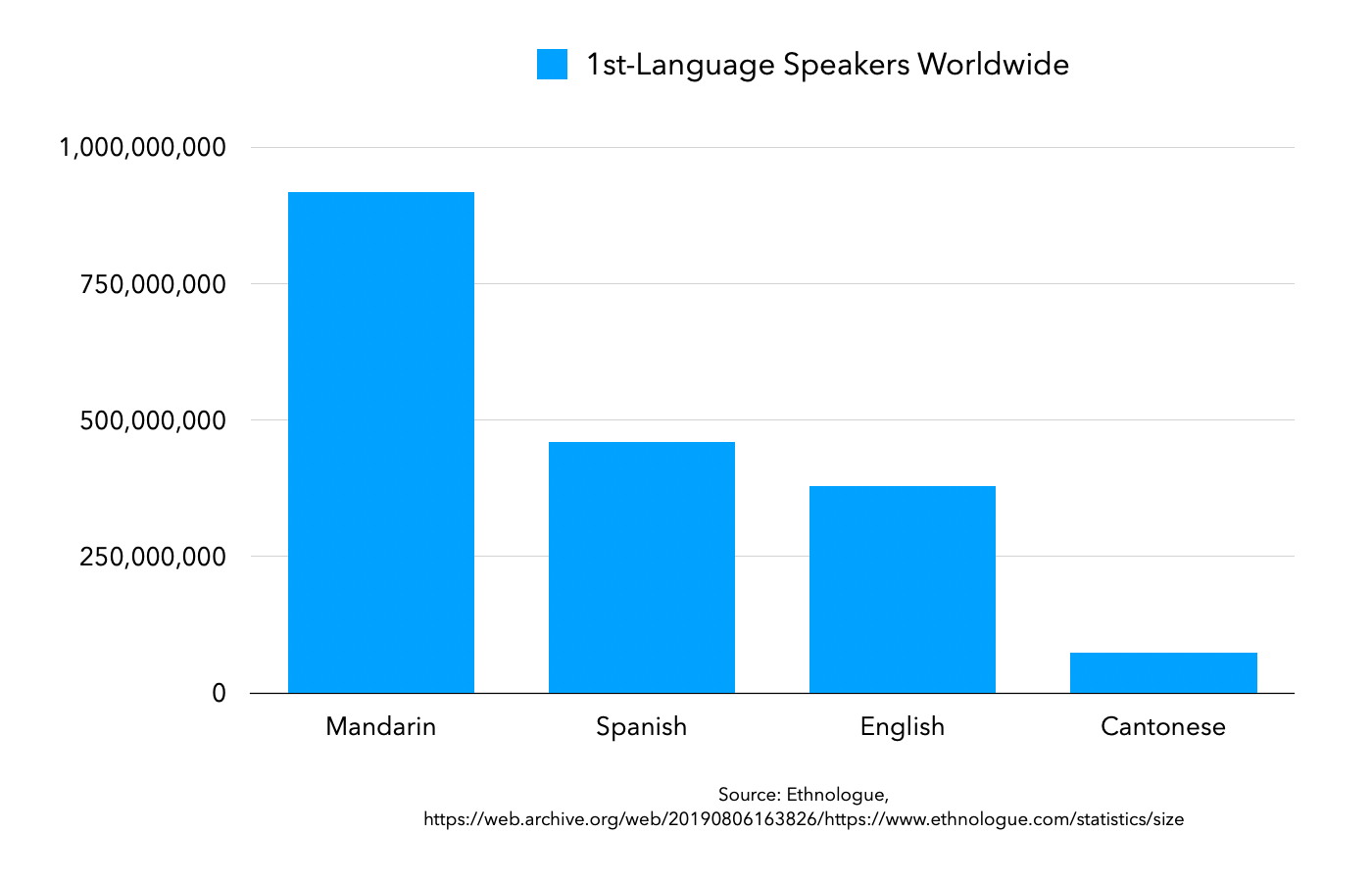
At the same time, the worldwide Mandarin field is by far the largest language field in the world, and it’s likely that it is the largest language field ever in history.

Chart: Languages by First-Language Speakers—2019

So, the need is especially great for Mandarin field language learners to be able to help Mandarin-speakers overcome their cultural backgrounds and cultivate faith in the Creator!

Creation/Evolution, and Also the Great Wall of Characters

However, I suspect that even in their mother tongue, many Mandarin field language learners would be hesitant to discuss creation/evolution, since it is an especially deeply technical subject. Adding the requirement to conduct the discussion in Mandarin, which has traditionally been written using the extraordinarily complex Chinese characters, to many just makes an already daunting task seem even more undoable.

The Great Wall of China

In addition to the inherent technical difficulty of the subject of creation/evolution, Mandarin field language learners also face the Great Wall of characters.

To help with this formidable challenge, the organization’s official Mandarin digital material for the No. 3 2021 issue of Awake!, and for the Was Life Created? and Origin of Life brochures, is available with Pīnyīn (Pīn·yīn {Piecing Together of} · Sounds → [Pinyin] 拼音). Additionally, unofficial Pīnyīn (Pīn·yīn {Piecing Together of} · Sounds → [Pinyin] 拼音) Plus material—specifically designed, not to be spiritual food, but for helping Mandarin field language learners to get past the Great Wall of characters and actually learn to understand and speak the Mandarin they need—is available for the Was Life Created? and Origin of Life brochures, and should eventually be available for the No. 3 2021 issue of Awake! too. For updates on these Pīnyīn (Pīn·yīn {Piecing Together of} · Sounds → [Pinyin] 拼音) Plus resources, keep an eye on this blog, on the Links News blog, and on the related account on the social network of your choice listed on this blog’s Contact page.