Categories
Culture History Language Learning Science

Pīnyīn

Pīnyīn (Pīn·yīn {Piecing Together of} · Sounds → [Pinyin] 拼音) 👈🏼 Tap/click to show/hide the “flashcard”

[To accompany last week’s repost on “Zhùyīn (Zhù·yīn {Annotating of} · Sounds → [Zhuyin] 注音 註/注音)”, here is a repost of the MEotW post on “Pīnyīn (Pīn·yīn {Piecing Together of} · Sounds → [Pinyin] 拼音)”.]

Pīnyīn (Pīn·yīn {Piecing Together of} · Sounds → [Pinyin] 拼音)” is the expression commonly used to refer to the phonetic alphabet introduced by China in 1958. This system is also known by longer, more official names:

  • Hànyǔ (Hàn·yǔ {Han (Chinese)} · Language → [(Modern Standard) Mandarin] 汉语 漢語) Pīnyīn (Pīn·yīn {Piecing Together of} · Sounds → [Pinyin] 拼音)
  • Hànyǔ (Hàn·yǔ {Han (Chinese)} · Language → [(Modern Standard) Mandarin] 汉语 漢語) Pīnyīn (Pīn·yīn {Piecing Together of} · Sounds → [Pinyin] 拼音) Fāng’àn (Fāng’·àn {Direction → [Method]} · {Long, Narrow Table or Desk → [Plan]} 方案)

When thinking of Pīnyīn (Pīn·yīn {Piecing Together of} · Sounds → [Pinyin] 拼音) and its predecessor Zhùyīn (Zhù·yīn Annotating · Sounds → [Zhuyin] 注音 註/注音) (last week’s MEotW), some focus on the superficial differences between them. However, it’s perhaps even more important to note what they have in common, as indicated by the fact that the names of both systems end in “yīn (sound [→ [musical note/sound; tone; pronunciation | syllable | news; tidings]] 音)”: Both systems focus on representing the sounds of Mandarin, sounds which make up Mandarin speech and thus represent meanings. In fact, Pīnyīn (Pīn·yīn {Piecing Together of} · Sounds → [Pinyin] 拼音)’s literal meaning tells us that this system helps people to “piece together sounds” to make up Mandarin speech, and thus convey the meanings that Mandarin speech represents.
汉字 / 漢字? Pīnyīn?

In contrast, many people believe that the Hànzì (Hàn·zì {Han (Chinese)} · Characters 汉字 漢字), the Chinese characters, represent meanings more directly through their own visual design, as opposed to primarily being a system that represents Mandarin, Cantonese, etc., speech sounds which represent meaning. This view of Chinese characters, however, is actually a myth, which has been called the ideographic myth—God designed our brains and bodies to primarily represent meaning through speech, some humans in their hubris presumed that it would be better for us humans to represent meaning directly through visual symbols, and of course God was right and these humans were wrong.

There are actually many myths and misconceptions that people believe regarding Chinese characters, and sadly, that is also the case regarding Pīnyīn (Pīn·yīn {Piecing Together of} · Sounds → [Pinyin] 拼音).

Common Myths and Misconceptions

  • Pīnyīn (Pīn·yīn {Piecing Together of} · Sounds → [Pinyin] 拼音) is just a pronunciation aid. It’s not really a writing system like the characters are.”
    • But, is Pīnyīn even really a writing system? Interestingly, the Chinese national standard Zhōngguó Mángwén (中国盲文/中國盲文, Chinese Braille) is basically a transliteration or conversion of Pīnyīn into braille letters. Braille is obviously a writing system, so Pīnyīn must also be a writing system, not just a pronunciation aid.

  • Pīnyīn (Pīn·yīn {Piecing Together of} · Sounds → [Pinyin] 拼音) is just training wheels. Characters are real wheels.”
    • Since Pīnyīn is not just a pronunciation aid, but a full writing system, it is not “training wheels”—it’s regular wheels. On the other hand, Chinese characters are like non-round wheels—more difficult than necessary.

  • Pīnyīn (Pīn·yīn {Piecing Together of} · Sounds → [Pinyin] 拼音) on its own can’t be understood because there are too many homophones (words that sound the same, but have different meanings) in Mandarin.”
    • When people are just speaking Mandarin, with no characters in sight to help them, do they have problems understanding each other because of all the homophones? Can blind Mandarin-speakers, who cannot see characters, still “see” what people mean when those people speak Mandarin? Native Mandarin-speakers have confirmed to me that no, homophones are not a significant problem in spoken Mandarin—people can use the context and understand each other okay. So, people can use the context and understand each other okay when using Pīnyīn too, since Pīnyīn directly represents the sound of spoken Mandarin.

      • The above quote is from the article “Pīnyīn Was Plan A”. Check it out for more on this subject.
  • Pīnyīn (Pīn·yīn {Piecing Together of} · Sounds → [Pinyin] 拼音) is less accurate than Zhùyīn (Zhù·yīn Annotating · Sounds → [Zhuyin] 注音 註/注音).”
    • Some people say that Zhuyin is more accurate or correct than Pinyin. Actually, both Zhuyin and Pinyin represent the same Mandarin sounds, just with different symbols. In fact, it’s not difficult to find tables that directly map the corresponding Zhuyin and Pinyin expressions to each other—a simple Google search for “pinyin zhuyin table” turns up many, many results. Pinyin and Zhuyin are just like different codes for encoding the same Mandarin message, so basically, neither is more accurate or correct than the other.

      • The above quote is from the tiandi.info post “Pinyin and Zhuyin”. (If you need login information for the parts of tiandi.info that require it, request it by email, and include information on who referred you and/or what group/cong. you are in.)
  • Pīnyīn (Pīn·yīn {Piecing Together of} · Sounds → [Pinyin] 拼音) makes your Mandarin sound like English.”
    • This is only true if you are using it wrong. For example, if you read a French word and you make it sound like English when you read it out, the problem is not that the French word is written using the Latin alphabet like English is—the problem is that you are thinking of English sounds when you see the French word, when you should be thinking of French sounds. Similarly, you shouldn’t blame Pīnyīn (Pīn·yīn {Piecing Together of} · Sounds → [Pinyin] 拼音) if you are thinking of English sounds when you see it, because it’s up to you to understand that Pīnyīn (Pīn·yīn {Piecing Together of} · Sounds → [Pinyin] 拼音) represents Mandarin sounds, not English sounds.
    • Don’t worry, it becomes second nature to properly associate Pīnyīn (Pīn·yīn {Piecing Together of} · Sounds → [Pinyin] 拼音) with Mandarin sounds after you get familiar with Mandarin sounds and used to the Pīnyīn (Pīn·yīn {Piecing Together of} · Sounds → [Pinyin] 拼音) system. However, if you, say, prematurely stop using Pīnyīn (Pīn·yīn {Piecing Together of} · Sounds → [Pinyin] 拼音) and instead turn to characters in an effort to avoid the baggage of English sounds, you may actually never really get the hang of Mandarin sounds. Seriously, I’ve seen people who focus on characters remain in this speech Twilight Zone for years and years! That’s because while characters do represent Mandarin speech sounds, they’re just bad at it—it’s just not what characters focus on. In stark contrast, Pīnyīn (Pīn·yīn {Piecing Together of} · Sounds → [Pinyin] 拼音) is all about the sounds of Mandarin. It literally spells out in a simple way how a Mandarin syllable sounds at the beginning, at the end, and in between. Characters, though, represent the complex sound of a Mandarin syllable as one coarse lump, in a complex and often unrelated way—you either get it or you don’t, and many don’t.
      • Yes, characters are like a conceited jerk who convinces you with grand promises to jump from a high place, doesn’t bother to catch you, and then makes you think it’s your fault that you can’t fly. Pīnyīn (Pīn·yīn {Piecing Together of} · Sounds → [Pinyin] 拼音), though, is like a modest and straightforward person who clearly explains each step for you so that you can dependably and confidently get to where you want to go.

For more information regarding Pīnyīn (Pīn·yīn {Piecing Together of} · Sounds → [Pinyin] 拼音) and how we in the Mandarin field should view it, check out these articles:

Pīnyīn is a Good, Workable Writing System On Its Own”
This article is a brief overview of why it’s important for those of us in the Mandarin field to recognize that Pīnyīn (Pīn·yīn {Piecing Together of} · Sounds → [Pinyin] 拼音) is a full writing system, not just a pronunciation aid.

Pīnyīn Was Plan A”
This extensively researched in-depth article discusses how we in the Mandarin field should view Pīnyīn (Pīn·yīn {Piecing Together of} · Sounds → [Pinyin] 拼音).

(Short link: tiandi.info/articles)

Categories
Culture Language Learning Technology Theocratic

jìjiào

jìjiào (jì·jiào count; calculate · {dispute [about]} [→ [haggle over; fuss about; bother about; bicker]] 计较 計較) 👈🏼 Tap/click to show/hide the “flashcard”

[Notes: Tap/click on a Pīnyīn (Pīn·yīn {Piecing Together of} · Sounds → [Pinyin] 拼音) expression to reveal its “flashcard”; tap/click on a “flashcard” or its Pīnyīn (Pīn·yīn {Piecing Together of} · Sounds → [Pinyin] 拼音) expression to hide the “flashcard”. 📖 📄 📘 icons mean 📖 Reveal All, 📄 Reveal Advanced, and 📘 Reveal None re all the “flashcards” in the heading, paragraph, etc. that they are placed at the beginning of.]

I have long especially liked 1 Corinthians 13. It contains counsel on what really does and doesn’t matter in life, an extensive description and definition of the most important kind of love, and a sublime discussion about the need to become complete, mature, as a person. As these apply to life in general, so too do they apply to our lives as Mandarin field language learners.

As Mandarin field language learners, it can benefit us greatly to consider what we can learn from 1 Corinthians 13, and along the way, we can also consider some of the Mandarin expressions used in that chapter in the current version of the Mandarin New World Translation Bible (nwtsty).

‘Keeping Account of the Injury’

This week’s MEotW, “jìjiào (jì·jiào count; calculate · {dispute [about]} [→ [haggle over; fuss about; bother about; bicker]] 计较 計較)”, is used in verse 5 (WOL) of 1 Corinthians 13:

Screenshot of “_jìjiào_” in 1 Co. 13:5 (nwtsty, CHS+_Pīnyīn_ WOL)

(Dark mode for the Watchtower ONLINE LIBRARY (WOL) website, as shown in the above image, can be enabled in the Safari web browser by using the Noir Safari extension. Other web browsers may also have extensions with similar functionality.)

For comparison, here are the current English and Pīnyīn (Pīn·yīn {Piecing Together of} · Sounds → [Pinyin] 拼音) Plus renderings of 1 Corinthians 13:5:

English:

does not behave indecently, does not look for its own interests, does not become provoked. It does not keep account of the injury.

Pīnyīn (Pīn·yīn {Piecing Together of} · Sounds → [Pinyin] 拼音) Plus:

📖 📄 📘 (not 不) zuò ({does do} 做) (not 不) guīju (guī·ju (following) {dividers → [rules]} · {carpenter’s squares → [regulations]} → [following established standards] 规矩 規矩) de ( 的) shì (things 事), (not 不) qiú ({does seek} 求) zìjǐ (self 自己) de (’s 的) lìyì (lì·yì {sharpening → [advantage]} · benefit → [benefit] 利益), (not 不) qīngyì (qīng·yì lightly · easily 轻易 輕易) dòngnù (dòng·nù {does have moved} · anger → [does get angry] 动怒 動怒), (not 不) jìjiào (jì·jiào {does count} · {does dispute about} 计较 計較) biéren (bié·ren other · people 别人 別人) zàochéng (zào·chéng {have created} · {to come to be} 造成) de (’s 的) shānghài (injuring → [injury] 伤害 傷害),

The “jì (counting; computing; calculating; numbering [→ [plot; plan (n or v)]]) in “jìjiào (jì·jiào count; calculate · {dispute [about]} [→ [haggle over; fuss about; bother about; bicker]] 计较 計較) can mean “count; calculate”, and it also appears in “jìsuàn (jì·suàn counting; computing; calculating · computing; calculating; figuring 计算 計算)”. As for the “jiào (compare; contrast | dispute | {being compared} → [comparatively; relatively; fairly; quite; rather | clear[ly]; obvious[ly]]) in “jìjiào (jì·jiào count; calculate · {dispute [about]} [→ [haggle over; fuss about; bother about; bicker]] 计较 計較)”, while it means “compare; contrast” in “bǐjiào (compare; contrast | {being compared} → [comparatively; relatively; fairly; quite; rather] | comparing → [comparison] 比较 比較)”, in “jìjiào (jì·jiào count; calculate · {dispute [about]} [→ [haggle over; fuss about; bother about; bicker]] 计较 計較) it has its older meaning of “dispute”.

Interestingly, besides its morphemes’ literal meanings of “count; calculate · dispute”, “jìjiào (jì·jiào count; calculate · {dispute [about]} [→ [haggle over; fuss about; bother about; bicker]] 计较 計較) can also mean “haggle over; fuss about; bother about; bicker” in some settings. In 1 Corinthians 13:5 in the current English and Mandarin versions of the New World Translation Bible, it corresponds with the English expression “keep account of”.

Nitpicking…

Every human-designed system has its shortcomings and negative aspects, including Pīnyīn (Pīn·yīn {Piecing Together of} · Sounds → [Pinyin] 拼音). However, is it advantageous or helpful to harp on or “fuss about” its potentially negative aspects without considering the whole picture?

For example, some make a fuss about the many homophones (different words that sound the same) in Mandarin, saying that they make Pīnyīn (Pīn·yīn {Piecing Together of} · Sounds → [Pinyin] 拼音) unsuitable to be a full writing system for Mandarin. In the overall picture of reality, though, since Pīnyīn (Pīn·yīn {Piecing Together of} · Sounds → [Pinyin] 拼音) is just a relatively simple representation of Mandarin speech, homophones are no more a problem when people use Pīnyīn (Pīn·yīn {Piecing Together of} · Sounds → [Pinyin] 拼音) than they are when people speak Mandarin. People have learned to deal with the challenge of homophones when speaking Mandarin by using sufficient clarifying context, and so people can similarly understand Pīnyīn (Pīn·yīn {Piecing Together of} · Sounds → [Pinyin] 拼音), homophones and all.

(People who say they have trouble understanding Pīnyīn (Pīn·yīn {Piecing Together of} · Sounds → [Pinyin] 拼音) because of homophones may actually be showing that the texts they are reading were written without sufficient context, and were relying on characters as a crutch rather than accurately representing Mandarin speech like they should. Or, these people may be showing that they themselves don’t actually understand spoken Mandarin very well, rather than that Pīnyīn (Pīn·yīn {Piecing Together of} · Sounds → [Pinyin] 拼音) has some inherent shortcoming, when it just simply and directly represents spoken Mandarin.)

Conversely, in the overall picture, characters have the parallel problem of homographs, characters that could represent multiple different words. So, making an anti-Pīnyīn (Pīn·yīn {Piecing Together of} · Sounds → [Pinyin] 拼音) fuss over Mandarin homophones amounts to jìjiào (jì·jiào counting · {disputing about} (things) → [fussing about (things)] 计较 計較), nitpicking over a problem that’s being adequately handled, while offering a solution in the characters that has its own corresponding problem.

Another objection to Pīnyīn (Pīn·yīn {Piecing Together of} · Sounds → [Pinyin] 拼音) that I have heard is that it makes some English-speaking Mandarin learners think of English sounds, so the Mandarin they speak doesn’t sound like native Mandarin. For this reason, some say, it would be better to use Chinese characters or Zhùyīn (Zhù·yīn {Annotating of} · Sounds → [Zhuyin] 注音 註/注音), which would not similarly remind people of English. Is this a real thing? Or, is it just an excuse used by some who are infected by Exotic East Syndrome to focus on “exotic” Eastern systems rather than the “mundane” Latin alphabet used by English and Pīnyīn (Pīn·yīn {Piecing Together of} · Sounds → [Pinyin] 拼音)?

I do not doubt that some, even many, English-speaking Mandarin learners think of English sounds when they see Pīnyīn (Pīn·yīn {Piecing Together of} · Sounds → [Pinyin] 拼音), but this is actually not a shortcoming of Pīnyīn (Pīn·yīn {Piecing Together of} · Sounds → [Pinyin] 拼音) itself, but rather, a rookie mistake on the part of these English-speaking Mandarin learners, who have not yet trained themselves to recognize Pīnyīn (Pīn·yīn {Piecing Together of} · Sounds → [Pinyin] 拼音) as a system that actually represents Mandarin sounds, not English sounds. It may also indicate that these Mandarin learners still need to become more familiar with and used to the sounds of Mandarin in the first place. The article Pīnyīn Is a Good, Workable Writing System on Its Own has an entire section on this, part of which says:

As English-speaking Mandarin-learners get more familiar with the sounds of correct Mandarin speech, they can come to get used to correctly mentally connecting Pīnyīn to correct Mandarin sounds, rather than to English sounds. Then, they can regularly and reliably use Pīnyīn to help them speak Mandarin-sounding Mandarin, just like people regularly and reliably use written French to help them speak French-sounding French.

…While Ignoring White Elephants

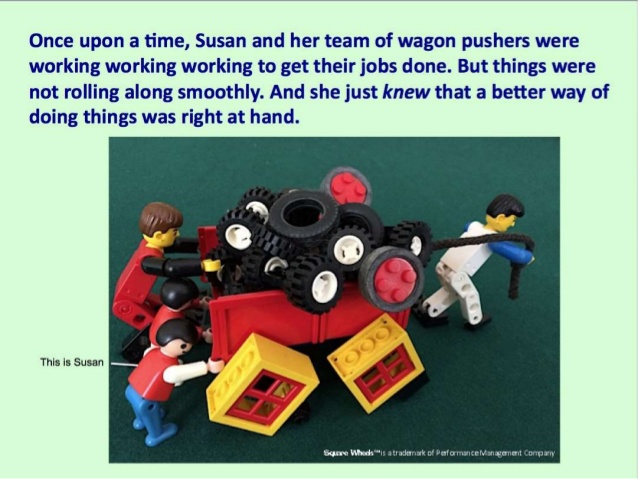
Rather than just nitpicking and harping on the real or perceived shortcomings of Pīnyīn (Pīn·yīn {Piecing Together of} · Sounds → [Pinyin] 拼音) in order to support the traditionally imposed Chinese characters, let us not overlook the white elephant in the room regarding the inhumanly and inhumanely complex characters—learning and remembering them is extremely difficult and costly in terms of time and effort, especially compared to comparatively simple and elegant Pīnyīn (Pīn·yīn {Piecing Together of} · Sounds → [Pinyin] 拼音). Let us not “strain out the gnat but gulp down the camel” like the scribes and Pharisees of Jesus’ day did. (Matthew 23:24) Yes, let us not incorrectly look down on and dismiss Pīnyīn (Pīn·yīn {Piecing Together of} · Sounds → [Pinyin] 拼音) as merely being training wheels when it is really regular wheels, and let us also not just swallow the egregious reality that Chinese characters are actually more like square wheels than regular wheels!

Lego diorama of people pushing a cart with square wheels, when the cart is filled with round wheels

The problem is not that Pīnyīn (Pīn·yīn {Piecing Together of} · Sounds → [Pinyin] 拼音) is like training wheels, because Pīnyīn (Pīn·yīn {Piecing Together of} · Sounds → [Pinyin] 拼音) is actually like regular wheels. The real problem is that characters are like square wheels!

Categories
Culture History Language Learning Science

Pīnyīn

Pīnyīn (Pīn·yīn {Piecing Together} · Sounds → [Pinyin] 拼音) ← Tap/click to show/hide the “flashcard”

Pīnyīn (Pīn·yīn {Piecing Together} · Sounds → [Pinyin] 拼音)” is the expression commonly used to refer to the phonetic alphabet introduced by China in 1958. This system is also known by longer, more official names:

  • Hànyǔ (Hàn·yǔ {Han (Chinese)} · Language → [(Modern Standard) Mandarin] 汉语 漢語) Pīnyīn (Pīn·yīn {Piecing Together} · Sounds → [Pinyin] 拼音)
  • Hànyǔ (Hàn·yǔ {Han (Chinese)} · Language → [(Modern Standard) Mandarin] 汉语 漢語) Pīnyīn (Pīn·yīn {Piecing Together} · Sounds → [Pinyin] 拼音) Fāng’àn (Fāng’·àn {Direction → [Method]} · {Long, Narrow Table or Desk → [Plan]} 方案)

When thinking of Pīnyīn (Pīn·yīn {Piecing Together} · Sounds → [Pinyin] 拼音) and its predecessor Zhùyīn (Zhù·yīn Annotating · Sounds → [Zhuyin] 注音 註/注音) (last week’s MEotW), some focus on the superficial differences between them. However, it’s perhaps even more important to note what they have in common, as indicated by the fact that the names of both systems end in “yīn (sound [→ [musical note/sound; tone; pronunciation | syllable | news; tidings]] 音)”: Both systems focus on representing the sounds of Mandarin, sounds which make up Mandarin speech and thus represent meanings. In fact, Pīnyīn (Pīn·yīn {Piecing Together} · Sounds → [Pinyin] 拼音)’s literal meaning tells us that this system helps people to “piece together sounds” to make up Mandarin speech, and thus convey the meanings that Mandarin speech represents.

汉字 / 漢字? Pīnyīn?

In contrast, many people believe that the Hànzì (Hàn·zì {Han (Chinese)} · Characters 汉字 漢字), the Chinese characters, represent meanings more directly through their own visual design, as opposed to primarily being a system that represents Mandarin, Cantonese, etc., speech sounds which represent meaning. This view of Chinese characters, however, is actually a myth, which has been called the ideographic myth—God designed our brains and bodies to primarily represent meaning through speech, some humans in their hubris presumed that it would be better for us humans to represent meaning directly through visual symbols, and of course God was right and these humans were wrong.

There are actually many myths and misconceptions that people believe regarding Chinese characters, and sadly, that is also the case regarding Pīnyīn (Pīn·yīn {Piecing Together} · Sounds → [Pinyin] 拼音).

Common Myths and Misconceptions

  • Pīnyīn (Pīn·yīn {Piecing Together} · Sounds → [Pinyin] 拼音) is just a pronunciation aid. It’s not really a writing system like the characters are.”
    • But, is Pīnyīn even really a writing system? Interestingly, the Chinese national standard Zhōngguó Mángwén (中国盲文/中國盲文, Chinese Braille) is basically a transliteration or conversion of Pīnyīn into braille letters. Braille is obviously a writing system, so Pīnyīn must also be a writing system, not just a pronunciation aid.

  • Pīnyīn (Pīn·yīn {Piecing Together} · Sounds → [Pinyin] 拼音) is just training wheels. Characters are real wheels.”
    • Since Pīnyīn is not just a pronunciation aid, but a full writing system, it is not “training wheels”—it’s regular wheels. On the other hand, Chinese characters are like non-round wheels—more difficult than necessary.

  • Pīnyīn (Pīn·yīn {Piecing Together} · Sounds → [Pinyin] 拼音) on its own can’t be understood because there are too many homophones (words that sound the same, but have different meanings) in Mandarin.”
    • When people are just speaking Mandarin, with no characters in sight to help them, do they have problems understanding each other because of all the homophones? Can blind Mandarin-speakers, who cannot see characters, still “see” what people mean when those people speak Mandarin? Native Mandarin-speakers have confirmed to me that no, homophones are not a significant problem in spoken Mandarin—people can use the context and understand each other okay. So, people can use the context and understand each other okay when using Pīnyīn too, since Pīnyīn directly represents the sound of spoken Mandarin.

      • The above quote is from the article “Pīnyīn Was Plan A”. Check it out for more on this subject.
  • Pīnyīn (Pīn·yīn {Piecing Together} · Sounds → [Pinyin] 拼音) is less accurate than Zhùyīn (Zhù·yīn Annotating · Sounds → [Zhuyin] 注音 註/注音).”
    • Some people say that Zhuyin is more accurate or correct than Pinyin. Actually, both Zhuyin and Pinyin represent the same Mandarin sounds, just with different symbols. In fact, it’s not difficult to find tables that directly map the corresponding Zhuyin and Pinyin expressions to each other—a simple Google search for “pinyin zhuyin table” turns up many, many results. Pinyin and Zhuyin are just like different codes for encoding the same Mandarin message, so basically, neither is more accurate or correct than the other.

      • The above quote is from the tiandi.info post “Pinyin and Zhuyin”. (If you need login information for the parts of tiandi.info that require it, request it by email, and include information on who referred you and/or what group/cong. you are in.)
  • Pīnyīn (Pīn·yīn {Piecing Together} · Sounds → [Pinyin] 拼音) makes your Mandarin sound like English.”
    • This is only true if you are using it wrong. For example, if you read a French word and you make it sound like English when you read it out, the problem is not that the French word is written using the Latin alphabet like English is—the problem is that you are thinking of English sounds when you see the French word, when you should be thinking of French sounds. Similarly, you shouldn’t blame Pīnyīn (Pīn·yīn {Piecing Together} · Sounds → [Pinyin] 拼音) if you are thinking of English sounds when you see it, because it’s up to you to understand that Pīnyīn (Pīn·yīn {Piecing Together} · Sounds → [Pinyin] 拼音) represents Mandarin sounds, not English sounds.
    • Don’t worry, it becomes second nature to properly associate Pīnyīn (Pīn·yīn {Piecing Together} · Sounds → [Pinyin] 拼音) with Mandarin sounds after you get familiar with Mandarin sounds and used to the Pīnyīn (Pīn·yīn {Piecing Together} · Sounds → [Pinyin] 拼音) system. However, if you, say, prematurely stop using Pīnyīn (Pīn·yīn {Piecing Together} · Sounds → [Pinyin] 拼音) and instead turn to characters in an effort to avoid the baggage of English sounds, you may actually never really get the hang of Mandarin sounds. Seriously, I’ve seen people who focus on characters remain in this speech Twilight Zone for years and years! That’s because while characters do represent Mandarin speech sounds, they’re just bad at it—it’s just not what characters focus on. In stark contrast, Pīnyīn (Pīn·yīn {Piecing Together} · Sounds → [Pinyin] 拼音) is all about the sounds of Mandarin. It literally spells out in a simple way how a Mandarin syllable sounds at the beginning, at the end, and in between. Characters, though, represent the complex sound of a Mandarin syllable as one coarse lump, in a complex and often unrelated way—you either get it or you don’t, and many don’t.
      • Yes, characters are like a conceited jerk who convinces you with grand promises to jump from a high place, doesn’t bother to catch you, and then makes you think it’s your fault that you can’t fly. Pīnyīn (Pīn·yīn {Piecing Together} · Sounds → [Pinyin] 拼音), though, is like a modest and straightforward person who clearly explains each step for you so that you can dependably and confidently get to where you want to go.

For more information regarding Pīnyīn (Pīn·yīn {Piecing Together} · Sounds → [Pinyin] 拼音) and how we in the Mandarin field should view it, check out these articles:

Pīnyīn is a Good, Workable Writing System On Its Own”
This article is a brief overview of why it’s important for those of us in the Mandarin field to recognize that Pīnyīn (Pīn·yīn {Piecing Together} · Sounds → [Pinyin] 拼音) is a full writing system, not just a pronunciation aid.

Pīnyīn Was Plan A”
This extensively researched in-depth article discusses how we in the Mandarin field should view Pīnyīn (Pīn·yīn {Piecing Together} · Sounds → [Pinyin] 拼音).

(Short link: tiandi.info/articles)