Categories
Culture Language Learning Science

jítǐ zhǔyì

jítǐ zhǔyì ((jí·tǐ gathered; collected · {body [→ [style; form]]} → [collective] 集体 集體) (zhǔ·yì master · meaning → [-ism] 主义 主義) [collectivism; community spirit]) ← Tap/click to show/hide the “flashcard”

Generally speaking, Western societies are considered to be relatively individualistic, while Eastern societies, like Chinese ones, are considered to be relatively collectivistic, emphasizing the collective, or group, over the individual. This week’s MEotW, “jítǐ zhǔyì ((jí·tǐ gathered; collected · {body [→ [style; form]]} → [collective] 集体 集體) (zhǔ·yì master · meaning → [-ism] 主义 主義) [collectivism; community spirit])”, seems to be the main Mandarin expression referring to such collectivism. (The MEotW post on “kǒngbù huódòng ((kǒng·bù fearing · terror → [terrorist] 恐怖) (huó·dòng living · moving → [activities] 活动 活動) [terrorism; terrorist activities]) contains a brief discussion about some other Mandarin -isms.)

Differences and Possible Causal Factors

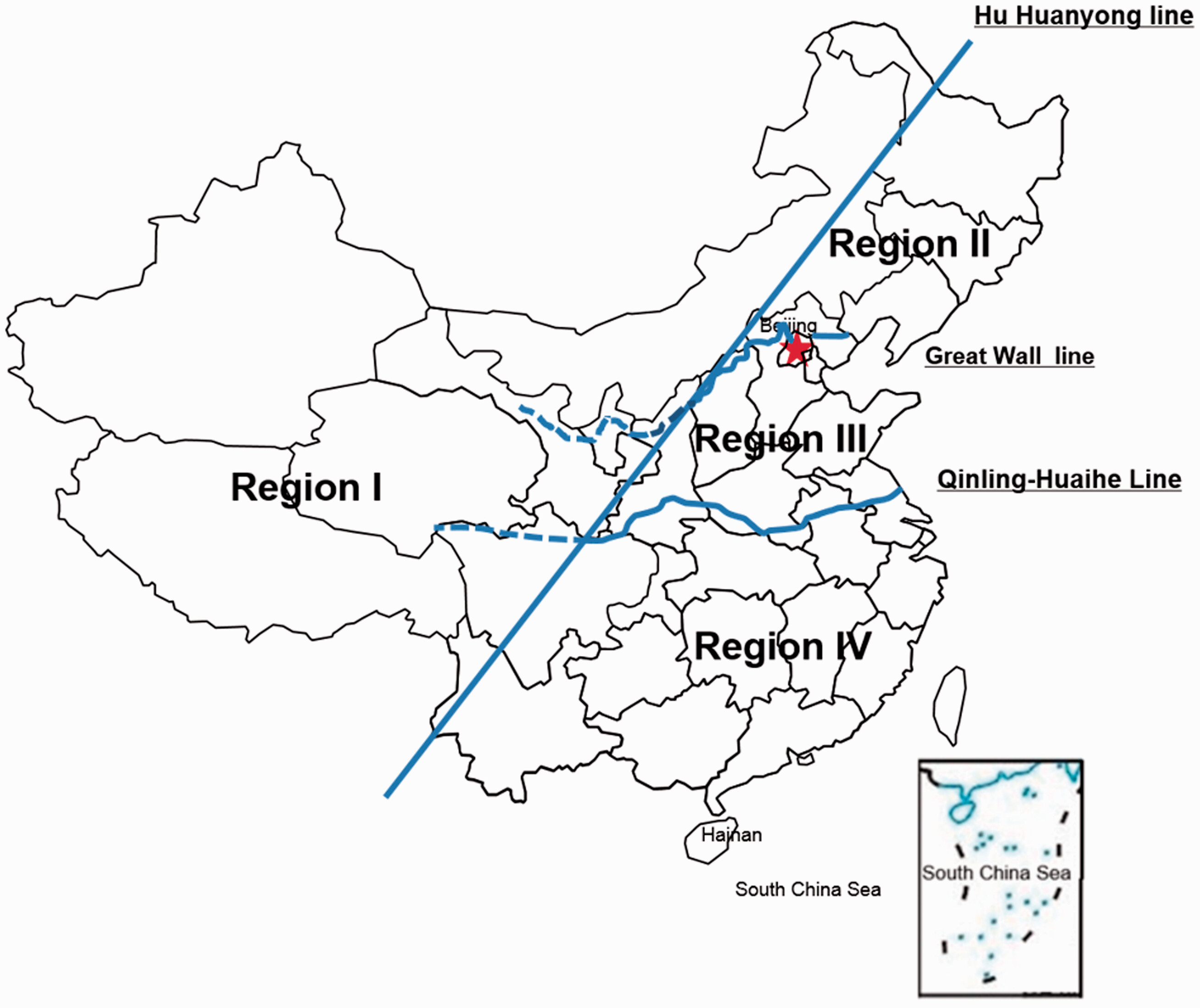
While researching this post, I came across a scientific paper that has some interesting information about individualism and collectivism, including some information about measurable regional variations in collectivism that have been found across the Chinese mainland. Here is a quotation from it, regarding individualism and collectivism in general:

The distinction between individualism and collectivism captures important differences in how the relationship between self and others is constructed, as well as whether the individual or the group is understood as the basic unit of analysis (Cross et al., 2011; Hofstede, 2001; Markus & Kitayama, 1991, 2010; Oyserman et al., 2002; Triandis, 1995). People living in individualistic cultural contexts (e.g., the United States and the United Kingdom) tend to pay more attention to the achievement of their own goals and their own uniqueness. They have clear boundaries with others and pursue well-being or life satisfaction by sharing feelings and achieving personal success. In contrast, people living in collectivistic cultural contexts (e.g., China, Japan, and Korea) tend to be more concerned about maintaining harmonious relations with in-group members, and the boundaries between themselves and these others are much less firm. This distinction is reflected in cognition, perception, memory, cultural products, and even brain function (Morling, 2016; Nisbett & Masuda, 2003; Oyserman et al., 2002; Zhu et al., 2007). Many explanations for these differences have been proposed, including cultural heritage (Ma et al., 2016), modernity (Inglehart & Baker, 2000), climato-economic theory (Van de Vliert et al., 2013), the subsistence system (Uskul et al., 2008), the historical risk of infectious disease (Fincher et al., 2008), and geographic and relational mobility (Oishi, 2010).

Later in the paper, the authors divide China into four regions, and present a table listing some factors that may have contributed to the varying degrees of collectivism in those regions.

Triple-Line Framework of variations within China.

Table 1. Ecological Factor Differences Among the Four Regions.

Region I Region II Region III Region IV
Collectivism Lowest Lower Higher Highest
Climate Harsh Harsh Comfortable Comfortable
Water Less Enough Less Enough
Rainfall <400 mm 400–800 mm 400–800 mm >800 mm
Subsistence
system
Herder Wheat or herder/wheat-blended Wheat Rice
Voluntary
settlement
No Yes No No
Population
density
Low Low High High

Pluses and Minuses

Collectivistic societies can have certain good aspects, as expressed by this example sentence from the entry for “xūntáo (xūn·táo {cure (meat/etc.) with smoke} · {mould (as with clay)} → [influence positively; nurture; edify; train] 熏陶 熏/薰陶) in Pleco’s built-in dictionary:

Zài jítǐ zhǔyì jīngshén de xūntáo xià, háizimen hùxiāng guānxīn, hùxiāng bāngzhù. [Word division was edited.]

Nurtured in the spirit of collectivism, the children care for each other and help each other.

However, recently, some research has come out that shows that some negative ways of thinking, feeling, and acting are more likely to be displayed by those in collectivistic societies.

To clarify, here is a definition of “zero-sum” :

Of any system where all gains are offset by exactly equal losses.

So, a zero-sum game or system is one in which another must lose for one to win—no win-win situations. That means that if you hold zero-sum beliefs, as, according to the studies referred to in the above post, collectivists are more likely to do, then you will think that any goodness that’s enjoyed by someone else is goodness that’s no longer available to you.

Zero-sum thinking makes it difficult to have true empathy for others who are suffering, and it makes it difficult to follow the Bible counsel at Romans 12:15:

Rejoice with those who rejoice; weep with those who weep.

Collectivism and the Obsession with Chinese Characters

It seems, then, that there is a connection between collectivism and China’s obsessive refusal so far to move on from Chinese characters to more reasonable and modern writing systems like Pīnyīn (Pīn·yīn {Piecing Together of} · Sounds → [Pinyin] 拼音). Consider this excerpt from my article “Pīnyīn (Pīn·yīn {Piecing Together of} · Sounds → [Pinyin] 拼音) Was Plan A”:

In addition to those who feel that phasing out the Hànzì [Chinese characters] would be a regrettable cultural loss, I have also noticed that there are some for whom knowledge of Hànzì is a matter of pride and self-identity. They are proud of knowing the Hànzì as they do, and they view their knowledge of the Hànzì as part of what makes them who they are, as something that distinguishes them from those who don’t know the Hànzì. Such ones may defend the Hànzì to the point of irrationality in the face of a more accessible alternative that would make them and their hard-earned knowledge of Hànzì less “special”, that would threaten to render worthless all of the blood, sweat, and tears they have invested into grappling with these “Chinese puzzles”. It’s as if they are saying, “That’s not fair! If I had to go through all this bitter hard work to learn characters before I could read and write Chinese, then everyone else has to too!”

Self-Identity and Balanced Self-Love

Self-identity is one thing that can particularly be a struggle for those raised in collectivistic societies, since the self is relatatively often neglected in such societies. It’s perhaps not surprising then, that, as mentioned above, in the relatively collectivistic Chinese societies, with their relative paucity, or scarcity, of more healthy ways to build and maintain self-identity, so many have such an unhealthy, obsessive attachment to Chinese characters, as something to desperately hang their neglected self-identities on.

As Jehovah’s organization has commented, for us to follow well the command at Matthew 19:19 to “love your neighbor as yourself”, we must first love ourselves in a healthy way. Also, while Romans 12:3 telling each of us “not to think more of himself than it is necessary to think, but to think so as to have a sound mind” is mainly an admonition against the overly self-important thinking that individualistic societies can tend to promote, it also shows that it is necessary to think a certain amount of ourselves to have a balanced, sound mind.

In turn, it seems that our developing a balanced, healthy view of ourselves can contribute to our avoiding things like zero-sum thinking, and to our developing a balanced, healthy view of Chinese characters. From that balanced, healthy place, we can be free to develop a balanced, healthy view of the possible alternative of Pīnyīn (Pīn·yīn {Piecing Together of} · Sounds → [Pinyin] 拼音), which could empower us to serve Jehovah and help others in the Mandarin field as well as we ought to be able to.
Categories
Culture Current Events Language Learning Science Technology Theocratic

jiǎ xiāoxi

jiǎ (false; fake假/叚)
xiāoxi (xiāo·xi disappearing · news → [news; information] 消息) ← Tap/click to show/hide the “flashcard”

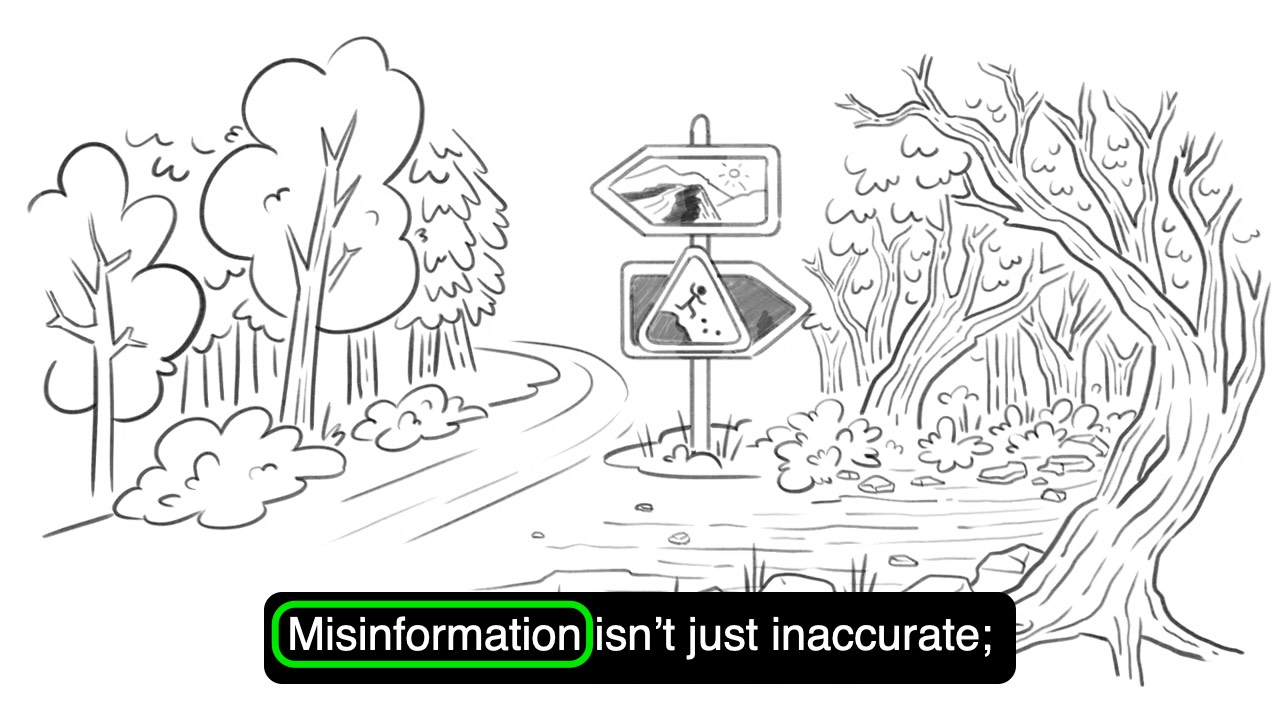
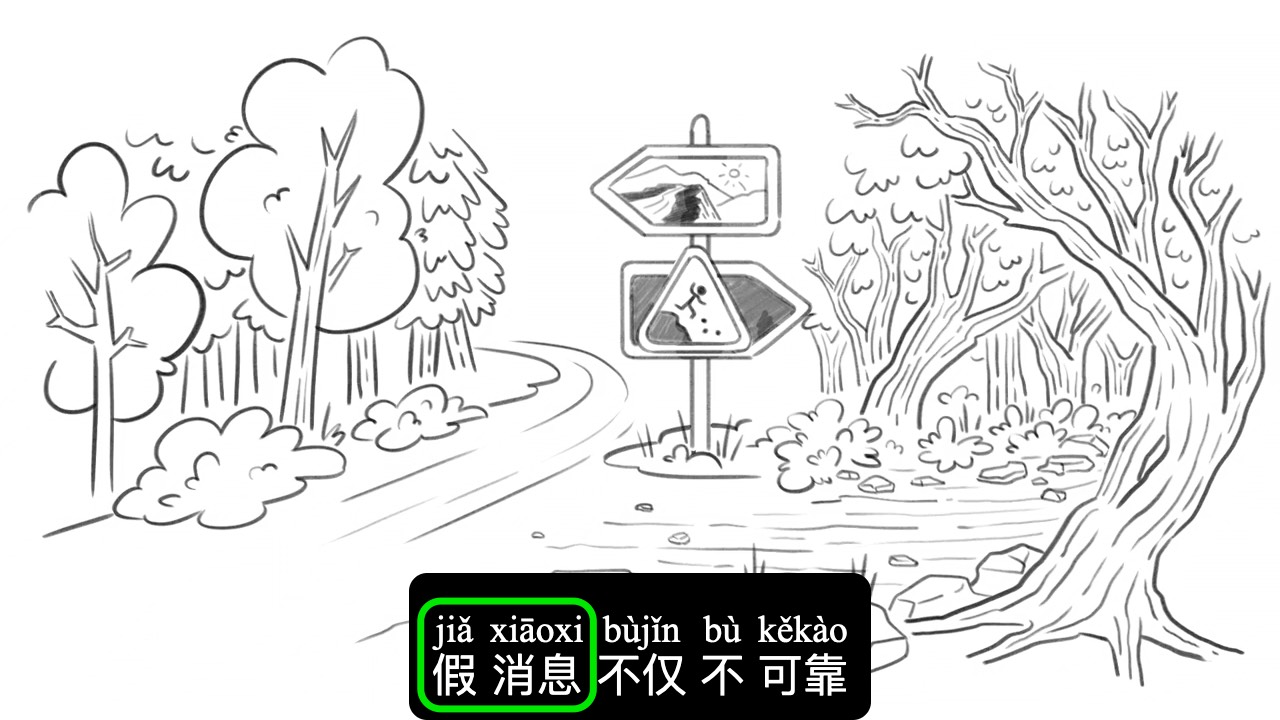
At the time of this writing, jw.org was featuring the whiteboard animation video “Protect Yourself From Misinformation”. The English and Mandarin versions of this video match the English word “misinformation” with this week’s MEotW, “jiǎ (false; fake假/叚) xiāoxi (xiāo·xi disappearing · news → [news; information] 消息)”:

Screenshot from the video “Protect Yourself From Misinformation”, 0:32 mark, showing “Misinformation” in the subtitle

Screenshot from the video “消息满天飞,如何辨真假”, 0:32 mark, showing “假消息 (jiǎ xiāoxi)” in the subtitle

[Note: The MEotW post on “shèjiāo wǎngzhàn ((shè·jiāo {god of the land → [society] → [social]} · {meeting → [associating]} → [social contact/interaction] 社交) (wǎng·zhàn {net → [web]} · {stand → [station]} → [website] 网站 網站) [social networking website; social network]) contains information about how to add unproofread computer-generated Pīnyīn (Pīn·yīn {Piecing Together of} · Sounds → [Pinyin] 拼音) to the subtitles of Mandarin videos on jw.org in most browsers.]

“Jiǎ (false; fake假/叚) xiāoxi (xiāo·xi disappearing · news → [news; information] 消息) can also be translated as “false news”, “false information”, or perhaps even “fake news”, as confirmed by the entry for this expression in the excellent Referenced Theo. Expressions (RTE) resource.

Disappearing?

“Jiǎ ({[is] false; fake; phony; artificial} | if; supposing; assume; presume | borrow; {avail oneself of}假/叚) means “false” or “fake”, and “xiāoxi (xiāo·xi disappearing · news → [news; information] 消息)”, while used to effectively mean “news” or “information”, actually literally means “disappearing news”. Why “disappearing”? Perhaps that is a nod to the fleeting nature of news—relatively quickly, when it’s not new anymore, it’s not news anymore.

The Wiktionary entry for “xiāoxi (xiāo·xi disappearing · news → [news; information] 消息) seems to bear this out, as it says:

消息 (xiāoxi) refers to news as in new information; to express the meaning of news as in reports of current events, use 新聞/新闻 (xīnwén).

“Xiāoxi (Xiāo·xi disappearing · news → [news; information] 消息) also appears in the expression “hǎo (good 好) xiāoxi (xiāo·xi disappearing · news → [news] 消息)”, meaning “good news”, which we use often in the Mandarin field. In fact, “Hǎo (Good 好) Xiāoxi (Xiāo·xi Disappearing · News → [News] 消息)”! is the title of the concluding song for this year’s Mandarin conventions! (English, Mandarin, Pīnyīn (Pīn·yīn {Piecing Together of} · Sounds → [Pinyin] 拼音) Plus) Also, we will say “Wángguó (Wáng·guó King’s · Nation → [Kingdom] 王国 王國) de (’s 的) hǎo (good 好) xiāoxi (xiāo·xi disappearing · news → [news] 消息) when we want to refer to “the good news of the Kingdom”. Of course, while the message of this good news will “disappear” as news when it is not news anymore, the Kingdom itself “will stand forever”!—Daniel 2:44.

Myths and Misinformation About Chinese Characters, Etc.

As Mandarin field language learners, we need to be aware that many myths and much misinformation have been spread about the Chinese languages, especially when it comes to Chinese characters. Indeed, there is so much misinformation about Chinese characters that Victor Mair wrote the following in the foreword of the book Ideogram: Chinese Characters and the Myth of Disembodied Meaning, by J. Marshall Unger:

There is probably no subject on earth concerning which more misinformation is purveyed and more misunderstandings circulated than Chinese characters (漢字, Chinese hanzi, Japanese kanji, Korean hanja), or sinograms.

Also, in his book The Chinese Language: Fact and Fantasy, John DeFrancis lists the following myths regarding Chinese characters, that many believe:

  • The Ideographic Myth
    • The MEotW post on “Hāmǐjíduōdùn (Armageddon 哈米吉多顿 哈米吉多頓) contains a discussion of this myth, with some selected excerpts on this subject from DeFrancis’ book.
  • The Universality Myth
  • The Emulatability Myth
  • The Monosyllabic Myth
  • The Indispensability Myth
  • The Successfulness Myth

Regarding these myths, in p. 2–3 of his aforementioned book, J. Marshall Unger provides this summary:

Passing for the moment over the history of how the hunt for the perfect language unfolded, let us jump ahead to the result: the intellectual baggage about Chinese characters that we have inherited from the Renaissance and Enlightenment. John DeFrancis, in his classic book The Chinese Language (1984), sums up that weighty legacy under six headings, and a better summary would be hard to find. The source of all the confusion is what DeFrancis calls the Ideographic Myth, the notion that Chinese characters represent meaning directly, without reference to language (that is, speech) in any way. Its logical extension is the Universality Myth, according to which Chinese script allows for communication between mutually uninteligible dialects and languages. This leads in turn to the Emulatability Myth, which holds that Chinese script can serve as a model for a general system of signs that transcends natural language. These first three myths have little to do with the actual structure or history of the Chinese language or its writing system, in contrast with the remaining three: the Monosyllabic Myth, Indispensability Myth, and Successfulness Myth. Each of these—the names are more or less self-explanatory—makes a strong claim about language and the writing system, claims that have had significant social and political consequences.

At least some of the political consequences referred to above have been deliberate, meaning that at least some of the myths and misinformation spread about Chinese languages and Chinese characters qualify as political propaganda. If we’re not careful, we could end up parroting this political propaganda. (We could also end up parroting worldly human cultural propaganda, which is also a bad thing for people who seek to be no part of the world.) Also, all the difficulties and confusion caused by all the myths and misinformation surrounding Chinese languages and Chinese characters massively hinder the efforts of Mandarin field language learners to stay spiritually strong and to reach the hearts of Mandarin-speakers with Bible truth. This can result in deeply negative spiritual consequences that should be of great concern to us. To complete the sentence quoted from the video mentioned at the beginning of this post:

Misinformation isn’t just inaccurate; it can also be dangerous!

Categories
Science Technology Theocratic

pèngqiǎo

pèngqiǎo (pèng·qiǎo {having bumped into} · {being coincidental} → [by chance/coincidence] 碰巧) ← Tap/click to show/hide the “flashcard”

[Notes: Tap/click on a Pīnyīn (Pīn·yīn {Piecing Together of} · Sounds → [Pinyin] 拼音) expression to reveal its “flashcard”; tap/click on a “flashcard” or its Pīnyīn (Pīn·yīn {Piecing Together of} · Sounds → [Pinyin] 拼音) expression to hide the “flashcard”. 📖 📄 📘 icons mean 📖 Reveal All, 📄 Reveal Advanced, and 📘 Reveal None re all the “flashcards” in the heading, paragraph, etc. that they are placed at the beginning of.]

The Shēngmìng Láizì Chuàngzào Ma? ((Shēngmìng Life 生命) (Lái·zì Came · From 来自 來自) (Chuàng·zào Initiating · {Making, Creating} → [Creating] 创造 創造) (Ma [? ptcl for “yes/no” questions])? [Was Life Created? (lc)]) (Was Life Created? (lc)) brochure and the Shēngmìng de Qǐyuán—Zhíde Sīkǎo de Wǔ Ge Wèntí ((Shēngmìng Life 生命) (de ’s 的) (Qǐ·yuán {Rising → [Starting]} · Source → [Origin] 起源/原)—(Zhí·de Worth · Getting → [Worth] 值得) (Sī·kǎo {Thinking About} · Examining 思考) (de ’s 的) (Wǔ Five 五) (Ge [mw]個/个) (Wèn·tí Asking · Subjects → [Questions] 问题 問題) [The Origin of Life—Five Questions Worth Asking (lf)]) (The Origin of Life—Five Questions Worth Asking (lf)) brochure were originally published back in 2010, but recently, the English version of the Was Life Created? brochure was updated to the December 2022 Printing, and the Mandarin version of it was updated to the February 2023 Printing. Also, the Was Life Created? brochure and the Origin of Life brochure are now in the Teaching Toolbox section in the JW Library app. So, it would be good to consider some of the expressions used in the Mandarin versions of these publications that can be so helpful when discussing whether life was created.

What a Coincidence!

This week’s MEotW, “pèngqiǎo (pèng·qiǎo {having bumped into} · {being coincidental} → [by chance/coincidence] 碰巧)”, which means “by chance” or “by coincidence”, occurs often (24 times, in fact) in section 1 of the Mandarin Origin of Life brochure, which in English is entitled “How Did Life Begin?”. For example, this Mandarin expression occurs twice in this portion of a caption for one of this section’s pictures:

English:

RNA (1) is required to make proteins (2), yet proteins are involved in the production of RNA. How could either one arise by chance, let alone both?…

Mandarin:

📖 📄 📘 Yào ({(there) must} 要) yǒu ({be having} → [be] 有) RNA (1) cái ({only then}才/纔) néng ({would (there) be being able} 能) zhìzào (zhì·zào {to make} · {to create} → [to make] 制造 製造) dànbái zhì ((dàn·bái egg · white → [protein] 蛋白) (zhì substances) [proteins]) (2), ér ({and yet} 而) zhìzào (zhì·zào {to make} · {to create} → [to make] 制造 製造) RNA yòu ({on the other hand} 又) xūyào (requires 需要) dànbái zhì ((dàn·bái egg · white → [protein] 蛋白) (zhì substances) [proteins]). Zhèi (these) liǎng (two) zhǒng ({types of}種/种) fēnzǐ (fēn·zǐ {divided (off)} · {small and hard things} → [molecules] 分子) zěnme (zěn·me how · [suf] 怎么 怎麼/麽) kěnéng (could 可能) gèzì (gè·zì each · self 各自) pèngqiǎo (pèng·qiǎo {having bumped into} · {being coincidental} → [by chance] 碰巧) chǎnshēng (chǎn·shēng {be given birth to → [be produced]} · {be given birth to → [be caused to exist]} → [be brought into being] 产生 產生) ne ([? ptcl] 呢)? Liǎngzhě (Liǎng·zhě {two → [both]} · {ones → [of them]} 两者 兩者) tóngshí (tóng·shí {(at the) same} · {(particular) time} 同时 同時) pèngqiǎo (pèng·qiǎo {having bumped into} · {being coincidental} → [by chance] 碰巧) chǎnshēng (chǎn·shēng {being given birth to → [being produced]} · {being given birth to → [being caused to exist]} → [being brought into being] 产生 產生) jiù (then 就) gèng (more 更) búyòng (bú·yòng not · {do use → [do need]} 不用) shuō ({to speak of}說/説) le ([(at the end of a phrase/sentence) indicates a change] 了). …

Another occurrence of “pèngqiǎo (pèng·qiǎo {having bumped into} · {being coincidental} → [by chance/coincidence] 碰巧) in this section of the Mandarin Origin of Life brochure can be found in this portion of highlighted text:

English:

If the creation of complex molecules in the laboratory requires the skill of a scientist, could the far more complex molecules in a cell really arise by chance?

Mandarin:

📖 📄 📘 Shíyàn shì ((Shí·yàn {solidly → [truly]} · testing → [experimenting] 实验 實驗) (shì room 室) [laboratory]) li (inside裡/裏) héchéng (hé·chéng {close → [combine]} · {to come to be} 合成) de (’s 的) fùzá (fù·zá {turned around → [complex]} · mixed → [complex] 复杂 複雜) fēnzǐ (fēn·zǐ {divided (off)} · {small and hard things} → [molecules] 分子), shì (are 是) kēxuéjiā (kē·xué·jiā {{branches of study} · learning → [science]} · -ist → [scientist] 科学家 科學家) yòng (uses 用) jīngzhàn (jīng·zhàn excellent · deep → [consummate] 精湛) de (’s 的) jìshù (jì·shù skill · technique → [skill] 技术 技術) zhìzào (zhì·zào {to make} · {to create} → [to create] 制造 製造) chulai (chu·lai out · {to come} 出来 出來) de ({’s (things)} 的), nàme (nà·me {(in) that (case) → [then]} · [suf] 那么/末 那麼/末) xìbāo (xì·bāo tiny · womb → [cell] 细胞 細胞) zhōng (within 中) fùzá (fù·zá {turned around → [complex]} · mixed → [complex] 复杂 複雜) de (getting 得) duō ({to be (much) more} 多) de (’s 的) fēnzǐ (fēn·zǐ {divided (off)} · {small and hard things} → [molecules] 分子) ne ([(what about them) ? ptcl] 呢)? Zhēnde (Zhēn·de (they) really · ’s 真的) yǒu ({do have} 有) kěnéng (kě·néng maybe · {being able} → [possibility] 可能) pèngqiǎo (pèng·qiǎo {having bumped into} · {being coincidental} → [by chance] 碰巧) chǎnshēng (chǎn·shēng {to be given birth to → [to be produced]} · {to be given birth to → [to be caused to exist]} → [to be brought into being] 产生 產生) ma ([? ptcl for “yes/no” questions])?

“Fancy Bumping into…”

The way that “pèngqiǎo (pèng·qiǎo {having bumped into} · {being coincidental} → [by chance/coincidence] 碰巧) “works” as an expression is a bit odd. “Pèng (bump; touch; {knock against} 碰) means “bump into”, and “qiǎo ({[is] clever; intelligent; skillful; ingenious} | {[being] opportune; coincidental} [→ [coincidentally]] 巧) can mean “being coincidental”, so “pèngqiǎo (pèng·qiǎo {having bumped into} · {being coincidental} → [by chance/coincidence] 碰巧) literally means “having bumped into being coincidental”.

We can also note that, like “shìwēi (shì·wēi {showing; indicating; revealing; manifesting; demonstrating [of]} · might; power; strength; force → [putting on a show of force | demonstrating (as a protest); marching; holding a demonstration | demonstration] 示威) in last week’s MEotW, “pèngqiǎo (pèng·qiǎo {having bumped into} · {being coincidental} → [by chance/coincidence] 碰巧) has verb-object construction. (See that post for more information on that.)

Should we believe evolutionists’ claims that life in all its complexity and glory pèngqiǎo (pèng·qiǎo {having bumped into} · {being coincidental} → [by chance] 碰巧) came into being? It would be quite tiānzhēn (tiān·zhēn {(of) heaven → [natural]} · {(following) natural instincts} → [naive] 天真) (a past MEotW) of us to do so!


For convenience:

The direct link for the current generation Pīnyīn (Pīn·yīn {Piecing Together of} · Sounds → [Pinyin] 拼音) Plus resource for the Origin of Life brochure is:

The short link for Chinese field language-learning links for the Origin of Life brochure is:

More Pīnyīn (Pīn·yīn {Piecing Together of} · Sounds → [Pinyin] 拼音) and Pīnyīn (Pīn·yīn {Piecing Together of} · Sounds → [Pinyin] 拼音) Plus web material based on the Mandarin Origin of Life brochure will be made available in the Pīnyīn (Pīn·yīn {Piecing Together of} · Sounds → [Pinyin] 拼音) Plus web resource as time allows.