Categories
Culture History Language Learning Science

tóngbèi yālì

tóngbèi (tóng·bèi (from people of the) same · generation → [peer] 同辈 同輩)
yālì (yā·lì pressing · force → [pressure] 压力 壓力) ← Tap/click to show/hide the “flashcard”

[Notes: Tap/click on a Pīnyīn (Pīn·yīn {Piecing Together of} · Sounds → [Pinyin] 拼音) expression to reveal its “flashcard”; tap/click on a “flashcard” or its Pīnyīn (Pīn·yīn {Piecing Together of} · Sounds → [Pinyin] 拼音) expression to hide the “flashcard”. 📖 📄 📘 icons mean 📖 Reveal All, 📄 Reveal Advanced, and 📘 Reveal None re all the “flashcards” in the heading, paragraph, etc. that they are placed at the beginning of.]

At the time of this writing, jw.org was featuring a video with the following title, which includes this week’s MEotW, “tóngbèi (tóng·bèi (from people of the) same · generation → [peer] 同辈 同輩) yālì (yā·lì pressing · force → [pressure] 压力 壓力)”, in the Mandarin text:

English:

Stand Up to Peer Pressure!

Mandarin:

📖 📄 📘 Xiàng (To向/曏/嚮) Tóngbèi (Tóng·bèi (from People of the) Same · Generation → [Peer] 同辈 同輩) Yālì (Yā·lì Pressing · Force → [Pressure] 压力 壓力) Shuō (Say說/説) (No 不)!

Morphemic Breakdown

In “tóngbèi (tóng·bèi (from people of the) same · generation → [peer] 同辈 同輩) yālì (yā·lì pressing · force → [pressure] 压力 壓力)”, “tóng (same; similar | {together [with]}; {in common}同/仝) means “same”, and “bèi (generation | lifetime | {people of a certain kind}; class) means “generation”. Additionally, in this context, we can consider it to be implied that the “tóngbèi (tóng·bèi (from people of the) same · generation → [peer] 同辈 同輩) effectively means “(from people of the) same generation”, or “peer”, used as an adjective.

As for the “yālì (yā·lì pressing · force → [pressure] 压力 壓力)”, in this expression, “yā (press; {push/hold down} [→ [control; quell]]) means “pressing”, and “lì (power; strength; force [→ [ability]] | forcefully 力) means “force”. So, “yālì (yā·lì pressing · force → [pressure] 压力 壓力) here effectively means “pressure”, and thus “tóngbèi (tóng·bèi (from people of the) same · generation → [peer] 同辈 同輩) yālì (yā·lì pressing · force → [pressure] 压力 壓力) effectively means “peer pressure”.

As mentioned in the MEotW post on “shǔlíng (shǔ·líng {(in the) category (of)} · spirit → [spiritual (nwtsty-CHS Appx. A2 notes change from “shǔlíng” to “xīnlíng”, etc.)] 属灵 屬靈) zhànzhēng (zhàn·zhēng war · contending → [war; warfare] 战争 戰爭), Satan and his underlings undoubtedly continue to view peer pressure as a highly effective spiritual weapon of mass destruction for them.

Should We Fear the Dead?

What do dead people have to do with peer pressure? As ones educated in Bible truth, we know that the dead are not conscious, so they can no longer affect those of us who are living, right? (Ecclesiastes 9:5, 10) Well, they can if we let them, as illuminated by this English saying:

Tradition is just peer pressure from dead people.

Yes, while many may assume that peer pressure is mainly just a problem that affects young people who have not yet come into their own as individuals with their own minds and hearts, the truth is that people of all ages who follow traditions handed down from those who came before us are going along with peer pressure from these dead people—they all did x so we also do x. Sometimes, such following of tradition can be good, just as some peer pressure can be positive. However, just as peer pressure to smoke, to take drugs, to engage in nationalistic, immoral, or false religious practices, etc. is bad, some traditions can be bad too.

Peer Pressure and Chinese Characters

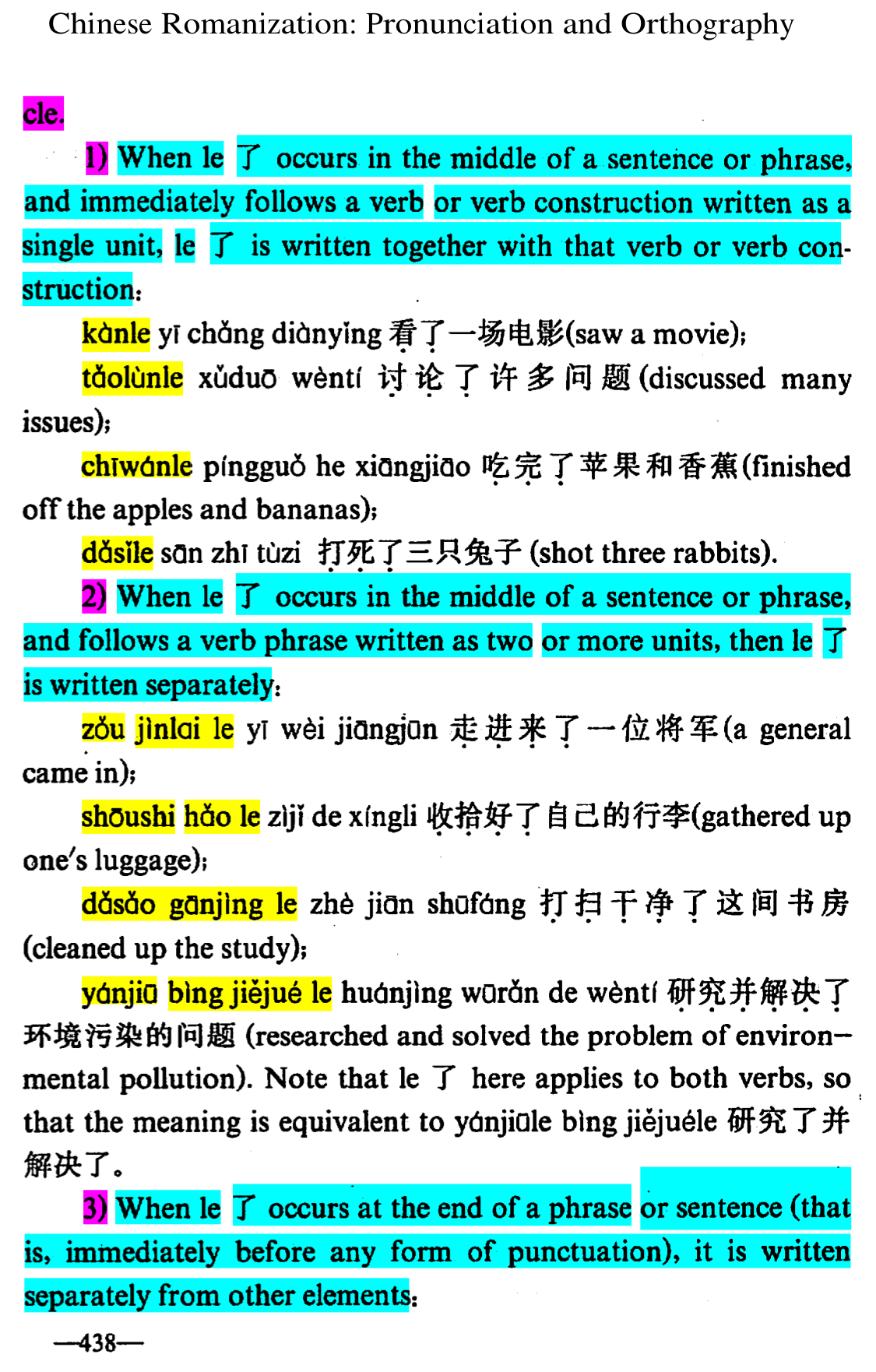
Since Chinese characters are the oldest continuously used writing system, lots and lots of tradition has accumulated around them, that is, lots and lots of peer pressure from lots and lots of dead people. However, even with this exceptional weight of tradition, is there any more reason to go along with the traditions associated with characters than there is to go along with any other traditions or peer pressure from imperfect humans in Satan’s world? No! For example, the exceptional weight of tradition involving Christmas, so beloved and celebrated by so many for so long, does not make it any less problematic for God’s true people.

汉字 / 漢字? Pīnyīn?

Regarding characters and Pīnyīn (Pīn·yīn {Piecing Together of} · Sounds → [Pinyin] 拼音), after decades of learning Mandarin for the Mandarin field and several years of research into how first principles of linguistics apply to such learning, the advice I now give is: Use the simple, elegant Pīnyīn (Pīn·yīn {Piecing Together of} · Sounds → [Pinyin] 拼音) system when you can, and just use the unnecessarily extraordinarily complex characters when you have to.

That advice may be contrary to the traditional consensus of thousands of years’ worth of dead people, as well as that of most living people, but as Jesus taught us, the wide road can lead to a bad place, and the narrow road can be the one that leads to a good place. To walk such a narrow road when most are on the corresponding wide road, we need to overcome peer pressure, whether it comes from the living or it comes from the dead in the form of tradition.—Matthew 7:13, 14.

Categories
Culture History Science Technology Theocratic

jìnhuà lùn

jìnhuà (jìn·huà {to advance} · transforming → [evolution] 进化 進化)
lùn (discussing → [theory; doctrine]) ← Tap/click to show/hide the “flashcard”

The Shēngmìng Láizì Chuàngzào Ma? ((Shēngmìng Life 生命) (Lái·zì Came · From 来自 來自) (Chuàng·zào Initiating · {Making, Creating} → [Creating] 创造 創造) (Ma [? ptcl for “yes/no” questions])? [Was Life Created? (lc)]) (Was Life Created? (lc)) brochure and the Shēngmìng de Qǐyuán—Zhíde Sīkǎo de Wǔ Ge Wèntí ((Shēngmìng Life 生命) (de ’s 的) (Qǐ·yuán {Rising → [Starting]} · Source → [Origin] 起源/原)—(Zhí·de Worth · Getting → [Worth] 值得) (Sī·kǎo {Thinking About} · Examining 思考) (de ’s 的) (Wǔ Five 五) (Ge [mw]個/个) (Wèn·tí Asking · Subjects → [Questions] 问题 問題) [The Origin of Life​—Five Questions Worth Asking (lf)]) (The Origin of Life​—Five Questions Worth Asking (lf)) brochure were originally published back in 2010, but recently, the English version of the Was Life Created? brochure was updated to the December 2022 Printing, and the Mandarin version of it was updated to the February 2023 Printing. Also, the Was Life Created? brochure and the Origin of Life brochure are now in the Teaching Toolbox section in the JW Library app. So, it would be good to consider some of the expressions used in the Mandarin versions of these publications that can be so helpful when discussing whether life was created.

How It Started

For most of human history, people in general believed that life was created. Of course it was, because how else could the wonderful, extraordinarily complex thing that is life have come into existence? The very first part of the Bible contains an account of how God created life, and many ancient peoples had their creation myths. (The ancient Chinese seem to have had several creation myths.) Eventually, though, the idea represented in English by the word “evolution” and in Mandarin by this week’s MEotW “jìnhuà (jìn·huà {to advance} · transforming → [evolution] 进化 進化) lùn (discussing → [theory; doctrine]) came to grow in popularity in this world that’s alienated from God.—Ephesians 4:17, 18.

Screenshot of the CHS+Py _Was Life Created?_ brochure on the Watchtower ONLINE LIBRARY, with _“Jìnhuàlùn”_ circled

How It Breaks Down

The “jìn ({advance; enter [into; in]}) in “jìnhuà (jìn·huà {to advance} · transforming → [evolution] 进化 進化) is also used in “jìnbù (jìn·bù {advancing [of]} · steps → [progress[ing]; advancing; improvement] 进步 進步), and it means “to advance”.

The “huà (change; transform; convert [→ [melt; dissolve; thaw | abbr. for huàxué (chemistry)]] 化) in “jìnhuà (jìn·huà {to advance} · transforming → [evolution] 进化 進化) is also used in “qiánghuà (qiáng·huà {to be strong} · transform → [strengthen] 强化 強化) (“strengthen”), and it basically means “to transform”. Interestingly, this “huà (change; transform; convert [→ [melt; dissolve; thaw | abbr. for huàxué (chemistry)]] 化) also occurs in “wénhuà (wén·huà {(with) writing} · transformed (system) → [culture] | {(with) writing} · transformed → [cultural] 文化) (“culture”), which seems to literally mean “(system) transformed by writing”.

As for the “lùn (discussing → [theory; doctrine]) in “jìnhuà (jìn·huà {to advance} · transforming → [evolution] 进化 進化) lùn (discussing → [theory; doctrine]), it basically means “to discuss”, as it does in “tǎolùn (discussing [→ [discussion]] 讨论 討論), and it can effectively mean “theory; doctrine”.

On one level, then, the way that the expression “jìnhuà (jìn·huà {to advance} · transforming → [evolution] 进化 進化) lùn (discussing → [theory; doctrine]) works is that it’s “the theory of transforming to advance”.

How It’s Going

A while ago, I saw a video on the Internet in which the presenter pointed out that in science, “theory” does not mean the same as it does in regular usage. As Wikipedia summarizes in its article on scientific theories:

A scientific theory differs from a scientific fact or scientific law in that a theory explains “why” or “how”: a fact is a simple, basic observation, whereas a law is a statement (often a mathematical equation) about a relationship between facts and/or other laws. For example, Newton’s Law of Gravity is a mathematical equation that can be used to predict the attraction between bodies, but it is not a theory to explain how gravity works.[source] Stephen Jay Gould wrote that “…facts and theories are different things, not rungs in a hierarchy of increasing certainty. Facts are the world’s data. Theories are structures of ideas that explain and interpret facts.”[source]

The meaning of the term scientific theory (often contracted to theory for brevity) as used in the disciplines of science is significantly different from the common vernacular usage of theory.[source][source] In everyday speech, theory can imply an explanation that represents an unsubstantiated and speculative guess,[source] whereas in a scientific context it most often refers to an explanation that has already been tested and is widely accepted as valid.[source][source]

How It Could, and Will, End Up

Note, though, the statements that follow in that Wikipedia article:

The strength of a scientific theory is related to the diversity of phenomena it can explain and its simplicity. As additional scientific evidence is gathered, a scientific theory may be modified and ultimately rejected if it cannot be made to fit the new findings; in such circumstances, a more accurate theory is then required.

Yes, while a scientific theory like evolution may be considered by some to be having some evidence supporting it, in true science, it may also end up being disproven and thus rejected after new evidence comes to light. As suggested by the basic meaning of the “lùn (discussing → [theory; doctrine]) in “jìnhuà (jìn·huà {to advance} · transforming → [evolution] 进化 進化) lùn (discussing → [theory; doctrine]), a scientific theory is an ongoing discussion, not a sealed, unalterable conclusion.

Let us be positive and courageous then, in discussing with Mandarin-speaking people the evidence presented in the Shēngmìng Láizì Chuàngzào Ma? ((Shēngmìng Life 生命) (Lái·zì Came · From 来自 來自) (Chuàng·zào Initiating · {Making, Creating} → [Creating] 创造 創造) (Ma [? ptcl for “yes/no” questions])? [Was Life Created? (lc)]) (Was Life Created? (lc)) brochure and in the Shēngmìng de Qǐyuán—Zhíde Sīkǎo de Wǔ Ge Wèntí ((Shēngmìng Life 生命) (de ’s 的) (Qǐ·yuán {Rising → [Starting]} · Source → [Origin] 起源/原)—(Zhí·de Worth · Getting → [Worth] 值得) (Sī·kǎo {Thinking About} · Examining 思考) (de ’s 的) (Wǔ Five 五) (Ge [mw]個/个) (Wèn·tí Asking · Subjects → [Questions] 问题 問題) [The Origin of Life​—Five Questions Worth Asking (lf)]) (The Origin of Life​—Five Questions Worth Asking (lf)) brochure. If the ones we speak to are truly scientific people, as well as being humble people, they will consider the evidence with open minds, and not just dogmatically stick to believing in evolution simply because it’s a currently accepted scientific theory.


For convenience:

The direct link for the current generation Pīnyīn (Pīn·yīn {Piecing Together of} · Sounds → [Pinyin] 拼音) Plus resource for the Was Life Created? brochure is:

The short link for Chinese field language-learning links for the Was Life Created? brochure is:

More Pīnyīn (Pīn·yīn {Piecing Together of} · Sounds → [Pinyin] 拼音) and Pīnyīn (Pīn·yīn {Piecing Together of} · Sounds → [Pinyin] 拼音) Plus web material based on the Mandarin Was Life Created? brochure will be made available in the Pīnyīn (Pīn·yīn {Piecing Together of} · Sounds → [Pinyin] 拼音) Plus web resource as time allows. Work is now underway to produce a Pīnyīn (Pīn·yīn {Piecing Together of} · Sounds → [Pinyin] 拼音) Plus web resource for the Mandarin Origin of Life brochure as well.
Categories
Culture Current Events History Language Learning Science Technology

xuānchuán

xuānchuán (xuān·chuán declaring; proclaiming; announcing · {passing on}; spreading; transmitting → [conducting propaganda; propagating; disseminating; publicizing | propaganda] 宣传 宣傳) ← Tap/click to show/hide the “flashcard”

Several MEotW posts, including last week’s post on “cì’ěr (cì’·ěr {stabs; pricks → [irritates; pierces]} · ear → [grating on the ear; jarring; ear-piercing] 刺耳), have mentioned propaganda. So, it seems that it’s about time to consider the Mandarin expression “xuānchuán (xuān·chuán declaring; proclaiming; announcing · {passing on}; spreading; transmitting → [conducting propaganda; propagating; disseminating; publicizing | propaganda] 宣传 宣傳)”, which is often used to translate “propaganda”.

Morphemic Breakdown

The “xuān (declare; proclaim; announce 宣) in “xuānchuán (xuān·chuán declaring; proclaiming; announcing · {passing on}; spreading; transmitting → [conducting propaganda; propagating; disseminating; publicizing | propaganda] 宣传 宣傳) means “declare; proclaim; announce”, and it also appears in expressions like “xuānbù (xuān·bù declare; proclaim; announce · declare; spread; announce; publish; proclaim 宣布 宣布/佈)”, “xuānjiǎng (xuān·jiǎng declare; proclaim; announce · {speak of → [explain]} 宣讲 宣講)”, “xuānyáng (xuān·yáng declare; proclaim; announce · {raise → [make known]} 宣扬 宣揚)”, etc.

The “chuán ({pass on}; {hand down}; spread; transmit [→ [summon]]) in “xuānchuán (xuān·chuán declaring; proclaiming; announcing · {passing on}; spreading; transmitting → [conducting propaganda; propagating; disseminating; publicizing | propaganda] 宣传 宣傳) means “pass on; hand down; spread; transmit”, and it also appears in expressions like “chuándào (chuán·dào spreading · way → [preaching] 传道 傳道)”, “Chuándàoshū (Chuán·dào·shū Spreading · Way · Book → [Ecclesiastes] 传道书 傳道書)”, “chuánjiǎng (chuán·jiǎng spread · {speak of; say; tell} [(that)] 传讲 傳講)”, “chuántǒng (chuán·tǒng {passed on} · {gathered together (things) → [interconnected system]} → [tradition | traditional] 传统 傳統)”, etc.

The above-mentioned morphemes in “xuānchuán (xuān·chuán declaring; proclaiming; announcing · {passing on}; spreading; transmitting → [conducting propaganda; propagating; disseminating; publicizing | propaganda] 宣传 宣傳) are both basically verbs, and “xuānchuán (xuān·chuán declaring; proclaiming; announcing · {passing on}; spreading; transmitting → [conducting propaganda; propagating; disseminating; publicizing | propaganda] 宣传 宣傳) itself is also basically a verb. However, it’s also used as a noun, making it a verbal noun, or a gerundial noun, in those cases.

How Bad Is It?

As mentioned in the excellent Referenced Theo. Expressions (RTE) resource, “it seems 宣传 [xuānchuán] is a neutral word in Chinese (can be either positive or negative)”. Indeed, the morphemes that make up “xuānchuán (xuān·chuán declaring; proclaiming; announcing · {passing on}; spreading; transmitting → [conducting propaganda; propagating; disseminating; publicizing | propaganda] 宣传 宣傳), mentioned above, are themselves both morally neutral. Like any technology, whether the things that these morphemes represent result in good or harm depends on how they are used. Unfortunately, we are now living in the last days of a world ruled by Satan the Devil, a world filled with self-seeking people who totally would misuse anything that would potentially enable them to exert influence over other people.—2 Timothy 3:1–5; 1 John 5:19.

It should not be surprising, then, that the worldly Chinese governing authorities may at times disseminate what many would recognize as propaganda—biased, misleading distortions of the truth meant to promote certain viewpoints, political or cultural objectives, etc. Add to that how Eastern culture generally encourages people to conform to the group and not question authority, and it’s not surprising that many who grew up marinated in Chinese culture have come to just accept such propaganda as fact, as just the way things are in the Chinese world.

As for the West, even though it has more of a culture of questioning authority, it, along with the world in general that the Internet can reach, has been experiencing a rise in misinformation and disinformation. Social media and other technologies that have become available have given people more power to select what information they want to take in, and, egged on by engagement-seeking algorithms, many have unfortunately chosen to just focus on information sources that tell them what they want to hear, whether it’s true or not. As the Bible foretold long ago:

For there will be a period of time when they will not put up with the wholesome teaching, but according to their own desires, they will surround themselves with teachers to have their ears tickled. They will turn away from listening to the truth and give attention to false stories.
2 Timothy 4:3, 4.

As Jehovah’s people, we especially need to be wary of any worldly propaganda, because we want to be the true worshippers spoken of by Jesus, ones who “must worship with spirit and truth”.—John 4:23, 24.

Unfortunately, these days, even something as basically human as language gets politicized, so even just being language learners in the Mandarin field, we still need to watch out for worldly propaganda. Below are a couple of commonly accepted beliefs about the Chinese languages that are actually propaganda, not truth.

Propaganda About “Dialects”

“Mandarin, Cantonese, Shanghainese, etc. are just dialects of the one Chinese language.” The truth is that being mutually unintelligible, Mandarin, Cantonese, Shanghainese, etc. are really different languages, like French and English are different languages. The erroneous belief that Mandarin, Cantonese, Shanghainese, etc. are just dialects of the one Chinese language has been promoted by the worldly central governing authorities in China to bolster the idea that China is indeed one big happy political entity that should have a central government—them.

Historically, though, it wasn’t always the case that there was just one government over the land that China now occupies. That didn’t become the case until Qín Shǐhuáng ((Qín {Qin (dynasty)} 秦) (Shǐ·huáng Beginning · Emperor 始皇) (the founder of the Qín dynasty and the first emperor of China)) conquered the other Warring States—which were peers of his own state of Qín ({Qin (one of the Warring States)} 秦)—and became the first emperor of a forcefully unified China. If it wasn’t for this, China could conceivably have become like modern-day Europe, with several peer states which are recognized as having their own distinct languages and cultures.

So, there is no need to allow the idea that Mandarin, Cantonese, etc. are just dialects to sabotage our efforts to learn Mandarin well by making us think that we can just take Cantonese, etc. and twist it a little to get Mandarin—all we would get then is a twisted mess!

Propaganda and the Characters

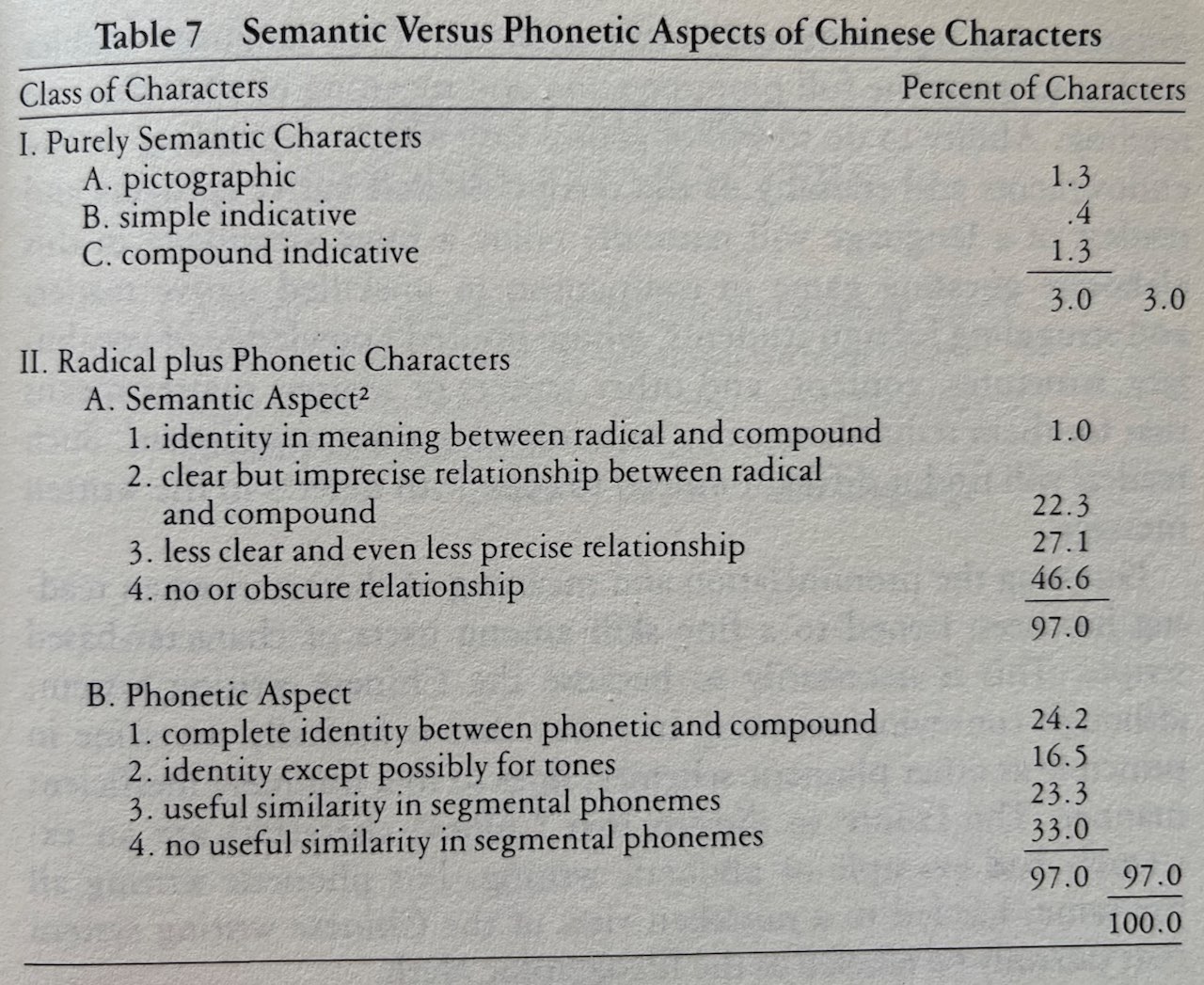
“Chinese characters are the primary aspect of the Chinese languages.” The truth is that when it comes to human language, speech is primary, not writing.

However, given how so many people around the world are so enchanted with the visually intricate Chinese characters, some may feel that the characters give China a certain amount of cultural—and maybe even political—soft power. Many also feel that characters have a unifying effect on Chinese people, since they use characters to write even if they speak different Chinese languages, as explained above. Thus, many may also feel that there may be some political advantages to characters for China’s worldly central ruling authorities. So, they may thus be motivated to promote Chinese characters over, say, a system like Pīnyīn (Pīn·yīn {Piecing Together of} · Sounds → [Pinyin] 拼音) that doesn’t have the same perceived visual and cultural pizzaz that the characters have, and that is only for Mandarin.

The truth is, though, that there is really no technical requirement for any language, Chinese or otherwise, to be written using Chinese characters—Pīnyīn (Pīn·yīn {Piecing Together of} · Sounds → [Pinyin] 拼音) works fine as a writing system for Mandarin without incurring the extraordinary costs in time and effort that the characters do, and separate but similar alphabetical systems can conceivably be designed and used for other Chinese languages as well.

Re the supposed unifying effect of the Chinese characters, there is not necessarily really much of a unifying effect among the Mandarin-speakers, Cantonese-speakers, Japanese-speakers, Korean-speakers, etc. who may use characters to write, any more than the use of the Latin alphabet unifies English-speakers, French-speakers, Italian-speakers, Mandarin-speakers, etc. who may use it to write. An especially stark current example of the relative insignificance of any unifying effect that a script or writing system may have is that unfortunately, Russia and Ukraine have hardly been unified because of their both using the Cyrillic script.

We who are Jehovah’s people in particular don’t need a product of human culture like the Chinese characters to unite us—we are united by the culture of spirit and truth from Jehovah God himself!—John 4:23, 24.

Don’t Be a Gullible “Tourist”!

As Jehovah’s people, let us make sure we are advancing the interests of God’s Kingdom, and not unwittingly serving the interests of worldly Chinese governments. As missionaries and rescue workers in the Mandarin field, and not just tourists (email me for login information, and include information on who referred you and/or what group/cong. you are in), let us be focused on what really helps us to do our God-honouring and life-saving work better. Let us not be misled by the self-serving xuānchuán (xuān·chuán declaring · spreading → [propaganda] 宣传 宣傳), the propaganda, from Satan’s world.