Categories
Culture Language Learning

piānjiàn

piānjiàn (piān·jiàn {inclined; slanting; leaning → [partial; prejudiced]} · seeing → [prejudice; bias] 偏见 偏見) ← Tap/click to show/hide the “flashcard”

[Notes: Tap/click on a Pīnyīn (Pīn·yīn {Piecing Together of} · Sounds → [Pinyin] 拼音) expression to reveal its “flashcard”; tap/click on a “flashcard” or its Pīnyīn (Pīn·yīn {Piecing Together of} · Sounds → [Pinyin] 拼音) expression to hide the “flashcard”. 📖 📄 📘 icons mean 📖 Reveal All, 📄 Reveal Advanced, and 📘 Reveal None re all the “flashcards” in the heading, paragraph, etc. that they are placed at the beginning of.]

At the time of this writing, jw.org was featuring the article “Prejudice​—Are You Infected?”. The Mandarin version uses this week’s MEotW, “piānjiàn (piān·jiàn {inclined; slanting; leaning → [partial; prejudiced]} · seeing → [prejudice; bias] 偏见 偏見), to translate “prejudice”.

The “piān (incline; slant; lean [→ [insist on | diverge; deviate]] | inclined; slanting; leaning [→ [partial; prejudiced | stubbornly; wilfully; insistently; persistently; contrarily]] 偏) in “piānjiàn (piān·jiàn {inclined; slanting; leaning → [partial; prejudiced]} · seeing → [prejudice; bias] 偏见 偏見) literally means “inclined; slanting; leaning”, and the “jiàn (see | seeing → [view (opinion)]) used here is a well-known expression that means “seeing”. So, “piānjiàn (piān·jiàn {inclined; slanting; leaning → [partial; prejudiced]} · seeing → [prejudice; bias] 偏见 偏見) literally refers to a way of seeing that’s not on the level—an accurate way of describing prejudice. The “piān (incline; slant; lean [→ [insist on | diverge; deviate]] | inclined; slanting; leaning [→ [partial; prejudiced | stubbornly; wilfully; insistently; persistently; contrarily]] 偏) in “piānjiàn (piān·jiàn {inclined; slanting; leaning → [partial; prejudiced]} · seeing → [prejudice; bias] 偏见 偏見) literally meaning “inclined; slanting; leaning” is an interesting contrast to the “píng ({[being] flat, level, even} [→ [[being] peaceful; calm | peace | [being] equal; fair; just | standard; level]] | {make [to be] flat, level, even} [→ [make peace; pacify; calm down]] 平) in “gōngpíng ({[is] just; fair; impartial} · {[is] flat, level, even → [[is] equal; fair; just; objective]} → [[is] fair; just; impartial; equitable | fairly; justly] 公平) (“fair; just; impartial; equitable”) literally meaning “flat, level, even”.

Buried Prejudice Illustrated

Of course, we who are Jehovah’s people especially consciously avoid having and displaying prejudice. However, as it happens, last week’s MEotW post on “Dōng (East) (West 西) mentioned that scientists have observed that there is such a thing as buried prejudice (prejudice that we may unconsciously have and act on), while the above-mentioned article (which originally appeared in Awake!) being featured on jw.org applies the following interesting illustration to prejudice:

English:

Prejudice is like a virus. It harms its victims, and people can be unaware that they are infected.

Mandarin:

📖 📄 📘 Piānjiàn (Piān·jiàn {inclined → [prejudiced]} · seeing → [prejudice] 偏见 偏見) jiù (exactly 就) xiàng (like 像/象) bìngdú (bìng·dú disease · {poison → [virus]} → [virus] 病毒) yíyàng (yí·yàng {(of) one} · {pattern → [way]} → [the same way] 一样 一樣) huì (will) duì (towards) rén (people 人) zàochéng (zào·chéng make · {to come to be} 造成) shānghài (shāng·hài {hurting → [harming]} · harming → [harm] 伤害 傷害), érqiě (ér·qiě and · moreover 而且) (one 一) ge ([mw]個/个) rén (person 人) wǎngwǎng (wǎng·wǎng {going towards} · {going towards} → [often] 往往) chájué budào ((chá·jué scrutinizes · {to wake to → [to become aware of]} → [is aware of] 察/查觉 察/查覺) (bu·dào not · {arriving at} 不到) [is not aware]) zìjǐ (self 自己) (already 已) bèi ([passive signifier] → [is] 被) gǎnrǎn (gǎn·rǎn {feeling → [being affected by]} · {having caught (disease)} → [infected] 感染) le ([indicates a change] 了).

We Don’t Have Time for This!

As also mentioned in last week’s MEotW post on “Dōng (East) (West 西), the Mandarin field is one in which East often meets West, and while people can find the differences interesting, differences can also pose spiritual challenges, since something being different than what we are used to means that we are not used to it, and it generally means that we do not deeply know or understand it.

Will we respond to the unknown with fear of the unknown? Let us make good use of the above-mentioned Awake! article and other provisions from Jehovah and his organization, to help us rise to the spiritual challenges posed by the people and things we encounter in the Mandarin field that are different from what we have been used to. That way, we can focus on contributing positively to all the important God-honouring and life-saving work we still have to do in this field.

The worldwide Mandarin field may in fact be the largest language field that has ever existed in human history, and with about 95% of the planet’s Chinese people living in China itself, all the government opposition there has been to our work, all the traditions-based encumbrances and propaganda-fueled confusion that Mandarin field language learners have had to deal with, etc., we may just have scratched the surface of the work that still needs to be done in this massive worldwide field. So, we really don’t have time for the problems that can be caused by prejudice, buried or otherwise.

Screenshot of spreadsheet table and chart showing the estimated numbers of Chinese people inside & outside China in 2023

(The above is from a spreadsheet which contains source links. A PDF file (with working source links) for that spreadsheet can be downloaded here.)

Categories
Language Learning Science Technology Theocratic

wùzhǒng

wùzhǒng (wù·zhǒng {thing → [creature]} · species → [species] 物种 物種) ← Tap/click to show/hide the “flashcard”

The Shēngmìng Láizì Chuàngzào Ma? ((Shēngmìng Life 生命) (Lái·zì Came · From 来自 來自) (Chuàng·zào Initiating · {Making, Creating} → [Creating] 创造 創造) (Ma [? ptcl for “yes/no” questions])? [Was Life Created? (lc)]) (Was Life Created? (lc)) brochure and the Shēngmìng de Qǐyuán—Zhíde Sīkǎo de Wǔ Ge Wèntí ((Shēngmìng Life 生命) (de ’s 的) (Qǐ·yuán {Rising → [Starting]} · Source → [Origin] 起源/原)—(Zhí·de Worth · Getting → [Worth] 值得) (Sī·kǎo {Thinking About} · Examining 思考) (de ’s 的) (Wǔ Five 五) (Ge [mw]個/个) (Wèn·tí Asking · Subjects → [Questions] 问题 問題) [The Origin of Life​—Five Questions Worth Asking (lf)]) (The Origin of Life​—Five Questions Worth Asking (lf)) brochure were originally published back in 2010, but recently, the English version of the Was Life Created? brochure was updated to the December 2022 Printing, and the Mandarin version of it was updated to the February 2023 Printing. Also, the Was Life Created? brochure and the Origin of Life brochure are now in the Teaching Toolbox section in the JW Library app. So, it would be good to consider some of the expressions used in the Mandarin versions of these publications that can be so helpful when discussing whether life was created.

Feeling Unqualified?

Whether or not a Creator exists is one of the first questions that needs to be settled in order for one to make spiritual progress, and these days, much scientific or technical information, both accurate and inaccurate, is available in connection with this question. So, it would be good for us to try our best to get conversant with such scientific or technical information.

However, perhaps some hesitate to discuss scientific or technical subjects in their ministry (especially in their Mandarin ministry), because of feeling unqualified, or not “smart” enough. Even practising professionals in technical industries such as web or app development, etc., sometimes talk about being affected by impostor syndrome, so it wouldn’t be surprising if some of us in the Mandarin field who have neither been highly educated about science nor systematically trained on Mandarin may feel like impostors when confronting the prospect of speaking to people in Mandarin about scientific subjects.

The Bible contains many examples of ones who similarly felt unqualified to do what Jehovah directed them to do, such as Moses, Gideon, Amos, Jeremiah, etc. However, despite them feeling unqualified, Jehovah provided them with the help and support required for them to ultimately accomplish what he wanted them to accomplish. Also, David coming off victorious against Goliath is a classic example of someone who, because of Jehovah’s help, succeeded in spite of appearing unqualified from a human viewpoint.

The article “Do Not Limit Yourself​—Overcoming Feelings of Inadequacy”, from the November 2012 Kingdom Ministry, makes some good points that can help us if we feel unqualified to participate in some aspect of our God-given ministry. It’s focused on the Bible study activity in general, but the points it makes can also apply to, say, speaking to people in Mandarin about evolution and creation.

Related Mandarin Resources

Speaking of speaking to people in Mandarin about evolution and creation, helping us to do so is the official Pīnyīn (Pīn·yīn {Piecing Together of} · Sounds → [Pinyin] 拼音) material for the Shēngmìng Láizì Chuàngzào Ma? ((Shēngmìng Life 生命) (Lái·zì Came · From 来自 來自) (Chuàng·zào Initiating · {Making, Creating} → [Creating] 创造 創造) (Ma [? ptcl for “yes/no” questions])? [Was Life Created? (lc)]) (Was Life Created? (lc)) brochure and for the Shēngmìng de Qǐyuán—Zhíde Sīkǎo de Wǔ Ge Wèntí ((Shēngmìng Life 生命) (de ’s 的) (Qǐ·yuán {Rising → [Starting]} · Source → [Origin] 起源/原)—(Zhí·de Worth · Getting → [Worth] 值得) (Sī·kǎo {Thinking About} · Examining 思考) (de ’s 的) (Wǔ Five 五) (Ge [mw]個/个) (Wèn·tí Asking · Subjects → [Questions] 问题 問題) [The Origin of Life​—Five Questions Worth Asking (lf)]) (The Origin of Life​—Five Questions Worth Asking (lf)) brochure that Jehovah’s organization has made available. Also, some related unofficial 3-line and Pīnyīn (Pīn·yīn {Piecing Together of} · Sounds → [Pinyin] 拼音) Plus material is also available, as detailed at the tiandi.info/lc short link for Chinese language-learning resources for the Was Life Created? brochure. (Pīnyīn (Pīn·yīn {Piecing Together of} · Sounds → [Pinyin] 拼音) Plus material and a short link for the Origin of Life brochure are also in the works.)

This blog will also seek to help out by occasionally discussing expressions that appear in the Mandarin versions of the Was Life Created? brochure and the Origin of Life brochure. One such expression is this week’s MEotW, “wùzhǒng (wù·zhǒng {thing → [creature]} · species → [species] 物种 物種), which is used to translate the English word “species”.

Species and Kinds in Mandarin

First, what does “species” even mean in English? One dictionary gives this definition:

Biology A group of closely related organisms that are very similar to each other and are usually capable of interbreeding and producing fertile offspring.

Now, consider this footnote in the Was Life Created? brochure that discusses how “species” compares to the term “kind” that’s used in the Bible’s Genesis account:

While the word “species” is used frequently in this section, it should be noted that this term is not found in the Bible book of Genesis. There we find the term “kind,” which is much broader in meaning. Often, what scientists choose to call the evolution of a new species is simply a matter of variation within a “kind,” as the word is used in the Genesis account.

With the above in mind, note that the Was Life Created? brochure (Mandarin version © 2010, 2023-02 Printing) uses “wùzhǒng (wù·zhǒng {thing → [creature]} · species → [species] 物种 物種) to translate “species”, and it uses the “lèi ({kind; type; class; category; genus [of]} | {resemble; be similar to}) in “rénlèi (rén·lèi human/man·kind 人类 人類) to translate “kinds”, as referred to in the Bible book of Genesis.

In comparison, worldly dictionaries like those that can be viewed in the Pleco app join the Was Life Created? brochure in presenting Wùzhǒng Qǐyuán ((Wù·zhǒng {Thing → [Creature]} · Species’ → [Species’] 物种 物種) (Qǐ·yuán {Rising → [Starting]} · Source → [Origin] 起源/原) [Origin of Species]) as the Mandarin translation of “Origin of Species”, the famous book by Charles Darwin. Also, note that in the Mandarin translation of this passage:

The Bible word “kinds” is not a scientific term, but it seems to refer to broad divisions of life-forms. Thus, a single “kind” may include many species or varieties.

the 2021 Awake, No. 3 uses “zhǒnglèi (zhǒng·lèi {{species [of]} | {seed; strain; breed [of]} | {type [of]}; {kind [of]}} · {kind; type; class; category; genus [of]} 种类 種類) to translate “species”, and it follows the current Mandarin New World Translation Bible (nwtsty) in using “lèibié (lèi·bié kind; type; class; category; genus · differentiated → [classification; category; kind] 类别 類別) to translate “kinds”. (Compare Genesis 1:24, 25 in English and Mandarin.) Also, in case you ever encounter “pǐnzhǒng (pǐn·zhǒng product · variety → [breed; strain; variety] 品种 品種)”, that’s what this issue of Awake! uses to translate “varieties”.


For convenience:

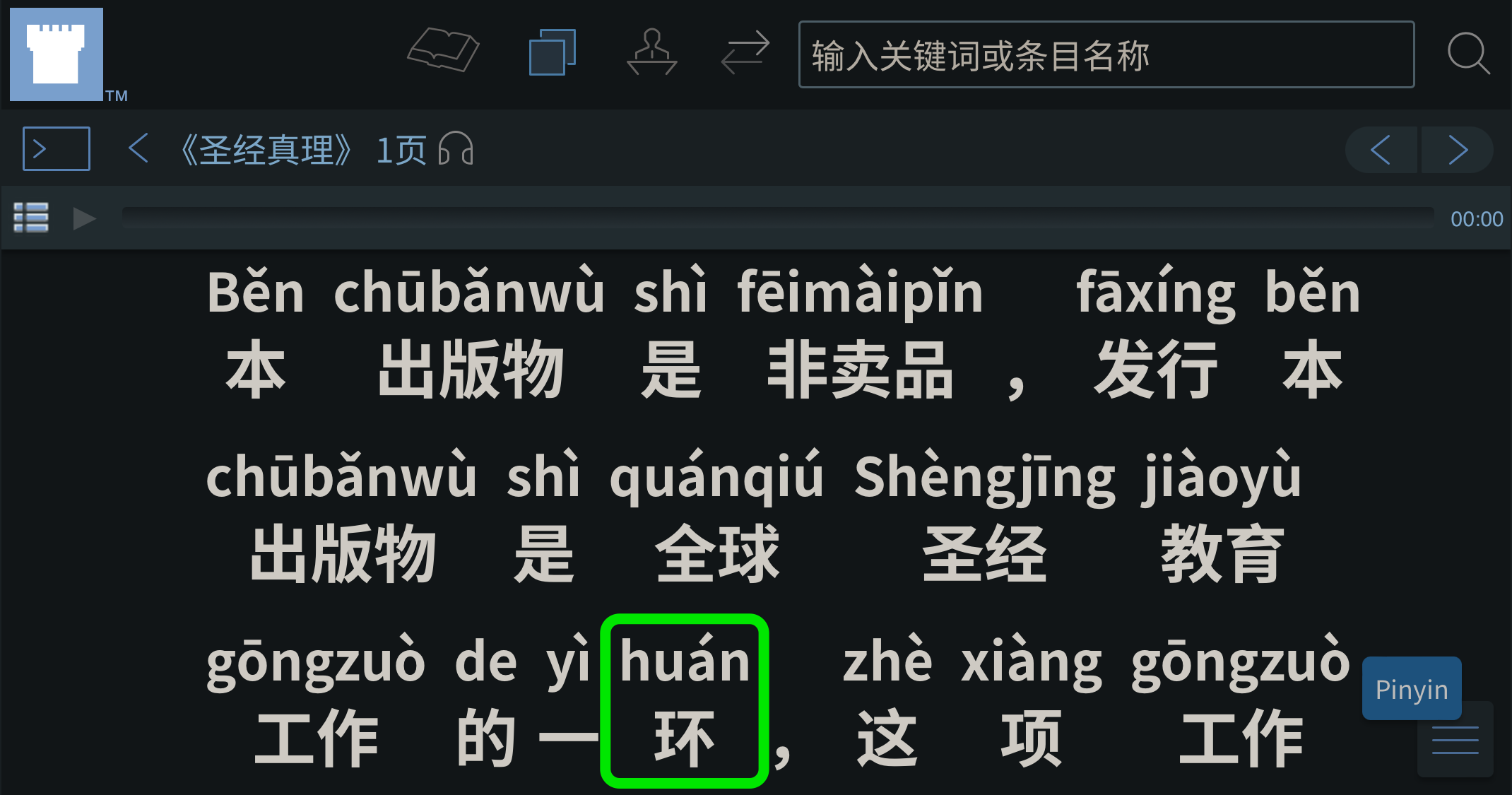
The direct link for the current generation Pīnyīn (Pīn·yīn {Piecing Together of} · Sounds → [Pinyin] 拼音) Plus resource for the Was Life Created? brochure is:

The short link for Chinese field language-learning links for the Was Life Created? brochure is:

More Pīnyīn (Pīn·yīn {Piecing Together of} · Sounds → [Pinyin] 拼音) and Pīnyīn (Pīn·yīn {Piecing Together of} · Sounds → [Pinyin] 拼音) Plus web material based on the Mandarin Was Life Created? brochure will be made available in the Pīnyīn (Pīn·yīn {Piecing Together of} · Sounds → [Pinyin] 拼音) Plus web resource as time allows. Work is now underway to produce a Pīnyīn (Pīn·yīn {Piecing Together of} · Sounds → [Pinyin] 拼音) Plus web resource for the Mandarin Origin of Life brochure as well.
Categories
Culture History Language Learning Science

tóngbèi yālì

tóngbèi (tóng·bèi (from people of the) same · generation → [peer] 同辈 同輩)
yālì (yā·lì pressing · force → [pressure] 压力 壓力) ← Tap/click to show/hide the “flashcard”

[Notes: Tap/click on a Pīnyīn (Pīn·yīn {Piecing Together of} · Sounds → [Pinyin] 拼音) expression to reveal its “flashcard”; tap/click on a “flashcard” or its Pīnyīn (Pīn·yīn {Piecing Together of} · Sounds → [Pinyin] 拼音) expression to hide the “flashcard”. 📖 📄 📘 icons mean 📖 Reveal All, 📄 Reveal Advanced, and 📘 Reveal None re all the “flashcards” in the heading, paragraph, etc. that they are placed at the beginning of.]

At the time of this writing, jw.org was featuring a video with the following title, which includes this week’s MEotW, “tóngbèi (tóng·bèi (from people of the) same · generation → [peer] 同辈 同輩) yālì (yā·lì pressing · force → [pressure] 压力 壓力)”, in the Mandarin text:

English:

Stand Up to Peer Pressure!

Mandarin:

📖 📄 📘 Xiàng (To向/曏/嚮) Tóngbèi (Tóng·bèi (from People of the) Same · Generation → [Peer] 同辈 同輩) Yālì (Yā·lì Pressing · Force → [Pressure] 压力 壓力) Shuō (Say說/説) (No 不)!

Morphemic Breakdown

In “tóngbèi (tóng·bèi (from people of the) same · generation → [peer] 同辈 同輩) yālì (yā·lì pressing · force → [pressure] 压力 壓力)”, “tóng (same; similar | {together [with]}; {in common}同/仝) means “same”, and “bèi (generation | lifetime | {people of a certain kind}; class) means “generation”. Additionally, in this context, we can consider it to be implied that the “tóngbèi (tóng·bèi (from people of the) same · generation → [peer] 同辈 同輩) effectively means “(from people of the) same generation”, or “peer”, used as an adjective.

As for the “yālì (yā·lì pressing · force → [pressure] 压力 壓力)”, in this expression, “yā (press; {push/hold down} [→ [control; quell]]) means “pressing”, and “lì (power; strength; force [→ [ability]] | forcefully 力) means “force”. So, “yālì (yā·lì pressing · force → [pressure] 压力 壓力) here effectively means “pressure”, and thus “tóngbèi (tóng·bèi (from people of the) same · generation → [peer] 同辈 同輩) yālì (yā·lì pressing · force → [pressure] 压力 壓力) effectively means “peer pressure”.

As mentioned in the MEotW post on “shǔlíng (shǔ·líng {(in the) category (of)} · spirit → [spiritual (nwtsty-CHS Appx. A2 notes change from “shǔlíng” to “xīnlíng”, etc.)] 属灵 屬靈) zhànzhēng (zhàn·zhēng war · contending → [war; warfare] 战争 戰爭), Satan and his underlings undoubtedly continue to view peer pressure as a highly effective spiritual weapon of mass destruction for them.

Should We Fear the Dead?

What do dead people have to do with peer pressure? As ones educated in Bible truth, we know that the dead are not conscious, so they can no longer affect those of us who are living, right? (Ecclesiastes 9:5, 10) Well, they can if we let them, as illuminated by this English saying:

Tradition is just peer pressure from dead people.

Yes, while many may assume that peer pressure is mainly just a problem that affects young people who have not yet come into their own as individuals with their own minds and hearts, the truth is that people of all ages who follow traditions handed down from those who came before us are going along with peer pressure from these dead people—they all did x so we also do x. Sometimes, such following of tradition can be good, just as some peer pressure can be positive. However, just as peer pressure to smoke, to take drugs, to engage in nationalistic, immoral, or false religious practices, etc. is bad, some traditions can be bad too.

Peer Pressure and Chinese Characters

Since Chinese characters are the oldest continuously used writing system, lots and lots of tradition has accumulated around them, that is, lots and lots of peer pressure from lots and lots of dead people. However, even with this exceptional weight of tradition, is there any more reason to go along with the traditions associated with characters than there is to go along with any other traditions or peer pressure from imperfect humans in Satan’s world? No! For example, the exceptional weight of tradition involving Christmas, so beloved and celebrated by so many for so long, does not make it any less problematic for God’s true people.

汉字 / 漢字? Pīnyīn?

Regarding characters and Pīnyīn (Pīn·yīn {Piecing Together of} · Sounds → [Pinyin] 拼音), after decades of learning Mandarin for the Mandarin field and several years of research into how first principles of linguistics apply to such learning, the advice I now give is: Use the simple, elegant Pīnyīn (Pīn·yīn {Piecing Together of} · Sounds → [Pinyin] 拼音) system when you can, and just use the unnecessarily extraordinarily complex characters when you have to.

That advice may be contrary to the traditional consensus of thousands of years’ worth of dead people, as well as that of most living people, but as Jesus taught us, the wide road can lead to a bad place, and the narrow road can be the one that leads to a good place. To walk such a narrow road when most are on the corresponding wide road, we need to overcome peer pressure, whether it comes from the living or it comes from the dead in the form of tradition.—Matthew 7:13, 14.