Categories
Culture Science Technology Theocratic

yījù

yījù (yī·jù {being depended/relied on} · evidence → [basis; foundation] 依据 依據) 👈🏼 Tap/click to show/hide the “flashcard”

[Notes: Tap/click on a Pīnyīn (Pīn·yīn {Piecing Together of} · Sounds → [Pinyin] 拼音) expression to reveal its “flashcard”; tap/click on a “flashcard” or its Pīnyīn (Pīn·yīn {Piecing Together of} · Sounds → [Pinyin] 拼音) expression to hide the “flashcard”. 📖 📄 📘 icons mean 📖 Reveal All, 📄 Reveal Advanced, and 📘 Reveal None re all the “flashcards” in the heading, paragraph, etc. that they are placed at the beginning of.]

The Shēngmìng Láizì Chuàngzào Ma? ((Shēngmìng Life 生命) (Lái·zì Came · From 来自 來自) (Chuàng·zào Initiating · {Making, Creating} → [Creating] 创造 創造) (Ma [? ptcl for “yes/no” questions])? [Was Life Created? (lc)]) (Was Life Created? (lc)) brochure and the Shēngmìng de Qǐyuán—Zhíde Sīkǎo de Wǔ Ge Wèntí ((Shēngmìng Life 生命) (de ’s 的) (Qǐ·yuán {Rising → [Starting]} · Source → [Origin] 起源/原)—(Zhí·de Worth · Getting → [Worth] 值得) (Sī·kǎo {Thinking About} · Examining 思考) (de ’s 的) (Wǔ Five 五) (Ge [mw]個/个) (Wèn·tí Asking · Subjects → [Questions] 问题 問題) [The Origin of Life—Five Questions Worth Asking (lf)]) (The Origin of Life—Five Questions Worth Asking (lf)) brochure were originally published back in 2010, but relatively recently, the English version of the Was Life Created? brochure was updated to the December 2022 Printing, and the Mandarin version of it was updated to the February 2023 Printing. Also, the Was Life Created? brochure and the Origin of Life brochure are now in the Teaching Toolbox section in the JW Library app. So, it would be good to consider some of the expressions used in the Mandarin versions of these publications that can be so helpful when discussing whether life was created.

Basis

This week’s MEotW, which appears in the section of the Mandarin Was Life Created? brochure entitled “Nǐ (You 你) Xiāngxìn (Xiāng·xìn It · {Do Believe} → [Do Believe] 相信) Shénme (Shén·me What · [suf] 什么 什/甚麼) Ne ([? ptcl] 呢)?” (“What Do You Believe?”), is “yījù (yī·jù {being depended/relied on} · evidence → [basis; foundation] 依据 依據)”:

English:

It is our hope that this brochure will prompt you to examine again the basis for some of your beliefs.

Mandarin (WOL; Pīnyīn (Pīn·yīn {Piecing Together of} · Sounds → [Pinyin] 拼音) Plus)

📖 📄 📘 Wǒmen (Wǒ·men we · [pl] 我们 我們) xīwàng (xī·wàng hope · {gaze (into the distance) at (that) → [hope]} → [hope] 希望) běn ({root or stem of a} → [this] 本) cèzi (cè·zi brochure · [suf for nouns] 册子 冊子) néng ({will be able} 能) qūshǐ (qū·shǐ {to spur on (a horse) → [to urge on]} · {to cause} → [to prompt] 驱使 驅使) (you 你) chóngxīn (chóng·xīn again · newly 重新) xiǎngxiang (xiǎng·xiang {to think about} · {to think about} 想想) zìjǐ (self 自己) de (’s 的) kànfǎ (kàn·fǎ {looking at (some things)} · way 看法) yǒu ({does have} 有) shénme (shén·me what · [suf] 什么 什/甚麼) yījù (yī·jù {being relied on} · evidence → [basis] 依据 依據).

The first morpheme in “yījù (yī·jù {being depended/relied on} · evidence → [basis; foundation] 依据 依據) is also the first morpheme in “yīkào (yī·kào {depend/rely on} · {lean against/on → [depend/rely on]} 依靠)”. As for the second morpheme in “yījù (yī·jù {being depended/relied on} · evidence → [basis; foundation] 依据 依據)”, it’s also the second morpheme in “zhèngjù (zhèng·jù evidence; proof; testimony · evidence; certificate; proof 证据 證/証據)”. When put together in “yījù (yī·jù {being depended/relied on} · evidence → [basis; foundation] 依据 依據)”, these two morphemes literally mean “being depended/relied on evidence”, and effectively mean “basis; foundation”.

What’s Actually Evidence-Based

Those who believe in the supposedly scientific theory of evolution may suppose that much scientific evidence supports it, and some of them refer to the Bible’s creation account as a “creation myth”, or as a “fairy tale”. However, ironically, multiple lines of evidence actually show that the claims of evolution are fairy tales and fantasies, and that creation is more truly evidence-based. In fact, the Was Life Created? brochure has an entire section entitled “Evolution—Myths and Facts” in English, and “Jìnhuà‐Lùn ((Jìn·huà {to Advance} · Transforming → [Evolution] 进化 進化)‐(Lùn Discussing → [Theory]) [Evolution])Jiǎshè (Jiǎ·shè Artificial · {Settings Up} → [Hypotheses] 假设 假設) (and與/与) Shìshí (Shì·shí Matters · {Being Solid} → [Facts] 事实 事實) in Mandarin. (WOL, Pīnyīn (Pīn·yīn {Piecing Together of} · Sounds → [Pinyin] 拼音) Plus). The evolution myths discussed in this section of the Was Life Created? brochure are:

Myth 1. Mutations provide the raw materials needed to create new species.

The facts. …Research shows that mutations cannot transform an original species into an entirely new one.

Myth 2. Natural selection led to the creation of new species.

The facts. …Natural selection may be helping species adapt to the changing demands of existence, but it is not creating anything new.

Myth 3. The fossil record documents macroevolutionary changes.

The facts. …According to the fossil record, all the major groups of animals appeared suddenly and remained virtually unchanged.

Yes, the fossil record and other scientific evidence actually support what the Bible’s creation account says, that God created living things in their full form—they simply didn’t “evolve” gradually through intermediate forms, either on their own or under God’s direction.

As the MEotW post on “chuàngzào (chuàng·zào initiating · {making, creating} → [creating | creation; innovation] 创造 創造) says:

So, “chuàngzào (chuàng·zào initiating · {making, creating} → [creating | creation; innovation] 创造 創造), being made up of “chuàng (initiate; create; start; originate; {achieve (sth. for the first time)}創/刱/剏/剙) and “zào (make; build; create 造), covers the entire process of coming up with the idea for something, and then actually making or building it. This is in contrast with the idea of theistic evolution, that God somehow got the ball rolling and then sat back and let the process of evolution develop all the wonderful living things in the natural world.

Bear Witness to the Creator in Mandarin!

Indeed, it is creation, not evolution, that has a good yījù (yī·jù {being relied on} · evidence → [basis] 依据 依據), or basis in evidence. Let us not be intimidated, then, by the confident but groundless claims of evolutionists. Rather, let us courageously bear witness to the truth that the evidence points to, that Jehovah God deserves to be recognized and honoured as our Creator.—Revelation 4:11 (English WOL, Mandarin WOL, Pīnyīn (Pīn·yīn {Piecing Together of} · Sounds → [Pinyin] 拼音) Plus).

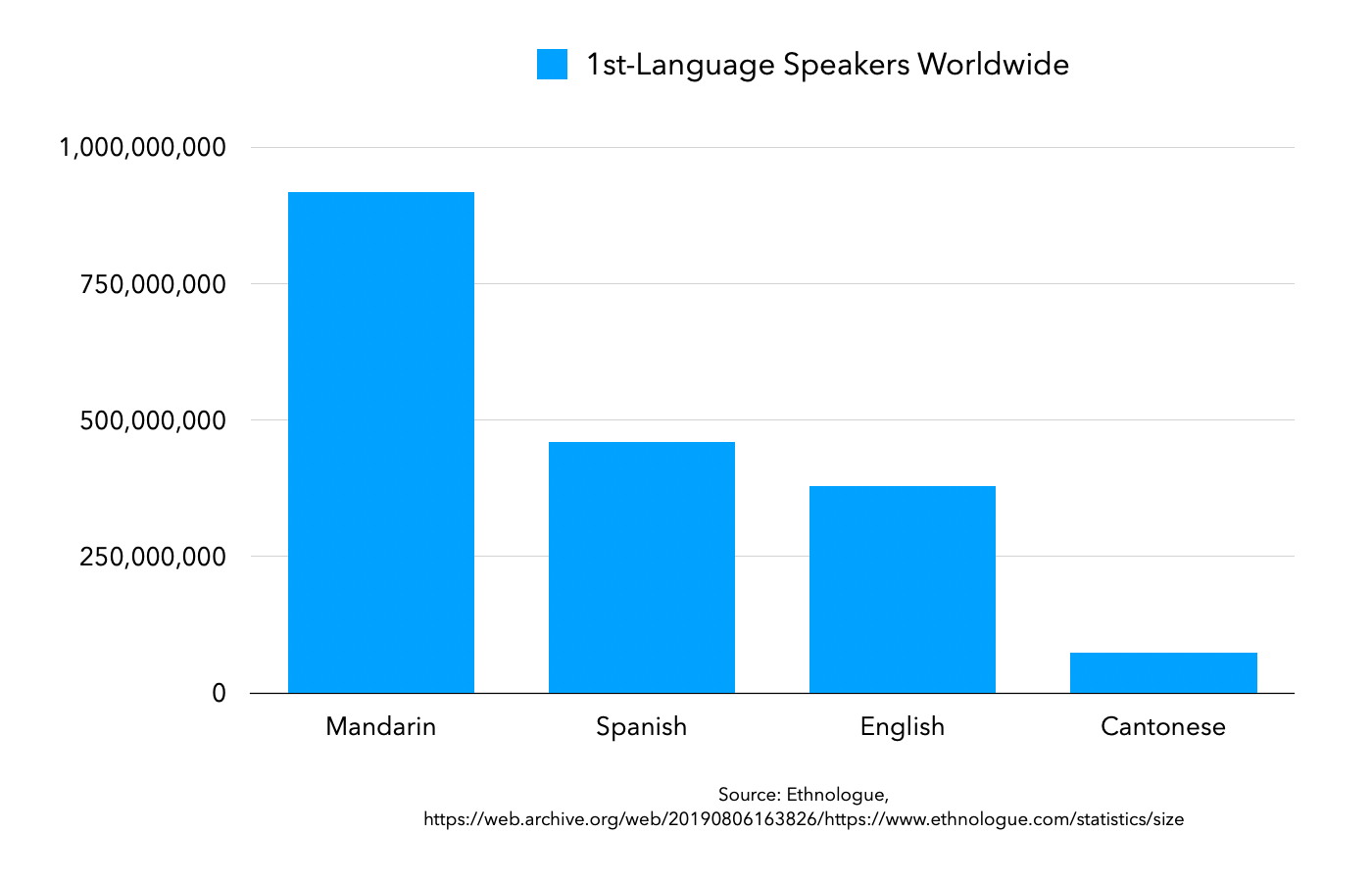
And, since their cultural background predisposes many Mandarin-speaking people to not believe in God, let us Mandarin field language learners especially not hesitate to learn and use the Mandarin expressions required to share the potentially life-altering truth about our Creator with Mandarin-speaking people. The need is great, more tools and resources are available to help us than ever, and Jehovah is sure to appreciate and bless our efforts!


For convenience:

The direct link for the current-generation Pīnyīn (Pīn·yīn {Piecing Together of} · Sounds → [Pinyin] 拼音) Plus resource for the Was Life Created? brochure is:

The short link for Chinese field language-learning links for the Was Life Created? brochure is:

More Pīnyīn (Pīn·yīn {Piecing Together of} · Sounds → [Pinyin] 拼音) and Pīnyīn (Pīn·yīn {Piecing Together of} · Sounds → [Pinyin] 拼音) Plus web material based on the Mandarin Was Life Created? brochure will be made available in the Pīnyīn (Pīn·yīn {Piecing Together of} · Sounds → [Pinyin] 拼音) Plus web resource as time allows.

Categories
Culture Current Events Experiences Language Learning Technology Theocratic

qiānqiū‐wàndài

qiānqiū (qiān·qiū thousand · autumns 千秋)wàndài (wàn·dài {ten thousand} · {replacings → [generations]} 万代 萬代) 👈🏼 Tap/click to show/hide the “flashcard”

[Notes: Tap/click on a Pīnyīn (Pīn·yīn {Piecing Together of} · Sounds → [Pinyin] 拼音) expression to reveal its “flashcard”; tap/click on a “flashcard” or its Pīnyīn (Pīn·yīn {Piecing Together of} · Sounds → [Pinyin] 拼音) expression to hide the “flashcard”. 📖 📄 📘 icons mean 📖 Reveal All, 📄 Reveal Advanced, and 📘 Reveal None re all the “flashcards” in the heading, paragraph, etc. that they are placed at the beginning of.]

Rather than dismissively thinking to ourselves that the songs produced by the organization are “just songs”, we should remember that the slave class takes seriously its responsibility to provide spiritual food to God’s people, and so it is going to make sure that the lyrics in its songs are spiritually correct, while also being emotionally moving.—Ezekiel 33:32; Matthew 24:45.

“In Ev’ry Generation”

“qiānqiū” _Pīnyīn_ Plus info, Song 2 (music+_Pīnyīn_), on iPhone 13 mini (landscape orientation)

This week’s MEotW in the unofficial Pīnyīn (Pīn·yīn {Piecing Together of} · Sounds → [Pinyin] 拼音) Plus resource “Sing Out Joyfully” Bk. (Pīnyīn+Music, Pīnyīn Plus, Web)

This week’s MEotW, “qiānqiū (qiān·qiū thousand · autumns 千秋)wàndài (wàn·dài {ten thousand} · {replacings → [generations]} 万代 萬代)”, comes from the first verse of song 2, which is entitled “Jehovah Is Your Name” in English and “Nǐ de ((Nǐ You 你) (de ’s 的) [Your]) Míng (Name 名) Shì (Is 是) Yēhéhuá (Jehovah 耶和华 耶和華) in Mandarin:

English:

In ev’ry generation—
Jehovah is your name.

Mandarin (WOL, Pīnyīn (Pīn·yīn {Piecing Together of} · Sounds → [Pinyin] 拼音) Plus):

📖 📄 📘 Nǐ de ((Nǐ you 你) (de ’s 的) [your]) míng (name 名) cóngbù (cóng·bù ever · not → [never] 从不 從不) gēnggǎi (gēng·gǎi {does change} · {does alter} 更改),
Liúchuán (Liú·chuán {flows → [circulates]} · {is handed down} (for) 流传 流傳) qiānqiū (qiān·qiū thousand · autumns 千秋)wàndài (wàn·dài {ten thousand} · {replacings → [generations]} 万代 萬代).

“Qiānqiū (Qiān·qiū thousand · autumns 千秋)wàndài (wàn·dài {ten thousand} · {replacings → [generations]} 万代 萬代) literally means “thousand autumns ten thousand replacings”. However, as explained in the MEotW post on “dài ({take the place of}; replace; subsitute | replacing; substituting → [acting; substitute | generation [→ [period; era; age]]] 代)”, this expression, while literally meaning “replacing”, can effectively mean “generation”:

Yes, the Chinese concept of a “generation” is that it is something that takes the place of or replaces what was there before—the emphasis seems to be on continuation, and a new generation is viewed as having done well if it lived up to or maintained what came before it. In contrast, in the English-speaking world, a “generation” is something new that is generated—the emphasis seems to be more on innovation, progress, and a new generation is viewed as having done well if it improved upon what came before it, and moved things ahead. For example, the English expression “next generation” indeed implies innovation and progress compared to previous generations, such as when applied to vehicles, computers, and other technology.

So, on a certain level of literalness, “qiānqiū (qiān·qiū thousand · autumns 千秋)wàndài (wàn·dài {ten thousand} · {replacings → [generations]} 万代 萬代) means “thousand autumns ten thousand generations”. As shown in the example above from song 2, this is basically a poetic way to refer to “ev’ry generation”, or “forever”. Another expression that means basically the same thing is “qiānqiū (qiān·qiū thousand · autumns 千秋)wànshì (wàn·shì {ten thousand} · generations 万世 萬世)”.

Also, another example of “wàn ({ten thousand} [→ [all; a very great number of]]萬/万) (“ten thousand”) being used in Mandarin to effectively mean “all” or “every” occurs in “wànwù (wàn·wù {ten thousand → [all]} · things 万物 萬物)”, which literally means “ten thousand things” and effectively means “all things”.

Is Everyone Replaceable?

This talk of replacing reminds me: It’s a pet peeve of mine that people sometimes use the expression “no one is irreplaceable”. While it’s true that each of us should maintain appropriate modesty and humility, I suspect that this expression really reflects worldly human corporate culture that treats people like fungible, disposable widgets instead of as individual human beings that each have different qualities and abilities. Such thinking that justifies exploiting people for small-minded short-term profit without having to appropriately recognize and reward them for their individual contributions and potential is in stark contrast to the Bible’s depiction of how Jehovah God knows and values each one of us as individuals. As Jesus said at Matthew 10:29–31:

Two sparrows sell for a coin of small value, do they not? Yet not one of them will fall to the ground without your Father’s knowledge. But even the hairs of your head are all numbered. So have no fear; you are worth more than many sparrows.

Musical Notation 🎼 and the Mandarin Field

In this post about a Mandarin expression found in our songbook, another subject that I want to touch on is: Is musical notation 🎼 too hard to be worth the trouble of producing it and using it? Are fewer and fewer people able to read it? I was fortunate enough to have been taught how to read musical notation in school. I have never thought of musical notation as being particularly difficult to use (it’s much easier to learn than characters, which many unquestioningly try to learn), and I find that it helps me to sing Kingdom songs more correctly (according to the intended melody, message, etc.) and more confidently more of the time. However, I am aware that not everyone in the Mandarin field has the same experience with musical notation. For example, a while ago, an older brother told me that he didn’t know how to read musical notation. Also, some people in the Mandarin field may have been affected by how education systems in this old world have been facing significant challenges relating to providing music education for younger ones.

Regardless of how the world may be failing in many cases to equitably provide good music education, Jehovah’s organization has pointed out that music is important in Jehovah’s worship. For example, not long ago, a Meeting Workbook said:

Music can have a powerful influence on the mind and body. Singing is an important part of our worship of Jehovah.

In accordance with the importance of music in Jehovah’s worship, Mandarin field language learners used to have available to them official material from the organization containing musical notation with Pīnyīn (Pīn·yīn {Piecing Together of} · Sounds → [Pinyin] 拼音) in the lyrics. However, perhaps at least partially because of the technical difficulty and costliness of producing material with musical notation and both Chinese characters and Pīnyīn (Pīn·yīn {Piecing Together of} · Sounds → [Pinyin] 拼音) in the lyrics, as of this writing, late in 2024, there is no official material currently available from the organization that shows Pīnyīn (Pīn·yīn {Piecing Together of} · Sounds → [Pinyin] 拼音) and musical notation on the same page or screen.

The organization continues to publish official songbook material for different languages in general that contains musical notation, so it evidently still considers musical notation to generally be worthwhile to produce. It continues to produce official material for the current songbook that uses musical notation along with lyrics rendered only in Chinese characters, without Pīnyīn (Pīn·yīn {Piecing Together of} · Sounds → [Pinyin] 拼音), and it has even produced official material that uses jiǎnpǔ (jiǎn·pǔ simple · {register or record for reference → [musical notation]} → [numbered musical notation] 简谱 簡譜) (a kind of musical notation also known as numbered musical notation) and Chinese characters.

For those who find it helpful in their Mandarin field activities to put musical notation together with Pīnyīn (Pīn·yīn {Piecing Together of} · Sounds → [Pinyin] 拼音), the unofficial Pīnyīn (Pīn·yīn {Piecing Together of} · Sounds → [Pinyin] 拼音) Plus resource “Sing Out Joyfully” Bk. (Pīnyīn+Music, Pīnyīn Plus, Web) exists and is continuing to be improved. As shown in the screenshot above, this resource aids Mandarin field language learners by breaking with tradition and featuring lyrics in the musical notation that are only in relatively large-print Pīnyīn (Pīn·yīn {Piecing Together of} · Sounds → [Pinyin] 拼音) by default—characters are relegated to Pīnyīn (Pīn·yīn {Piecing Together of} · Sounds → [Pinyin] 拼音) Plus “flashcards” that are added as time allows.

Unlike the traditionally-used but unnecessarily extraordinarily complex characters that need to be accompanied by Pīnyīn (Pīn·yīn {Piecing Together of} · Sounds → [Pinyin] 拼音) before many are able to read them, Pīnyīn (Pīn·yīn {Piecing Together of} · Sounds → [Pinyin] 拼音) itself is a simple, elegant alphabetical full writing system for Mandarin that is easy to learn and remember. Also, it is no harder to typeset than other alphabetical writing systems with diacritics, such as the writing systems now used for French, Czech, Vietnamese, etc.*

In its Tips: section at the bottom of its home page, the “Sing Out Joyfully” Bk. (Pīnyīn+Music, Pīnyīn Plus, Web) resource contains these links that some may find helpful:


For convenience:

The direct link for the Pīnyīn (Pīn·yīn {Piecing Together of} · Sounds → [Pinyin] 拼音) Plus resource for the “Sing Out Joyfully” book is:

The short link for Chinese field language-learning links for the “Sing Out Joyfully” book is:

More Pīnyīn (Pīn·yīn {Piecing Together of} · Sounds → [Pinyin] 拼音) and Pīnyīn (Pīn·yīn {Piecing Together of} · Sounds → [Pinyin] 拼音) Plus web material based on the Mandarin “Sing Out Joyfully” book will be made available in the Pīnyīn (Pīn·yīn {Piecing Together of} · Sounds → [Pinyin] 拼音) Plus web resource as time allows.


* Thanks to ongoing advancements in personal computing hardware and software, producing material that contains things like musical notation and Pīnyīn (Pīn·yīn {Piecing Together of} · Sounds → [Pinyin] 拼音) text at reasonable cost is quicker and easier than ever. At this time, production of the musical notation in the “Sing Out Joyfully” Bk. (Pīnyīn+Music, Pīnyīn Plus, Web) resource begins in free open source software called MuseScore Studio, running on a Mac. Pīnyīn (Pīn·yīn {Piecing Together of} · Sounds → [Pinyin] 拼音) text for the lyrics in the musical notation is entered using macOS’s ABC – Extended input source (keyboard layout). (Just using Pīnyīn (Pīn·yīn {Piecing Together of} · Sounds → [Pinyin] 拼音) text only here simplifies things so much compared to having to somehow input characters with Pīnyīn (Pīn·yīn {Piecing Together of} · Sounds → [Pinyin] 拼音) ruby text!) When it’s ready, the musical notation for a song is exported from MuseScore Studio into SVG format, which is a plain text format that allows for the inclusion of links that activate Pīnyīn (Pīn·yīn {Piecing Together of} · Sounds → [Pinyin] 拼音) Plus flashcards on webpages. The coding for the SVG links is currently mostly done using the text editor BBEdit, in which editing large text files is quite performant. For Pīnyīn (Pīn·yīn {Piecing Together of} · Sounds → [Pinyin] 拼音) Plus web material production in general, my current favourite tool is Nova, but such web material can be produced in any application suitable for web development, such as Visual Studio Code, etc. ^

Categories
Culture Experiences Language Learning Science Theocratic

chóngwēn

chóngwēn (chóng·wēn again · {warm up [→ [review | revise | recall; relive]]} [→ [review | relive | revive (memories, friendship, etc.)]] 重温 重溫) 👈🏼 Tap/click to show/hide the “flashcard”

[Notes: Tap/click on a Pīnyīn (Pīn·yīn {Piecing Together of} · Sounds → [Pinyin] 拼音) expression to reveal its “flashcard”; tap/click on a “flashcard” or its Pīnyīn (Pīn·yīn {Piecing Together of} · Sounds → [Pinyin] 拼音) expression to hide the “flashcard”. 📖 📄 📘 icons mean 📖 Reveal All, 📄 Reveal Advanced, and 📘 Reveal None re all the “flashcards” in the heading, paragraph, etc. that they are placed at the beginning of.]

A few years back, I wrote up a brief web page listing reasons for producing Pīnyīn (Pīn·yīn {Piecing Together of} · Sounds → [Pinyin] 拼音), etc. material for the Imitate (ia) book. Some, especially some who grew up in the West, may have felt that this book is made up of “just stories”, and ones that they were already quite familiar with, at that. However, we must remember that Chinese Bible students may often have a different perspective regarding the Bible accounts that are made to come to life in the Imitate book. As that web page said:

  • Many Chinese people in the world have not been exposed to Bible accounts the way many Westerners have.
  • Also, I have heard that some, perhaps many, Chinese Bible students tend to approach their Bible studies like intellectual exercises for accumulating chōuxiàng (abstract) head knowledge as if for a school exam, rather than as training for their hearts for their own real lives.

Later, the web page touches on how some of the real-world benefits of good storytelling like that found in the Imitate book involve empathy:

    • The actress Natalie Portman once said, “I love acting. I think it’s the most amazing thing to be able to do. Your job is practicing empathy. You walk down the street imagining every person’s life.”
  • The Imitate book helps build Bible students’ empathy towards Bible characters, which in turn helps Bible students realize that others would feel empathy towards them as well if they imitated these Bible characters—not everyone will just think they’re crazy, like many worldly friends or family members might think.

While even fictional stories can have the benefits described in the links and the quote above, true stories from the Bible can have even greater benefits, including spiritual ones.

Besides the Imitate book, another book from Jehovah’s organization that relates Bible accounts is the Learn From the Bible (lfb) book. The letter from the Governing Body in this book says that, similarly to the Imitate book, the Learn From the Bible book also “brings the Bible accounts to life and captures the feelings of those depicted”, while, unlike the Imitate book, it “tells the story of the human family from creation onward”. While the Learn From the Bible book is especially suitable for children, the letter from the Governing Body in this book says that “it can also be used to help adults who desire to learn more about the Bible”. So, it would be good to consider on this blog some of the expressions used in the Mandarin Learn From the Bible book.

For Some, It’s Keeping the Engine Warm

This week’s MEotW, “chóngwēn (chóng·wēn again · {warm up [→ [review | revise | recall; relive]]} [→ [review | relive | revive (memories, friendship, etc.)]] 重温 重溫)”, appears in the section of the Mandarin Learn From the Bible book entitled, in English, “A Letter From the Governing Body”:

English:

For the most part, this book has been prepared with children in mind. However, it can also be used to help adults who desire to learn more about the Bible. And since the Bible is a book for everyone, no doubt all of us will benefit from reviewing its lessons, which can help us to be truly happy.

Mandarin (WOL, Pīnyīn (Pīn·yīn {Piecing Together of} · Sounds → [Pinyin] 拼音) Plus):

📖 📄 📘 Běn ({root or stem of a} → [this] 本) shū (writing → [book]) zhǔyào (zhǔ·yào {master → [mainly]} · {being important} → [mainly] 主要) shì ({has been} 是) wèi (for為/爲) háizi (hái·zi children · [suf for nouns] 孩子) biānxiě (biān·xiě {woven → [compiled]} · written 编写 編寫) de ({’s (book)} 的), dàn (but 但) (also 也) néng (can 能) bāngzhù (help 帮助 幫助) chéngniánrén (chéng·nián·rén {have come to be → [fully grown]} · years · persons → [adults] 成年人) gènghǎo (gèng·hǎo more · well → [better] 更好) de (-ly 地) liǎojiě (liǎo·jiě {to understand} · {to untie → [to solve]} → [to understand] 了解 了/瞭解) Shèngjīng (Shèng·jīng (the) Holy · Scriptures → [the Bible] 圣经 聖經). Shèngjīng (Shèng·jīng (the) Holy · Scriptures → [the Bible] 圣经 聖經) shì (is 是) xiěgěi (xiě·gěi written · {to be given to} 写给 寫給) suǒyǒu (suǒ·yǒu {(all) whom} · {(there) are having → [(there) are]} → [all] 所有) rén (people 人) de (’s 的) shū (writing → [book]), wèi (for為/爲) rén (people 人) dàilái (dài·lái {to bring} · {to come} 带来 帶來) zhēnzhèng (zhēn·zhèng true · proper 真正) de (’s 的) kuàilè ({being happy} 快乐 快樂). Yuèdú (reading 阅读 閱/閲讀) běn ({root or stem of a} → [this] 本) shū (writing → [book]), chóngwēn (chóng·wēn again · {warming up → [reviewing]} → [reviewing] 重温 重溫) Shèngjīng (Shèng·jīng (the) Holy · Scriptures → [the Bible] 圣经 聖經) de (’s 的) dàoli (dào·li ways · reasonings → [principles] 道理), yídìng (yí·dìng {(with) one} · {setting fixedly} → [definitely] 一定) néng (can 能) ràng (allow) (you 你) huòyì (huò·yì {to catch → [to reap]} · benefits 获益 獲益) (not 不) qiǎn (shallow).

While the morphemes in “chóngwēn (chóng·wēn again · {warm up [→ [review | revise | recall; relive]]} [→ [review | relive | revive (memories, friendship, etc.)]] 重温 重溫) literally mean “again warm up”, the Mandarin Learn From the Bible book here uses “chóngwēn (chóng·wēn again · {warm up [→ [review | revise | recall; relive]]} [→ [review | relive | revive (memories, friendship, etc.)]] 重温 重溫) to effectively correspond to the word “reviewing” in the English version. (Interestingly, in other contexts, “chóngwēn (chóng·wēn again · {warm up [→ [review | revise | recall; relive]]} [→ [review | relive | revive (memories, friendship, etc.)]] 重温 重溫) can also effectively mean “revive (memories, friendship, etc.)”.) It’s worth noting that the “wēn ({[is] warm} [→ [temperature]] | {warm [up]} [→ [review; revise | recall; recollect; relive]]) in “chóngwēn (chóng·wēn again · {warm up [→ [review | revise | recall; relive]]} [→ [review | relive | revive (memories, friendship, etc.)]] 重温 重溫) also appears in “wēnxí (wēn·xí {warm up → [review]} · {practise → [review]} → [review] 温习 溫習)”, which effectively means “review”.

For Others, It’s a Journey of Discovery

As the above quote from the Governing Body points out, people of all ages can benefit from reviewing the Bible’s lessons, and the Learn From the Bible book can help with this, as it goes over many accounts from the Bible. Of course, reviewing implies going over accounts that one has already learned about before, and as noted above, many Mandarin-speaking people have not previously had the same opportunity to become acquainted with the Bible’s accounts. So, for them, the Learn From the Bible book offers the especially exciting prospect of discovering for the first time many Bible accounts. If we learn to speak to such ones understandably in Mandarin (whether or not we use Chinese characters), we may have the privilege of helping and guiding them on this journey of discovery.


For convenience:

The direct link for the Pīnyīn (Pīn·yīn {Piecing Together of} · Sounds → [Pinyin] 拼音) Plus resource for the Learn From the Bible book is:

The short link for Chinese field language-learning links for the Learn From the Bible book is:

More Pīnyīn (Pīn·yīn {Piecing Together of} · Sounds → [Pinyin] 拼音) and Pīnyīn (Pīn·yīn {Piecing Together of} · Sounds → [Pinyin] 拼音) Plus web material based on the Mandarin Learn From the Bible book will be made available in the Pīnyīn (Pīn·yīn {Piecing Together of} · Sounds → [Pinyin] 拼音) Plus web resource as time allows.