Categories
Culture Experiences Language Learning Science Theocratic

shūtú‐tóngguī

shūtú‐tóngguī ((shū·tú {[are] different} · ways; roads; routes 殊途)‐(tóng·guī {[are the] same} · {coming together} 同归 同歸) [[are] different roads/routes/etc. to the same place/destination/goal/etc.]) ← Tap/click to show/hide the “flashcard”

[Notes: Tap/click on a Pīnyīn (Pīn·yīn {Piecing Together of} · Sounds → [Pinyin] 拼音) expression to reveal its “flashcard”; tap/click on a “flashcard” or its Pīnyīn (Pīn·yīn {Piecing Together of} · Sounds → [Pinyin] 拼音) expression to hide the “flashcard”. 📖 📄 📘 icons mean 📖 Reveal All, 📄 Reveal Advanced, and 📘 Reveal None re all the “flashcards” in the heading, paragraph, etc. that they are placed at the beginning of.]

One of the publications that is now recommended to be used on Bible studies is the Yǒngyuǎn Xiǎngshòu Měihǎo de Shēngmìng—Hùdòng Shì Shèngjīng Kèchéng ((Yǒng·yuǎn Eternally · {Far (in Time)} 永远 永遠) (Xiǎng·shòu Enjoy · Receive 享受) (Měi·hǎo Beautiful · Good 美好) (de ’s 的) (Shēngmìng Life 生命)—(Hù·dòng {Each Other} · Moving → [Interactive] 互动 互動) (Shì (Type 式) (Shèng·jīng Holy · Scriptures → [Bible] 圣经 聖經) (Kè·chéng Lessons · Procedure → [Course] 课程 課程) [Enjoy Life Forever!—An Interactive Bible Course (lff)]) (Enjoy Life Forever! (lff)) book. This week’s MEotW, “shūtú‐tóngguī ((shū·tú {[are] different} · ways; roads; routes 殊途)‐(tóng·guī {[are the] same} · {coming together} 同归 同歸) [[are] different roads/routes/etc. to the same place/destination/goal/etc.])”, appears in lesson 13, point 4 of this book:

English:

Many people believe that religions are like different roads that all lead to God. But is that true?

Mandarin (WOL, Pīnyīn (Pīn·yīn {Piecing Together of} · Sounds → [Pinyin] 拼音) Plus):

📖 📄 📘 Xǔduō (Xǔ·duō numbers · many 许多 許多) rén (people 人) rènwéi (rèn·wéi identify · {(it) to be} 认为 認為), suǒyǒu (suǒ·yǒu {(all) which} · {(there) are having → [(there) are]} → [all] 所有) zōngjiào (zōng·jiào {schools of thought} · teachings → [religions] 宗教) dōu (all 都) shūtú‐tóngguī ((shū·tú {are different} · roads 殊途)‐(tóng·guī {are the same} · {coming together} 同归 同歸) [are different roads to the same place]), dàn (but 但) zhè (this) shì (is 是) zhēn (true 真) de ({’s (thing)} 的) ma ([? ptcl for “yes/no” questions])?

Morphemic Breakdown

The first morpheme in this week’s MEotW, “shū (different [→ [special; outstanding; remarkable]] 殊)”, literally means “different”. It can in some contexts effectively mean “special; outstanding; remarkable”, which helps explain its appearance in such expressions as “tèshū (tè·shū {[is] special; particular; unusual; exceptional} · {[is] different [→ [[is] special; outstanding; remarkable; unusual]]} 特殊) and “shūróng (shū·róng {different → [special; outstanding; remarkable]} · honour; glory 殊荣 殊榮)”.

The next morpheme, “tú (road; route; journey; way; path; course 途/涂 途/塗)”, means “road; route; journey; way; path; course”. Other Mandarin expressions that make use of it include “mítú (mí·tú lost · way; road; route [→ [lost one’s way]] 迷途)”, “qítú (qí·tú {[(wrong)] branch} · road; route; journey; way 歧途)”, and, notably, “qiántú (qián·tú ahead · road → [future; prospects] 前途)”.

The third morpheme, “tóng (same; similar | {together [with]}; {in common}同/仝)”, is an often-used one that basically means “same”, as it does in “tóngyàng (tóng·yàng {[(in the)] same} · kind; type; appearance; shape; {pattern; form [→ [way]]} [of] 同样 同樣)”, for example.

The last morpheme, “guī ({return to} | {belong to} | {turn over to} | converge; {gather/come together})”, can mean “return to”, “belong to”, “turn over to”, or “converge; gather/come together”, as it does in this week’s MEotW. Other Mandarin expressions in which it appears include “guīhuí (guī·huí return · {to circle back [to]} 归回 歸回) and “wú‐jiā‐kě‐guī ((wú without無/无)‐(jiā home 家)‐(kě {(that) can} 可)‐(guī {be returned to}) [homeless])”.

Taken together, the constituent morphemes in “shūtú‐tóngguī ((shū·tú {[are] different} · ways; roads; routes 殊途)‐(tóng·guī {[are the] same} · {coming together} 同归 同歸) [[are] different roads/routes/etc. to the same place/destination/goal/etc.]) effectively mean “[are] different roads/routes/etc. to the same place/destination/goal/etc.” As the Enjoy Life Forever! book points out, many believe that this concept applies to the different religions, but the Bible, for example, at Matthew 7:13, 14, plainly teaches otherwise.

One True Religion, Exclusive Devotion

Sadly, some people allow this to become a big issue for them. Years ago, I had a call who in many ways seemed like a good call. He was unusual in that he was young, but was a devout Buddhist who was seriously into Buddhism, not just someone who was merely going along with his Buddhist parents. We had a few long, seemingly good discussions, but one thing that he firmly believed was that it was acceptable for us to practise different religions and worship different gods. After a while, he attended a public talk that I gave in which I used the illustration that God requires his true worshippers to practise the one true religion and to be exclusively devoted to him, just like a husband requires exclusive devotion from his wife, and unfortunately, he lost interest after that. I felt bad because of what happened, but a brother reminded me that not everyone has the right heart condition to progress in the truth.—Acts 13:48.

Indeed, for one to make real spiritual progress, one must be willing to take to heart God’s clearly stated views, rather than stubbornly sticking to one’s own preferred ideas regardless of what God has said about them. Such acceptance of God’s direction is the only way for one to truly have a good relationship with him, as opposed to one just viewing and treating Almighty God like a butler who exists (if one even really believes he exists) merely to satisfy one’s whims.

Different Ways to Learn Mandarin?

Just as many find the idea that different religions are just different roads to the same place to be appealing, many also like to believe that there are different acceptable ways to learn Mandarin, including focusing on learning Chinese characters, as encouraged by many traditionally-minded Mandarin teachers. It may be true to an extent that different ways of learning Mandarin can produce acceptable results. However, if we truly want to make best use of our dedicated, limited time and resources in the Mandarin field, we should keep some basic, objective truths in mind, as pointed out in the article “SPEECH is Top Priority, Not Characters”:

It’s good if some have already learned to use characters, but for those of us who are learning Mandarin for the Mandarin field, our focus should really be on understanding Mandarin speech and speaking Mandarin understandably:

Your first linguistic goal should be to “utter speech easily understood.” [emphasis added] (1 Corinthians 14:8-11) Though people may be tolerant, mistakes or a heavy accent may distract them from listening to your message. Giving attention to proper pronunciation and grammar right from the start will prevent you from forming bad habits that are hard to break.
“Serving With a Foreign-Language Congregation”, in the March 15, 2006 Watchtower.

8 For if the trumpet sounds an indistinct call, who will get ready for battle? 9 In the same way, unless you with the tongue use speech that is easily understood [emphasis added], how will anyone know what is being said? You will, in fact, be speaking into the air. 10 It may be that there are many kinds of speech in the world, and yet no kind is without meaning. 11 For if I do not understand the sense of the speech, I will be a foreigner to the one speaking, and the one speaking will be a foreigner to me.
1 Corinthians 14:8–11.

…just like it’s an established fact that the earth is round, according to modern linguistics (the scientific study of language) this is also an established fact: “Speech is primary, writing is secondary and is always derivative of speech.” This scientific truth about language, that Jehovah built us and wired us to primarily communicate meaning through speech, supports what 1 Corinthians 14:8–11 (quoted above) says about understandable speech being of prime importance to Christian evangelizers. …

…publishers need to learn to understand Mandarin speech to benefit spiritually from Mandarin meetings, because the talks, comments, etc. at such meetings are made of Mandarin speech, not characters. In fact, focusing on characters makes this problem worse because it makes learning Mandarin speech harder and slower. At the very least, it distracts from learning Mandarin speech.

Characters focus mainly on themselves, and are at best a scenic route to learning Mandarin speech, while Pīnyīn is a fast, direct route to learning Mandarin speech. As rescue workers in the Mandarin field, rather than tourists, we must give top priority to the fastest, most effective way to help those in the field, not to the way that features cultural attractions for us to see.

Different roads indeed!


For convenience:

The direct link for the current generation Pīnyīn (Pīn·yīn {Piecing Together of} · Sounds → [Pinyin] 拼音) Plus resource for the Enjoy Life Forever! book is:

The short link for Chinese field language-learning links for the Enjoy Life Forever! book is:

More Pīnyīn (Pīn·yīn {Piecing Together of} · Sounds → [Pinyin] 拼音) and Pīnyīn (Pīn·yīn {Piecing Together of} · Sounds → [Pinyin] 拼音) Plus web material based on the Mandarin Enjoy Life Forever! book will be made available in the Pīnyīn (Pīn·yīn {Piecing Together of} · Sounds → [Pinyin] 拼音) Plus web resource as time allows.
Categories
Culture Current Events History Language Learning Science Technology

xuānchuán

xuānchuán (xuān·chuán declaring; proclaiming; announcing · {passing on}; spreading; transmitting → [conducting propaganda; propagating; disseminating; publicizing | propaganda] 宣传 宣傳) ← Tap/click to show/hide the “flashcard”

Several MEotW posts, including last week’s post on “cì’ěr (cì’·ěr {stabs; pricks → [irritates; pierces]} · ear → [grating on the ear; jarring; ear-piercing] 刺耳), have mentioned propaganda. So, it seems that it’s about time to consider the Mandarin expression “xuānchuán (xuān·chuán declaring; proclaiming; announcing · {passing on}; spreading; transmitting → [conducting propaganda; propagating; disseminating; publicizing | propaganda] 宣传 宣傳)”, which is often used to translate “propaganda”.

Morphemic Breakdown

The “xuān (declare; proclaim; announce 宣) in “xuānchuán (xuān·chuán declaring; proclaiming; announcing · {passing on}; spreading; transmitting → [conducting propaganda; propagating; disseminating; publicizing | propaganda] 宣传 宣傳) means “declare; proclaim; announce”, and it also appears in expressions like “xuānbù (xuān·bù declare; proclaim; announce · declare; spread; announce; publish; proclaim 宣布 宣布/佈)”, “xuānjiǎng (xuān·jiǎng declare; proclaim; announce · {speak of → [explain]} 宣讲 宣講)”, “xuānyáng (xuān·yáng declare; proclaim; announce · {raise → [make known]} 宣扬 宣揚)”, etc.

The “chuán ({pass on}; {hand down}; spread; transmit [→ [summon]]) in “xuānchuán (xuān·chuán declaring; proclaiming; announcing · {passing on}; spreading; transmitting → [conducting propaganda; propagating; disseminating; publicizing | propaganda] 宣传 宣傳) means “pass on; hand down; spread; transmit”, and it also appears in expressions like “chuándào (chuán·dào spreading · way → [preaching] 传道 傳道)”, “Chuándàoshū (Chuán·dào·shū Spreading · Way · Book → [Ecclesiastes] 传道书 傳道書)”, “chuánjiǎng (chuán·jiǎng spread · {speak of; say; tell} [(that)] 传讲 傳講)”, “chuántǒng (chuán·tǒng {passed on} · {gathered together (things) → [interconnected system]} → [tradition | traditional] 传统 傳統)”, etc.

The above-mentioned morphemes in “xuānchuán (xuān·chuán declaring; proclaiming; announcing · {passing on}; spreading; transmitting → [conducting propaganda; propagating; disseminating; publicizing | propaganda] 宣传 宣傳) are both basically verbs, and “xuānchuán (xuān·chuán declaring; proclaiming; announcing · {passing on}; spreading; transmitting → [conducting propaganda; propagating; disseminating; publicizing | propaganda] 宣传 宣傳) itself is also basically a verb. However, it’s also used as a noun, making it a verbal noun, or a gerundial noun, in those cases.

How Bad Is It?

As mentioned in the excellent Referenced Theo. Expressions (RTE) resource, “it seems 宣传 [xuānchuán] is a neutral word in Chinese (can be either positive or negative)”. Indeed, the morphemes that make up “xuānchuán (xuān·chuán declaring; proclaiming; announcing · {passing on}; spreading; transmitting → [conducting propaganda; propagating; disseminating; publicizing | propaganda] 宣传 宣傳), mentioned above, are themselves both morally neutral. Like any technology, whether the things that these morphemes represent result in good or harm depends on how they are used. Unfortunately, we are now living in the last days of a world ruled by Satan the Devil, a world filled with self-seeking people who totally would misuse anything that would potentially enable them to exert influence over other people.—2 Timothy 3:1–5; 1 John 5:19.

It should not be surprising, then, that the worldly Chinese governing authorities may at times disseminate what many would recognize as propaganda—biased, misleading distortions of the truth meant to promote certain viewpoints, political or cultural objectives, etc. Add to that how Eastern culture generally encourages people to conform to the group and not question authority, and it’s not surprising that many who grew up marinated in Chinese culture have come to just accept such propaganda as fact, as just the way things are in the Chinese world.

As for the West, even though it has more of a culture of questioning authority, it, along with the world in general that the Internet can reach, has been experiencing a rise in misinformation and disinformation. Social media and other technologies that have become available have given people more power to select what information they want to take in, and, egged on by engagement-seeking algorithms, many have unfortunately chosen to just focus on information sources that tell them what they want to hear, whether it’s true or not. As the Bible foretold long ago:

For there will be a period of time when they will not put up with the wholesome teaching, but according to their own desires, they will surround themselves with teachers to have their ears tickled. They will turn away from listening to the truth and give attention to false stories.
2 Timothy 4:3, 4.

As Jehovah’s people, we especially need to be wary of any worldly propaganda, because we want to be the true worshippers spoken of by Jesus, ones who “must worship with spirit and truth”.—John 4:23, 24.

Unfortunately, these days, even something as basically human as language gets politicized, so even just being language learners in the Mandarin field, we still need to watch out for worldly propaganda. Below are a couple of commonly accepted beliefs about the Chinese languages that are actually propaganda, not truth.

Propaganda About “Dialects”

“Mandarin, Cantonese, Shanghainese, etc. are just dialects of the one Chinese language.” The truth is that being mutually unintelligible, Mandarin, Cantonese, Shanghainese, etc. are really different languages, like French and English are different languages. The erroneous belief that Mandarin, Cantonese, Shanghainese, etc. are just dialects of the one Chinese language has been promoted by the worldly central governing authorities in China to bolster the idea that China is indeed one big happy political entity that should have a central government—them.

Historically, though, it wasn’t always the case that there was just one government over the land that China now occupies. That didn’t become the case until Qín Shǐhuáng ((Qín {Qin (dynasty)} 秦) (Shǐ·huáng Beginning · Emperor 始皇) (the founder of the Qín dynasty and the first emperor of China)) conquered the other Warring States—which were peers of his own state of Qín ({Qin (one of the Warring States)} 秦)—and became the first emperor of a forcefully unified China. If it wasn’t for this, China could conceivably have become like modern-day Europe, with several peer states which are recognized as having their own distinct languages and cultures.

So, there is no need to allow the idea that Mandarin, Cantonese, etc. are just dialects to sabotage our efforts to learn Mandarin well by making us think that we can just take Cantonese, etc. and twist it a little to get Mandarin—all we would get then is a twisted mess!

Propaganda and the Characters

“Chinese characters are the primary aspect of the Chinese languages.” The truth is that when it comes to human language, speech is primary, not writing.

However, given how so many people around the world are so enchanted with the visually intricate Chinese characters, some may feel that the characters give China a certain amount of cultural—and maybe even political—soft power. Many also feel that characters have a unifying effect on Chinese people, since they use characters to write even if they speak different Chinese languages, as explained above. Thus, many may also feel that there may be some political advantages to characters for China’s worldly central ruling authorities. So, they may thus be motivated to promote Chinese characters over, say, a system like Pīnyīn (Pīn·yīn {Piecing Together of} · Sounds → [Pinyin] 拼音) that doesn’t have the same perceived visual and cultural pizzaz that the characters have, and that is only for Mandarin.

The truth is, though, that there is really no technical requirement for any language, Chinese or otherwise, to be written using Chinese characters—Pīnyīn (Pīn·yīn {Piecing Together of} · Sounds → [Pinyin] 拼音) works fine as a writing system for Mandarin without incurring the extraordinary costs in time and effort that the characters do, and separate but similar alphabetical systems can conceivably be designed and used for other Chinese languages as well.

Re the supposed unifying effect of the Chinese characters, there is not necessarily really much of a unifying effect among the Mandarin-speakers, Cantonese-speakers, Japanese-speakers, Korean-speakers, etc. who may use characters to write, any more than the use of the Latin alphabet unifies English-speakers, French-speakers, Italian-speakers, Mandarin-speakers, etc. who may use it to write. An especially stark current example of the relative insignificance of any unifying effect that a script or writing system may have is that unfortunately, Russia and Ukraine have hardly been unified because of their both using the Cyrillic script.

We who are Jehovah’s people in particular don’t need a product of human culture like the Chinese characters to unite us—we are united by the culture of spirit and truth from Jehovah God himself!—John 4:23, 24.

Don’t Be a Gullible “Tourist”!

As Jehovah’s people, let us make sure we are advancing the interests of God’s Kingdom, and not unwittingly serving the interests of worldly Chinese governments. As missionaries and rescue workers in the Mandarin field, and not just tourists (email me for login information, and include information on who referred you and/or what group/cong. you are in), let us be focused on what really helps us to do our God-honouring and life-saving work better. Let us not be misled by the self-serving xuānchuán (xuān·chuán declaring · spreading → [propaganda] 宣传 宣傳), the propaganda, from Satan’s world.

Categories
Culture History Language Learning Names Technology

Hànzì

Hànzì (Hàn·zì {Han (Chinese)} · Characters 汉字 漢字) ← Tap/click to show/hide the “flashcard”

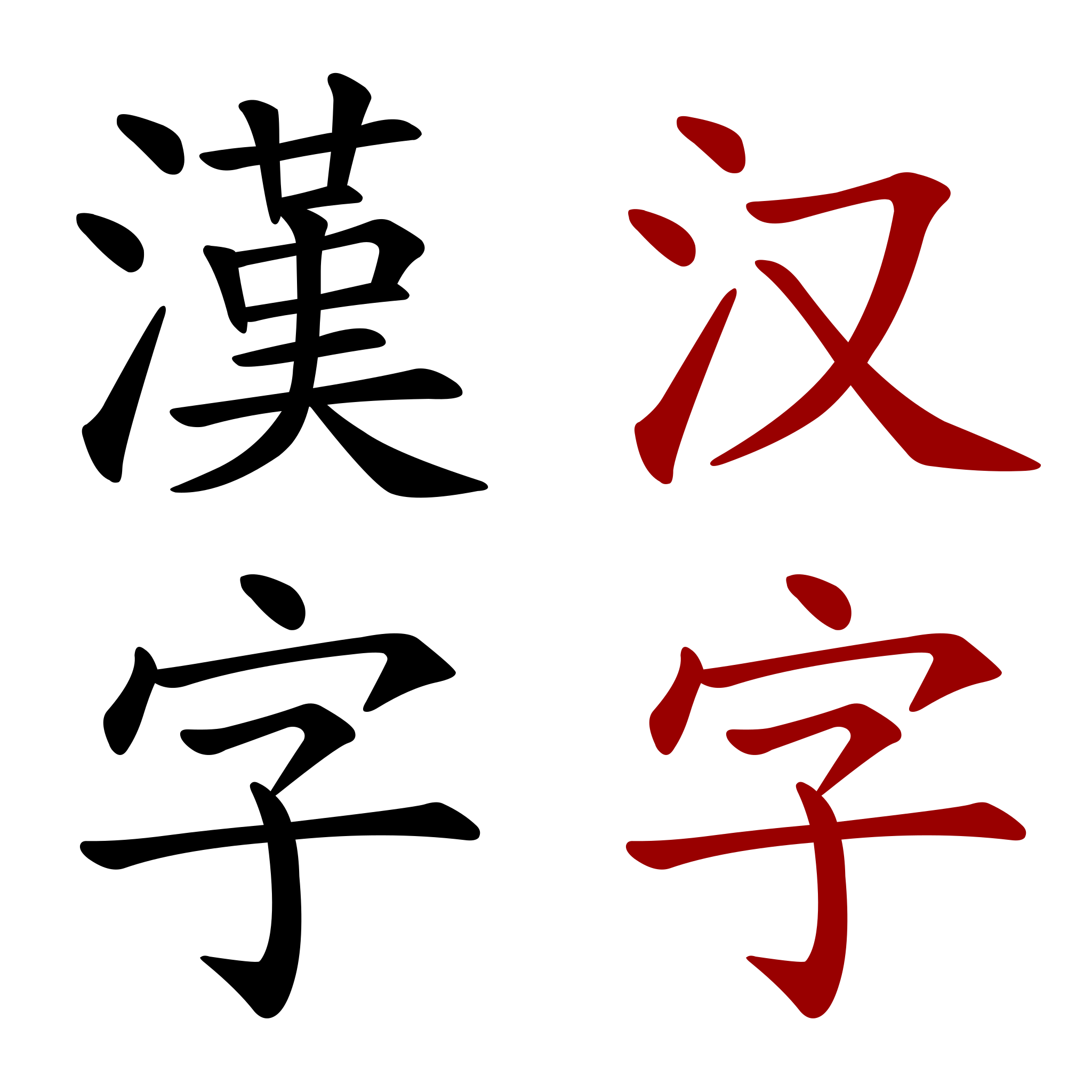
Hànzì (Hàn·zì {Han (Chinese)} · Characters 汉字 漢字)” is what Chinese characters are called in Mandarin. Actually, “Hànzì (Hàn·zì {Han (Chinese)} · Characters 汉字 漢字)” literally means “Han characters”, but as discussed in the MEotW post on “Hànyǔ (Hàn·yǔ {Han (Chinese)} · Language [→ [(Modern Standard) Mandarin]] 汉语 漢語)”, the Han are by far the largest ethnic group in China, and they are the dominant cultural force in China. Thus, Han characters are, in effect, Chinese characters.

漢字 汉字

Han culture has affected not only China, but also many of the surrounding nations. The words used by some of these nations to refer to “Chinese characters” are obvious echoes of “Hànzì (Hàn·zì {Han (Chinese)} · Characters 汉字 漢字)”:

  • Japanese: kanji
  • Korean: Hanja
  • Vietnamese: hán tự

Hànzì (Hàn·zì {Han (Chinese)} · Characters 汉字 漢字) are still used a lot in modern Japanese writing. However, although Hànzì (Hàn·zì {Han (Chinese)} · Characters 汉字 漢字) used to be the dominant writing system in Korea and in Vietnam, those nations have moved on to mainly use alphabetic writing systems.

The Korean Connection

Regarding the situation in Korea, the Awake! article “Let’s Try Writing in Hankul!” says:

BEFORE Hankul [or Hangul] was created, the Korean language did not have its own script. For more than a thousand years, educated Koreans wrote their language using Chinese characters. Over the years, however, various attempts were made to devise a better writing system. But since all of them were based on Chinese characters, only the well-educated could use them.

King Sejong spearheaded the creation of an alphabet that would both suit spoken Korean and be easy to learn and use.

Sadly, some scholars opposed Hankul, precisely because it was so easy to learn! They derisively called it Amkul, meaning “women’s letters.” They disdained a system that could be learned even by women, who back then were not taught to read in the schools. This prejudice against Hankul persisted among upper-class Koreans for some time. In fact, more than 400 years elapsed before the Korean government declared that Hankul could be used in official documents.

The Chinese Conundrum

How about the writing system situation in China itself? Do the Chinese languages need to be written using Hànzì (Hàn·zì {Han (Chinese)} · Characters 汉字 漢字)? Chinese traditionalists have influenced many people to assume so, but there is actually no technical linguistic requirement that any Chinese language be written using Hànzì (Hàn·zì {Han (Chinese)} · Characters 汉字 漢字)—writing Chinese languages using Hànzì (Hàn·zì {Han (Chinese)} · Characters 汉字 漢字) is purely and merely a deeply embedded tradition.

Proof that the use of Hànzì (Hàn·zì {Han (Chinese)} · Characters 汉字 漢字) is merely a tradition and not a technical requirement comes from the fact that Pīnyīn (Pīn·yīn {Piecing Together of} · Sounds → [Pinyin] 拼音), a phonetic alphabetic system designed by a Chinese government team, is a good, workable full writing system for Modern Standard Mandarin.

Why has China held on to its traditional use of Hànzì (Hàn·zì {Han (Chinese)} · Characters 汉字 漢字) when other nations have moved on to alphabetic writing systems? As mentioned in the MEotW post on “Zhōngguó (Zhōng·guó Central · Nation → [China | Chinese] 中国 中國)”,

Some wonder why China has held on to its archaic characters writing system instead of moving on to using a modern alphabetic writing system like almost every other nation does, even though outstanding native sons like Lǔ Xùn ((Lǔ Stupid; Rash (surname)) (Xùn Fast; Quick; Swift 迅) (pen name of Zhōu Shùrén, the greatest Chinese writer of the 20th cent. and a strong advocate of alphabetic writing)) have advocated strongly for that. Perhaps the proud self-centredness of the only nation to name itself the centre of the world provides a clue….

When the Communists took over China a few years after World War II, their Plan A for China’s writing system situation actually did involve eventually moving on from the characters to an alphabetic writing system that would be developed, which turned out to be Pīnyīn (Pīn·yīn {Piecing Together of} · Sounds → [Pinyin] 拼音). However, the government needed the help of the people already educated in Hànzì (Hàn·zì {Han (Chinese)} · Characters 汉字 漢字), and many of these people opposed this plan that they feared would involve leaving behind, or at least de-emphasizing, a cultural tradition that they were very proud of, that they had invested very much time and effort into mastering, and that gave them much prestige in the existing environment.1 In other words, the pride and prejudice of those who had already been educated in the Hànzì (Hàn·zì {Han (Chinese)} · Characters 汉字 漢字) caused them to disparage and oppose the idea of a simpler alternative writing system, just as had been the case in Korea, as noted above. So, the simplification of the Hànzì (Hàn·zì {Han (Chinese)} · Characters 汉字 漢字) is the farthest China has gotten so far with regard to official writing system reform, and even that has only been achieved in the face of much criticism and opposition.

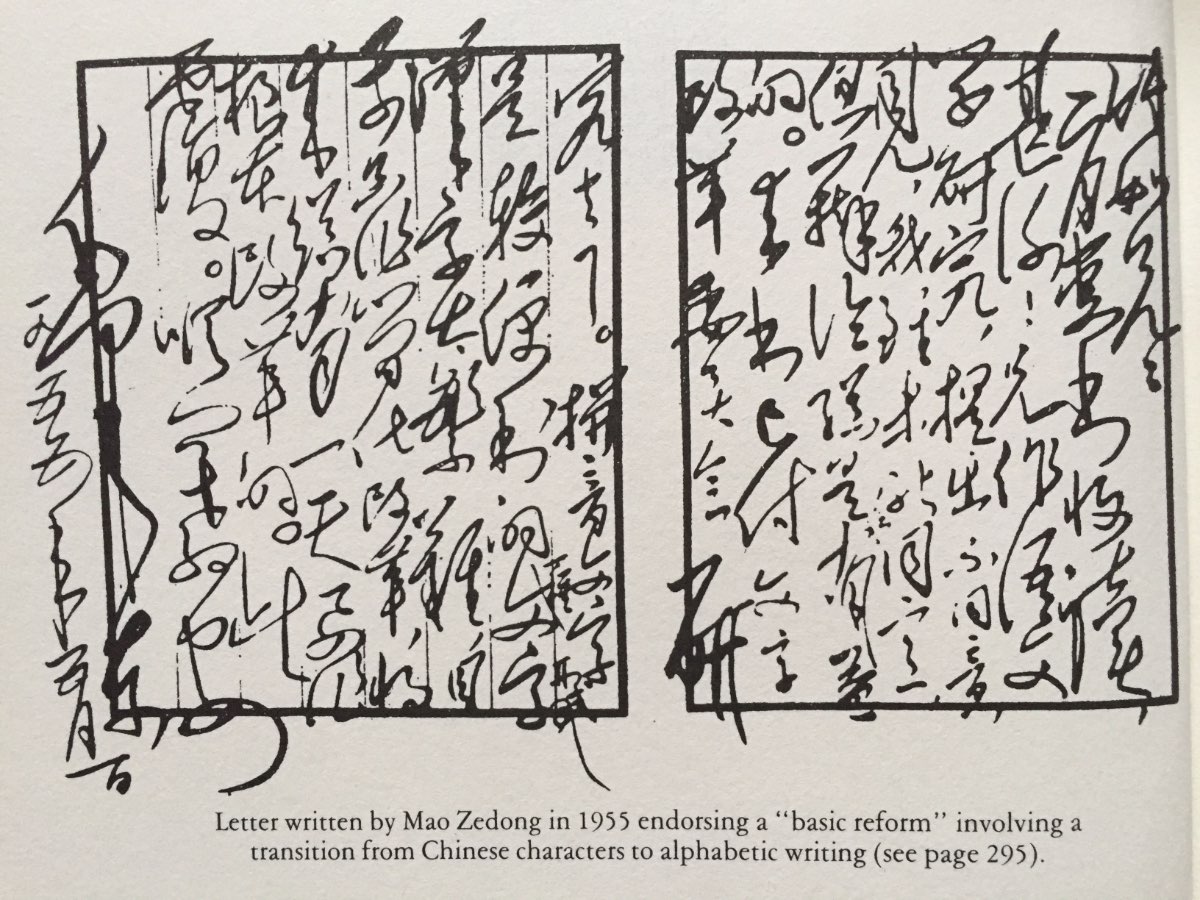
Chairman Máo Zédōng ((Máo Hair (surname) 毛) (Zé·dōng Marsh · East 泽东 澤東) (the founder of the People’s Republic of China)) (Wikipedia article) himself supported continuing to move on, from simplification of the characters to actually adopting Pīnyīn (Pīn·yīn {Piecing Together of} · Sounds → [Pinyin] 拼音) as a writing system. In a letter to an old schoolmate, he wrote:

…Pinyin writing is a form of writing that is relatively convenient. Chinese characters are too complicated and difficult. At present we are only engaged in reform along the lines of simplification, but some day in the future we must inevitably carry out a basic reform.2

Letter from Mao endorsing a transition from Chinese characters to alphabetic writing

(The above picture is from near the beginning of the book The Chinese Language: Fact and Fantasy, by John DeFrancis.)

While obviously what Máo ((Máo Hair (surname) 毛) (abbr. for Máo Zédōng, the founder of the People’s Republic of China)) foresaw regarding a writing system “basic reform” in China has not yet come true, American sinologist and University of Pennsylvania Professor of East Asian Languages and Civilizations Victor H. Mair wrote in a blog post:

So, those who are in favor of HP [Hànyǔ (Hàn·yǔ {Han (Chinese)} · Language → [(Modern Standard) Mandarin] 汉语 漢語) Pīnyīn (Pīn·yīn {Piecing Together of} · Sounds → [Pinyin] 拼音)] don’t need to be concerned, and those who are opposed to HP don’t need to be frightened. HP is ineluctably playing a greater and greater role in the educational, cultural, social, political, and every other aspect of the lives of Chinese citizens, and this is occurring without regard to anyone pushing it as a governmental program. It is happening because of the wishes of those who actually use it for a wide variety of helpful purposes.

Digraphia [the use of more than one writing system for the same language, in this case the use of both Hànzì (Hàn·zì {Han (Chinese)} · Characters 汉字 漢字) and Pīnyīn (Pīn·yīn {Piecing Together of} · Sounds → [Pinyin] 拼音) for writing Modern Standard Mandarin] is emerging before our very eyes, enabling people to use the alphabet and the characters for whatever purposes they deem suitable. Nobody needs to take a vote or carry out a survey for this to happen.

Tourists or Missionaries?

Regardless of how worldly Chinese people view the Hànzì (Hàn·zì {Han (Chinese)} · Characters 汉字 漢字), how should we dedicated Mandarin field language-learners view them? It would be easy to fall back on the commonly accepted view, the tourist’s view, that the Hànzì (Hàn·zì {Han (Chinese)} · Characters 汉字 漢字) are an integral and fascinating part of China’s precious cultural heritage that we should duly respect and even heap adulation upon.

However, as Mandarin field language-learners, we are not in the Mandarin field to be tourists just enjoying the exotic foreign culture. On the contrary, we must be more like missionaries or spiritual rescue workers involved in an urgent life-saving work, because lives are indeed involved. As ones involved in an urgent, life-saving work, we need tools, technologies, and systems that efficiently and effectively help us to get this work done without wasting time and effort when people’s everlasting lives are at stake. From this sober and pragmatic angle, the extraordinarily difficult-to-learn-and-remember Hànzì (Hàn·zì {Han (Chinese)} · Characters 汉字 漢字) are far from ideal. Thus, while there is obviously value in learning as many Hànzì (Hàn·zì {Han (Chinese)} · Characters 汉字 漢字) as one is reasonably able to, it is fortunate that Pīnyīn (Pīn·yīn {Piecing Together of} · Sounds → [Pinyin] 拼音) exists and is available as a simple, effective alternative writing system for Mandarin, for the many times when it is not necessary to use Hànzì (Hàn·zì {Han (Chinese)} · Characters 汉字 漢字).


1. John DeFrancis, The Chinese Language: Fact and Fantasy (Honolulu: University of Hawaii Press, 1984), p. 258. ^

2. Ibid., p. 295. ^