Categories
Culture History Language Learning Science Theocratic

tiān‐yī‐wúfèng

tiān‐yī‐wúfèng ((tiān [(is)] heavenly 天)‐(yī garment 衣)‐(wú·fèng without · seams 无缝 無縫) [[is] flawless]) 👈🏼 Tap/click to show/hide the “flashcard”

[Notes: Tap/click on a Pīnyīn (Pīn·yīn {Piecing Together of} · Sounds → [Pinyin] 拼音) expression to reveal its “flashcard”; tap/click on a “flashcard” or its Pīnyīn (Pīn·yīn {Piecing Together of} · Sounds → [Pinyin] 拼音) expression to hide the “flashcard”. 📖 📄 📘 icons mean 📖 Reveal All, 📄 Reveal Advanced, and 📘 Reveal None re all the “flashcards” in the heading, paragraph, etc. that they are placed at the beginning of.]

We in the Mandarin field should keep in mind that many Mandarin-speaking people were taught to believe in evolution, and thus tend to not believe in God. The Shēngmìng Láizì Chuàngzào Ma? ((Shēngmìng Life 生命) (Lái·zì Came · From 来自 來自) (Chuàng·zào Initiating · {Making, Creating} → [Creating] 创造 創造) (Ma [? ptcl for “yes/no” questions])? [Was Life Created? (lc)]) (Was Life Created? (lc)) brochure and the Shēngmìng de Qǐyuán—Zhíde Sīkǎo de Wǔ Ge Wèntí ((Shēngmìng Life 生命) (de ’s 的) (Qǐ·yuán {Rising → [Starting]} · Source → [Origin] 起源/原)—(Zhí·de Worth · Getting → [Worth] 值得) (Sī·kǎo {Thinking About} · Examining 思考) (de ’s 的) (Wǔ Five 五) (Ge [mw]個/个) (Wèn·tí Asking · Subjects → [Questions] 问题 問題) [The Origin of Life—Five Questions Worth Asking (lf)]) (The Origin of Life—Five Questions Worth Asking (lf)) brochure were originally published back in 2010, but they are still considered current publications, and relatively recently, the English version of the Was Life Created? brochure was updated to the December 2022 Printing, and the Mandarin version of it was updated to the February 2023 Printing. So, it would be good for us to consider some of the expressions used in the Mandarin versions of the Was Life Created? and Origin of Life brochures, which can be so helpful when discussing the fundamentally important question of whether life was created.

“Very Fortunate” Indeed!

This week’s MEotW, which appears in the first paragraph of the section of the Mandarin Was Life Created? brochure entitled “Shēngjī (Shēng·jī Life · {Mechanism → [Being Organic]} → [Life] 生机 生機)Bóbó (Bó·bó Flourishing · Flourishing 勃勃) de (’s 的) Dìqiú (Dì·qiú Earth · Globe 地球) (“The Living Planet”), is “tiān‐yī‐wúfèng ((tiān [(is)] heavenly 天)‐(yī garment 衣)‐(wú·fèng without · seams 无缝 無縫) [[is] flawless])”:

English:

Life on earth could never exist were it not for a series of very fortunate “coincidences,”

Mandarin (WOL; Pīnyīn (Pīn·yīn {Piecing Together of} · Sounds → [Pinyin] 拼音) Plus)

📖 📄 📘 Dìqiú (Dì·qiú earth · globe 地球) zài (in 在) hěn (very 很) duō (many 多) fāngmiàn (fāng·miàn {directions → [sides]} · faces → [aspects] 方面) dōu ({all of them} 都)qiǎohé (qiǎo·hé {being coincidental → [coincidentally]} · {closing → [matching]} → [coincidental] 巧合)de (-ly 地) pèihe (pèi·he matches · {closes → [accords]} → [is suitable] 配合) de (getting 得) tiān‐yī‐wúfèng ((tiān (to be) heavenly 天)‐(yī garment 衣)‐(wú·fèng without · seams 无缝 無縫) [to be flawless]), yào (if 要)bu ((it) not 不)shì ({would be} 是) zhèyàng (zhè·yàng this · {form → [way]} 这样 這樣), dìqiú (dì·qiú earth · globe 地球) shang (upon 上) gēnběn (gēn·běn {root (of a plant)} · {root or stem of a plant} → [basically] 根本) jiù (then 就) (not 不) kěnéng (could 可能) yǒu (have 有) shēngmìng (life 生命).

Where the English Was Life Created? brochure speaks of the “coincidences” that made life possible on earth as “very fortunate” (a bit of British understatement?), the Mandarin Was Life Created? brochure effectively says these “coincidences” made earth “suitable for life to a miraculously/superhumanly flawless extent”. In the process of doing so, it evokes the long-standing Chinese cultural concept of “Tiān (Heaven [→ [God]] 天),” or Heaven.

“Let Me Reintroduce You to…”

As the Lasting Peace brochure (English, Mandarin) helps us understand, this concept of “Tiān (Heaven [→ [God]] 天) is a kind of conceptual bridge back to a time when historical records show that the Chinese worshipped one supreme deity:

WHO IS GOD?

TO THE Chinese, the concept of God, or Shang-di (literally “Emperor above”), is both foreign and abstract. Most people worship heaven and earth, spirits and demons, ancestors and other humans. Interestingly, however, according to Chinese historical records, between three and four thousand years ago, during the Xia and Shang dynasties, the Chinese were already worshipping one supreme deity. The book The Religious History of China explains that they “reckoned that between heaven and earth there was a principal God who stood supreme and had absolute control over all things. . . . This supreme deity came to be called Di, or Shang-di, during the Shang Dynasty, and was known as Tien [heaven], or Tien-di [Emperor in Heaven], during the Zhou Dynasty [11th century to 256 B.C.E.].” Thus, the ancient Chinese believed in the existence of a Supreme Sovereign of the universe.

During the Spring and Autumn period (c. 722-481 B.C.E.) and the Warring States period (c. 480-221 B.C.E.), Confucianism and Taoism gained ascendancy. Influenced by these two schools of thought, the worship of Shang-di was gradually replaced by the abstract idea of reverence for Tien. By the Han dynasty (202 B.C.E.–221 C.E.), under the dominance of Confucianism, the Chinese became engrossed in moral culture and social order, and the concept of Shang-di suffered another setback. With the spread of Buddhism into China, the Chinese no longer held to the belief of a Creator who is in control of the universe, but they accepted Heaven, or Providence, as the first cause of all things. Since then, the concept of God, or Shang-di, has become something completely foreign to most Chinese.

Who, then, really is God? The Bible shows that God is not a force or law of nature that governs the operation of all things in the universe. Nor is he Tien, which is venerated by many Chinese. Rather, God is a living spirit who has feelings and personality traits. He is the almighty and omniscient Sovereign of the Universe, and his love is boundless. Not only has he created all things but he also has a definite purpose for mankind—that we worship him with love and live forever on this beautiful earth in lasting peace and happiness.

(PDF files with 3-line material covering the Mandarin version of the above quotation from the Lasting Peace brochure can be downloaded from here (iPad-Letter-A4) or here (XLP-iPhone-A5). (Pīnyīn (Pīn·yīn {Piecing Together of} · Sounds → [Pinyin] 拼音) Plus material for the Lasting Peace brochure is in the works, but is not quite ready to be posted yet.) The short link for Chinese field language-learning links for the Lasting Peace brochure is: Lasting Peace Brochure Links (tiandi.info/pc).)

Use of this week’s MEotW in the Mandarin Was Life Created? brochure reflects good insight into what can help us to reach the hearts of the Chinese people we meet in the Mandarin field, as we reintroduce them to the “Supreme Sovereign of the universe” whom they once recognized and worshipped.


For convenience:

The direct link for the current-generation Pīnyīn (Pīn·yīn {Piecing Together of} · Sounds → [Pinyin] 拼音) Plus resource for the Was Life Created? brochure is:

The short link for Chinese field language-learning links for the Was Life Created? brochure is:

More Pīnyīn (Pīn·yīn {Piecing Together of} · Sounds → [Pinyin] 拼音) and Pīnyīn (Pīn·yīn {Piecing Together of} · Sounds → [Pinyin] 拼音) Plus web material based on the Mandarin Was Life Created? brochure will be made available in the Pīnyīn (Pīn·yīn {Piecing Together of} · Sounds → [Pinyin] 拼音) Plus web resource as time allows.

Categories
Culture Language Learning Science Technology Theocratic

qià‐dào‐hǎochu

qià‐dào‐hǎochu ((qià just; exactly 恰)‐(dào {[is] having arrived at} 到)‐(hǎo·chu good · places; points [→ [benefits; advantages | gain; profit]] 好处 好處) [[is] perfect; just right]) 👈🏼 Tap/click to show/hide the “flashcard”

[Notes: Tap/click on a Pīnyīn (Pīn·yīn {Piecing Together of} · Sounds → [Pinyin] 拼音) expression to reveal its “flashcard”; tap/click on a “flashcard” or its Pīnyīn (Pīn·yīn {Piecing Together of} · Sounds → [Pinyin] 拼音) expression to hide the “flashcard”. 📖 📄 📘 icons mean 📖 Reveal All, 📄 Reveal Advanced, and 📘 Reveal None re all the “flashcards” in the heading, paragraph, etc. that they are placed at the beginning of.]

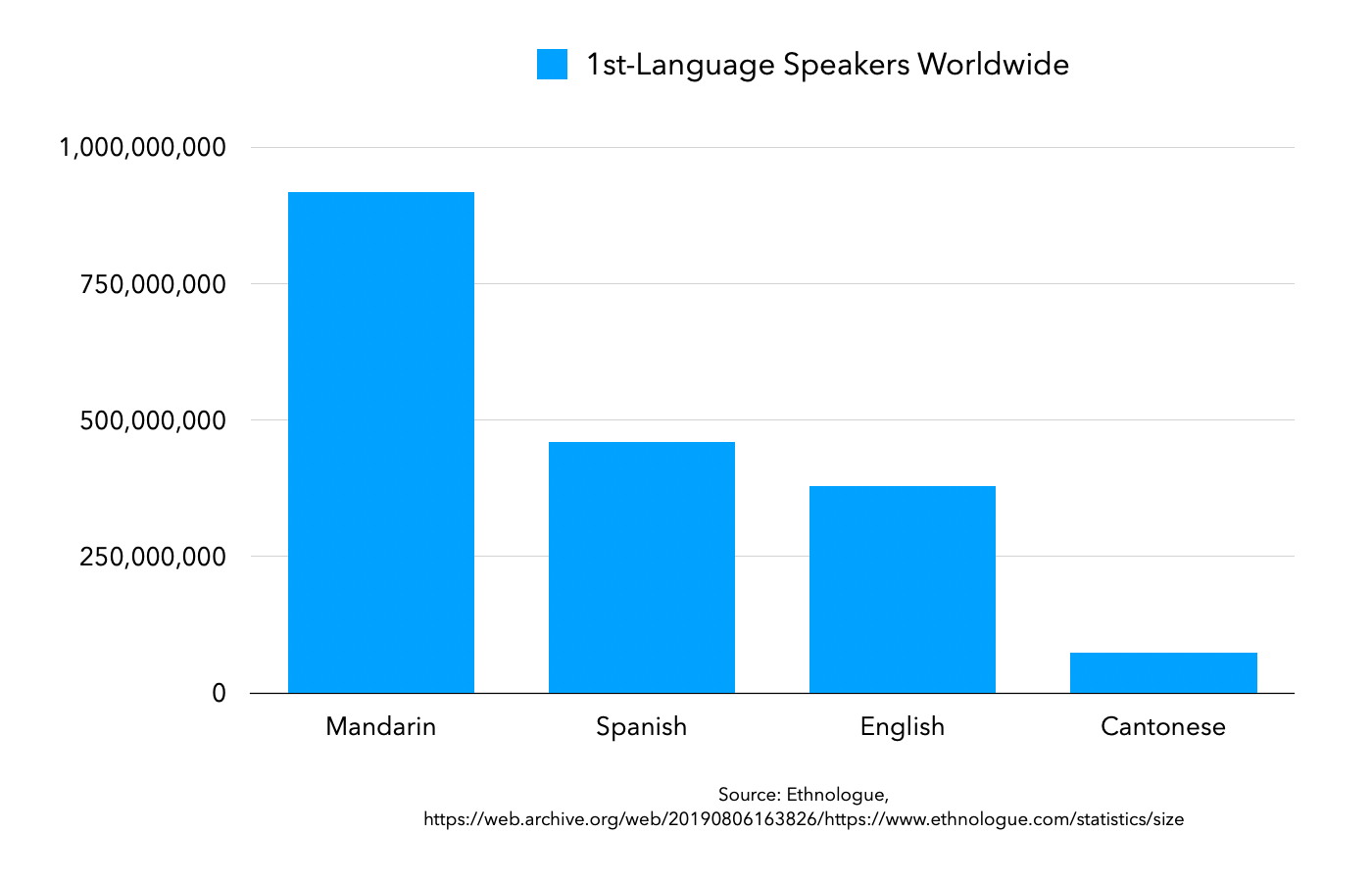
At the time of this writing, the Teaching Toolbox in the JW Library app had recently included the No. 3 2021 issue of Awake! magazine. While it is not currently in the Teaching Toolbox, this question considered in this issue, “Should You Believe in a Creator?”, remains an important one for Mandarin field language learners to pay special attention to. Many of the Mandarin-speaking people in the field especially need help with this matter, because their cultural background tends to cause them to not believe in a Creator. At the same time, though, whether the Creator exists remains the first major question that needs to be settled before they can make real further spiritual progress. Another important factor is that the worldwide Mandarin field continues to be huge, probably the language field with more people in it than any other language field in history.

For us Mandarin field language learners, though, using Mandarin to discuss the question of the Creator’s existence is especially challenging and requires special effort from us, because of the particularly deeply technical concepts and vocabulary involved. And, this is in addition to the usual unusual challenges presented by Chinese characters, the general misinformation and disinformation present in the world about the Chinese languages, etc.

Finely Tuned to Be Just Right

This week’s MEotW, “qià‐dào‐hǎochu ((qià just; exactly 恰)‐(dào {[is] having arrived at} 到)‐(hǎo·chu good · places; points [→ [benefits; advantages | gain; profit]] 好处 好處) [[is] perfect; just right])”, occurs in the No. 3 2021 issue of Awake! magazine in the fifth and sixth paragraphs of the article “What the Universe Tells Us”:

English:

The universe is fine-tuned to support life. Consider what scientists call the weak force. It keeps our sun burning at a steady rate. If the force were weaker, the sun would never have formed. If it were stronger, the sun would have disappeared long ago.

The weak force is just one of several finely tuned features that we depend on. …

Mandarin:

📖 📄 📘 Yǔzhòu (Yǔ·zhòu universe · {all time, past, present, and future} → [universe] 宇宙) zhōng (within 中) de (’s 的) gèzhǒng (gè·zhǒng each · {type of} 各种 各種) (force 力) dōu ({each one of them} 都) qià‐dào‐hǎochu ((qià exactly 恰)‐(dào {is having arrived at} 到)‐(hǎo·chu good · place 好处 好處) [is just right]), suǒyǐ (suǒ·yǐ {that which} · {is the reason} → [thus] 所以) shēngmìng (life 生命) cái ({only then}才/纔) néng ({is able} 能) cúnzài (cún·zài {to exist} · {to be present} 存在). Lái (come) kànkan (kàn·kan {look at} · {look at} 看看) kēxué‐jiā ((kē·xué {branches of study} · learning → [science] 科学 科學)‐(jiā -ists 家) [scientists]) suǒ ({that which (they)} 所) shuō ({speak of}說/説) de (’s 的) ruò (weak 弱)hélì (hé·lì {pit (of a fruit) → [nuclear]} · force 核力), zhèi (this) zhǒng ({type of}種/种) (force 力) ràng (allows) tàiyáng (tài·yáng highest · {positive/active/male principle in nature (Chinese philosophy)} → [sun] 太阳 太陽) (at 以) wěndìng (wěn·dìng steady · set 稳定 穩定) de (’s 的) sùdù (sù·dù {being fast → [speed]} · degree → [rate] 速度) ránshāo (rán·shāo {to be ignited} · {to burn} 燃烧 燃燒). Rúguǒ (Rú·guǒ if · {fruit → [if indeed]} 如果) zhèi (this) zhǒng ({type of}種/种) (force 力) ruò ({was weak} 弱) yìdiǎnr (yì·diǎnr a · bit (more) 一点 一點), tàiyáng (tài·yáng highest · {positive/active/male principle in nature (Chinese philosophy)} → [sun] 太阳 太陽) jiù (then 就) wúfǎ (wú·fǎ {would not have had} · way → [would have been unable] 无法 無法) xíngchéng (xíng·chéng {form (n)} · {to come to be} → [to form] 形成); rúguǒ (rú·guǒ if · {fruit → [if indeed]} 如果) zhèi (this) zhǒng ({type of}種/种) (force 力) qiáng ({was strong}強/彊) yìdiǎnr (yì·diǎnr a · bit (more) 一点 一點), tàiyáng (tài·yáng highest · {positive/active/male principle in nature (Chinese philosophy)} → [sun] 太阳 太陽) jiù (then 就) huì (would) ránshāo (rán·shāo ignite · burn 燃烧 燃燒) de (getting 得) tài ({too much} 太) kuài ({to be quick} 快), zǎo ({early on} 早) jiù (then 就) xiāoshī (xiāo·shī {would have disappeared} · {would have been lost} 消失) le ([(at the end of a phrase/sentence) indicates a change] 了).

📖 📄 📘 Ruò (weak 弱)hélì (hé·lì {pit (of a fruit) → [nuclear]} · force 核力) qià‐dào‐hǎochu ((qià exactly 恰)‐(dào {is having arrived at} 到)‐(hǎo·chu good · place 好处 好處) [is just right]), dàn (but 但) (it 它) zhǐshì (zhǐ·shì only · is 只是) wéichí (wéi·chí maintaining · {holding → [sustaining]} → [sustaining] 维持 維持) shēngmìng (life 生命) de (’s 的) qízhōng (qí·zhōng them · among 其中) (one 一) ge ([mw]個/个) yīnsù (yīn·sù cause · {raw silk → [basic element]} → [factor] 因素). …

In the above examples, “qià‐dào‐hǎochu ((qià just; exactly 恰)‐(dào {[is] having arrived at} 到)‐(hǎo·chu good · places; points [→ [benefits; advantages | gain; profit]] 好处 好處) [[is] perfect; just right]) is used to correspond with the English expressions “fine-tuned” and “finely tuned”. While much cruder than the exquisite systems found in the natural world, many systems produced by human technology can help us to understand the need for certain factors to be finely tuned before an even moderately complex system can function properly. For example, a phone number that’s off by just one number is a wrong number, and older readers will remember radios that needed to be tuned to a certain frequency before the desired radio station could be heard clearly. Speaking of readers, anyone reading this post first had to follow a link (or manually type in a URL) that had to be coded just right—if the web address requested was not within a narrow margin of error, this post would not have loaded!

Let us, then, remember this week’s MEotW, “qià‐dào‐hǎochu ((qià just; exactly 恰)‐(dào {[is] having arrived at} 到)‐(hǎo·chu good · places; points [→ [benefits; advantages | gain; profit]] 好处 好處) [[is] perfect; just right])”, so that we can be helped to be able to talk to Mandarin-speaking people about how the universe, the sun, the earth, our own bodies, etc. are tuned to be just right, so that we can live, ponder how we got here, and get to know our Creator.


A Pīnyīn (Pīn·yīn {Piecing Together of} · Sounds → [Pinyin] 拼音) Plus resource for the No. 3 2021 issue of Awake! magazine, which discusses the question “Should You Believe in a Creator?”, is in the works. For updates on the Pīnyīn (Pīn·yīn {Piecing Together of} · Sounds → [Pinyin] 拼音) Plus resources that are available, keep an eye on this blog, on the Links News blog, and on the related account on the social network of your choice listed on this blog’s Contact page.

Categories
Culture Experiences Science Technology Theocratic

ménwèi

ménwèi (mén·wèi door; gate; entrance · {guarding; defending (person)} 门卫 門衛) 👈🏼 Tap/click to show/hide the “flashcard”

[Notes: Tap/click on a Pīnyīn (Pīn·yīn {Piecing Together of} · Sounds → [Pinyin] 拼音) expression to reveal its “flashcard”; tap/click on a “flashcard” or its Pīnyīn (Pīn·yīn {Piecing Together of} · Sounds → [Pinyin] 拼音) expression to hide the “flashcard”. 📖 📄 📘 icons mean 📖 Reveal All, 📄 Reveal Advanced, and 📘 Reveal None re all the “flashcards” in the heading, paragraph, etc. that they are placed at the beginning of.]

We in the Mandarin field should keep in mind that many Mandarin-speaking people were taught to believe in evolution, and thus tend to not believe in God. The Shēngmìng Láizì Chuàngzào Ma? ((Shēngmìng Life 生命) (Lái·zì Came · From 来自 來自) (Chuàng·zào Initiating · {Making, Creating} → [Creating] 创造 創造) (Ma [? ptcl for “yes/no” questions])? [Was Life Created? (lc)]) (Was Life Created? (lc)) brochure and the Shēngmìng de Qǐyuán—Zhíde Sīkǎo de Wǔ Ge Wèntí ((Shēngmìng Life 生命) (de ’s 的) (Qǐ·yuán {Rising → [Starting]} · Source → [Origin] 起源/原)—(Zhí·de Worth · Getting → [Worth] 值得) (Sī·kǎo {Thinking About} · Examining 思考) (de ’s 的) (Wǔ Five 五) (Ge [mw]個/个) (Wèn·tí Asking · Subjects → [Questions] 问题 問題) [The Origin of Life—Five Questions Worth Asking (lf)]) (The Origin of Life—Five Questions Worth Asking (lf)) brochure were originally published back in 2010, but they are still considered current publications, and relatively recently, the English version of the Was Life Created? brochure was updated to the December 2022 Printing, and the Mandarin version of it was updated to the February 2023 Printing. So, it would be good for us to consider some of the expressions used in the Mandarin versions of the Was Life Created? and Origin of Life brochures, which can be so helpful when discussing whether life was created.

Access Restricted

This week’s MEotW, “ménwèi (mén·wèi door; gate; entrance · {guarding; defending (person)} 门卫 門衛)”, occurs starting in the 10th paragraph in the QUESTION 2 section of the Origin of Life brochure, which section is entitled, in English, “Is Any Form of Life Really Simple?”:

English:

Think again of a factory. It might have security guards who monitor the products that enter and leave through the doorways in the factory wall. Similarly, the cell membrane has special protein molecules embedded in it that act like the doors and the security guards.

The cell membrane has “security guards” that allow only specific substances to pass in or out

Mandarin (WOL, Pīnyīn (Pīn·yīn {Piecing Together of} · Sounds → [Pinyin] 拼音) Plus):

📖 📄 📘 Qǐng (please) xiǎngxiang (xiǎng·xiang {think about} · {think about} 想想) gōngchǎng (gōng·chǎng work · factory → [factory] 工厂 工廠) de (’s 的) qíngkuàng (situation 情况 情況). Yǒuxiē (Yǒu·xiē {(there) are having → [(there) are]} · some 有些) gōngchǎng (gōng·chǎng work · factories (that) → [factories (that)] 工厂 工廠) huì (will) yǒu (have 有) ménwèi (mén·wèi door/entrance · {guarding (persons)} 门卫 門衛) zài (at 在) wéiqiáng (wéi·qiáng enclosing · wall 围墙 圍牆) de (’s 的) rùkǒu (rù·kǒu {to be entered} · {mouths → [openings]} → [entrances] 入口) bǎshǒu (bǎ·shǒu {holding → [guarding]} · guarding → [guarding] 把守), jiānkòng (jiān·kòng supervising · controlling 监控 監控) huòwù (huò·wù product · things’ → [products’] 货物 貨物) jìn (entering)chū ({(and) coming out} 出). Tóngyàng (Tóng·yàng same · {pattern → [way]} 同样 同樣), xìbāo (xì·bāo tiny · womb → [cell] 细胞 細胞) (membrane 膜) shang (upon 上) xiāngqiànzhe (xiāngqiàn·zhe embedded · {are being} → [are embedded] 镶嵌着 鑲嵌着/著) yìxiē (yì·xiē one · {indefinite number of} → [some] 一些) tèbié (tè·bié special · differentiated → [special] 特别 特別) de (’s 的) dànbái‐zhì ((dàn·bái egg · white → [protein] 蛋白)‐(zhì substance) [protein]) fēnzǐ (fēn·zǐ {divided (off)} · {small and hard things} → [molecules] 分子), zhèixiē (zhèi·xiē this · {indefinite number of} → [these] 这些 這些) fēnzǐ (fēn·zǐ {divided (off)} · {small and hard things} → [molecules] 分子) (both 既) shì (are 是) mén (doors/entrances), (also 也) shì (are 是) ménwèi (mén·wèi door/entrance · {guarding (persons)} 门卫 門衛).


📖 📄 📘 Xìbāo (Xì·bāo tiny · womb → [cell] 细胞 細胞) (membrane 膜) yǒu (has 有) ménwèi (mén·wèi door/entrance · {guarding (persons)} 门卫 門衛)”, zhǐ (only只/秖/衹/祇) róngxǔ (róng·xǔ {containing → [allowing]} · allowing 容许 容許) mǒuxiē (mǒu·xiē certain · {indefinite number of} → [certain] 某些) tèdìng (tè·dìng specially · set 特定) de (’s 的) wùzhì (wù·zhì matter · substances → [substances] 物质 物質) jìn ({to enter into})chū ({(or) to come out of} 出) xìbāo (xì·bāo tiny · womb → [cell] 细胞 細胞)

As can be seen from the above, the Mandarin Origin of Life brochure uses “ménwèi (mén·wèi door; gate; entrance · {guarding; defending (person)} 门卫 門衛) to translate the English expression “security guards”.

Morphemes and Related Expressions

The morpheme “mén (door; gate; entrance; opening) in “ménwèi (mén·wèi door; gate; entrance · {guarding; defending (person)} 门卫 門衛) means “door; gate; entrance”. Other expressions in which it has this meaning include “kāimén (kāi·mén open · door [→ [(of a shop, etc.) open]] 开门 開門) (“open a door”; “(of a shop, etc.) open”) and “guānmén (guān·mén shut; close · door [→ [(of a shop, etc.) close]] 关门 關/関門) (“shut/close a door”; “(of a shop, etc.) close”). Of particular interest to us in the Mandarin field, “mén (door; gate; entrance; opening) also occurs in “méntú (mén·tú {school of thought} · disciple; follower 门徒 門徒) (“disciple; follower”), where it means “school of thought”. Another noteworthy use of “mén (door; gate; entrance; opening) is in the expression “zhuānmén (zhuān·mén [is] [(in)] special; specialized · {door → [class; category; branch of study | way]} → [[is] special; specialized; customized | specially; for a particular purpose] 专门 專門) (“special; specialized; customized”), in which it effectively means “class; category; branch of study” or “way”.

The “wèi (defending; guarding; protecting [(person) [→ [security guard]]]衛/衞) in “ménwèi (mén·wèi door; gate; entrance · {guarding; defending (person)} 门卫 門衛) effectively means “guarding/defending person”, from a basic meaning of “defend; guard; protect”. Other Mandarin expressions in which it appears include “bǎowèi (bǎo·wèi protect; defend; safeguard · guard; defend; protect 保卫 保衛/衞)”, “shìwèi (shì·wèi attending; serving · defending; guarding; protecting (person) → [[imperial] military bodyguard] 侍卫 侍衛)”, “shǒuwèi (guard; defend | {guarding; defending (person)} → [bodyguard] 守卫 守衛)”, and “wèishēng (wèi·shēng {defending/guarding/protecting of} · life → [hygiene; sanitation | hygienic] 卫生 衛/衞生)”. Incidentally, the character used to write this “wèi (defending; guarding; protecting [(person) [→ [security guard]]]衛/衞) appears in “Dàwèi (David 大卫 大衛) (“David”), but there it is used for how it sounds.

Security by Serendipity?

Our cells have molecule-sized security guards that help protect their proper functioning! This reminds us that even our simplest cells are highly complex, well-regulated systems. Similarly, a computer system may have security software, input validation code, etc. that seek to keep out malware and other kinds of digital stuff that doesn’t belong, in order to help the computer system keep running properly. Would anyone contend that any piece of security software could have evolved by chance? Let us learn how to reason with Mandarin-speaking people about how our cells and their “security guards” are even less likely to have evolved by chance.


For convenience:

The direct link for the current-generation Pīnyīn (Pīn·yīn {Piecing Together of} · Sounds → [Pinyin] 拼音) Plus resource for the Origin of Life brochure is:

The short link for Chinese field language-learning links for the Origin of Life brochure is:

More Pīnyīn (Pīn·yīn {Piecing Together of} · Sounds → [Pinyin] 拼音) and Pīnyīn (Pīn·yīn {Piecing Together of} · Sounds → [Pinyin] 拼音) Plus web material based on the Mandarin Origin of Life brochure will be made available in the Pīnyīn (Pīn·yīn {Piecing Together of} · Sounds → [Pinyin] 拼音) Plus web resource as time allows.