Categories
Culture Experiences Science Technology Theocratic

ménwèi

ménwèi (mén·wèi door; gate; entrance · {guarding; defending (person)} 门卫 門衛) 👈🏼 Tap/click to show/hide the “flashcard”

[Notes: Tap/click on a Pīnyīn (Pīn·yīn {Piecing Together of} · Sounds → [Pinyin] 拼音) expression to reveal its “flashcard”; tap/click on a “flashcard” or its Pīnyīn (Pīn·yīn {Piecing Together of} · Sounds → [Pinyin] 拼音) expression to hide the “flashcard”. 📖 📄 📘 icons mean 📖 Reveal All, 📄 Reveal Advanced, and 📘 Reveal None re all the “flashcards” in the heading, paragraph, etc. that they are placed at the beginning of.]

We in the Mandarin field should keep in mind that many Mandarin-speaking people were taught to believe in evolution, and thus tend to not believe in God. The Shēngmìng Láizì Chuàngzào Ma? ((Shēngmìng Life 生命) (Lái·zì Came · From 来自 來自) (Chuàng·zào Initiating · {Making, Creating} → [Creating] 创造 創造) (Ma [? ptcl for “yes/no” questions])? [Was Life Created? (lc)]) (Was Life Created? (lc)) brochure and the Shēngmìng de Qǐyuán—Zhíde Sīkǎo de Wǔ Ge Wèntí ((Shēngmìng Life 生命) (de ’s 的) (Qǐ·yuán {Rising → [Starting]} · Source → [Origin] 起源/原)—(Zhí·de Worth · Getting → [Worth] 值得) (Sī·kǎo {Thinking About} · Examining 思考) (de ’s 的) (Wǔ Five 五) (Ge [mw]個/个) (Wèn·tí Asking · Subjects → [Questions] 问题 問題) [The Origin of Life—Five Questions Worth Asking (lf)]) (The Origin of Life—Five Questions Worth Asking (lf)) brochure were originally published back in 2010, but they are still considered current publications, and relatively recently, the English version of the Was Life Created? brochure was updated to the December 2022 Printing, and the Mandarin version of it was updated to the February 2023 Printing. So, it would be good for us to consider some of the expressions used in the Mandarin versions of the Was Life Created? and Origin of Life brochures, which can be so helpful when discussing whether life was created.

Access Restricted

This week’s MEotW, “ménwèi (mén·wèi door; gate; entrance · {guarding; defending (person)} 门卫 門衛)”, occurs starting in the 10th paragraph in the QUESTION 2 section of the Origin of Life brochure, which section is entitled, in English, “Is Any Form of Life Really Simple?”:

English:

Think again of a factory. It might have security guards who monitor the products that enter and leave through the doorways in the factory wall. Similarly, the cell membrane has special protein molecules embedded in it that act like the doors and the security guards.

The cell membrane has “security guards” that allow only specific substances to pass in or out

Mandarin (WOL, Pīnyīn (Pīn·yīn {Piecing Together of} · Sounds → [Pinyin] 拼音) Plus):

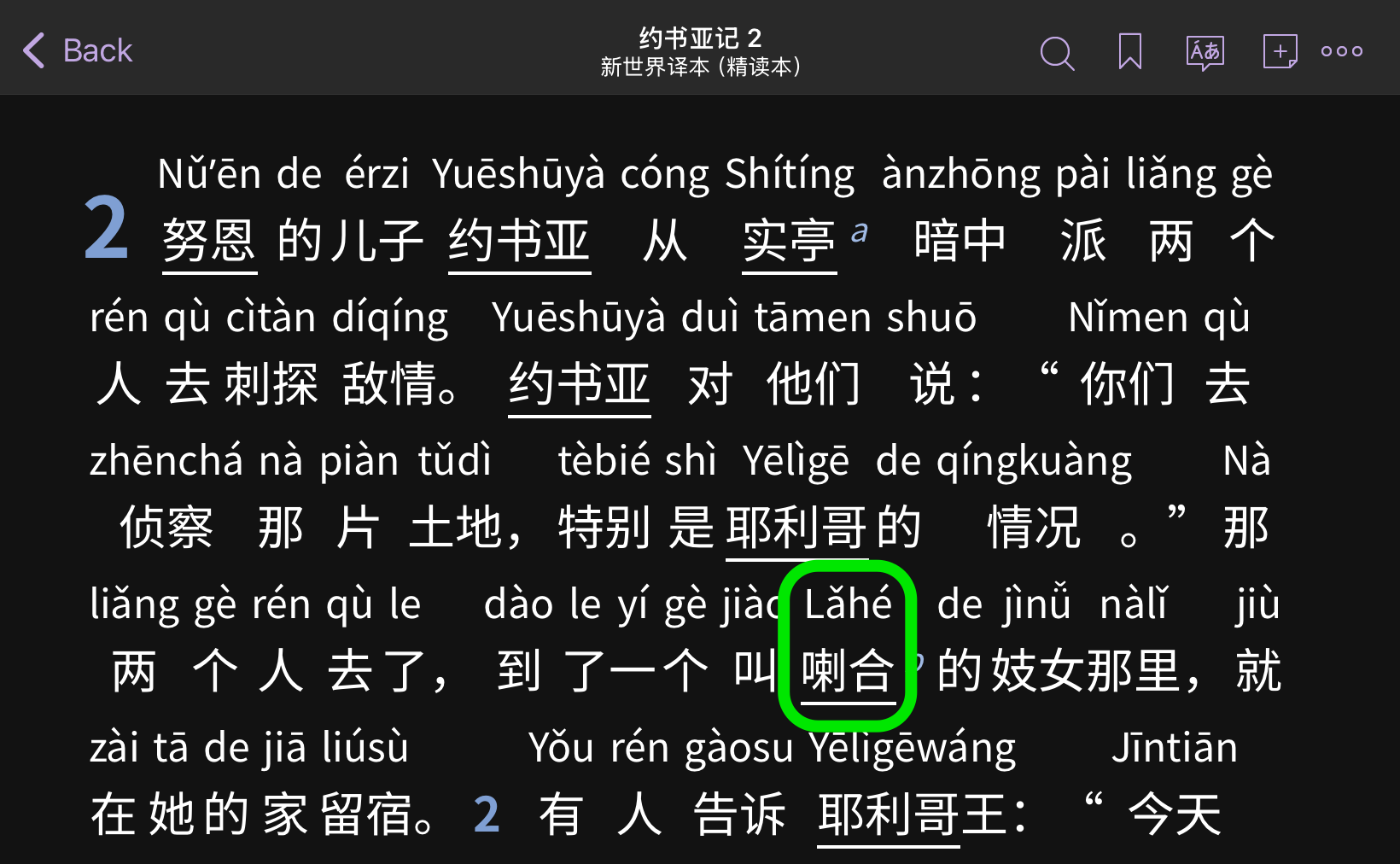
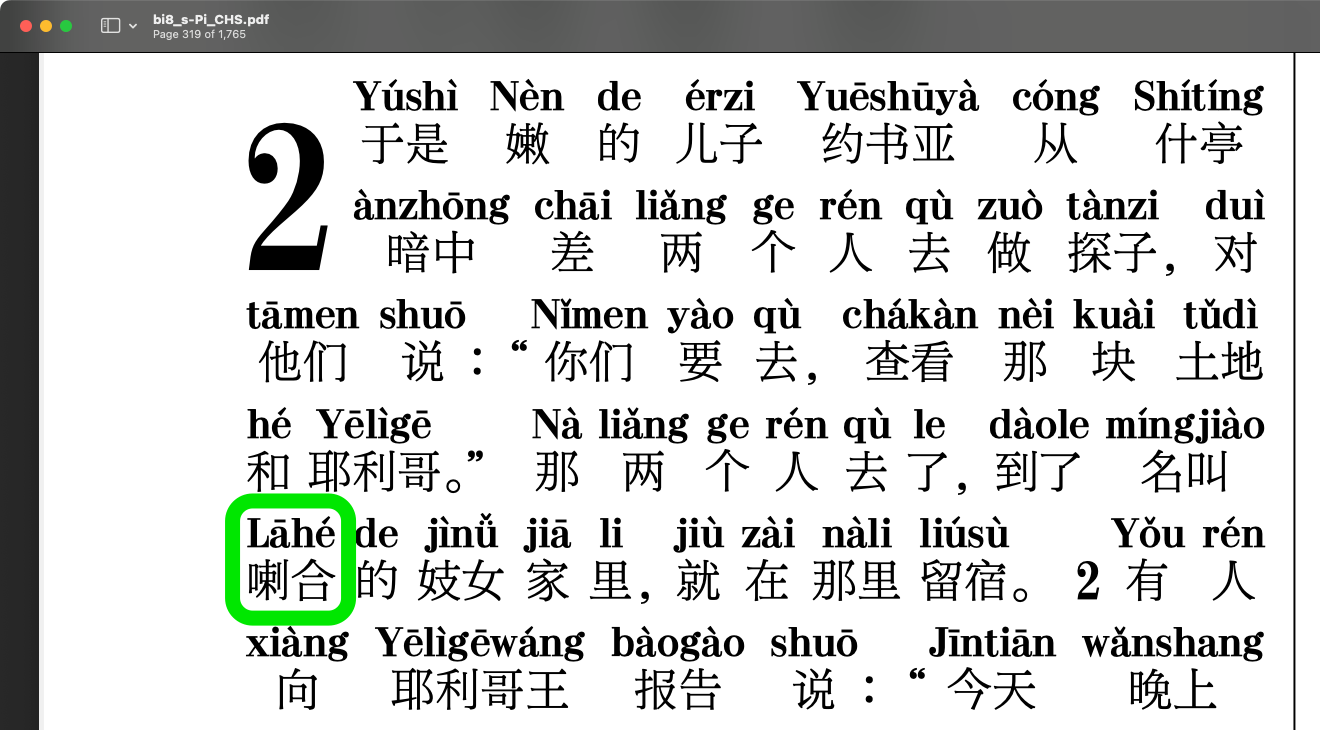
📖 📄 📘 Qǐng (please) xiǎngxiang (xiǎng·xiang {think about} · {think about} 想想) gōngchǎng (gōng·chǎng work · factory → [factory] 工厂 工廠) de (’s 的) qíngkuàng (situation 情况 情況). Yǒuxiē (Yǒu·xiē {(there) are having → [(there) are]} · some 有些) gōngchǎng (gōng·chǎng work · factories (that) → [factories (that)] 工厂 工廠) huì (will) yǒu (have 有) ménwèi (mén·wèi door/entrance · {guarding (persons)} 门卫 門衛) zài (at 在) wéiqiáng (wéi·qiáng enclosing · wall 围墙 圍牆) de (’s 的) rùkǒu (rù·kǒu {to be entered} · {mouths → [openings]} → [entrances] 入口) bǎshǒu (bǎ·shǒu {holding → [guarding]} · guarding → [guarding] 把守), jiānkòng (jiān·kòng supervising · controlling 监控 監控) huòwù (huò·wù product · things’ → [products’] 货物 貨物) jìn (entering)chū ({(and) coming out} 出). Tóngyàng (Tóng·yàng same · {pattern → [way]} 同样 同樣), xìbāo (xì·bāo tiny · womb → [cell] 细胞 細胞) (membrane 膜) shang (upon 上) xiāngqiànzhe (xiāngqiàn·zhe embedded · {are being} → [are embedded] 镶嵌着 鑲嵌着/著) yìxiē (yì·xiē one · {indefinite number of} → [some] 一些) tèbié (tè·bié special · differentiated → [special] 特别 特別) de (’s 的) dànbái‐zhì ((dàn·bái egg · white → [protein] 蛋白)‐(zhì substance) [protein]) fēnzǐ (fēn·zǐ {divided (off)} · {small and hard things} → [molecules] 分子), zhèixiē (zhèi·xiē this · {indefinite number of} → [these] 这些 這些) fēnzǐ (fēn·zǐ {divided (off)} · {small and hard things} → [molecules] 分子) (both 既) shì (are 是) mén (doors/entrances), (also 也) shì (are 是) ménwèi (mén·wèi door/entrance · {guarding (persons)} 门卫 門衛).


📖 📄 📘 Xìbāo (Xì·bāo tiny · womb → [cell] 细胞 細胞) (membrane 膜) yǒu (has 有) ménwèi (mén·wèi door/entrance · {guarding (persons)} 门卫 門衛)”, zhǐ (only只/秖/衹/祇) róngxǔ (róng·xǔ {containing → [allowing]} · allowing 容许 容許) mǒuxiē (mǒu·xiē certain · {indefinite number of} → [certain] 某些) tèdìng (tè·dìng specially · set 特定) de (’s 的) wùzhì (wù·zhì matter · substances → [substances] 物质 物質) jìn ({to enter into})chū ({(or) to come out of} 出) xìbāo (xì·bāo tiny · womb → [cell] 细胞 細胞)

As can be seen from the above, the Mandarin Origin of Life brochure uses “ménwèi (mén·wèi door; gate; entrance · {guarding; defending (person)} 门卫 門衛) to translate the English expression “security guards”.

Morphemes and Related Expressions

The morpheme “mén (door; gate; entrance; opening) in “ménwèi (mén·wèi door; gate; entrance · {guarding; defending (person)} 门卫 門衛) means “door; gate; entrance”. Other expressions in which it has this meaning include “kāimén (kāi·mén open · door [→ [(of a shop, etc.) open]] 开门 開門) (“open a door”; “(of a shop, etc.) open”) and “guānmén (guān·mén shut; close · door [→ [(of a shop, etc.) close]] 关门 關/関門) (“shut/close a door”; “(of a shop, etc.) close”). Of particular interest to us in the Mandarin field, “mén (door; gate; entrance; opening) also occurs in “méntú (mén·tú {school of thought} · disciple; follower 门徒 門徒) (“disciple; follower”), where it means “school of thought”. Another noteworthy use of “mén (door; gate; entrance; opening) is in the expression “zhuānmén (zhuān·mén [is] [(in)] special; specialized · {door → [class; category; branch of study | way]} → [[is] special; specialized; customized | specially; for a particular purpose] 专门 專門) (“special; specialized; customized”), in which it effectively means “class; category; branch of study” or “way”.

The “wèi (defending; guarding; protecting [(person) [→ [security guard]]]衛/衞) in “ménwèi (mén·wèi door; gate; entrance · {guarding; defending (person)} 门卫 門衛) effectively means “guarding/defending person”, from a basic meaning of “defend; guard; protect”. Other Mandarin expressions in which it appears include “bǎowèi (bǎo·wèi protect; defend; safeguard · guard; defend; protect 保卫 保衛/衞)”, “shìwèi (shì·wèi attending; serving · defending; guarding; protecting (person) → [[imperial] military bodyguard] 侍卫 侍衛)”, “shǒuwèi (guard; defend | {guarding; defending (person)} → [bodyguard] 守卫 守衛)”, and “wèishēng (wèi·shēng {defending/guarding/protecting of} · life → [hygiene; sanitation | hygienic] 卫生 衛/衞生)”. Incidentally, the character used to write this “wèi (defending; guarding; protecting [(person) [→ [security guard]]]衛/衞) appears in “Dàwèi (David 大卫 大衛) (“David”), but there it is used for how it sounds.

Security by Serendipity?

Our cells have molecule-sized security guards that help protect their proper functioning! This reminds us that even our simplest cells are highly complex, well-regulated systems. Similarly, a computer system may have security software, input validation code, etc. that seek to keep out malware and other kinds of digital stuff that doesn’t belong, in order to help the computer system keep running properly. Would anyone contend that any piece of security software could have evolved by chance? Let us learn how to reason with Mandarin-speaking people about how our cells and their “security guards” are even less likely to have evolved by chance.


For convenience:

The direct link for the current-generation Pīnyīn (Pīn·yīn {Piecing Together of} · Sounds → [Pinyin] 拼音) Plus resource for the Origin of Life brochure is:

The short link for Chinese field language-learning links for the Origin of Life brochure is:

More Pīnyīn (Pīn·yīn {Piecing Together of} · Sounds → [Pinyin] 拼音) and Pīnyīn (Pīn·yīn {Piecing Together of} · Sounds → [Pinyin] 拼音) Plus web material based on the Mandarin Origin of Life brochure will be made available in the Pīnyīn (Pīn·yīn {Piecing Together of} · Sounds → [Pinyin] 拼音) Plus web resource as time allows.

Categories
Culture History Language Learning Names Technology

jiǎntǐ‐zì

jiǎntǐ (jiǎn·tǐ simplified · {body → [style] → [typeface; font]} → [simplified Chinese] 简体 簡體) (characters 字) 👈🏼 Tap/click to show/hide the “flashcard”

[This is a reposting of a post that was originally posted on December 7, 2020. I took the opportunity to flesh out the original post and this repost with additional material.]

For a long, long, long time, Chinese characters were just Chinese characters. Then, in 1956, the Communist government of mainland China issued what came to be known as the First Chinese Character Simplification Scheme (a second round of Chinese character simplification was later attempted and ultimately rescinded), and official simplified Chinese characters came into the world. (Some characters had been unofficially simplified and used for various purposes, both everyday and artistic, before that.)

On the matter of what simplified Chinese characters are called in Mandarin, Wikipedia provides this summary:

Simplified Chinese characters may be referred to by their official name above [(简化字; jiǎnhuàzì)[source]] or colloquially (简体字; jiǎntǐzì). In its broadest sense, the latter term refers to all characters that have undergone simplifications of character “structure” or “body”[source], some of which have existed for millennia alongside regular, more complicated forms. On the other hand, the official name refers to the modern systematically simplified character set, which (as stated by then-Chairman Mao Zedong in 1952) includes not only structural simplification but also substantial reduction in the total number of standardized Chinese characters.[source]

For reference, this is the term used on jw.org when referring to Mandarin written using simplified Chinese characters:

jw.org referring to Mandarin written using simplified Chinese characters

jw.org refers to simplified Chinese characters as “jiǎntǐ (jiǎn·tǐ simplified · {body → [style] → [typeface; font]} → [simplified Chinese] 简体 簡體) characters.

The Great Simplified vs. Traditional Debate

While it seems obvious that simpler is generally better, there is actually much, much debate about the pros and cons of simplified characters vs. traditional characters, as discussed in these articles:

The following posts summarize how many feel about traditional and simplified characters:

Standards and Compromises

While the simplified characters themselves are indeed easier to learn and remember compared to the traditional characters, for many, they have become another set of characters in addition to the traditional characters that has to be learned and remembered. (There is, at least, some overlap between the two systems. Where do they overlap? That is yet more information that has to be learned and remembered…) And while simplified characters have been simplified, they are still characters, and characters are inherently extraordinarily complex and hard to learn and remember.

xkcd: Standards

Creative Commons Attribution-NonCommercial Licence logo Randall Munroe [source]

The simplified characters became a new standard that many have had to learn in addition to that of the traditional characters.

While Pīnyīn (Pīn·yīn {Piecing Together of} · Sounds → [Pinyin] 拼音) is also a different system to be learned and remembered, it is in a whole different league compared to any system of Chinese characters when it comes to ease of learning and remembering. One of the scholars who helped create Hangul (or Hankul), the Korean alphabet, said of it: “The wise can learn it in one morning, and even the unwise can learn it in ten days.” Being also a phonetic alphabet, Pīnyīn (Pīn·yīn {Piecing Together of} · Sounds → [Pinyin] 拼音) can be reasonably said to be in the same ballpark (with the added advantage that the Latin alphabet letters used in Pīnyīn (Pīn·yīn {Piecing Together of} · Sounds → [Pinyin] 拼音) are already familiar to many people)—downright revolutionary compared to the years (decades?) required to learn even simplified characters.

Simplified characters are thus a compromise that mainland China, Singapore, etc. have settled on—simpler than traditional characters, but perhaps thus not as good at being characters. Meanwhile, they are still characters, still having many of the complexities and vagaries of characters. They fall short of the fundamental reform envisioned by Máo Zédōng ((Máo Hair (surname) 毛) (Zé·dōng Marsh · East 泽东 澤東) (the founder of the People’s Republic of China)) (Wikipedia article), Lǔ Xùn ((Lǔ Stupid; Rash (surname)) (Xùn Fast; Quick; Swift 迅) (pen name of Zhōu Shùrén, the greatest Chinese writer of the 20th cent. and a strong advocate of alphabetic writing)) (Wikipedia article), and others, that would have involved eventually moving on from any kind of characters to alphabetic writing.

Letter from Máo Zédōng endorsing a transition from Chinese characters to alphabetic writing

A letter written by Máo Zédōng ((Máo Hair (surname) 毛) (Zé·dōng Marsh · East 泽东 澤東) (the founder of the People’s Republic of China)) endorsing “a basic reform” involving a transition from Chinese characters to alphabetic writing1


1. John DeFrancis, The Chinese Language: Fact and Fantasy (Honolulu: University of Hawaii Press, 1984), p. ii. ^

Categories
Culture History Language Learning Names Technology

fántǐ‐zì

fántǐ (fán·tǐ complicated; complex; difficult · {body → [style] → [typeface; font]} → [traditional Chinese] 繁体 繁體) (characters 字) 👈🏼 Tap/click to show/hide the “flashcard”

[This is a reposting of a post that was originally posted on November 30, 2020. I took the opportunity to flesh out the original post and this repost with additional material.]

For a long, long, long time, Chinese characters were just Chinese characters. Then, in 1956, the Communist government of mainland China issued what came to be known as the First Chinese Character Simplification Scheme (a second round of Chinese character simplification was later attempted and ultimately rescinded), and official simplified Chinese characters came into the world. (Some characters had been unofficially simplified and used for various purposes, both everyday and artistic, before that.)

Name?

To distinguish these newfangled official simplified Chinese characters from the Chinese characters that had existed before, and that continue to be used by many people in many parts of the world, retronyms were coined to refer to these pre-existing Chinese characters, just as the term “acoustic guitar” was coined to refer to a regular non-electric guitar after electric guitars came along.

In the English-speaking world, the pre-official simplification characters have come to be called “traditional Chinese characters”, as opposed to the “simplified Chinese characters”. In the Chinese-speaking world, as is true of many things regarding Chinese characters, the situation is…complicated. Wikipedia summarizes the situation thusly:

Traditional Chinese characters (the standard characters) are called several different names within the Chinese-speaking world. The government of Taiwan officially calls traditional Chinese characters standard characters or orthodox characters (traditional Chinese: 正體字; simplified Chinese: 正体字; pinyin: zhèngtǐzì; Zhuyin Fuhao: ㄓㄥˋ ㄊㄧˇ ㄗˋ).[source] However, the same term is used outside Taiwan to distinguish standard, simplified and traditional characters from variant and idiomatic characters.[source]

In contrast, users of traditional characters outside Taiwan, such as those in Hong Kong, Macau and overseas Chinese communities, and also users of simplified Chinese characters, call them complex characters (traditional Chinese: 繁體字; simplified Chinese: 繁体字; pinyin: fántǐzì; Zhuyin Fuhao: ㄈㄢˊ ㄊㄧˇ ㄗˋ). Users of simplified characters sometimes informally refer to them as “old characters” (Chinese: 老字; pinyin: lǎozì; Zhuyin Fuhao: ㄌㄠˇ ㄗˋ).

Users of traditional characters also sometimes call them “full Chinese characters” (traditional Chinese: 全體字; simplified Chinese: 全体字; pinyin: quántǐ zì; Zhuyin Fuhao: ㄑㄩㄢˊ ㄊㄧˇ ㄗˋ) to distinguish them from simplified Chinese characters.

In my experience in the Chinese fields in Canada, I have always heard traditional Chinese characters referred to using this week’s MEotW, “fántǐ (fán·tǐ complicated; complex; difficult · {body → [style] → [typeface; font]} → [traditional Chinese] 繁体 繁體) (characters 字)”. For reference, this is also the term used on jw.org when referring to Mandarin written using traditional Chinese characters:

jw.org referring to Mandarin written using traditional Chinese characters

jw.org refers to traditional Chinese characters as “fántǐ (fán·tǐ complicated; complex; difficult · {body → [style] → [typeface; font]} → [traditional Chinese] 繁体 繁體)” characters.

Beloved by Traditionalists and Purists, But Complicated

Many feel that traditional characters are the best characters of all, since, in their estimation, the official simplified characters have lost some of the heart and soul of characters. As a symbolic example, some point to how the simplified character for “love”, “爱”, omits the “heart” radical (“心”), which is appropriately in the traditional character for “love”, “愛”.

Yes, as the above post mentions, the obvious, glaring issue with traditional characters is—aggravated by the fact that there are tens of thousands of them—their extreme, extraordinary complexity, the result of their problematically complex basic nature, along with thousands of years of accumulated occasionally arbitrary design decisions and developmental cruft. For example, note the below excerpt from p. 82 of the book The Chinese Language: Fact and Fantasy, by John DeFrancis:

In the case of the rendition for the huáng meaning “sturgeon” we have two variants, one written with the “yellow” phonetic and the other with the “emperor” phonetic, both combined with the semantic element for “fish”:

魚 “fish”
鱑 “fish” + huáng “yellow” = huáng “sturgeon”
鰉 “fish” + huáng “emperor” = huáng “sturgeon”

While etymological research might succeed in clarifying the basis for some of the variation, in many cases, as one specialist in Chinese paleography concludes, “it is simply a matter of the whim of the writer” (Barnard 1978:203).

Scribal whim goes far to explain a diversity bordering on chaos in the forms of the Chinese characters as they evolved in the Shang dynasty and during the long years of political and administrative disunity in the Zhou dynasty (ca. 1028–221 B.C.). The situation was aggravated by the fact that characters were created by writers living in different historical periods, which inevitably meant changes in sounds over the years, and speaking different dialects, which inevitably affected their choice of phonetic elements in the creation of new characters.

Their inherent extraordinary complexity, exacerbated by an accumulated millennia-long history of design decisions made on a whim, out-of-date phonetic elements, etc., causes especially the traditional characters, and even the (moderately) simplified characters, to be extremely difficult for us imperfect humans to learn and to remember. This has lead to character amnesia and the Great Wall of unfamiliar characters being real things, even among those who have been studying characters for decades. How complex can traditional characters get? Theoretically, there is no upper limit!

The extreme, extraordinary complexity of traditional characters undoubtedly contributed greatly to illiteracy having been widespread in China for much of its history. Even for those who are privileged to be able to devote the extraordinary amount of time and effort needed to learn traditional characters, it’s a long, hard slog, compared to learning a comparatively simple and compact alphabetical writing system. It’s little wonder, then, that there have been serious, concerted efforts to simplify and even replace traditional Chinese characters.