Categories
Culture Current Events

wǔyè

wǔyè (wǔ·yè {7th of the 12 Earthly Branches → [south (placed at the midnight position of Chinese directions charts)]} · night → [midnight] 午夜) ← Tap/click to show/hide the “flashcard”

[Notes: Tap/click on a Pīnyīn (Pīn·yīn {Piecing Together} · Sounds → [Pinyin] 拼音) expression to reveal its “flashcard”; tap/click on a “flashcard” or its Pīnyīn (Pīn·yīn {Piecing Together} · Sounds → [Pinyin] 拼音) expression to hide the “flashcard”. 📖 📄 📘 icons mean 📖 Reveal All, 📄 Reveal Advanced, and 📘 Reveal None re all the “flashcards” in the heading, paragraph, etc. that they are placed at the beginning of.]

At the time of this writing, jw.org was featuring the article “Scientists Move the Doomsday Clock Forward—What Does the Bible Say?”. The Mandarin version of this article uses “Mòrì (Mò·rì End · {Sun → [Day]} → [Doomsday] 末日) Shízhōng (Shí·zhōng {(Particular) Times} · Clock → [Clock] 时钟 時鐘)” to translate “Doomsday Clock” (see the MEotW post on “shìjiè (shì·jiè {generation → [world]} · extent’s → [world’s] 世界) mòrì (mò·rì end · {sun → [day]} 末日)” for some info on “mòrì (mò·rì end · {sun → [day]} [→ [doomsday]] 末日)”), and it uses this week’s MEotW, “wǔyè (wǔ·yè {7th of the 12 Earthly Branches → [south (placed at the midnight position of Chinese directions charts)]} · night → [midnight] 午夜)” to translate “midnight”. Many Mandarin field language learners will be familiar with “ (night; evening夜/亱)”, which means “night” or “evening”, but what does “ ({7th of the 12 Earthly Branches} [→ [noon | midnight | south]] 午)” mean?

Earthly Branches

As shown in the Pīnyīn (Pīn·yīn {Piecing Together} · Sounds → [Pinyin] 拼音) Plus information for “ ({7th of the 12 Earthly Branches} [→ [noon | midnight | south]] 午)”, its literal meaning is “7th of the 12 Earthly Branches”. What in the world are the “Earthly Branches”? Wikipedia summarizes for us that:

The twelve Earthly Branches or Terrestrial Branches[source] are a Chinese ordering system used throughout East Asia in various contexts

One of those contexts in which the Earthly Branches are traditionally used by the Chinese is to name the twelve two-hour periods that they divided each day into. In this system, the seventh Earthly Branch “ ({7th of the 12 Earthly Branches} [→ [noon | midnight | south]] 午)” is the name of the two-hour period from 11 am to 1 pm, which has noon at its centre. Thus, “ ({7th of the 12 Earthly Branches} [→ [noon | midnight | south]] 午)” is associated with “noon”, and we get expressions such as “wǔcān (wǔ·cān {7th of the 12 Earthly Branches → [noon]} · meal → [lunch] 午餐)”, meaning “noon meal”, or “lunch”.

Wait a minute…how did an expression that’s associated with “noon” end up getting used in an expression that means “midnight”? This apparently happened because of a different context in which the Earthly Branches are also used, that of directions. In this context, “ ({7th of the 12 Earthly Branches} [→ [noon | midnight | south]] 午)” is used to mean “south”. Wait a minute…again…isn’t south at the bottom of a compass, while midnight is at the top of a clock? Well, check out this chart of the Chinese directions:
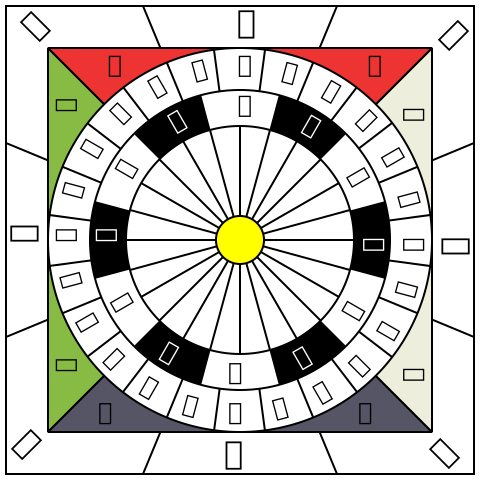
Directions used by Chinese mariners, astronomers, etc.

Directions used by Chinese mariners, astronomers, etc. By ancient Chinese convention, south, named “ ({7th of the 12 Earthly Branches} → [south] 午)”, is placed at the top, in the midnight position.
Creative Commons Attribution-ShareAlike License logo Locoluis

Indeed, the Mandarin word for “compass”, “zhǐnán‐zhēn ((zhǐ·nán {(points with) finger → [points]} · south 指南)‐(zhēn needle) [compass])” (a past MEotW), which actually means “points south needle”, embodies that the ancient Chinese viewed north and south from the opposite viewpoint compared to modern Westerners, whose convention is that a compass needle points north. (Of course, as one end of a compass needle is pointing north, the other end is simultaneously pointing south, so both viewpoints are correct—they’re just coming from different directions.) Thus, on a compass marked with the Chinese directions, south is placed at the top, where a clock puts midnight. This, apparently, is how we get “wǔyè (wǔ·yè {7th of the 12 Earthly Branches → [south (placed at the midnight position of Chinese directions charts)]} · night → [midnight] 午夜)”, which means “south night” and is used to mean “midnight”.

Heavenly Stems

By the way, often used with the Earthly Branches are the Heavenly Stems. Anyone who’s been in the Mandarin field for a while will have already seen some of them, albeit probably without knowing it—if, say, a paragraph in an English Watchtower study article has more than one study question, the questions would be labelled with the ordinals “a”, “b”, “c”, etc., and the corresponding study questions in the Mandarin version would be labelled with the ordinals “Jiǎ ({1st of the 10 Heavenly Stems} → [a] 甲)”, “ ({2nd of the 10 Heavenly Stems} → [b] 乙) ”, “Bǐng ({3rd of the 10 Heavenly Stems} → [c] 丙)”, etc., which are part of the Heavenly Stems Chinese system of ordinals.

Usage Example

Here is an example of “wǔyè (wǔ·yè {7th of the 12 Earthly Branches → [south (placed at the midnight position of Chinese directions charts)]} · night → [midnight] 午夜)” in use, taken from the above-mentioned jw.org article:

English:

“Scientists revealed on Tuesday that the ‘Doomsday Clock’ has been moved up to 90 seconds before midnight—the closest humanity has ever been to armageddon.”—ABC News.

Mandarin:

📖 📄 📘Kēxuéjiā (Kē·xué·jiā {branches of study · learning → [science]} · -ists → [scientists] 科学家 科學家) zài (on 在) Zhōu’èr (Zhōu’·èr {Circle → [Week(day)]} · Two → [Tuesday] 周二 周/週二) de (’s 的) shíhou ({(particular) time} 时候 時候), jiāng (took) Mòrì (Mò·rì End · {Sun → [Day]} → [Doomsday] 末日) Shízhōng (Shí·zhōng {(Particular) Times} · Clock → [Clock] 时钟 時鐘) tiáokuài (tiáo·kuài {to be adjusted} · {to be fast(er) → [to be farther ahead]} 调快 調快) le ([indicates a change] 了), jùlí (jù·lí {to be apart from} · {to be leaving from → [to be at a distance from]} 距离 距離) wǔyè (wǔ·yè {7th of the 12 Earthly Branches → [south (placed at the midnight position of Chinese directions charts)]} · night → [midnight] 午夜) zhǐ (just只/秖/衹/祇) shèng ({having remaining}剩/賸) 90 miǎo (seconds 秒), shì ((this) is 是) rénlèi (rén·lèi human·kind’s 人类 人類) shǐ (history 史) shang (upon 上) zuì (most最/㝡) jiējìn (jiē·jìn {coming close to} · {to be near} 接近) shìjiè (shì·jiè {generation → [world]} · extent’s → [world’s] 世界) mòrì (mò·rì end · {sun → [day]} 末日) de (’s 的) shíkè (shí·kè {(particular) time} · {carving → [moment]} 时刻 時刻).”—ABC Xīnwén (Xīn·wén New · {(That Which) Is Heard} → [News] 新闻 新聞) (Yīngyǔ (Yīng·yǔ English · language 英语 英語))
Categories
Theocratic

guānxīn

guānxīn (guān·xīn {close → [concern]} · heart [(with)] → [care [about/for]] 关心 關心) ← Tap/click to show/hide the “flashcard”

One of the publications that is now recommended to be used on Bible studies is the Yǒngyuǎn Xiǎngshòu Měihǎo de Shēngmìng—Hùdòng Shì Shèngjīng Kèchéng ((Yǒng·yuǎn Eternally · {Far (in Time)} 永远 永遠) (Xiǎng·shòu Enjoy · Receive 享受) (Měi·hǎo Beautiful · Good 美好) (de ’s 的) (Shēngmìng Life 生命)—(Hù·dòng {Each Other} · Moving → [Interactive] 互动 互動) (Shì (Type 式) (Shèng·jīng Holy · Scriptures → [Bible] 圣经 聖經) (Kè·chéng Lessons · Procedure → [Course] 课程 課程) [Enjoy Life Forever!—An Interactive Bible Course (lff)]) (Enjoy Life Forever! (lff)) book. The section of this book entitled “Kāishǐ (Kāi·shǐ Open · Begin 开始 開始) (Reading) Shèngjīng (Shèng·jīng (the) Holy · Scriptures → [the Bible] 圣经 聖經) Ba ([ptcl indicating a suggestion, request, or mild command] 吧/叭)!” (“Get Started Reading the Bible”) cites 1 Peter 5:7, which in English says that God “cares for you”. This week’s MEotW, guānxīn (guān·xīn {close → [concern]} · heart [(with)] → [care [about/for]] 关心 關心), is used to translate “cares for” in this scripture in the current Mandarin version of the New World Translation Bible.

The Pīnyīn (Pīn·yīn {Piecing Together} · Sounds → [Pinyin] 拼音) Plus unofficial rendering of this scripture, which can be found on the web here, is:

📖 📄 📘 Yào ({(you) must} 要) (hold 把) suǒyǒu (suǒ·yǒu {(all) which} · {(you) have’s} → [all (your)] 所有) yōulǜ ({being anxious} → [anxiety] 忧虑 憂慮) xiègěi (xiè·gěi {to be unloaded} · {to be given to} 卸给 卸給) Shàngdì (Shàng·dì Above’s · {Emperor → [God]} → [God] 上帝), yīnwei (yīn·wei because · for 因为 因為) (he 他) guānxīn (guān·xīn {closes → [concerns]} · heart (with) → [cares for] 关心 關心) nǐmen (nǐ·men you · [pl] 你们 你們).

Closing Off One’s Heart?

Guānxīn (Guān·xīn {close → [concern]} · heart [(with)] → [care [about/for]] 关心 關心)” literally means “to close heart”, which may seem odd for an expression that effectively means “to care (about/for)”. However, whereas in English a closed heart means one that is closed off from others, Mandarin seems to use “guān (shut; {close [up]} [→ [{lock up}; confine | concern; involve; implicate | connection | crux; {critical juncture}; {turning/key point} | {mountain pass}]]關/関)” in this and related expressions to refer to closing with or approaching someone or something, or perhaps to refer to enclosing or embracing someone or something—apparently it’s all in the (implied) prepositions.

Related Expressions

Considering some other Mandarin expressions with “guān (shut; {close [up]} [→ [{lock up}; confine | concern; involve; implicate | connection | crux; {critical juncture}; {turning/key point} | {mountain pass}]]關/関)” in them may help to improve our understanding of how this morpheme is used in Mandarin:

  • guān’ài (guān’·ài {closing [with] → [being concerned [about]]} · love 关爱 關愛)
  • guānhuái (guān·huái {close [with] → [[be] concerned [about]]} · {(carry in) bosom → [think of; be thoughtful toward; cherish]} 关怀 關懷)
  • guānxi (guān·xi {closing [with] → [involving]} · {tying → [relating]} → [relationship; relation | (sexual) relations | bearing; impact; relevance; significance; influence] 关系 關係)
  • guānyú (guān·yú {closing → [concerning; involving; relating]} · to; towards 关于 關於)
  • guānzhù (guān·zhù {close with → [be concerned about]} · {pour into → [concentrate on]} [→ [follow with interest; pay close attention to; follow (on social media)]] 关注 關注)

For convenience:

The direct link for the current generation Pīnyīn (Pīn·yīn {Piecing Together of} · Sounds → [Pinyin] 拼音) Plus resource for the Enjoy Life Forever! book is:

The short link for Chinese field language-learning links for the Enjoy Life Forever! book is:

More Pīnyīn (Pīn·yīn {Piecing Together of} · Sounds → [Pinyin] 拼音) and Pīnyīn (Pīn·yīn {Piecing Together of} · Sounds → [Pinyin] 拼音) Plus web material based on the Mandarin Enjoy Life Forever! book will be made available in the Pīnyīn (Pīn·yīn {Piecing Together of} · Sounds → [Pinyin] 拼音) Plus web resource as time allows.

Categories
Current Events

dòngdàng‐bù’ān

dòngdàng (dòng·dàng {[is] moving} · {[is] swinging; shaking; swaying} → [[is] suffering unrest/upheaval/turmoil; unstable; turbulent; chaotic] 动荡 動蕩/盪)bù’ān (bù’·ān not · {[is] peaceful; tranquil; calm} 不安) ← Tap/click to show/hide the “flashcard”

[Notes: Tap/click on a Pīnyīn (Pīn·yīn {Piecing Together} · Sounds → [Pinyin] 拼音) expression to reveal its “flashcard”; tap/click on a “flashcard” or its Pīnyīn (Pīn·yīn {Piecing Together} · Sounds → [Pinyin] 拼音) expression to hide the “flashcard”. 📖 📄 📘 icons mean 📖 Reveal All, 📄 Reveal Advanced, and 📘 Reveal None re all the “flashcards” in the heading, paragraph, etc. that they are placed at the beginning of.]

At the time of this writing, jw.org was featuring the article “2022: A Year of Turmoil—What Does the Bible Say?”. Although we do not participate in New Year’s celebrations, we may find it beneficial to talk to people who are looking back on the past year at around this time, and who may be a little more contemplative than usual about the significance of the things that happened over the course of that tumultuous year.

To correspond with the sense of the English word “turmoil” (a noun), the Mandarin version of the above-mentioned article uses this week’s MEotW, “dòngdàng (dòng·dàng {[is] moving} · {[is] swinging; shaking; swaying} → [[is] suffering unrest/upheaval/turmoil; unstable; turbulent; chaotic] 动荡 動蕩/盪)bù’ān (bù’·ān not · {[is] peaceful; tranquil; calm} 不安)” (an adjective phrase which can mean “suffered turmoil”), to describe the year 2022.

Related Expressions

The “dòng (move [→ [stir | arouse | change; alter]])” in “dòngdàng (dòng·dàng {[is] moving} · {[is] swinging; shaking; swaying} → [[is] suffering unrest/upheaval/turmoil; unstable; turbulent; chaotic] 动荡 動蕩/盪)bù’ān (bù’·ān not · {[is] peaceful; tranquil; calm} 不安)” literally means “moving”, and is used in a wide variety of other expressions. These include expressions as different as “dòngcí (dòng·cí moving · word → [verb] 动词 動詞)”, “dònglì (dòng·lì moving · force 动力 動力)”, “gǎndòng (gǎn·dòng feeling · moved | {make to feel} · move 感动 感動)”, and “dòngwù (dòng·wù moving · thing → [animal] 动物 動物)”.

The “ān ({set (sb.’s mind) at ease; calm} | {rest content; be satisfied} | {place in a suitable position [→ [install; fix; fit; set up]]} | {[is] peaceful; tranquil; calm; quiet [→ [[is] safe; secure; in good health]]} 安)” in “dòngdàng (dòng·dàng {[is] moving} · {[is] swinging; shaking; swaying} → [[is] suffering unrest/upheaval/turmoil; unstable; turbulent; chaotic] 动荡 動蕩/盪)bù’ān (bù’·ān not · {[is] peaceful; tranquil; calm} 不安)” has several different meanings, and it appears in well-known expressions such as “ānníng ({being peaceful}; {being tranquil} [→ [peace; tranquillity]] 安宁 安寧)”, “píng’ān (píng’·ān {[is] flat, level, even → [[is] peaceful]} · {[is] safe, secure} (nwtsty-CHS Appx. A2 says this term mainly refers to things being smooth and stable, safe and secure, free of danger) 平安)”, “ānquán (ān·quán {[being] safe} · {[being] whole} → [[being] safe; secure | safety; security] 安全)”, and “ānpái (ān·pái {placing in a suitable position} · {arranging; putting in order; sequencing; lining up} → [arranging | arrangement] 安排)”. It was also chosen to be included in the Mandarin version of the name “Anna”, “Ānnà (Anna 安娜)”, which is a past MEotW.

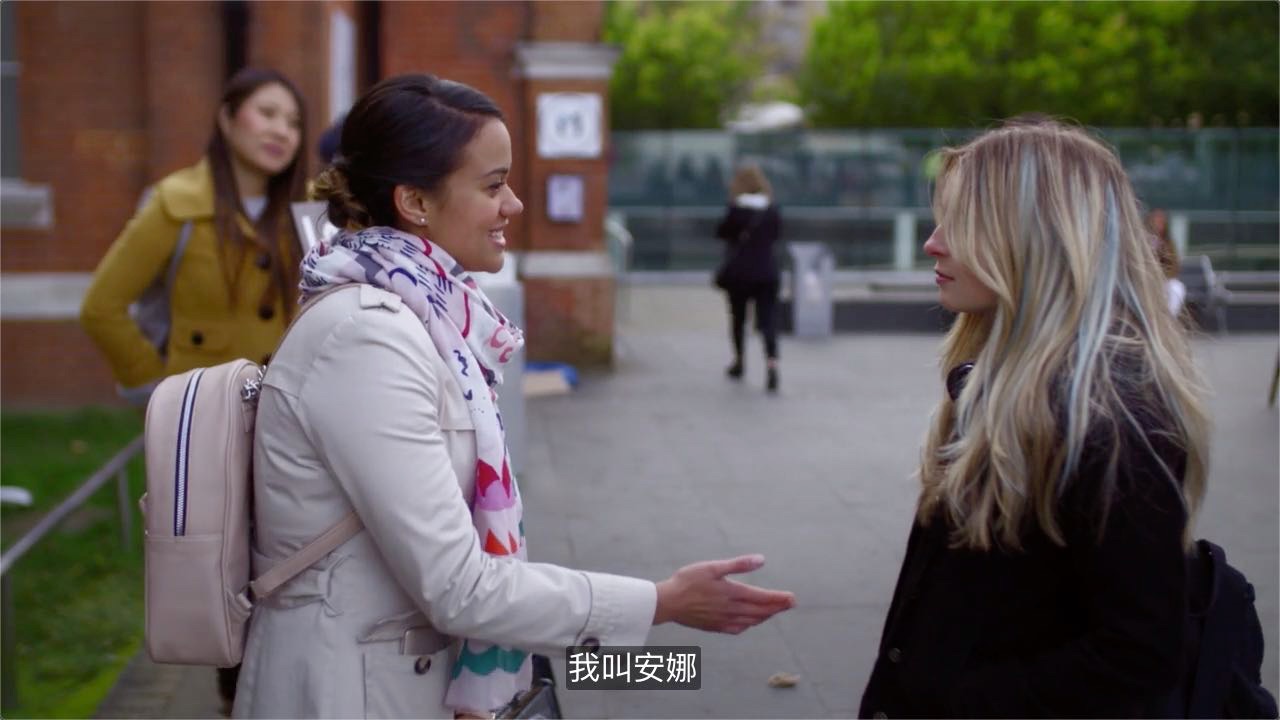
Neeta introduces herself to Jade (with Mandarin subtitle)
(I 我) jiào ({am called}叫/呌) Ānnà (Anna 安娜)

Usage Example

Here is an example of “dòngdàng (dòng·dàng {[is] moving} · {[is] swinging; shaking; swaying} → [[is] suffering unrest/upheaval/turmoil; unstable; turbulent; chaotic] 动荡 動蕩/盪)bù’ān (bù’·ān not · {[is] peaceful; tranquil; calm} 不安)” in use, adapted from the above-mentioned article:

English:

2022 was a year of turmoil. During 2022, war, economic hardship, and environmental disasters have dominated the news.

Mandarin:

📖 📄 📘 Dòngdàng (Dòng·dàng moved · swayed → [suffered turmoil] 动荡 動蕩/盪)bù’ān (bù’·ān not · peaceful 不安) de (’s 的) 2022 nián (year年/秊), zhànzhēng (zhàn·zhēng war · contending → [war] 战争 戰爭), jīngjì (jīng·jì {(of) managing of} · {crossing of a river → [helping]} → [economic] 经济 經濟) wēijī (wēi·jī {(for) ridge of a roof → [(for) danger]} · occasions → [crises] 危机 危機), huánjìng (huán·jìng surrounding · {boundaries → [(bounded) place] → [situation]} → [environmental] 环境 環境) wèntí (wèn·tí asking · problems → [problems] 问题 問題) zhī ( 之) lèi (kind) de (’s 的) bàodǎo (bào·dǎo reporting · instructing (things) → [news reports] 报导 報導) zhànjùle (zhàn·jù·le seized · occupied · [indicates a change] 占据了 占/佔據了) xīnwén (xīn·wén new · {(that which) is heard} → [news] 新闻 新聞) tóutiáo (tóu·tiáo head · {strips → [articles]} → [lead news stories] 头条 頭條).