Categories
Culture History Science

kǎlā’OK

kǎlā’OK (karaoke 卡拉OK) ← Tap/click to show/hide the “flashcard”

The selection of this week’s MEotW, “kǎlā’OK (karaoke 卡拉OK)”, was inspired by a Twitter thread of epic linguistic and etymological nerdery that I recently came across, which begins with this tweet:

Here are some of the tweets in this thread, which summarize how “kǎlā’OK (karaoke 卡拉OK)” became a word in Mandarin:

Borrowed Culture

In addition to “kǎlā’OK (karaoke 卡拉OK)”, another Mandarin word which borrowed from Japanese culture, which borrowed from Western culture, is “wénhuà (wén·huà {(with) writing} · transformed (system) → [culture] | {(with) writing} · transformed → [cultural] 文化)”, the Mandarin word for culture itself. As the MEotW post about that word says:

To translate the Western concept of culture, the Japanese coined the word bunka, which is written 文化 (see Liu, Zhengtan et al. 1984, s.v. wenhua). The Chinese imported this character combination from Japan and pronounced it according to the rules of their own language: wénhuà.
“Two Steps Toward Digraphia in China”, by Xieyan Hincha

So, people going on about “pure” Chinese culture are ignorant or in denial about the reality of how other cultures have influenced Chinese culture, and about what a great, enriching thing that can be. Anyone who has been in a group or congregation with people predominantly from a single cultural background, and who has also had the pleasure of being in a group or congregation with people from a variety of cultural backgrounds, has had the opportunity to see how the atmosphere of the latter situation can be a breath of fresh air compared to the relatively narrow—and potentially narrow-minded—cultural worldview that is sometimes allowed to be present in the former situation. Some parts of the world too are starting to realize the advantages of considering various cultural inputs, compared to trying to be productive or creative in a monocultural bubble.

Indeed, the proud “not invented here” logic of Chinese cultural purists who would, for example, reject Pīnyīn (Pīn·yīn {Piecing Together} · Sounds → [Pinyin] 拼音) because it uses letters from the Latin alphabet would also require us to reject things like European-style punctuation, Arabic numerals, and kǎlā’OK (karaoke 卡拉OK) because of their foreign-to-China origins. But, Chinese culture without kǎlā’OK (karaoke 卡拉OK)? How dreary! Next, they’ll be wanting us to do long division using Chinese characters—十一, 九十九, 一千八百三十六, …—instead of Arabic numbers, and they’ll be wanting us to read and decipher Chinese writings the old-fashioned way, without the “crutch” of those decadent European punctuation marks! 😱

(Of course, with kǎlā’OK (karaoke 卡拉OK), as with anything that may involve worldly culture and music—which can possibly include some bad things along with the good things—Christians must be selective, exercising good spiritual judgement and following their Bible-trained consciences.)

As members of the international brotherhood of Jehovah’s people, and as ones “taught by Jehovah” himself, we need not be content with, let alone proud of, a particular way of doing things prescribed by human, worldly Chinese cultural tradition.—1 Peter 5:9; Isaiah 54:13; 1 Corinthians 1:31; 1 John 2:17; Mark 7:1–13.
Categories
Culture History Theocratic

Jìniàn Jùhuì

Jìniàn Jùhuì ((Jì·niàn Remembering · {Thinking Of} → [Commemorating] 记/纪念 記/紀念) (Jùhuì Meeting 聚会 聚會) [[the] Memorial]) ← Tap/click to show/hide the “flashcard”

The page on jw.org entitled “Memorial of Jesus’ Death” invites people to this year’s Memorial, which as of this writing is fast approaching.

Appearing in the title of the Mandarin version of that page is this week’s MEotW, “Jìniàn Jùhuì ((Jì·niàn Remembering · {Thinking Of} → [Commemorating] 记/纪念 記/紀念) (Jùhuì Meeting 聚会 聚會) [[the] Memorial])”, which corresponds to “Memorial”, or “the Memorial”.

Note that in this post, “Jìniàn Jùhuì ((Jì·niàn Remembering · {Thinking Of} → [Commemorating] 记/纪念 記/紀念) (Jùhuì Meeting 聚会 聚會) [[the] Memorial])” is capitalized, rather than being rendered in all lowercase letters. Why has this been done? The answer involves another question: Is Pīnyīn (Pīn·yīn {Piecing Together} · Sounds → [Pinyin] 拼音) just a pronunciation aid or actually a full writing system?

To Be or Not to Be…a Full Writing System?

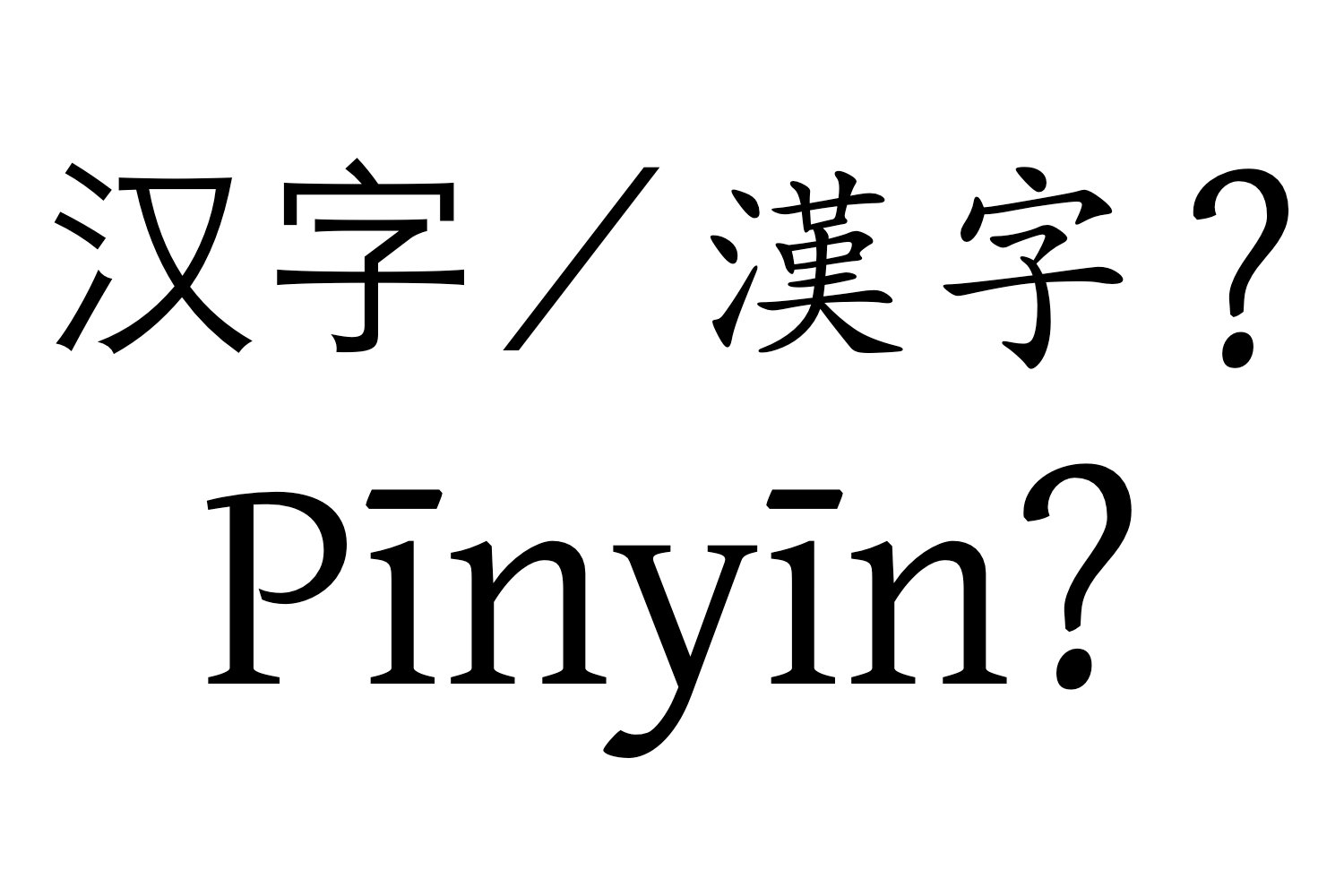
汉字 / 漢字? Pīnyīn?

The article “Pīnyīn (Pīn·yīn {Piecing Together} · Sounds → [Pinyin] 拼音) Was Plan A” explains that Pīnyīn (Pīn·yīn {Piecing Together} · Sounds → [Pinyin] 拼音) was originally meant by Máo Zédōng ((Máo Hair (surname) 毛) (Zé·dōng Marsh · East 泽东 澤東) (the founder of the People’s Republic of China)) and some of the other early movers and shakers of the People’s Republic of China to eventually replace Chinese characters. (Yes, seriously—it’s April, but we Jehovah’s Witnesses don’t make April Fools’ jokes!) Even though in this case cultural pride, tradition, and inertia have been allowed in the Mandarin-speaking part of the world to leave no room for innovation and progress, the fact remains that Pīnyīn (Pīn·yīn {Piecing Together} · Sounds → [Pinyin] 拼音) was intended by design to work as a full writing system. That it actually does so is shown in the scholarly paper “Two Steps Toward Digraphia in China”, and in the article “Pīnyīn (Pīn·yīn {Piecing Together} · Sounds → [Pinyin] 拼音) Is a Good, Workable Writing System on Its Own”.

R-E-S-P-E-C-T

Since Pīnyīn (Pīn·yīn {Piecing Together} · Sounds → [Pinyin] 拼音) is a full writing system like English is, there is good reason to consider it appropriate to capitalize Pīnyīn (Pīn·yīn {Piecing Together} · Sounds → [Pinyin] 拼音) words similarly to how English words are capitalized. Of course, there are different style guides with different rules regarding how and what to capitalize in English, especially when it comes to titles, but at the very least, any particular piece of writing should generally stick to whatever capitalization style has been chosen for it. (Hopefully it’s a good one.)

Unfortunately, in the part of the world that uses written Mandarin, Pīnyīn (Pīn·yīn {Piecing Together} · Sounds → [Pinyin] 拼音) is generally relegated to being just a pronunciation aid—it is not given the respect and dignity of being recognized as a full writing system, even though, as discussed above, it linguistically qualifies as one. Thus, Pīnyīn (Pīn·yīn {Piecing Together} · Sounds → [Pinyin] 拼音) is generally not capitalized in the world, if it is used at all. In contrast, Pīnyīn (Pīn·yīn {Piecing Together} · Sounds → [Pinyin] 拼音) Plus material gives Pīnyīn (Pīn·yīn {Piecing Together} · Sounds → [Pinyin] 拼音) the respect it has earned—it uses Pīnyīn (Pīn·yīn {Piecing Together} · Sounds → [Pinyin] 拼音) as its default main writing system and carefully follows the capitalization example of the official English version of the Mandarin material it is based on. E.g., since “God’s Kingdom” is rendered in the official English material with capital letters at the beginnings of its words, the Pīnyīn (Pīn·yīn {Piecing Together} · Sounds → [Pinyin] 拼音) Plus material follows suit with “Shàngdì (Shàng·dì Above’s · {Emperor → [God]} → [God] 上帝) de (’s 的) Wángguó (Wáng·guó King’s · Nation → [Kingdom] 王国 王國)”.

So, since “the Memorial” is capitalized in the organization’s official English material, such as the English version of the article “Memorial of Jesus’ Death” on jw.org, “Jìniàn Jùhuì ((Jì·niàn Remembering · {Thinking Of} → [Commemorating] 记/纪念 記/紀念) (Jùhuì Meeting 聚会 聚會) [[the] Memorial])” is capitalized in this post and in other material containing Pīnyīn (Pīn·yīn {Piecing Together} · Sounds → [Pinyin] 拼音) Plus material.

The Precedent of Punctuation

Is it “beneath” the Chinese world to follow the example of English when it comes to the capitalization of the alphabet it uses? Well, the Chinese world has followed Western writing style examples before, with punctuation. As the MEotW post on “diǎnliàng (diǎn·liàng {dot → [light (v); ignite]} · {to be bright} [→ [illuminate; shine light on]] 点亮 點亮)” pointed out:

Chinese writing in the past didn’t have punctuation, and now it has punctuation largely modeled after European punctuation. (For reference: Chinese punctuation – Wikipedia, Q&A: When were punctuation marks first used? – HistoryExtra, history – When was punctuation introduced into Chinese? – Chinese Language Stack Exchange)

Categories
Culture History Language Learning Names Technology

Hànzì

Hànzì (Hàn·zì {Han (Chinese)} · Characters 汉字 漢字) ← Tap/click to show/hide the “flashcard”

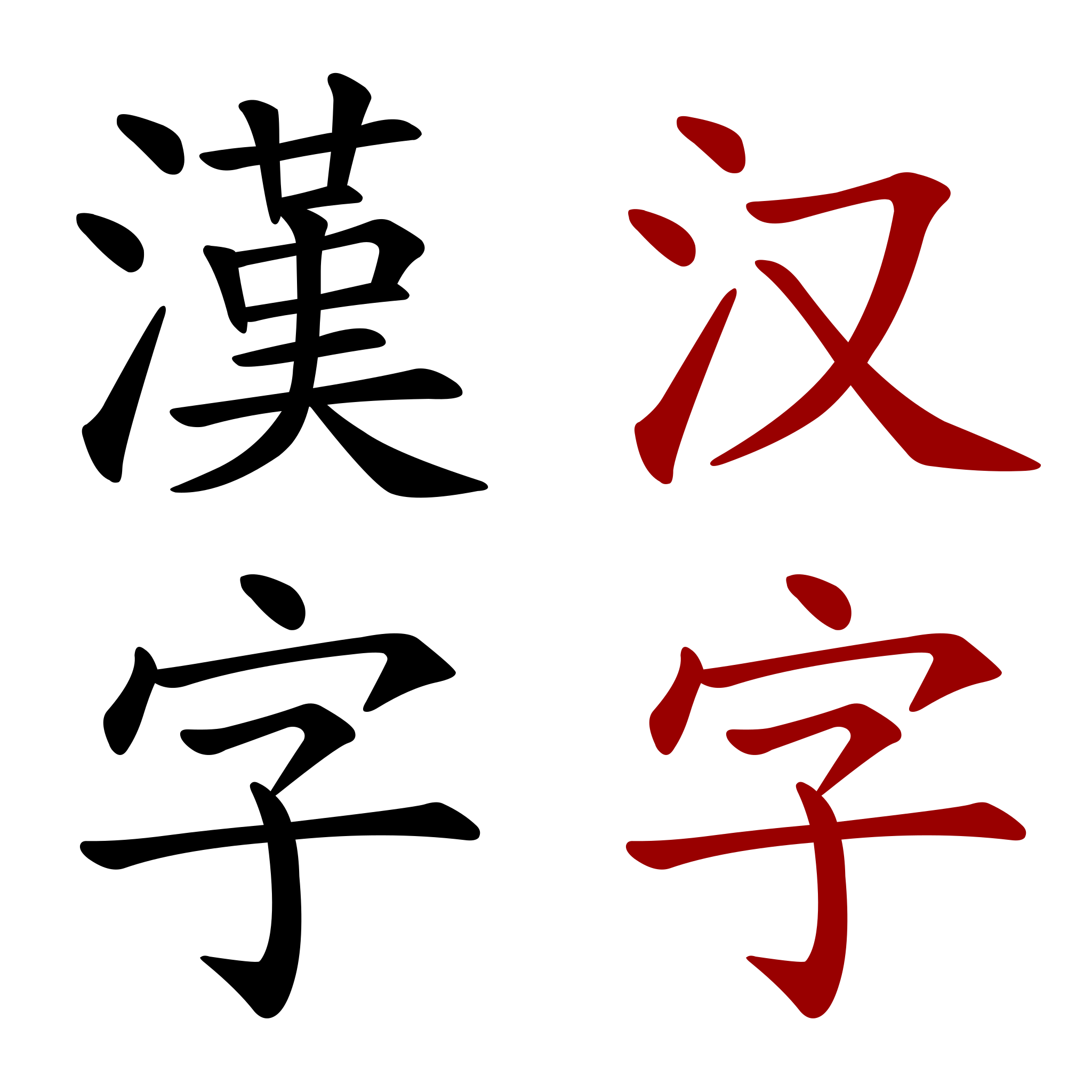
Hànzì (Hàn·zì {Han (Chinese)} · Characters 汉字 漢字)” is what Chinese characters are called in Mandarin. Actually, “Hànzì (Hàn·zì {Han (Chinese)} · Characters 汉字 漢字)” literally means “Han characters”, but as discussed in the MEotW post on “Hànyǔ (Hàn·yǔ {Han (Chinese)} · Language [→ [(Modern Standard) Mandarin]] 汉语 漢語)”, the Han are by far the largest ethnic group in China, and they are the dominant cultural force in China. Thus, Han characters are, in effect, Chinese characters.

漢字 汉字

Han culture has affected not only China, but also many of the surrounding nations. The words used by some of these nations to refer to “Chinese characters” are obvious echoes of “Hànzì (Hàn·zì {Han (Chinese)} · Characters 汉字 漢字)”:

  • Japanese: kanji
  • Korean: Hanja
  • Vietnamese: hán tự

Hànzì (Hàn·zì {Han (Chinese)} · Characters 汉字 漢字) are still used a lot in modern Japanese writing. However, although Hànzì (Hàn·zì {Han (Chinese)} · Characters 汉字 漢字) used to be the dominant writing system in Korea and in Vietnam, those nations have moved on to mainly use alphabetic writing systems.

The Korean Connection

Regarding the situation in Korea, the Awake! article “Let’s Try Writing in Hankul!” says:

BEFORE Hankul [or Hangul] was created, the Korean language did not have its own script. For more than a thousand years, educated Koreans wrote their language using Chinese characters. Over the years, however, various attempts were made to devise a better writing system. But since all of them were based on Chinese characters, only the well-educated could use them.

King Sejong spearheaded the creation of an alphabet that would both suit spoken Korean and be easy to learn and use.

Sadly, some scholars opposed Hankul, precisely because it was so easy to learn! They derisively called it Amkul, meaning “women’s letters.” They disdained a system that could be learned even by women, who back then were not taught to read in the schools. This prejudice against Hankul persisted among upper-class Koreans for some time. In fact, more than 400 years elapsed before the Korean government declared that Hankul could be used in official documents.

The Chinese Conundrum

How about the writing system situation in China itself? Do the Chinese languages need to be written using Hànzì (Hàn·zì {Han (Chinese)} · Characters 汉字 漢字)? Chinese traditionalists have influenced many people to assume so, but there is actually no technical linguistic requirement that any Chinese language be written using Hànzì (Hàn·zì {Han (Chinese)} · Characters 汉字 漢字)—writing Chinese languages using Hànzì (Hàn·zì {Han (Chinese)} · Characters 汉字 漢字) is purely and merely a deeply embedded tradition.

Proof that the use of Hànzì (Hàn·zì {Han (Chinese)} · Characters 汉字 漢字) is merely a tradition and not a technical requirement comes from the fact that Pīnyīn (Pīn·yīn {Piecing Together of} · Sounds → [Pinyin] 拼音), a phonetic alphabetic system designed by a Chinese government team, is a good, workable full writing system for Modern Standard Mandarin.

Why has China held on to its traditional use of Hànzì (Hàn·zì {Han (Chinese)} · Characters 汉字 漢字) when other nations have moved on to alphabetic writing systems? As mentioned in the MEotW post on “Zhōngguó (Zhōng·guó Central · Nation → [China | Chinese] 中国 中國)”,

Some wonder why China has held on to its archaic characters writing system instead of moving on to using a modern alphabetic writing system like almost every other nation does, even though outstanding native sons like Lǔ Xùn ((Lǔ Stupid; Rash (surname)) (Xùn Fast; Quick; Swift 迅) (pen name of Zhōu Shùrén, the greatest Chinese writer of the 20th cent. and a strong advocate of alphabetic writing)) have advocated strongly for that. Perhaps the proud self-centredness of the only nation to name itself the centre of the world provides a clue….

When the Communists took over China a few years after World War II, their Plan A for China’s writing system situation actually did involve eventually moving on from the characters to an alphabetic writing system that would be developed, which turned out to be Pīnyīn (Pīn·yīn {Piecing Together of} · Sounds → [Pinyin] 拼音). However, the government needed the help of the people already educated in Hànzì (Hàn·zì {Han (Chinese)} · Characters 汉字 漢字), and many of these people opposed this plan that they feared would involve leaving behind, or at least de-emphasizing, a cultural tradition that they were very proud of, that they had invested very much time and effort into mastering, and that gave them much prestige in the existing environment.1 In other words, the pride and prejudice of those who had already been educated in the Hànzì (Hàn·zì {Han (Chinese)} · Characters 汉字 漢字) caused them to disparage and oppose the idea of a simpler alternative writing system, just as had been the case in Korea, as noted above. So, the simplification of the Hànzì (Hàn·zì {Han (Chinese)} · Characters 汉字 漢字) is the farthest China has gotten so far with regard to official writing system reform, and even that has only been achieved in the face of much criticism and opposition.

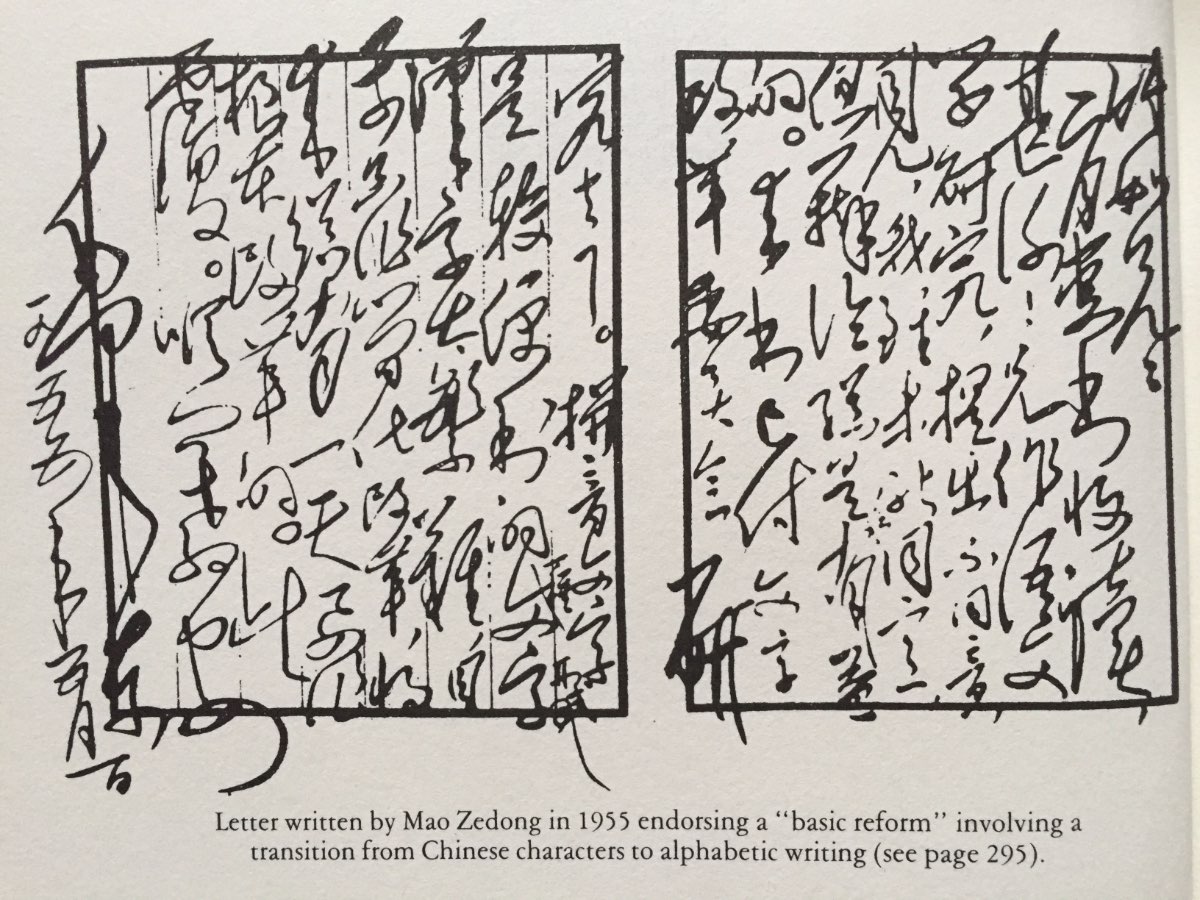
Chairman Máo Zédōng ((Máo Hair (surname) 毛) (Zé·dōng Marsh · East 泽东 澤東) (the founder of the People’s Republic of China)) (Wikipedia article) himself supported continuing to move on, from simplification of the characters to actually adopting Pīnyīn (Pīn·yīn {Piecing Together of} · Sounds → [Pinyin] 拼音) as a writing system. In a letter to an old schoolmate, he wrote:

…Pinyin writing is a form of writing that is relatively convenient. Chinese characters are too complicated and difficult. At present we are only engaged in reform along the lines of simplification, but some day in the future we must inevitably carry out a basic reform.2

Letter from Mao endorsing a transition from Chinese characters to alphabetic writing

(The above picture is from near the beginning of the book The Chinese Language: Fact and Fantasy, by John DeFrancis.)

While obviously what Máo ((Máo Hair (surname) 毛) (abbr. for Máo Zédōng, the founder of the People’s Republic of China)) foresaw regarding a writing system “basic reform” in China has not yet come true, American sinologist and University of Pennsylvania Professor of East Asian Languages and Civilizations Victor H. Mair wrote in a blog post:

So, those who are in favor of HP [Hànyǔ (Hàn·yǔ {Han (Chinese)} · Language → [(Modern Standard) Mandarin] 汉语 漢語) Pīnyīn (Pīn·yīn {Piecing Together of} · Sounds → [Pinyin] 拼音)] don’t need to be concerned, and those who are opposed to HP don’t need to be frightened. HP is ineluctably playing a greater and greater role in the educational, cultural, social, political, and every other aspect of the lives of Chinese citizens, and this is occurring without regard to anyone pushing it as a governmental program. It is happening because of the wishes of those who actually use it for a wide variety of helpful purposes.

Digraphia [the use of more than one writing system for the same language, in this case the use of both Hànzì (Hàn·zì {Han (Chinese)} · Characters 汉字 漢字) and Pīnyīn (Pīn·yīn {Piecing Together of} · Sounds → [Pinyin] 拼音) for writing Modern Standard Mandarin] is emerging before our very eyes, enabling people to use the alphabet and the characters for whatever purposes they deem suitable. Nobody needs to take a vote or carry out a survey for this to happen.

Tourists or Missionaries?

Regardless of how worldly Chinese people view the Hànzì (Hàn·zì {Han (Chinese)} · Characters 汉字 漢字), how should we dedicated Mandarin field language-learners view them? It would be easy to fall back on the commonly accepted view, the tourist’s view, that the Hànzì (Hàn·zì {Han (Chinese)} · Characters 汉字 漢字) are an integral and fascinating part of China’s precious cultural heritage that we should duly respect and even heap adulation upon.

However, as Mandarin field language-learners, we are not in the Mandarin field to be tourists just enjoying the exotic foreign culture. On the contrary, we must be more like missionaries or spiritual rescue workers involved in an urgent life-saving work, because lives are indeed involved. As ones involved in an urgent, life-saving work, we need tools, technologies, and systems that efficiently and effectively help us to get this work done without wasting time and effort when people’s everlasting lives are at stake. From this sober and pragmatic angle, the extraordinarily difficult-to-learn-and-remember Hànzì (Hàn·zì {Han (Chinese)} · Characters 汉字 漢字) are far from ideal. Thus, while there is obviously value in learning as many Hànzì (Hàn·zì {Han (Chinese)} · Characters 汉字 漢字) as one is reasonably able to, it is fortunate that Pīnyīn (Pīn·yīn {Piecing Together of} · Sounds → [Pinyin] 拼音) exists and is available as a simple, effective alternative writing system for Mandarin, for the many times when it is not necessary to use Hànzì (Hàn·zì {Han (Chinese)} · Characters 汉字 漢字).


1. John DeFrancis, The Chinese Language: Fact and Fantasy (Honolulu: University of Hawaii Press, 1984), p. 258. ^

2. Ibid., p. 295. ^