Categories
Culture Language Learning Science Technology Theocratic

róngyào

róngyào (róng·yào glory; honour · {being bright; dazzling; brilliant; shining → [honour; glory]} → [glory; honour] | glorify · {to be bright; dazzling; brilliant; shining → [to be glorious]} → [glorify] | honourable; glorious · {bright; dazzling; brilliant; shining → [glorious]} → [honourable; glorious] 荣耀 榮耀) 👈🏼 Tap/click to show/hide the “flashcard”

Rather than dismissively thinking to ourselves that the songs produced by the organization are “just songs”, we should remember that the slave class takes seriously its responsibility to provide spiritual food to God’s people, and so it is going to make sure that the lyrics in its songs are spiritually correct, while also being emotionally moving.—Ezekiel 33:32; Matthew 24:45.

“Give Jehovah Glory”

“Róngyào” _Pīnyīn_ Plus info, Song 159 (music+_Pīnyīn_), on iPhone 13 mini (landscape orientation)

This week’s MEotW in the unofficial Pīnyīn (Pīn·yīn {Piecing Together of} · Sounds → [Pinyin] 拼音) Plus resource “Sing Out Joyfully” Bk. (Pīnyīn+Music, Pīnyīn Plus, Web)

This week’s MEotW, “róngyào (róng·yào glory; honour · {being bright; dazzling; brilliant; shining → [honour; glory]} → [glory; honour] | glorify · {to be bright; dazzling; brilliant; shining → [to be glorious]} → [glorify] | honourable; glorious · {bright; dazzling; brilliant; shining → [glorious]} → [honourable; glorious] 荣耀 榮耀)”, comes from the relatively new song 159, which is entitled “Give Jehovah Glory” in English and “Róngyào (Róng·yào Glory · {Being Shining → [Glory]} → [Glory] 荣耀 榮耀) Guīgěi (Guī·gěi {Give Back} · {to Be Given to} 归给 歸給) Yēhéhuá (Jehovah 耶和华 耶和華) in Mandarin (WOL, Pīnyīn (Pīn·yīn {Piecing Together of} · Sounds → [Pinyin] 拼音) Plus).

“Róngyào (Róng·yào glory; honour · {being bright; dazzling; brilliant; shining → [honour; glory]} → [glory; honour] | glorify · {to be bright; dazzling; brilliant; shining → [to be glorious]} → [glorify] | honourable; glorious · {bright; dazzling; brilliant; shining → [glorious]} → [honourable; glorious] 荣耀 榮耀) is flexible regarding what part of speech it can be—it can mean “glory; honour”, “glorify”, or “honourable; glorious”. In the Mandarin field, what kinds of glory should we be mindful of? Whom should we seek to glorify? What kind of glory is truly glorious?

“Glory from Men” Who Glorify Worldly Human Chinese Culture

Some in the Mandarin field may focus on gaining knowledge of Chinese characters so as to obtain glory from certain humans. Ones who do this are taking a different approach from that of Jesus, who said at John 5:41–44:

I do not accept glory from men, but I well know that you do not have the love of God in you. I have come in the name of my Father, but you do not receive me. If someone else came in his own name, you would receive that one. How can you believe, when you are accepting glory from one another and you are not seeking the glory that is from the only God?

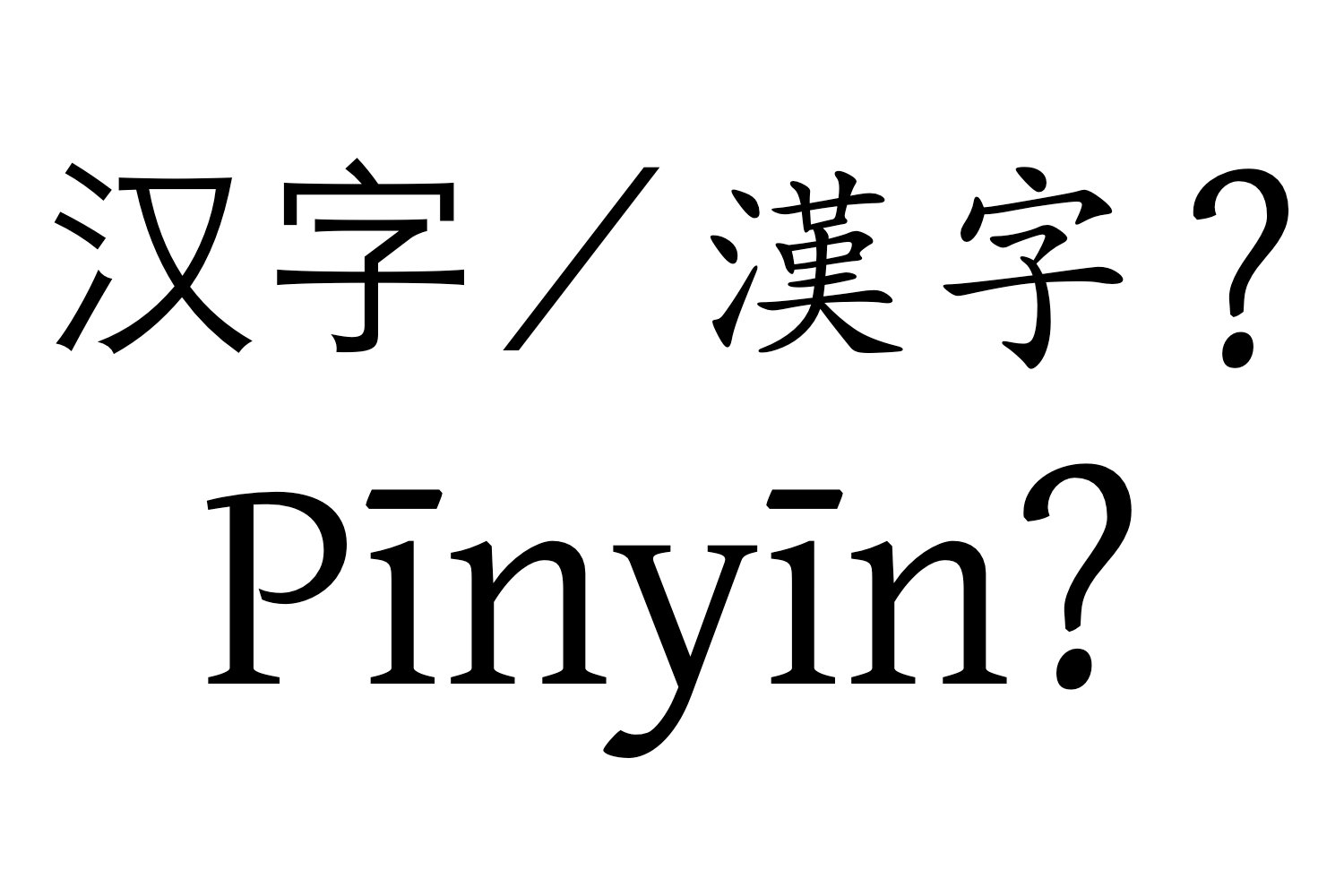
Why do some humans heap praise and glory on those who have acquired extensive knowledge of Chinese characters? For one thing, Chinese characters are famously extraordinarily hard to learn and remember (unnecessarily so, actually), and so there is the natural glory given to those who have been able to accomplish a hard thing. Also, though, Chinese characters are glamourized by many as distinctive symbols of worldly human Chinese culture, and many are proud of them, and proud of worldly human Chinese culture. This is a big reason why traditional Mandarin language instruction and traditional Mandarin language teachers in general focus on Chinese characters so much and encourage Mandarin learners to prioritize them.

It is only natural for a student of Mandarin to want to receive glory from his teacher and others like him. Unfortunately, though, experience has shown that going along with a traditional Mandarin language teacher’s focus on characters may lead to a Mandarin learner actually being diverted into a deep rabbit hole and hindered from actually learning how speak Mandarin well. While such ones may, after many years of intense effort, come to be able to recognize many Chinese characters, they may not be able to, say, glorify Jehovah while speaking powerfully and persuasively to Mandarin-speaking people, the way Jesus spoke to people. (Mark 1:22) That’s because this traditional focus on characters has all along been mainly meant, not to help Mandarin learners actually learn to speak Mandarin, but to perpetuate and glorify worldly human Chinese culture.

Glory for Worldly Chinese Political Systems

In this world, certain aspects of Chinese culture can unfortunately get politicized. For example, Simplified characters and Pīnyīn (Pīn·yīn {Piecing Together of} · Sounds → [Pinyin] 拼音) were created in mainland China, so some may promote these systems so as to glorify the political system of mainland China. On the other hand, Traditional characters and Zhùyīn (Zhù·yīn {Annotating of} · Sounds → [Zhuyin] 注音 註/注音) continued to be used in Taiwan after the mainland pivoted away from them, so some may promote these systems so as to glorify the political system of Taiwan. Even the Mandarin expression that people use to refer to the Mandarin language (Guóyǔ (Guó·yǔ National · Language → [(Modern Standard) Mandarin (term commonly used in Taiwan)] 国语 國語)/pǔtōnghuà (pǔ·tōng·huà common; universal · {through(out) → [common]} · speech → [(Modern Standard) Mandarin (term commonly used in China)] 普通话 普通話)/Huáyǔ (Huá·yǔ {Magnificent; Splendid; Flowery; Florescent → [Chinese]} · Language → [(Modern Standard) Mandarin (term commonly used in Singapore)] 华语 華語)/etc.) can be made to take on political connotations. Of course, as Jehovah’s politically neutral servants, we must avoid doing things just to glorify one human political system over another.

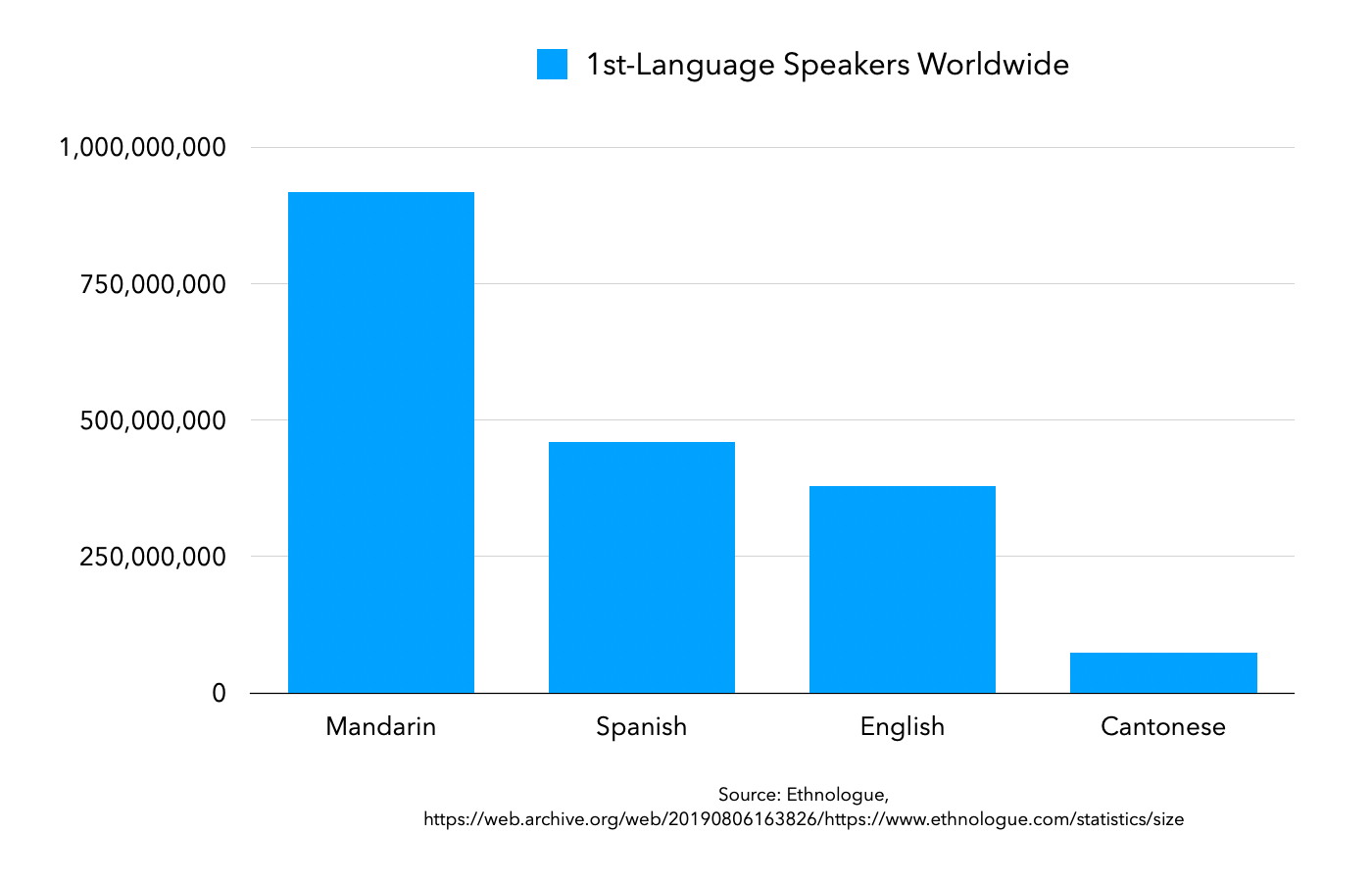
Another thing that we Mandarin field language learners must beware of is the erroneous idea that Mandarin, Cantonese, Shanghainese, etc. are just “dialects” of “Chinese”. This misconception has been widely spread as political propaganda, to bolster the idea that China should be united under one political system. So, if we parrot that erroneous view regarding so-called Chinese “dialects” that in reality function like distinct languages, then we are actually parroting political propaganda that is designed to glorify China’s central government regardless of any confusion or other negative effects that may result from such spreading of falsehood.

Glory for Jehovah

Rather than allowing ourselves to be used to glorify humans or things in this worldly human system, we can show that we seek to glorify Jehovah, the God of truth. (John 17:17; 4:23, 24) One way we can do so in the Chinese language fields is by rejecting the many untruths that have been spread about the Chinese languages. Also, we can do so by seeking to choose and use systems and methods based on what really works best to help us to praise and glorify Jehovah, not based on what serves to glorify ourselves or worldly humans, and not based on what serves to perpetuate and glorify worldly human cultures, traditions, and political systems.

As Jesus’ words above showed, Jehovah gives “the glory that is from the only God” to those who seek to give glory to him, rather than to mere humans. So, let us follow song 159’s simple but profound admonition, and give glory to Jehovah!

Categories
Culture Language Learning Languages Science

yǔzú

yǔzú (yǔ·zú language · {ethnic group → [group of things with common characteristics] → [group]} 语族 語族) 👈🏼 Tap/click to show/hide the “flashcard”

[This reposting of a post that was originally posted on February 15, 2021 seems to be a fitting companion to the recent reposting of the post on “yǔxì (yǔ·xì language · {tied (things) → [system; family]} 语系 語系)”. It discusses the important basic issue of how Mandarin should be classified as a language, a subject about which much political and cultural propaganda has unfortunately been spread.]

While “language family” seems to be a commonly accepted linguistic term, there does not seem to be universal consensus on what terms to use for subdivisions of language families. This is suggested by the wording used in the Wikipedia article on language families, under the subheading “Structure of a family”:

Language families can be divided into smaller phylogenetic units, conventionally referred to as branches of the family because the history of a language family is often represented as a tree diagram. A family is a monophyletic unit; all its members derive from a common ancestor, and all attested descendants of that ancestor are included in the family. …

Some taxonomists restrict the term family to a certain level, but there is little consensus in how to do so. Those who affix such labels also subdivide branches into groups, and groups into complexes.

So, it seems that one common—but not universal—language classification scheme is:

  • family > branch > group > complex…

In contrast, noted American sinologist and University of Pennsylvania Professor of East Asian Languages and Civilizations Victor H. Mair, in his article “The Classification of Sinitic Languages: What Is ‘Chinese’?” (p. 749), sets out a slightly different language classification scheme:

  • family > group > branch > language > dialect

The Mandarin Word for “Language Group”

Regardless of whether we consider language families to be first subdivided into branches or into groups, an accepted and acceptable Mandarin translation for “language group” is this week’s MEotW, “yǔzú (yǔ·zú language · {ethnic group → [group of things with common characteristics] → [group]} 语族 語族)”, as Prof. Mair confirms in the article (p. 747) mentioned above.

If “ (clan; race; tribe; {ethnic group}; nationality [→ [class or group of things or people with common characteristics]] 族)” seems familiar, perhaps that is because it occurs in some fairly well-known scriptures. For example, the 2019 Edition of the Mandarin New World Translation Bible translates “every nation and tribe and tongue and people” in Revelation 14:6 as “měi (every 每) ge ([mw]個/箇/个) guózú (guó·zú national · {ethnic group} → [nation] 国族 國族), bùzú (bù·zú sectional · {ethnic group} → [tribe] 部族), yǔyán (yǔ·yán language · {(type of) speech} 语言 語言), (and 和) mínzú (mín·zú {(of) people} · {ethnic group} → [people] 民族)”.

The Mandarin Word for “Language Branch”

For reference, the Mandarin word for “language branch” is “yǔzhī (yǔ·zhī language · branch 语支 語支)”, as Prof. Mair confirms in the article (p. 747) mentioned above.

It’s interesting to note that according to Prof. Mair’s article (p. 737) mentioned above, not only are Mandarin and Cantonese separate languages (not just “dialects”), it would be more accurate to consider them to be in separate language branches, as defined by the language classisification scheme he uses:

Cantonese and Mandarin are separate languages. Cantonese is not a ‘dialect’ of Mandarin or of Hanyu, and it is grossly erroneous to refer to it as such. Since Cantonese and Mandarin are separate languages (or, perhaps more accurately, separate branches), it is wrong to refer to them as ‘dialects.’ The same holds for Hokkien, Shanghainese, and so forth.

That Mandarin and Cantonese should really be considered to be in separate language branches emphasizes to us politically neutral Mandarin field language learners that we must not repeat or be misled by the politically motivated erroneous assertion that Mandarin, Cantonese, Shanghainese, etc. are just dialects of “Chinese”. That might be even more wrong than saying that English, French, Spanish, etc. are just dialects of “European”!

Categories
Culture Current Events Names Science Theocratic

Tiānfāng‐Yè‐Tán

Tiānfāng‐Yè‐Tán ((Tiān·fāng Heaven’s · {Direction → [Region]} → [Arabian] 天方)‐(Yè Night夜/亱)‐(Tán Chats) [Arabian Nights; One Thousand and One Nights]) 👈🏼 Tap/click to show/hide the “flashcard”

[Notes: Tap/click on a Pīnyīn (Pīn·yīn {Piecing Together of} · Sounds → [Pinyin] 拼音) expression to reveal its “flashcard”; tap/click on a “flashcard” or its Pīnyīn (Pīn·yīn {Piecing Together of} · Sounds → [Pinyin] 拼音) expression to hide the “flashcard”. 📖 📄 📘 icons mean 📖 Reveal All, 📄 Reveal Advanced, and 📘 Reveal None re all the “flashcards” in the heading, paragraph, etc. that they are placed at the beginning of.]

Recently, the No. 1 2025 issue of The Watchtower, entitled “An End to War—How?”, became available on jw.org. This week’s MEotW, Tiānfāng‐Yè‐Tán ((Tiān·fāng Heaven’s · {Direction → [Region]} → [Arabian] 天方)‐(Yè Night夜/亱)‐(Tán Chats) [Arabian Nights; One Thousand and One Nights])”, appears in the first paragraph of the introduction of the Mandarin version of this issue:

English:

Do you long to live in a world without war or violent conflict? For many, that idea sounds appealing but unrealistic.

Mandarin:

📖 📄 📘 (you 你) shì (are 是) bu (not 不) shì (are 是) hěn ({very much} 很) xiǎng (wanting 想) shēnghuó ({to live} 生活) zài (in 在) (one 一) ge ([mw]個/个) méiyǒu (méi·yǒu not · having 没有 沒有) zhànzhēng (zhàn·zhēng war · contending → [war] 战争 戰爭) de (’s 的) shìjiè (shì·jiè {generation → [world]} · extent → [world] 世界) li (inside裡/裏) ne ([? ptcl] 呢)? Duì (towards → [to]) hěn (very 很) duō (many 多) rén (people 人) lái (coming) shuō ({to be saying}說/説), zhè (this) jiǎnzhí (jiǎn·zhí {being simple} · {being straight} → [simply] 简直 簡直) shì (is 是) Tiānfāng‐Yè‐Tán ((Tiān·fāng Heaven’s · {Direction → [Region]} → [Arabian] 天方)‐(Yè Night夜/亱)‐(Tán Chats) [Arabian Nights; One Thousand and One Nights]).

The Tale of the Morphemes

In Tiānfāng‐Yè‐Tán ((Tiān·fāng Heaven’s · {Direction → [Region]} → [Arabian] 天方)‐(Yè Night夜/亱)‐(Tán Chats) [Arabian Nights; One Thousand and One Nights])”, “Tiānfāng (Tiān·fāng Heaven’s · {Direction → [Region]} → [Arabia | Arabian] 天方)”, meaning “Heaven’s Region”, is a Mandarin expression used to refer to “Arabia” or “Arabian”. “Yè (night; evening夜/亱) here means “Night”, and “Tán ({talk; speak; converse; chat; discuss [about]}) here means “Chats”.

When these morphemes are put together in Tiānfāng‐Yè‐Tán ((Tiān·fāng Heaven’s · {Direction → [Region]} → [Arabian] 天方)‐(Yè Night夜/亱)‐(Tán Chats) [Arabian Nights; One Thousand and One Nights])”, they on one level of literalness mean “Arabian Night Chats”, and they are used to refer to the collection of Middle Eastern folktales known in English as Arabian Nights, or One Thousand and One Nights.

In the context of the above quote from the Mandarin version of The Watchtower, saying that the idea of a world without war “jiǎnzhí (jiǎn·zhí {being simple} · {being straight} → [simply] 简直 簡直) shì (is 是) Tiānfāng‐Yè‐Tán ((Tiān·fāng Heaven’s · {Direction → [Region]} → [Arabian] 天方)‐(Yè Night夜/亱)‐(Tán Chats) [Arabian Nights; One Thousand and One Nights])” is kind of like saying in English that this idea is “just a fairy tale”.

Just a Fairy Tale?

Considering mankind’s ongoing failure to bring about a world without war, it may indeed seem reasonable to doubt how realistic such an idea is. However, the paragraph of The Watchtower quoted above goes on to say:

English:

The Bible reveals why mankind’s efforts to end war have failed. It also explains how you can be sure that worldwide peace is possible and will soon become a reality.

Mandarin:

📖 📄 📘 Shèngjīng (Shèng·jīng (the) Holy · Scriptures → [the Bible] 圣经 聖經) gàosu (tells 告诉 告訴) wǒmen (wǒ·men us · [pl] 我们 我們), wèi‐shénme ((wèi for)‐(shén·me what · [suf] 什么 什/甚麼) [why]) rén (humans 人) (not 不) kěnéng ({are able} 可能) kào ({to lean on} → [to rely on] 靠) zìjǐ (selves 自己) de ( 的) lìliang (lì·liang strength · quantity 力量) ràng ({to make}) shìjiè (shì·jiè {generation → [world]} · extent → [world] 世界) hépíng (hé·píng {be (together) with (one another)} · {be flat, level, even} → [be peaceful (nwtsty-CHS Appx. A2 says this term mainly refers to the absence of war or conflict)] 和平). Búguò (Bú·guò not · {do pass} → [however] 不过 不過) Shèngjīng (Shèng·jīng (the) Holy · Scriptures → [the Bible] 圣经 聖經) (also 也) shuō (says說/説), tiānxià (tiān·xià heaven · under → [the whole world] 天下) yídìng (yí·dìng {(with) one} · {setting fixedly} → [definitely] 一定) huì (will) tàipíng (tài·píng supremely · {be flat, level, even → [be peaceful]} 太平), érqiě (ér·qiě and · moreover 而且) zhè (this) yi (one 一) tiān (sky → [day] 天) yǐjing (yǐ·jing already · {has gone through} 已经 已經) ({being apart from}離/离) wǒmen (wǒ·men us · [pl] 我们 我們) (not 不) yuǎn (far) le ([(at the end of a phrase/sentence) indicates a change] 了)!

So, let us take advantage of whatever opportunities we have to make good use of the above-mentioned issue of The Watchtower (and its Mandarin version’s available Pīnyīn (Pīn·yīn {Piecing Together of} · Sounds → [Pinyin] 拼音)) in the Mandarin field. Let us do what we can to help Mandarin-speaking sheeplike ones to know that despite the wars now raging in Ukraine and elsewhere, and despite the conflicts threatening to break out, including a possible conflict between China and the USA over Taiwan, “tiānxià (tiān·xià heaven · under → [the whole world] 天下) (a past MEotW) yídìng (yí·dìng {(with) one} · {setting fixedly} → [definitely] 一定) huì (will) tàipíng (tài·píng supremely · {be flat, level, even → [be peaceful]} 太平)—there will definitely be worldwide peace—because of what Jehovah God, our loving Almighty Creator, will accomplish through his own very real Kingdom government.

Evidently an Actual Fairy Tale

In contrast to what the above-mentioned issue of The Watchtower says about the realistic hope of seeing God’s Kingdom make the earth into a peaceful paradise, I recently came across an interesting article entitled “Statistically Speaking, We Should Have Heard from Aliens by Now”, which says:

The paper presents a model to explore the Fermi Paradox and assess the value of SETI in the search for intelligent life. Despite its limitations, the model suggests that the absence of detected electromagnetic signals from alien civilizations can place limits on how many such civilizations exist. Under certain assumptions, the model predicts a 99% chance of detecting at least one signal if the estimated number of civilizations (based on the Drake equation) is around 1.

[For reference, here are the links to the Wikipedia articles regarding some of the terms mentioned above: Fermi paradox; SETI; Drake equation.]

So, while some people these days hope to make contact with space aliens who could maybe help us solve our problems, it seems that scientific evidence is starting to accumulate that shows that such a hope actually is just Tiānfāng‐Yè‐Tán ((Tiān·fāng Heaven’s · {Direction → [Region]} → [Arabian] 天方)‐(Yè Night夜/亱)‐(Tán Chats) [Arabian Nights; One Thousand and One Nights]), like a story out of Arabian Nights.

Rather than looking to space aliens out of science fiction, how much better it would be for people, including those in the Mandarin field, to look to the true God Jehovah, the Extraterrestrial Superintelligence who, as shown by much evidence, created us and has already made contact with us through his Word the Bible and his organization!