Categories
Culture Current Events History Language Learning Names Science

Bālèsītǎnrén

Bālèsītǎnrén (Bālèsītǎn·rén Palestinian · {people | person[s] | man/men} 巴勒斯坦人) ← Tap/click to show/hide the “flashcard”

[Notes: Tap/click on a Pīnyīn (Pīn·yīn {Piecing Together of} · Sounds → [Pinyin] 拼音) expression to reveal its “flashcard”; tap/click on a “flashcard” or its Pīnyīn (Pīn·yīn {Piecing Together of} · Sounds → [Pinyin] 拼音) expression to hide the “flashcard”. 📖 📄 📘 icons mean 📖 Reveal All, 📄 Reveal Advanced, and 📘 Reveal None re all the “flashcards” in the heading, paragraph, etc. that they are placed at the beginning of.]

At the time of this writing, jw.org was featuring the video “Can Love Conquer Hatred?” The introductory text for the Mandarin version of this video uses this week’s MEotW, “Bālèsītǎnrén (Bālèsītǎn·rén Palestinian · {people | person[s] | man/men} 巴勒斯坦人)”, to translate “Palestinians”:

English:

Despite the long history of violent hatred between Jews and Palestinians, some of them have successfully uprooted prejudice from their hearts. Meet two of them.

Mandarin:

📖 📄 📘 Yóutàirén (Yóutài·rén Jewish · people 犹太人 猶太人) ({(together) with} → [and]和/龢) Bālèsītǎnrén (Bālèsītǎn·rén Palestinian · people 巴勒斯坦人) yǒuzhe (yǒu·zhe having · {have been being} → [have been having] 有着 有着/著) xuèhǎi (xuè·hǎi blood · sea → [sea of blood] 血海)shēnchóu (shēn·chóu deep · hatred 深仇), liǎng (two) ge ([mw]個/个) mínzú (mín·zú {(of) people} · {ethnic groups} → [peoples] 民族) chángqī (cháng·qī long · {period of time} → [long-term] 长期 長期) yǒu ({have been having} 有) chōngtū (chōng·tū {dashing → [clashing]} · {chimney → [dashing forward]} → [conflicting] 冲突 衝突). Jíshǐ (Jí·shǐ {even though} · if 即使) rúcǐ (rú·cǐ {(it) is like} · this 如此), tāmen (tā·men him/her · [pl] [them] 他们 他們) dāngzhōng (dāng·zhōng in · among 当中 當中) háishi (hái·shi (there) still · are 还是 還是) yǒurén (yǒu·rén {having → [being]} · persons 有人) néng (able 能) chénggōng (chéng·gōng accomplishing · achievement → [successfully] 成功) fàngxia (fàng·xia {to put} · down 放下) duì (towards) bǐcǐ (bǐ·cǐ those · these → [one another] 彼此) de (’s 的) chóuhèn (chóu·hèn enmity · hatred 仇恨), hépíng (hé·píng {being (together) with} · {being flat, level, even} → [peacefully] 和平)xiāngchǔ (xiāng·chǔ {with each other} · {to dwell → [to get along]} 相处 相處). Ràng (let) wǒmen (wǒ·men us · [pl] 我们 我們) kànkan (kàn·kan {look at} · {look at} 看看) liǎng (two) ge ([mw]個/个) lìzi (lì·zi examples · [suf for nouns] 例子).

Related to “Bālèsītǎnrén (Bālèsītǎn·rén Palestinian · {people | person[s] | man/men} 巴勒斯坦人) being the Mandarin word for “Palestinians” is that “Bālèsītǎn (Palestine 巴勒斯坦) is the Mandarin word for “Palestine”. Knowing these expressions, along with some of the expressions in the above quote, will help us in the Mandarin field as we hear about, talk about, and pray about the ongoing Gaza-Israel conflict in the time ahead.

Note that it is apparent that “Bālèsītǎn (Palestine 巴勒斯坦) was chosen to represent “Palestine” in Mandarin because of what it sounds like, not because of the meanings of the supposedly ideographic (representing meaning directly through visible symbols, bypassing speech) Chinese characters used to write it out (“Hope for Bridle This Flat”??? 🤷🏻).

Neutrality

With open warfare now raging in various parts of the world, Jehovah’s people must face the issue of neutrality. With the very survival of individuals as well as of entire nations and peoples seemingly on the line, feelings can run high.

Related to this issue, I found the following articles on jw.org:

The final article linked to above concludes with this paragraph:

The courts of Ukraine have recognized that conscientious objection to military service is a fundamental human right that merits protection even during military mobilization. It is neither a selfish evasion of duty nor a threat to national interests and security. In affirming the rulings of the lower courts, the high court has upheld human rights for all Ukrainians. Ukraine has set an example for countries that punish conscientious objectors who refuse military service for reasons of conscience.

Philistines?

One interesting point I came across while researching this post is that although the modern name “Palestine” ultimately came from the Hebrew word for “Philistia”, it’s not actually correct to associate modern Palestinians with the ancient Philistines. As the February 1, 1995 issue of The Watchtower says:

Alexander the Great conquered the Philistine city of Gaza, but in time, the Philistines apparently ceased to be a separate people. Professor Lawrence E. Stager wrote in Biblical Archaeology Review (May/June 1991): “The Philistines too were exiled to Babylon. . . . No record exists, however, as to what happened to the exiled Philistines. Those who may have remained in Ashkelon after Nebuchadrezzar’s conquest apparently lost their ethnic identity. They simply disappear from history.”

The modern name Palestine is derived from Latin and Greek words, which leads further back to the Hebrew word for “Philistia.” Some Bible translations in the Arabic language use a word for “Philistines” that is easily confused with the word for modern Palestinians. However, Today’s Arabic Version uses a different Arabic word, thus distinguishing between the ancient Philistines and modern Palestinians.

As some linguists like to say, “etymology isn’t destiny”:

Words change their meaning over time, the meanings of words are something that we’re creating with each other as a community, and the idea that etymology isn’t destiny is a fun and liberating thing to think about! Imagine how boring the world would be if there were never any new words or new meanings of words!
Categories
Culture Current Events History

kǒngbù huódòng

kǒngbù huódòng ((kǒng·bù fearing · terror → [terrorist] 恐怖) (huó·dòng living · moving → [activities] 活动 活動) [terrorism; terrorist activities]) ← Tap/click to show/hide the “flashcard”

[Notes: Tap/click on a Pīnyīn (Pīn·yīn {Piecing Together of} · Sounds → [Pinyin] 拼音) expression to reveal its “flashcard”; tap/click on a “flashcard” or its Pīnyīn (Pīn·yīn {Piecing Together of} · Sounds → [Pinyin] 拼音) expression to hide the “flashcard”. 📖 📄 📘 icons mean 📖 Reveal All, 📄 Reveal Advanced, and 📘 Reveal None re all the “flashcards” in the heading, paragraph, etc. that they are placed at the beginning of.]

With what’s currently going on in the world, at the time of this writing, jw.org was featuring the article “Will Terrorism Ever End?”. Where the English version of this article uses the word “terrorism”, the Mandarin version uses this week’s MEotW, “kǒngbù huódòng ((kǒng·bù fearing · terror → [terrorist] 恐怖) (huó·dòng living · moving → [activities] 活动 活動) [terrorism; terrorist activities])”. For example, the titles of the English and Mandarin versions of the article are rendered as follows:

English:

Will Terrorism Ever End?

Mandarin:

📖 📄 📘 Kǒngbù Huódòng ((Kǒng·bù Fearing · Terror → [Terrorist] 恐怖) (Huó·dòng Living · Moving → [Activities] 活动 活動) [Terrorism]) Huì (Will) Yǒu (Have 有) Zhōngzhǐ (Zhōng·zhǐ Ending · Stopping 终止 終止) de (’s 的) (One 一) Tiān (Sky → [Day] 天) Ma ([? ptcl for “yes/no” questions])?

Morphemic Breakdown

In “kǒngbù huódòng ((kǒng·bù fearing · terror → [terrorist] 恐怖) (huó·dòng living · moving → [activities] 活动 活動) [terrorism; terrorist activities])”, “kǒngbù (kǒng·bù fearing · terror | terrifying · frightening [→ [terror; horror | horrible | terrorist (adj)]] 恐怖) is made up of morphemes that literally mean “fearing” and “terror”, and that together effectively mean “terrorist” (used as an adjective) in this context. Another expression in which “kǒngbù (kǒng·bù fearing · terror | terrifying · frightening [→ [terror; horror | horrible | terrorist (adj)]] 恐怖) is used this way is “kǒngbù fènzǐ ((kǒng·bù fearing · terror → [terrorist] 恐怖) (fèn·zǐ {component; part; portion (of a whole)} · person → [member (of a class or group)] 分子) [terrorist (person)])”, which means “terrorist”, that is, a person who is a terrorist.

As for “huódòng (huó·dòng living · moving → [activities] | {to be living → [to be moving]} · {to move} 活动 活動)”, its morphemes literally mean “living” and “moving”, and, in the context of “kǒngbù huódòng ((kǒng·bù fearing · terror → [terrorist] 恐怖) (huó·dòng living · moving → [activities] 活动 活動) [terrorism; terrorist activities])”, together they effectively mean “activities”. On one level of literalness, then, “kǒngbù huódòng ((kǒng·bù fearing · terror → [terrorist] 恐怖) (huó·dòng living · moving → [activities] 活动 活動) [terrorism; terrorist activities]) means “terrorist activities”. From there, it’s easy to see how it came to correspond with “terrorism”.

Mandarin -isms

“Terrorism” is but one of the world’s many -isms. Below are some other Mandarin expressions, besides “huódòng (huó·dòng living · moving → [activities] | {to be living → [to be moving]} · {to move} 活动 活動)”, used to construct the Mandarin equivalents of various English -isms, along with examples of them in use:

  • zhǔyì (zhǔ·yì master · meaning → [doctrine; ideology; -ism] 主义 主義)

    • guójiā zhǔyì ((guó·jiā nation · family → [nation] 国家 國家) (zhǔ·yì master · meaning → [-ism] 主义 主義) [nationalism])
    • zhǒngzú zhǔyì ((zhǒng·zú kind · race → [race] 种族 種族) (zhǔ·yì master · meaning → [-ism] 主义 主義) [racism; ethnocentrism])
    • chuántǒng zhǔyì ((chuán·tǒng {passed on} · {gathered together (things) → [interconnected system]} → [tradition] 传统 傳統) (zhǔ·yì master · meaning → [-ism] 主义 主義) [traditionalism])
  • lùn (discussing → [theory; doctrine; -ism | view; opinion])

    • wúshén lùn ((wú·shén no · God 无神 無神) (lùn discussing → [-ism]) [atheism])
    • bùkězhī lùn ((bù·kě·zhī not · can · {be known} → [[is] unknowable] 不可知) (lùn discussing → [-ism]) [agnosticism])
  • jīngshén (spirit [→ [mind; mental state; psycho-; -ism]] 精神)

    • Ā Q jīngshén ((Ā [pref indicating familiarity] 阿) (Q) (jīngshén spirit → [-ism] 精神) [Ah Q-ism; self-deception and rationalization as a coping mechanism, involving viewing personal and societal failures as “spiritual/moral victories” (Ā Q is the protagonist of Ā Q Zhèngzhuàn (The True Story of Ah Q), by Lǔ Xùn)])

Ah Q

To provide some background for “Ā Q jīngshén ((Ā [pref indicating familiarity] 阿) (Q) (jīngshén spirit → [-ism] 精神) [Ah Q-ism; self-deception and rationalization as a coping mechanism, involving viewing personal and societal failures as “spiritual/moral victories” (Ā Q is the protagonist of Ā Q Zhèngzhuàn (The True Story of Ah Q), by Lǔ Xùn)])”, Ā Q ((Ā [pref indicating familiarity] 阿) (Q) [protagonist of Ā Q Zhèngzhuàn (The True Story of Ah Q), by Lǔ Xùn]) is the protagonist of Ā Q Zhèngzhuàn ((Ā [pref indicating familiarity] 阿) (Q Q’s) (Zhèng·zhuàn Correct · Story → [True Story] 正传 正傳) [The True Story of Ah Q (novella by Lǔ Xùn; considered the first work written in Vernacular Chinese)]) (The True Story of Ah Q), a novella by Lǔ Xùn ((Lǔ Stupid; Rash (surname)) (Xùn Fast; Quick; Swift 迅) (pen name of Zhōu Shùrén, the greatest Chinese writer of the 20th cent. and a strong advocate of alphabetic writing)), who is considered the greatest Chinese writer of the 20th century, and who was a strong advocate of alphabetic writing for China. Regarding Ā Q Zhèngzhuàn ((Ā [pref indicating familiarity] 阿) (Q Q’s) (Zhèng·zhuàn Correct · Story → [True Story] 正传 正傳) [The True Story of Ah Q (novella by Lǔ Xùn; considered the first work written in Vernacular Chinese)]), Wikipedia provides this summary of how this literary work is viewed:

The piece is generally held to be a masterpiece of modern Chinese literature, since it is considered the first piece of work to fully utilize Vernacular Chinese after the 1919 May 4th Movement in China.[source]

Categories
Culture Current Events History Names

bǎixìng

bǎixìng (bǎi·xìng {hundred → [all]} · surnames → [common people | all existing surnames] 百姓) ← Tap/click to show/hide the “flashcard”

[Notes: Tap/click on a Pīnyīn (Pīn·yīn {Piecing Together of} · Sounds → [Pinyin] 拼音) expression to reveal its “flashcard”; tap/click on a “flashcard” or its Pīnyīn (Pīn·yīn {Piecing Together of} · Sounds → [Pinyin] 拼音) expression to hide the “flashcard”. 📖 📄 📘 icons mean 📖 Reveal All, 📄 Reveal Advanced, and 📘 Reveal None re all the “flashcards” in the heading, paragraph, etc. that they are placed at the beginning of.]

With the deadly shooting wars now being fought in places like Israel and Ukraine, jw.org recently featured an article with the following title:

English:

Who Will Save the Civilians?—What Does the Bible Say?

Mandarin:

📖 📄 📘 Zhànhuǒ (Zhàn·huǒ War · Fire → [Flames of War] 战火 戰火) Wúqíng (Wú·qíng {Not Having} · Feeling → [Being Heartless] 无情 無情), Shéi (Who) Lái ({Will Come}) Zhěngjiù ({to Save} 拯救) Wúgū (Wú·gū Without · Guilt → [Innocent] 无辜 無辜) de (’s 的) Bǎixìng (Bǎi·xìng {Hundred → [All]} · Surnames → [Common People] 百姓)?

This week’s MEotW is the last word in the above Mandarin title, “bǎixìng (bǎi·xìng {hundred → [all]} · surnames → [common people | all existing surnames] 百姓)”, which corresponds to “civilians”, or “common people”. And, as the Wikipedia page for this expression says:

The word “lao” (Chinese: 老; lit. ‘old’) is often added as a prefix before “baixing”.[source]

Origins?

“Bǎixìng (Bǎi·xìng {hundred → [all]} · surnames → [common people | all existing surnames] 百姓) literally means “hundred surnames”. Regarding how a hundred surnames came to represent the people of China, the above-mentioned Wikipedia article claims:

A confederation of tribes living along the Yellow River were the ancestors of what later became the Han ethnic group in China.[source][source] Several large tribes, including the Huangdi tribes (Chinese: 黄帝族), Yandi tribes (Chinese: 炎帝族), and the Yi tribes, formed an alliance that consisted of roughly 100 tribes. This alliance is the origin of the baixing () or the “hundred surnames.”

Around 2,000 Han Chinese surnames are currently in use, but 19 of these surnames are used by about half of the Han Chinese people. About 87% of the population shares 100 surnames.[source][source]

Logically, as the population of the grouping of tribes that eventually became China grew, for a time there were fewer than one hundred surnames, for a relatively brief time there were exactly one hundred surnames, and then there were over a hundred surnames. Whether the particular claim above about there having been about a hundred early tribes is accurate, somewhere along the line, the idea may have taken root that one hundred surnames were generally representative of the people of China, especially if it’s true, as claimed above, that a hundred surnames covers about 87% of China’s population.

Another possibility is that the “bǎi (hundred [→ [numerous; all [kinds of]]] 百) in “bǎixìng (bǎi·xìng {hundred → [all]} · surnames → [common people | all existing surnames] 百姓) is used to effectively mean “all”, like it does in “bǎiwù (bǎi·wù {hundred → [all]} · things 百物). A similar expression is “wànwù (wàn·wù {ten thousand → [all]} · things 万物 萬物)”, in which “wàn ({ten thousand} [→ [all; a very great number of]]萬/万), which literally means “ten thousand”, is used to mean “all”, or “a very great number of”.

Either way, as we can see from the above Mandarin jw.org article title, besides being used to refer to the common people of China, “bǎixìng (bǎi·xìng {hundred → [all]} · surnames → [common people | all existing surnames] 百姓) is now also used to refer to the common people of other nations as well.

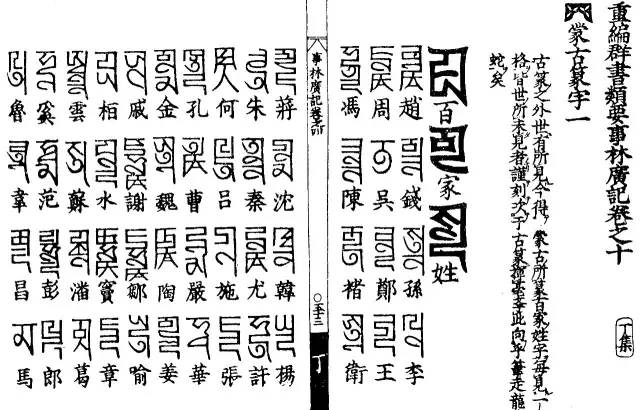
The Book of Family Surnames

The expression “bǎixìng (bǎi·xìng {hundred → [all]} · surnames → [common people | all existing surnames] 百姓) is apparently referenced in the title of the classic Chinese text Bǎijiā Xìng ((Bǎi·jiā {Hundred → [Many; Various; All]} · Families’ 百家) (Xìng Surnames 姓) [Hundred Family Surnnames/The Book of Family Names (classic Chinese text listing common Chinese surnames)]), which is the subject of the following summary from Wikipedia:

The Hundred Family Surnames (Chinese: 百家姓), commonly known as Bai Jia Xing,[source] also translated as Hundreds of Chinese Surnames,[source] is a classic Chinese text composed of common Chinese surnames. An unknown author compiled the book during the Song dynasty (960–1279).[source] The book lists 507 surnames.[source] Of these, 441 are single-character surnames and 66 are double-character surnames.[source] About 800 names have been derived from the original ones.[source]

In the dynasties following the Song, the 13th-century Three Character Classic, the Hundred Family Surnames, and the 6th-century Thousand Character Classic came to be known as San Bai Qian (Three, Hundred, Thousand), from the first character in their titles. They served as instructional books for children,[source] becoming the almost universal introductory literary texts for students (almost exclusively boys) from elite backgrounds and even for a number of ordinary villagers.

An example of the Chinese poem “Hundred Family Surnames” written in Chinese characters and in ʼPhags-pa script
Creative Commons Public Domain logo
An example of the Chinese poem “Hundred Family Surnames” written in Chinese characters and in ʼPhags-pa script (For more information on the ʼPhags-pa script, see the MEotW post on “cuò ({[is] alternating; staggered} [→ [[is] wrong; mistaken; incorrect; erroneous | missed | grinding; rubbing | moving to the side | mistake; error; blunder [→ [fault]]]] | {[is] interlocked and jagged} [→ [intricate]])”.)

Help for Dealing With the Easily-Offended?

Years ago, in the door-to-door work, I called on a Chinese man who had a double-character surname. Being a Chinese person who had grown up in Canada and who had not even heard of Qín Shǐhuáng ((Qín {Qin (dynasty)} 秦) (Shǐ·huáng Beginning · Emperor 始皇) (the founder of the Qín dynasty and the first emperor of China)) until I saw a movie about this remarkable historical figure when I was an adult, I was not familiar with the background of the relatively rare double-character surnames, so I innocently asked him about it. However, rather than being flattered by the interest and politely enlightening me, he chose to be offended that I didn’t know something about his background and culture that he had known since his childhood and just—unhelpfully—said something like, ‘Don’t you know about the history of China?’

Well, dear reader, after learning of Bǎijiā Xìng ((Bǎi·jiā {Hundred → [Many; Various; All]} · Families’ 百家) (Xìng Surnames 姓) [Hundred Family Surnnames/The Book of Family Names (classic Chinese text listing common Chinese surnames)]) and the double-character surnames in it, perhaps you may be spared a similarly dreary experience in the ministry. (Since we seek to reach everyone in our territories, we can end up meeting all kinds of people, like Jesus did. Some of them may be proud, petty, and unpleasant, but then again, some of them may be sheeplike, hungry for the truth, and appreciative of our imperfect efforts.)