Categories
Culture History

chá

chá (tea 茶) ← Tap/click to show/hide the “flashcard”

Long before drinking tea became a big part of English culture, it had been a big part of Chinese culture. As Wikipedia summarizes:

An early credible record of tea drinking dates to the third century AD, in a medical text written by Chinese physician Hua Tuo.[source] It was popularised as a recreational drink during the Chinese Tang dynasty [(618–907 CE)], and tea drinking subsequently spread to other East Asian countries. Portuguese priests and merchants introduced it to Europe during the 16th century.[source] During the 17th century, drinking tea became fashionable among the English, who started to plant tea on a large scale in British India.

Similarly, the English word “tea” and its doublet “chai” originally came from the words for “tea” in different Chinese languages. This week’s MEotW, “chá (tea 茶)”, is the word for “tea” in Mandarin.

“Tea” and its Doublet

Hold on, you may say, what’s a doublet? Here is a definition:

doublet

One of two (or more) words in a language that have the same etymological root but have come to the modern language through different routes.

So, how did “tea” and its doublet “chai” both end up in the English language after having come from the same root through different routes?

Linguists Gretchen McCulloch and Lauren Gawne discussed this on their podcast Lingthusiasm:

Lauren: One of the things I always find interesting about these loanwords that come to us in batches from particular domains is how it highlights global history, and usually global histories of trade and different power dynamics that have operated over that history. One of my absolute favourite stories is the story of tea. We’ve already talked about “chai” and “chia” in Nepali, “tea” in English. The words for “tea” in many of the world’s languages appear to be related. They’ll either have some kind of /te/ or /ti/ pronunciation or some kind of /t͡ʃ/ – “chia,” “chai” pronunciation. That’s because there were two main places in China from which tea travelled to all the different markets in the world.

Gretchen: In Mandarin, which is historically more spoken towards the centre of China, the word for tea is “cha,” but in Min Nan, which is also a variety of Chinese as spoken in the coastal province of Fujian, it’s pronounced /te/. They use the same character, but they’re pronounced differently, which is very common for how Chinese gets written. The key thing here is “coastal” because people who encountered the plant and the drink tea via the sea, via Fujianese traders, learned to pronounce it /te/ or variants on /te/. In French and German, it’s /te/. In English, it used to be /te/ until the vowel shifted. Whereas people who encountered tea through Central China, through land routes like the silk road – so through Sinitic “cha” – you get Mandarin “cha,” Korean “cha,” Japanese “ocha,” but also Hindi “chai,” Persian “chai,” Arabic “shai,” Turkish “chai,” Russian “chai,” and you’re down to Swahili “chai,” all goes through that land route, and sometimes via Persia, to get from “cha” to “chai.” The great maps that people have produced where you can tell if people encountered tea through the land route where they get “cha,” which becomes “chai,” or through the sea route, which becomes “te” and variants on “te” like “tea.”

The Development of Modern Mandarin

The mention above of historical Mandarin reminds me of a book that I read a while ago, A Billion Voices: China’s Search for a Common Language, by David Moser. Here is an excerpt:

After the fall of the Qing Dynasty and the establishment of the Republic of China in 1912, an urgent priority for the new Chinese government was the task of establishing a common language for a linguistically fractured China. When Mao took power in 1949, language unification continued to be of vital importance to the nation building agenda. Faced with the challenge of unifying a vast country populated with hundreds of ethnicities, languages, and dialects, these political leaders were confronted with some of the same linguistic problems and conundrums raised above: Is there such a thing as ‘the Chinese language’? Should the Chinese people share a common tongue? How should it be defined? How should pronunciation, vocabulary, and correct usage be determined? Should one standard language replace the numerous other regional variations, or should all other forms of Chinese continue to flourish? Should written Chinese continue to use the centuries-old character system, or should it be replaced with an alphabet, or some other phonetic system? And who, after all, is the final arbiter for such decisions?

In the PRC, the twentieth century quest for a solution to these problems has resulted in a version of Chinese called Putonghua. How did China arrive at this common language?

In what follows, I will present a brief historical overview of that process, and trace the trajectory of Putonghua as it moved into the twenty-first century.

The Cantonese Connection

Getting back to how historical words for “tea” in different Chinese languages ended up leading to the words “tea” and “chai” in English, here is some other information, that I found on the World Atlas of Language Structures website:

Most words for ‘tea’ found in the world’s languages are ultimately of Chinese origin, but they differ significantly in their form due to their coming via different routes. The differences begin already on Chinese soil. Most Sinitic languages have a form similar to Mandarin chá, but Min Nan Chinese, spoken e.g. in Fujian and Taiwan, has instead forms like te55 (Chaozhou). The Dutch traders, who were the main importers of tea into Europe, happened to have their main contacts in Amoy (Xiamen) in Fujian. This is why they adopted the word for ‘tea’ as thee, and in this form it then spread to large parts of Europe. The influence from Amoy is also visible in many languages spoken in the former Dutch colonies, as in Malay/Indonesian and Javanese teh. However, the first European tea importers were not the Dutch but the Portuguese, in the 16th century; their trade route went via Macao rather than via Amoy, and consequently Portuguese uses chá, derived from Cantonese cha.

Thus, as in other aspects, it seems that the first contact between the West and China when it comes to tea involved the Cantonese.
Categories
Culture History Theocratic

Jìniàn Jùhuì

Jìniàn Jùhuì ((Jì·niàn Remembering · {Thinking Of} → [Commemorating] 记/纪念 記/紀念) (Jùhuì Meeting 聚会 聚會) [[the] Memorial]) ← Tap/click to show/hide the “flashcard”

The page on jw.org entitled “Memorial of Jesus’ Death” invites people to this year’s Memorial, which as of this writing is fast approaching.

Appearing in the title of the Mandarin version of that page is this week’s MEotW, “Jìniàn Jùhuì ((Jì·niàn Remembering · {Thinking Of} → [Commemorating] 记/纪念 記/紀念) (Jùhuì Meeting 聚会 聚會) [[the] Memorial])”, which corresponds to “Memorial”, or “the Memorial”.

Note that in this post, “Jìniàn Jùhuì ((Jì·niàn Remembering · {Thinking Of} → [Commemorating] 记/纪念 記/紀念) (Jùhuì Meeting 聚会 聚會) [[the] Memorial])” is capitalized, rather than being rendered in all lowercase letters. Why has this been done? The answer involves another question: Is Pīnyīn (Pīn·yīn {Piecing Together} · Sounds → [Pinyin] 拼音) just a pronunciation aid or actually a full writing system?

To Be or Not to Be…a Full Writing System?

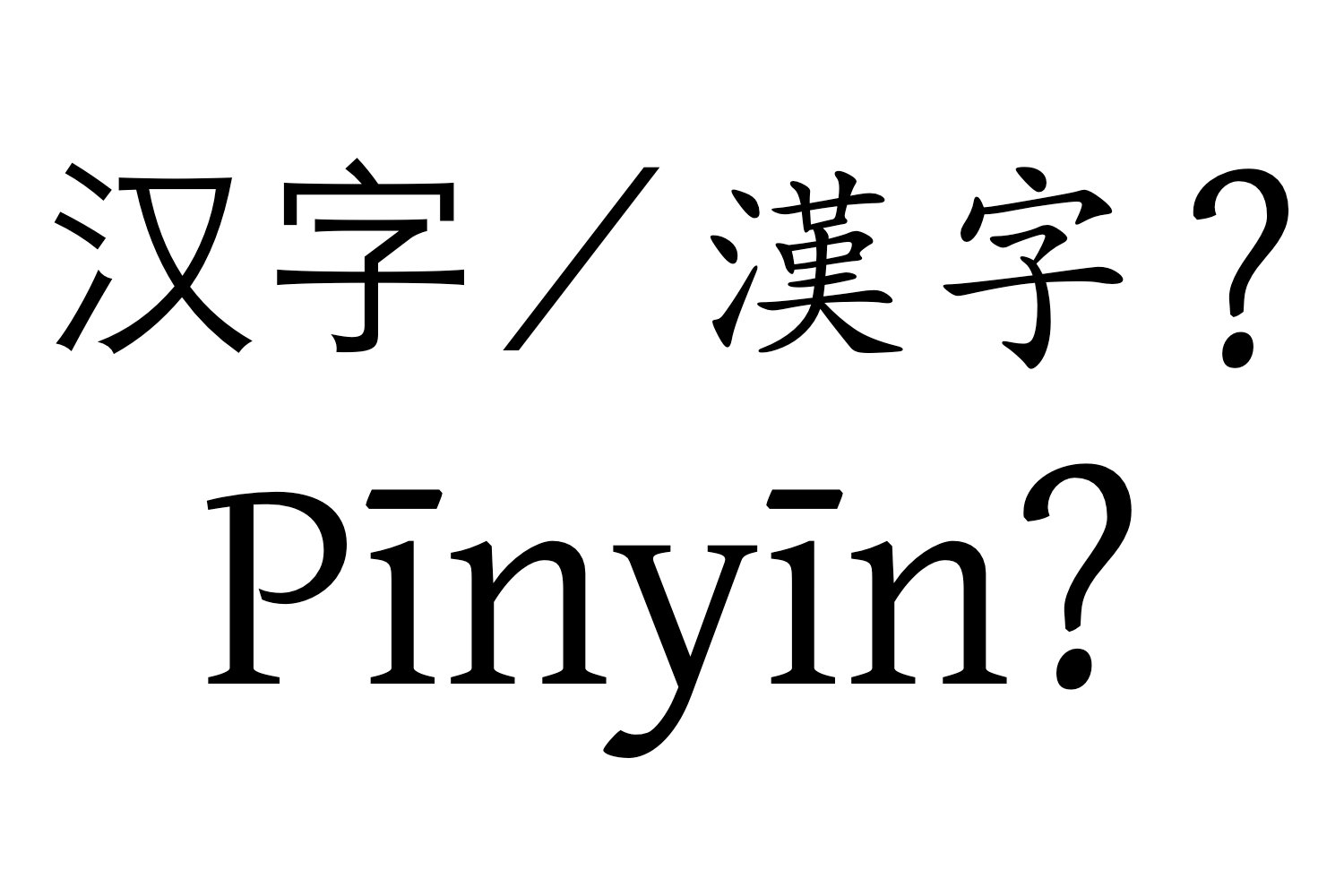
汉字 / 漢字? Pīnyīn?

The article “Pīnyīn (Pīn·yīn {Piecing Together} · Sounds → [Pinyin] 拼音) Was Plan A” explains that Pīnyīn (Pīn·yīn {Piecing Together} · Sounds → [Pinyin] 拼音) was originally meant by Máo Zédōng ((Máo Hair (surname) 毛) (Zé·dōng Marsh · East 泽东 澤東) (the founder of the People’s Republic of China)) and some of the other early movers and shakers of the People’s Republic of China to eventually replace Chinese characters. (Yes, seriously—it’s April, but we Jehovah’s Witnesses don’t make April Fools’ jokes!) Even though in this case cultural pride, tradition, and inertia have been allowed in the Mandarin-speaking part of the world to leave no room for innovation and progress, the fact remains that Pīnyīn (Pīn·yīn {Piecing Together} · Sounds → [Pinyin] 拼音) was intended by design to work as a full writing system. That it actually does so is shown in the scholarly paper “Two Steps Toward Digraphia in China”, and in the article “Pīnyīn (Pīn·yīn {Piecing Together} · Sounds → [Pinyin] 拼音) Is a Good, Workable Writing System on Its Own”.

R-E-S-P-E-C-T

Since Pīnyīn (Pīn·yīn {Piecing Together} · Sounds → [Pinyin] 拼音) is a full writing system like English is, there is good reason to consider it appropriate to capitalize Pīnyīn (Pīn·yīn {Piecing Together} · Sounds → [Pinyin] 拼音) words similarly to how English words are capitalized. Of course, there are different style guides with different rules regarding how and what to capitalize in English, especially when it comes to titles, but at the very least, any particular piece of writing should generally stick to whatever capitalization style has been chosen for it. (Hopefully it’s a good one.)

Unfortunately, in the part of the world that uses written Mandarin, Pīnyīn (Pīn·yīn {Piecing Together} · Sounds → [Pinyin] 拼音) is generally relegated to being just a pronunciation aid—it is not given the respect and dignity of being recognized as a full writing system, even though, as discussed above, it linguistically qualifies as one. Thus, Pīnyīn (Pīn·yīn {Piecing Together} · Sounds → [Pinyin] 拼音) is generally not capitalized in the world, if it is used at all. In contrast, Pīnyīn (Pīn·yīn {Piecing Together} · Sounds → [Pinyin] 拼音) Plus material gives Pīnyīn (Pīn·yīn {Piecing Together} · Sounds → [Pinyin] 拼音) the respect it has earned—it uses Pīnyīn (Pīn·yīn {Piecing Together} · Sounds → [Pinyin] 拼音) as its default main writing system and carefully follows the capitalization example of the official English version of the Mandarin material it is based on. E.g., since “God’s Kingdom” is rendered in the official English material with capital letters at the beginnings of its words, the Pīnyīn (Pīn·yīn {Piecing Together} · Sounds → [Pinyin] 拼音) Plus material follows suit with “Shàngdì (Shàng·dì Above’s · {Emperor → [God]} → [God] 上帝) de (’s 的) Wángguó (Wáng·guó King’s · Nation → [Kingdom] 王国 王國)”.

So, since “the Memorial” is capitalized in the organization’s official English material, such as the English version of the article “Memorial of Jesus’ Death” on jw.org, “Jìniàn Jùhuì ((Jì·niàn Remembering · {Thinking Of} → [Commemorating] 记/纪念 記/紀念) (Jùhuì Meeting 聚会 聚會) [[the] Memorial])” is capitalized in this post and in other material containing Pīnyīn (Pīn·yīn {Piecing Together} · Sounds → [Pinyin] 拼音) Plus material.

The Precedent of Punctuation

Is it “beneath” the Chinese world to follow the example of English when it comes to the capitalization of the alphabet it uses? Well, the Chinese world has followed Western writing style examples before, with punctuation. As the MEotW post on “diǎnliàng (diǎn·liàng {dot → [light (v); ignite]} · {to be bright} [→ [illuminate; shine light on]] 点亮 點亮)” pointed out:

Chinese writing in the past didn’t have punctuation, and now it has punctuation largely modeled after European punctuation. (For reference: Chinese punctuation – Wikipedia, Q&A: When were punctuation marks first used? – HistoryExtra, history – When was punctuation introduced into Chinese? – Chinese Language Stack Exchange)

Categories
Culture History Language Learning Names Technology

jiǎntǐ‐zì

jiǎntǐ (jiǎn·tǐ simplified · {body → [style] → [typeface; font]} → [simplified Chinese] 简体 簡體) (characters 字) 👈🏼 Tap/click to show/hide the “flashcard”

For a long, long, long time, Chinese characters were just Chinese characters. Then, in 1956, the Communist government of mainland China issued what came to be known as the First Chinese Character Simplification Scheme (a second round of Chinese character simplification was later attempted and ultimately rescinded), and official simplified Chinese characters came into the world. (Some characters had been unofficially simplified and used for various purposes, both everyday and artistic, before that.)

On the matter of what simplified Chinese characters are called in Mandarin, Wikipedia provides this summary:

Simplified Chinese characters may be referred to by their official name above [(简化字; jiǎnhuàzì)[source]] or colloquially (简体字; jiǎntǐzì). In its broadest sense, the latter term refers to all characters that have undergone simplifications of character “structure” or “body”[source], some of which have existed for millennia alongside regular, more complicated forms. On the other hand, the official name refers to the modern systematically simplified character set, which (as stated by then-Chairman Mao Zedong in 1952) includes not only structural simplification but also substantial reduction in the total number of standardized Chinese characters.[source]

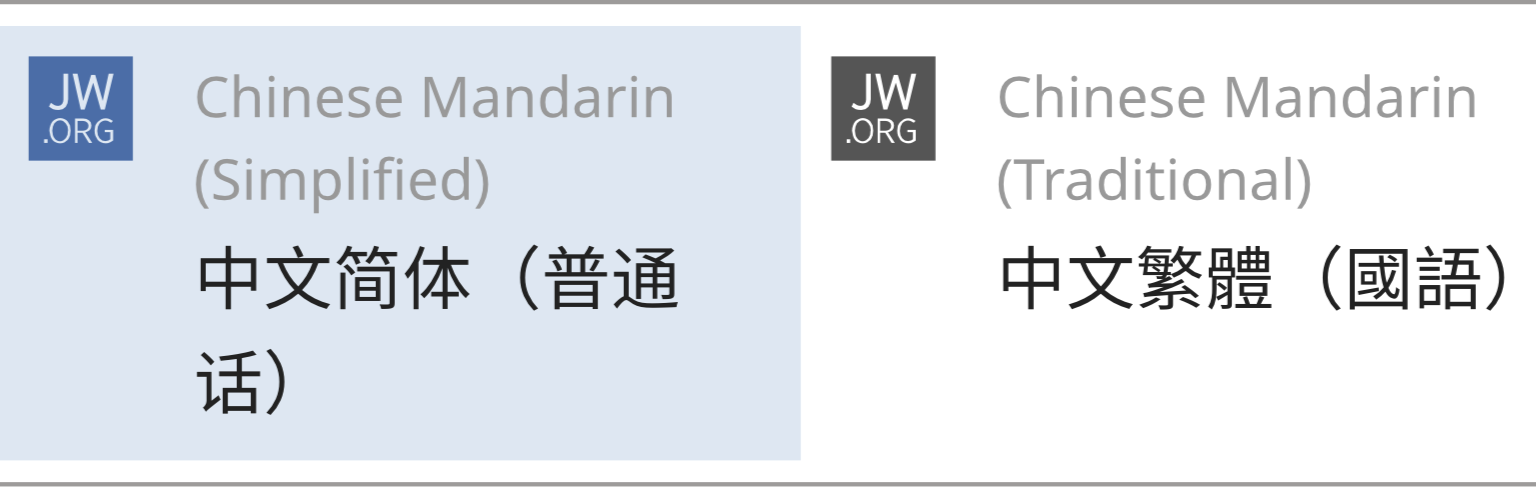
For reference, this is the term used on jw.org when referring to Mandarin written using simplified Chinese characters:

jw.org referring to Mandarin written using simplified Chinese characters

jw.org refers to simplified Chinese characters as “jiǎntǐ (jiǎn·tǐ simplified · {body → [style] → [typeface; font]} → [simplified Chinese] 简体 簡體) characters.

The Great Simplified vs. Traditional Debate

While it seems obvious that simpler is generally better, there is actually much, much debate about the pros and cons of simplified characters vs. traditional characters, as discussed in these articles:

The following posts summarize how many feel about traditional and simplified characters:

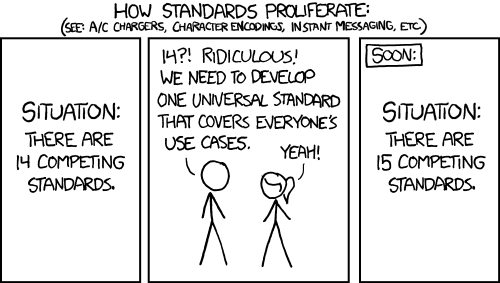
Standards and Compromises

While the simplified characters themselves are indeed easier to learn and remember compared to the traditional characters, for many, they have become another set of characters in addition to the traditional characters that has to be learned and remembered. (There is, at least, some overlap between the two systems. Where do they overlap? That is yet more information that has to be learned and remembered…) And while simplified characters have been simplified, they are still characters, and characters are inherently extraordinarily complex and hard to learn and remember.

xkcd: Standards

Creative Commons Attribution-NonCommercial Licence logo Randall Munroe [source]

The simplified characters became a new standard that many have had to learn in addition to that of the traditional characters.

While Pīnyīn (Pīn·yīn {Piecing Together of} · Sounds → [Pinyin] 拼音) is also a different system to be learned and remembered, it is in a whole different league compared to any system of Chinese characters when it comes to ease of learning and remembering. One of the scholars who helped create Hangul (or Hankul), the Korean alphabet, said of it: “The wise can learn it in one morning, and even the unwise can learn it in ten days.” Being also a phonetic alphabet, Pīnyīn (Pīn·yīn {Piecing Together of} · Sounds → [Pinyin] 拼音) can be reasonably said to be in the same ballpark (with the added advantage that the Latin alphabet letters used in Pīnyīn (Pīn·yīn {Piecing Together of} · Sounds → [Pinyin] 拼音) are already familiar to many people)—downright revolutionary compared to the years (decades?) required to learn even simplified characters.

Simplified characters are thus a compromise that mainland China, Singapore, etc. have settled on—simpler than traditional characters, but perhaps thus not as good at being characters. Meanwhile, they are still characters, still having many of the complexities and vagaries of characters. They fall short of the fundamental reform envisioned by Máo Zédōng ((Máo Hair (surname) 毛) (Zé·dōng Marsh · East 泽东 澤東) (the founder of the People’s Republic of China)) (Wikipedia article), Lǔ Xùn ((Lǔ Stupid; Rash (surname)) (Xùn Fast; Quick; Swift 迅) (pen name of Zhōu Shùrén, the greatest Chinese writer of the 20th cent. and a strong advocate of alphabetic writing)) (Wikipedia article), and others, that would have involved eventually moving on from any kind of characters to alphabetic writing.

Letter from Máo Zédōng endorsing a transition from Chinese characters to alphabetic writing

A letter written by Máo Zédōng ((Máo Hair (surname) 毛) (Zé·dōng Marsh · East 泽东 澤東) (the founder of the People’s Republic of China)) endorsing “a basic reform” involving a transition from Chinese characters to alphabetic writing1


1. John DeFrancis, The Chinese Language: Fact and Fantasy (Honolulu: University of Hawaii Press, 1984), p. ii. ^