📖 📄 ➕ Zàofú (Zào·fú Makes · Blessings (for) 造福) Quán (All 全) Rénlèi (Rén·lèi Man·kind 人类 人類) de (’s 的) Zhǐnán+ (Zhǐ·nán {(Points with) Finger → [Points]} · South (Thing) → [Guidebook] 指南) 🔼
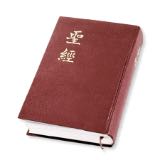
📖 📄 ➕ 1–3. Shèngjīng (Shèng·jīng (the) Holy · Scriptures → [the Bible] 圣经 聖經) shì (is 是) yì (one 一) běn ({root or stem of a} → [mw for books, etc.] 本) zěnyàng (zěn·yàng what · kind 怎样 怎樣) de (’s 的) shū (writing → [book] 书 書)? Shèngjīng (Shèng·jīng (the) Holy · Scriptures → [the Bible] 圣经 聖經) wèi‐shénme ((wèi for 为 為)‐(shén·me what · [suf] 什么 什/甚麼) → [why]) zhíde (zhí·de {is worth} · getting → [is deserving of] 值得) wǒmen (wǒ·men us · [pl] 我们 我們) zhùyì+ (zhù·yì {pouring (into a container) → [concentrating]} · {thoughts → [attention]} (on it) → [paying attention to it] 注意) hé ({(together) with} → [and] 和 和/龢) zhòngshì (zhòng·shì {(as) weighty} · regarding (it) 重视 重視)?
📖 📄 ➕ YÌBĀN (YÌ·BĀN {(AS) ONE} · KIND → [GENERALLY] 一般) lái (coming 来 來) shuō ({to say} 说 說/説), wúlùn (wú·lùn {not having} · {discussing of} → [no matter] 无论 無論) rén (people 人) duì (towards 对 對) Shèngjīng (Shèng·jīng (the) Holy · Scriptures → [the Bible] 圣经 聖經) yǒu (have 有) shénme (shén·me what · [suf] 什么 什/甚麼) kànfǎ (kàn·fǎ {looking at (it)} · way 看法), dōu ((they) even 都) búhuì (bú·huì not · would → [would not] 不会 不會) fǒudìng+ (fǒu·dìng deny · {to be set} 否定) zhèi (this 这 這) běn ({root or stem of a} → [mw for books, etc.] 本) shū (writing → [book] 书 書) shì (is 是) jīngdiǎn+ (jīng·diǎn {(of) the classics} · {a standard work of scholarship} 经典 經典), jùyǒu (possesses 具有) fēifán+ (fēi·fán not · commonplace 非凡) de (’s 的) yǐngxiǎng (yǐng·xiǎng reflection · sound → [influencing] 影响 影響)‐lì (power 力). Xīn Dà‐Yīng Bǎikē‐Quánshū ((Xīn New 新) ((Dà Big → [Great] 大)‐(Yīng Britain 英) → [Britannica]) ((Bǎi·kē {Hundred → [Numerous]} · {Branches Of Study} → [Encyclopædic] 百科)‐(Quán·shū Complete · Book 全书 全書) → [Encyclopædia]) → [The New Encyclopædia Britannica]) shuō (says 说 說/説), Shèngjīng shì “rénlèi lìshǐ shang zuì jù ({provided with} → [having] 具) yǐngxiǎng‐lì de cóngshū+ (cóng·shū {thicket of → [collection of]} · {writings → [books]} 丛书 叢書)”, zhèige (zhèi·ge this · [mw] 这个 這個) píngjià (píng·jià {appraising of} · value 评价 評價) yìdiǎnr (yì·diǎn·r one · {point → [bit]} · {child → [(diminutive) non-syllabic retroflex suffix; pronunciation feature in Beijing dialect]} 一点(儿) 一點(兒)) yě (even 也) bù (not 不) kuāzhāng+ (kuā·zhāng {is overstating} · {is stretching → [is exaggerating]} 夸张 誇張). Xiànzài ràng wǒmen kànkan, Shèngjīng yǒu něixiē fēifán (fēi·fán not · commonplace 非凡) zhī (’s 之) chù (places → [aspects] 处 處/䖏/処).
📖 📄 ➕ Lìshǐ (Lì·shǐ {Experienced (Things) → [History]} · History → [History] 历史 歷史) Yōujiǔ+ (Yōu·jiǔ {Remote (in Time)} · {for a Long Time} → [Long-Standing] 悠久), Liúchuán (Liú·chuán {Having Been Flowed → [Having Been Circulated]} · {Having Been Spread} 流传 流傳) Zuì (Most 最 最/㝡) Guǎng (Wide 广 廣) 🔼
📖 📄 ➕ [túpiàn+ (tú·piàn picture · {slice → [mw]} 图片 圖片) (jw.org)]
📖 📄 ➕ 2 Shèngjīng (Shèng·jīng (the) Holy · Scriptures → [the Bible] 圣经 聖經) kěshuō (kě·shuō {(it) can} · {be said} 可说 可說/説) shì (is 是) shìshang (shì·shang {generation → [world]} · upon 世上) xiàncún+ (xiàn·cún {appearing → [presently]} · existing 现存 現存) zuì (most 最 最/㝡) gǔlǎo (gǔ·lǎo ancient · old 古老) de (’s 的) yì (one 一) běn ({root or stem of a} → [mw for books, etc.] 本) shū (writing → [book] 书 書), zài (in 在) zōngjiào (zōng·jiào {school of thought} · teaching → [religious] 宗教) jīngdiǎn (jīng·diǎn {(of) the classics} · {standard works of scholarship} 经典 經典) zhōng (among 中) gèng ((it) {more so} 更) shì (is 是) zuìzǎo (zuì·zǎo most · early 最早) kāishǐ (kāi·shǐ opened · began 开始 開始) xiězuò (xiě·zuò {to be written} · {to be composed} 写作 寫作) de ({’s (book)} 的). Shèngjīng kāitóu de jǐ juàn ({volumes of} 卷) shū (writings → [books] 书 書), shì (are 是) Yǐsèliè‐rén ((Yǐsèliè Israel 以色列)‐(rén person 人) → [Israelite]) Móxī+ (Moses 摩西) zài 3,500 duō nián qián (xiāngdāng (xiāng·dāng mutually · matching 相当 相當) yú (to 于 於/于) Zhōngguó (Zhōng·guó Central · Nation → [China] 中国 中國) de (’s 的) Shāng (Shang 商) Cháo+ ({Imperial Court} → [Dynasty] 朝)) yòng (using 用) gǔ (ancient 古) Xībólái+ (Hebrew 希伯来 希伯來)‐yǔ (language 语 語) xiě (wrote 写 寫) de ({’s (books)} 的), zuìhòu de shūjuàn zài Gōngyuán (Gōng·yuán Common · Beginning → [C.E. (Common Era)] 公元) 1 shìjì mò cái wánchéng. Zài chángdá 1,600 duō nián de shíqī li, yǒu 40 duō rén zhíbǐ+ (zhí·bǐ {caught → [grasped]} · pens 执笔 執筆) xiě ({to write} 写 寫) Shèngjīng (Shèng·jīng (the) Holy · Scriptures → [the Bible] 圣经 聖經). Shèngjīng (Shèng·jīng (the) Holy · Scriptures → [the Bible] 圣经 聖經) yóu (by 由/繇) 66 juàn ({volumes of} 卷) shū (writings → [books] 书 書) zǔchéng (zǔ·chéng {(is formed of) sections → [is formed]} · {to come to be} 组成 組成), tóu yí juàn jiào Chuàngshì‐Jì+ ((Chuàng·shì {Initiating, Creating of} · {Generation → [World]} 创世 創世)‐(Jì Record 记 記) → [The Book of Genesis]), jìzǎile dìqiú shòuzào de guòchéng, rénlèi de qǐyuán, yǐjí zǎoqī rénlèi de lìshǐ. Qítā jīngjuàn bāohánle lìshǐ, lǜfǎ, yùyán, shīgē, shūxìn, quànshì zhēnyán, hé xǔduō yǒu jiàzhí de zīliào.
📖 📄 ➕ 3 Shèngjīng (Shèng·jīng (the) Holy · Scriptures → [the Bible] 圣经 聖經) zhèi (this 这 這) běn ({root or stem of a} → [mw for books, etc.] 本) shū (writing → [book] 书 書) suīrán (suī·rán although · -ly 虽然 雖然) gǔlǎo (gǔ·lǎo {is ancient} · {is old} 古老), érqiě (ér·qiě and · moreover 而且) yídù (yí·dù (at) one · {passing (of time) → [mw for occasions/times]} → [at one time] 一度) bèi ([passive signifier] → [got] 被) dāngquánzhě+ (dāng·quán·zhě {serving as} · authority · persons 当权者 當權者) shìtú (shì·tú trying · seeking → [trying] 试图 試圖) xiāomiè (xiāo·miè {to eliminate} · {to extinguish} (it) 消灭 消滅), kěshì (kě·shì but · {(it) is (the case that)} 可是) Shèngjīng (Shèng·jīng (the) Holy · Scriptures → [the Bible] 圣经 聖經) xiǎnshì (xiǎn·shì {to be evident} · {has shown} 显示 顯示) chū (out 出) qiángdà (qiáng·dà strong · {big → [great]} 强大 強大) de (’s 的) shēngmìng (life 生命)‐lì (force 力), búdàn (bú·dàn not · only 不但) méiyǒu (méi·yǒu not · having 没有 沒有) zài (in 在) lìshǐ (lì·shǐ {experienced (things) → [history]} · history → [history] 历史 歷史) de (’s 的) hóngliú (hóng·liú flood · flowing → [mighty torrent] 洪流) zhōng (within 中) yānmiè+ (yān·miè {sunk into oblivion} · {been extinguished} 湮灭 湮滅), fǎn’ér (fǎn’·ér {turning (that) over → [instead]} · {but (rather)} 反而) chéngwéi (chéng·wéi becoming · {to be} 成为 成為) shìshang (shì·shang {generation → [world]} · upon 世上) liúchuán (liú·chuán {flowing → [circulating]} · spreading 流传 流傳) zuì (most 最 最/㝡) guǎng ({beng wide} 广 廣) de (’s 的) shū (writing → [book] 书 書). Qízhōng mǒuxiē bùfen huò zhěng běn bèi ([passive signifier] → [have been] 被) fānyì+ (fān·yì {turned over → [translated]} · translated 翻译 翻譯) chéng ({to come to be (in)} 成) 2,500 duō ({more than (that)} 多) zhǒng ({varieties of} 种 種/种) yǔyán (yǔ·yán languages · {(types of) speech} 语言 語言), yìnshuā+ (yìn·shuā {have been printed} · {have been brushed} → [have been printed] 印刷) zǒngliàng (zǒng·liàng total · number 总量 總量) dá ({has reached} 达 達) 30 duō ({more than (that)} 多) yì ({hundred million} 亿 億). Jīntiān, quánqiú yǒu bǎi‐fēn‐zhī ((bǎi hundred 百)‐(fēn dividings → [parts] 分)‐(zhī ’ → [among them] 之) → [percent]) 98 de (’s 的) rénkǒu (rén·kǒu people · {mouths of} → [population] 人口) nénggòu (néng·gòu {is able} · enough 能够 能夠) yǐ (with 以) zìjǐ (selves 自己) shúxī (shú·xī {(to the point of) being cooked → [(to the point of) being familiar]} · know → [know well] 熟悉) de (’s 的) mǔyǔ+ (mǔ·yǔ mother · tongue 母语 母語) dúdào (dú·dào {to read} · {arriving at} 读到 讀到) Shèngjīng (Shèng·jīng (the) Holy · Scriptures → [the Bible] 圣经 聖經). Qǐng xiǎngxiang, rúguǒ Shàngdì xiǎng yòng yì běn shū gēn quán rénlèi gōutōng, zhèi běn shū bú shì yīnggāi (should 应该 應該) guǎngfàn+ (guǎng·fàn widely · {floating → [extensively]} → [broadly] 广泛 廣泛) liúchuán (liú·chuán {be flowed → [be circulated]} · {be spread} 流传 流傳), bìng ({side by side with} 并 並/竝/并) yìchéng (yì·chéng {having been translated} · {to come to be (in)} 译成 譯成) gèzhǒng (gè·zhǒng various · {varieties of} 各种 各種) yǔyán (yǔ·yán languages · {(types of) speech} 语言 語言), ràng rénrén dōu kěyǐ déyì ma? (Tímótài Qiánshū ((Tímótài Timothy 提摩太) (Qián·shū Earlier · {Writing → [Letter]} 前书 前書) → [1 Timothy]) 2:4) Shèngjīng jiùshì zhèyàng de yì běn shū.
📖 📄 ➕ Nèiróng+ (Nèi·róng Inside · {Contained (Things)} → [Contents] 内容 內容) Zuì (Most 最 最/㝡) Kěkào (Kě·kào {Are Able} · {to Be Leaned On → [to Be Relied On]} → [Are Reliable] 可靠) 🔼
📖 📄 ➕ 4–8. Qǐng (please 请 請) shuōshuo (shuō·shuo say · say 说说 說說) kēxué+ (kē·xué (in) {branches of study} · learning → [(in) science] 科学 科學) hé ({(together) with} → [and] 和 和/龢) lìshǐ (lì·shǐ {experienced (things) → [history]} · history → [history] 历史 歷史) fāngmiàn (fāng·miàn {directions → [sides]} · faces → [aspects] 方面) yǒu ({(there) are having} → [(there) are] 有) něixiē (něi·xiē which · {indefinite number of} → [which] 哪些) zhèngjù+ ({(lines of) evidence} 证据 證/証據) biǎomíng (biǎo·míng showing · {to be clear} 表明), Shèngjīng (Shèng·jīng (the) Holy · Scriptures → [the Bible] 圣经 聖經) de (’s 的) nèiróng (nèi·róng inside · {contained (things)} → [contents] 内容 內容) shì (are 是) zhǔnquè (zhǔn·què accurate · true 准确 準確) kěxìn (kě·xìn able · {to be believed} 可信) de ({’s (contents)} 的)?
📖 📄 ➕ 4 Shèngjīng (Shèng·jīng (the) Holy · Scriptures → [the Bible] 圣经 聖經) rúguǒ (rú·guǒ if · {fruit → [if indeed]} 如果) zhēnde (zhēn·de really · ’s 真的) láizì (lái·zì comes · from 来自 來自) Shàngdì (Shàng·dì Above’s · {Emperor → [God]} → [God] 上帝), nèiróng+ (nèi·róng inside · {contained (things)} → [contents] 内容 內容) jiù (then 就) yīnggāi (should 应该 應該) zhǔnquè (zhǔn·què {be accurate} · {be true} 准确 準確) kěkào (kě·kào {be able} · {to be leaned on → [to be relied on]} → [be reliable] 可靠), zhēnshí (zhēn·shí {be true} · {be solid → [be true]} 真实 真實) wú ({be without} 无 無/无) wěi ({being false} 伪 偽). Shèngjīng fúhé zhèige biāozhǔn ma? Nénggòu jīngde qǐ kēxué+ (kē·xué {branches of study} · learning → [science] 科学 科學) hé ({(together) with} → [and] 和 和/龢) lìshǐ (lì·shǐ {experienced (things) → [history]} · history → [history] 历史 歷史) de (’s 的) yànzhèng+ (yàn·zhèng verifying · testifying 验证 驗證) ma ([? ptcl for “yes/no” questions] 吗 嗎)? Ràng wǒmen xiān kànkan kēxué fāngmiàn de kěkào zhèngjù+ (evidence 证据 證/証據).
📖 📄 ➕ [túpiàn (tú·piàn picture · {slice → [mw]} 图片 圖片) (jw.org)]
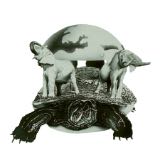
📖 📄 ➕ 5 Shèngjīng (Shèng·jīng (the) Holy · Scriptures → [the Bible] 圣经 聖經) bìng (actually 并 並/竝/并) bú (not 不) shì (is 是) kēxué+ (kē·xué {branches of study} · learning → [science] 科学 科學) shūjí (shū·jí {writing → [book]} · record → [book] 书籍 書籍), dàn (but 但) suǒ ({that which (it)} 所) tán (discusses 谈 談) de ({’ (information)} 的) zhǐyào (zhǐ·yào only · {requiring that} (it) → [provided it] 只要) shèjí+ (shè·jí {wades into → [involves]} · reaching → [touches upon] 涉及) kēxué (kē·xué {branches of study} · learning → [science] 科学 科學), jiù (then 就) zǒng (invariably 总 總/縂) gēn (with 跟) xiàndài (xiàn·dài {appearing → [current]} · {replacing → [generation] → [era]} → [modern] 现代 現代) yǐjing (yǐ·jing already · {has gone through} 已经 已經) zhèngshí+ (zhèng·shí {being proved} · solidly → [being verified] 证实 證實) de (’s 的) kēxué+ (kē·xué {branches of study} · learning → [scientific] 科学 科學) fāxiàn (fā·xiàn {sendings out → [generatings]} · appearings → [findings] 发现/见 發現/見) yízhì (yí·zhì {(is of) one} · sending → [is consistent] 一致), wánquán bú shòu xiězuò niándài nèixiē cuòwù de liúxíng guāndiǎn suǒ yǐngxiǎng. Bǐfang shuō, gǔrén xiāngxìn, dàdì shì bèi sì zhī dàxiàng tuózhe de, sì zhī dàxiàng zé zhàn zài yì zhī dà hǎiguī de bèi shang; Shèngjīng (Shèng·jīng (the) Holy · Scriptures → [the Bible] 圣经 聖經) què (however 却 卻) qīngqing‐chǔchǔ (clear 清清‐楚楚) de (-ly 地) xuāngào+ (xuān·gào declares · tells 宣告): “Shàngdì bǎ běijí pū zài xūwú zhī jìng, bǎ dàdì xuán zài xūkōng zhīshàng.” (Yuēbó‐Jì ((Yuēbó Job 约伯 約伯)‐(Jì Record 记 記) → [The Book of Job]) 26:7, xiě (written 写 寫) yú (in 于 於/于) Gōngyuán Qián+ ((Gōng·yuán Common · Beginning → [C.E. (Common Era)] 公元) (Qián Before 前) → [B.C.E. (Before the Common Era)]) 1473 nián (year 年 年/秊)) Cǐwài, Shèngjīng zǎo zài 2,700 nián qián jiù zhǐchū dìqiú (dì·qiú earth · globe 地球) de (’s 的) xíngzhuàng+ (shape 形状 形狀), shuō (saying 说 說/説): “Shàngdì (Shàng·dì Above’s · {Emperor → [God]} → [God] 上帝) zhù (dwells 住) zài (in 在) dàdì (dà·dì {big → [great]} · earth → [the earth] 大地) de (’s 的) yuánquān+ (yuán quān round · circle 圆圈 圓圈) zhīshàng (zhī·shàng ’s · above 之上)”. (Yǐsàiyà‐Shū ((Yǐsàiyà Isaiah 以赛亚 以賽亞)‐(Shū Writing → [Book] 书 書) → [The Book of Isaiah]) 40:22) Qǐng xiǎngxiang, rúguǒ Shèngjīng bú shì Shàngdì (Shàng·dì Above’s · {Emperor → [God]} → [God] 上帝) qǐshì+ (qǐ·shì {opened → [enlightened]} · showed → [inspired] 启示 啟示) de, dāngshí de zhíbǐzhě+ (zhí·bǐ·zhě {caught → [grasped]} · pen · persons → [writers] 执笔者 執筆者) yòu ([used for emphasis] 又) zěnme (zěn·me how · [suf] 怎么 怎麼/麽) kěnéng (could 可能) zhǔnquè de xiěchū zhèixiē shìshí ne?
📖 📄 ➕ 6 Qíshí (Qí·shí their · {being solid → [actuality]} → [actually] 其实 其實) Shèngjīng (Shèng·jīng (the) Holy · Scriptures → [the Bible] 圣经 聖經) jìzǎile+ (jì·zǎi·le recorded · {wrote down} · {to completion} 记载了 記載了) bùshǎo (bù·shǎo not · few 不少) shìshí (shì·shí matters · {being solid} → [facts] 事实 事實), shì ({(that) are} 是) qítā (qí·tā it · otherwise’s → [other] 其他) rén (people 人) dào ({having arrived at} 到) kēxué (kē·xué {branches of study} · learning → [science] 科学 科學) jìnbù (jìn·bù {had advanced} · steps → [had progressed] 进步 進步) le ([(at the end of a phrase/sentence) indicates a change] 了), kēxué‐jiā+ ((kē·xué {branches of study} · learning → [science] 科学 科學)‐(jiā -ists 家) → [scientists]) tíchū (tí·chū {had carried (hanging down from the hand) → [had raised] → [had refered to]} · out 提出) zhèngjù (evidence 证据 證/証據) zhīhòu (zhī·hòu ’s · {after (that)} 之后 之後) cái ({only then} 才 才/纔) zhīdào (zhī·dào knew · {(the) way (of)} → [knew] 知道) de ({’s (facts)} 的). Jǔlì (Jǔ·lì {to raise} · examples 举例 舉例) shuō ({to say} 说 說/説): Yǔzhòu+ (Yǔ·zhòu universe · {all time, past, present, and future} → [universe] 宇宙) shì (is 是) yǒu (had 有) kāishǐ (kāi·shǐ opening · beginning 开始 開始) de ({’s (universe)} 的) (Chuàngshì‐Jì ((Chuàng·shì {Initiating, Creating of} · {Generation → [World]} 创世 創世)‐(Jì Record 记 記) → [The Book of Genesis]) 1:1), gèlèi shēngwù shì àn ({in accordance with} 按) cìxù+ (cì·xù occurrence · order 次序) chūxiàn (chū·xiàn {having put out} · appearing 出现 出現) de ({’s (living things)} 的) (Chuàngshì‐Jì ((Chuàng·shì {Initiating, Creating of} · {Generation → [World]} 创世 創世)‐(Jì Record 记 記) → [The Book of Genesis]) dì‐1 ((dì [pref to form ordinal numbers] 第)‐(yī one 1) → [1st]) zhāng (chapter 章) 🔗), shēngwù tōngguò yíchuán+ (yí·chuán {left behind} · {passed on} → [inherited] 遗传 遺傳) jīyīn ({genes (loan)} 基因) fányǎn+ (fán·yǎn multiply · {spread out} 繁衍) (Shīpiān (Shī·piān {Sacred Song} · {Piece of Writing} → [Psalm] 诗篇 詩篇) 139:16), děngděng (děng·děng etc. · etc. 等等). Zài jǔ ge lì: Zǎo zài rénlèi duì xìjūn+ (xì·jūn tiny · germs → [germs] 细菌 細菌) réngrán (réng·rán still · -ly 仍然) yìwú‐suǒzhī ((yì·wú {one → [entirely]} · {were not having} 一无 一無) (suǒ·zhī {that which (they)} · {were knowing} 所知) → [were knowing nothing]), wèishēng+ (wèi·shēng {protecting of} · life → [hygiene] 卫生 衛/衞生) zhīshi (knowledge 知识 知識) shífēn pínfá de shíhou, Shèngjīng jiù yǐjing fēnfu rén yào ((they) must 要) zhùyì (zhù·yì {pour (into a container) → [concentrate]} · {thoughts → [attention]} (on) → [pay attention to] 注意) wèishēng (wèi·shēng {protecting of} · life → [hygiene] 卫生 衛/衞生), bǎochí qīngjié le. Shèngjīng guīdìng: Fán jiēchùguo shītǐ huò fènbiàn de rén dōu bìxū qīngxǐ shēntǐ hé yīfu. (Mín‐Shù‐Jì ((Mín {The People} 民)‐(Shù Numbers 数 數)‐(Jì Record 记 記) → [The Book of Numbers]) 19:11–22; Shēn‐Mìng‐Jì ((Shēn States 申)‐(Mìng Commands 命)‐(Jì Record 记 記) → [The Book of Deuteronomy]) 23:12–14)
📖 📄 ➕ 7 Qǐng (please 请 請) xiǎngxiang (xiǎng·xiang think · think 想想), gǔdài+ (gǔ·dài ancient · {replacings → [generations] → [era]} 古代) xiě (wrote 写 寫) Shèngjīng (Shèng·jīng (the) Holy · Scriptures → [the Bible] 圣经 聖經) de (’s 的) rén (persons 人) zěnme (zěn·me how · [suf] 怎么 怎麼/麽) kěnéng (could 可能) xiěchū (xiě·chū write · out 写出 寫出) zhèixiē (zhèi·xiē this · {indefinite number of} → [these] 这些 這些) gēn (with 跟) xiàndài (xiàn·dài {appearing → [current]} · {replacing → [generation] → [era]} → [modern] 现代 現代) kēxué+ (kē·xué {branches of study} · learning → [science] 科学 科學) yízhì (yí·zhì {are (of) one} · sending → [are consistent] 一致) de (’s 的) shìshí (shì·shí matters · {being solid} → [facts] 事实 事實) ne ([? ptcl] 呢)? Hélǐ de jiélùn shì: Shèngjīng jué bú shì láizì rén de zhìhuì, yīnwei gǔdài de rén gēnběn bù kěnéng yǒu zhèixiē zhīshi, zhǐyǒu (zhǐ·yǒu (there) only · {is having → [is]} 只有) Zàowù‐Zhǔ+ ((Zào·wù Created · Things 造物)‐(Zhǔ Master 主) → [Creator]) cái yǒu zhìhuì hé nénglì, qǐshì+ (qǐ·shì {to open → [to enlighten]} · {to show} → [to inspire] 启示 啟示) zhíbǐzhě (zhí·bǐ·zhě {caught → [grasped]} · pen · persons → [writers] 执笔者 執筆者) xiěchū zhèixiē shìshí lai. Yīncǐ wǒmen yǒu chōngfèn lǐyóu xiāngxìn, Shèngjīng díquè láizì Shàngdì.
📖 📄 ➕ 8 Zài (additionally 再) lái (come 来 來) kànkan (kàn·kan {look at} · {look at} 看看) Shèngjīng (Shèng·jīng (the) Holy · Scriptures → [the Bible] 圣经 聖經) de (’s 的) lìshǐ (lì·shǐ {experienced (things) → [history]} · history → [historical] 历史 歷史) jìzǎi (jì·zǎi recorded · writings → [records] 记载 記載) shìfǒu (shì·fǒu are · {(or) not} 是否) zhǔnquè (zhǔn·què accurate · true 准确 準確) kěxìn+ (kě·xìn able · {to be believed} 可信). Gǔdài (Gǔ·dài ancient · {replacings → [generations] → [era]} 古代) de (’s 的) shū (writings → [books] 书 書) yìbān (yì·bān {(as) one} · kind → [generally] 一般) dōu (even 都) hányǒu (hán·yǒu {hold in the mouth → [contain]} · have 含有) shénhuà (shén·huà gods · {(sets of) words → [stories]} → [myths] 神话 神話) chuánshuō+ (chuán·shuō {passed on} · said (things) → [legends] 传说 傳說/説), érqiě xiě lìshǐ de rén wǎngwǎng huì kuādà+ (kuādà exaggerate · {to be big → [to be great]} 夸大 誇/夸大) duì (towards 对 對) dāngquánzhě (dāng·quán·zhě {serving as} · authority · person 当权者 當權者) yǒulì (yǒu·lì having · {being sharp → [benefit]} 有利) de (’s 的) shì (things 事), yǎnshì+ (yǎn·shì cover · {adorn → [gloss over]} 掩饰 掩飾) búlì (bú·lì not · {sharp → [favourable]} → [unfavourable] 不利) de (’s 的) shì (things 事). Shèngjīng (Shèng·jīng (the) Holy · Scriptures → [the Bible] 圣经 聖經) què (however 却 卻) jiérán+ (jié·rán {cut off} · -ly → [completely] 截然)‐bùtóng (bù·tóng not · {is the same} → [is different] 不同), jì méiyǒu shénhuà chuánshuō de chéngfèn (chéng·fèn completion · component → [component] 成分/份), yě cóngbù yǎnshì rén de guòcuò. Shèngjīng bàodào shìjiàn shí, wǎngwǎng jìxia rénmíng (rén·míng persons’ · names 人名), dìdiǎn (dì·diǎn ground · spots → [places] 地点 地點), rìqī (rì·qī {sun → [day]} · {scheduled time} → [date] 日期), hé ({(together) with} → [and] 和 和/龢) shíjiān (shí·jiān {(particular) times} · betweens → [times] 时间 時間) děng kěkào zīliào, ràng hòurén nénggòu jiāyǐ (jiā·yǐ {adding (to it)} · [suf] 加以) kǎozhèng+ (kǎo·zhèng {to test → [to verify]} · {to be confirmed} 考证 考證). Jǔ ge lì, Shèngjīng tídào Yēsū kāishǐ chuándào de shíhou, tóngshí lièchūle+ (liè·chū·le listed · out · {to completion} 列出了) qī (seven 七) ge ([mw] 个 個/个) tǒngzhìzhě (tǒng·zhì·zhě {gathering together → [commanding]} · ruling · persons → [rulers] 统治者 統治者) huò (or 或) dìfāng‐guān de míngzi. Nǐ zhǐyào chá yì chá lìshǐ wénxiàn+ (wén·xiàn {writings → [pieces of writing]} · offered → [documents and literature related to history/culture/etc.] 文献 文獻), jiù zhīdào Shèngjīng de jìzǎi shìfǒu zhèngquè le. (Lùjiā Fúyīn ((Lùjiā Luke’s 路加) (Fú·yīn Blessings · {Sounds → [News]} 福音) → [The Good News According to Luke]) 3:1, 2) Yì běn shū rúguǒ shì zài Shàngdì de zhǐyǐn xià xiěchéng de, bú shì yīnggāi zhǔnquè de bàodào shǐshí ma?
📖 📄 ➕ ZHÙMÍNG (ZHÙ·MÍNG (HAVE) {SHOWN → [OUTSTANDING]} · NAME → [WELL-KNOWN] 著名) ZŌNGJIÀO (ZŌNG·JIÀO {SCHOOL OF THOUGHT} · TEACHING → [RELIGIOUS] 宗教) JĪNGDIǍN (JĪNG·DIǍN {(OF) THE CLASSICS} · {STANDARD WORKS OF SCHOLARSHIP} 经典 經典) CHÉNGSHŪ (CHÉNG·SHŪ BECAME · {WRITINGS → [BOOKS]} → [WERE PUBLISHED IN BOOK FORM] 成书 成書) NIÁNBIǍO+ (NIÁN·BIǍO YEARS · {DISPLAYING (DEVICE) → [TABLE]} → [CHRONOLOGICAL TABLE] 年表)
| 📖 📄 ➕ Zōngjiào (Zōng·jiào {School of Thought} · Teaching → [Religious] 宗教) Jīngdiǎn (Jīng·diǎn {(Of) the Classics} · {Standard Work of Scholarship} 经典 經典) | 📖 📄 ➕ Chéngshū (Chéng·shū Became · {Writing → [Book]} → [Was Published in Book Form] 成书 成書) Shíjiān (Shí·jiān {(Particular) Times} · Between → [Time] 时间 時間) (Dàyuē (Dà·yuē Largely · Approximately 大约 大約)) |
|---|---|
| 📖 📄 ➕ Móxī Wǔjīng ((Móxī Moses’ 摩西) (Wǔ·jīng Five · Scriptures 五经 五經) → [Pentateuch]) (Shèngjīng (Shèng·jīng (the) Holy · Scriptures’s → [the Bible’s] 圣经 聖經) Tóu (Head → [First] 头 頭) Wǔ (Five 五) Juàn (Books 卷)) | Gōngyuán Qián+ ((Gōng·yuán Common · Beginning → [C.E. (Common Era)] 公元) (Qián Before 前) → [B.C.E. (Before the Common Era)]) 1473 nián (year 年 年/秊) |
| 📖 📄 ➕ Fèituó (Veda 吠陀) (Yìndù‐Jiào ((Yìndù India 印度)‐(Jiào Teaching → [Religion] 教) → [Hinduism])) | Gōngyuán Qián ((Gōng·yuán Common · Beginning → [C.E. (Common Era)] 公元) (Qián Before 前) → [B.C.E. (Before the Common Era)]) 900 nián (year 年 年/秊) |
| 📖 📄 ➕ Dào Dé Jīng ((Dào Way’s; Path’s; Road’s 道) (Dé Virtue’s 德 德/悳/惪) (Jīng Classic 经 經) → [The Classic of the Virtue of the Dao (Tao Te Ching)]) (Dàojiào (Dào·jiào Way · {Teaching → [Religion]} → [Taoism] 道教)) | Gōngyuán Qián ((Gōng·yuán Common · Beginning → [C.E. (Common Era)] 公元) (Qián Before 前) → [B.C.E. (Before the Common Era)]) 510 nián (year 年 年/秊) |
| 📖 📄 ➕ Lúnyǔ (Lún·yǔ Discourse · Sayings → [The Analects] 论语 論語) (Rújiào (Rú·jiào {Scholarly → [Confucian]} · Teaching → [Confucianism] 儒教)) | Gōngyuán Qián ((Gōng·yuán Common · Beginning → [C.E. (Common Era)] 公元) (Qián Before 前) → [B.C.E. (Before the Common Era)]) 480 nián (year 年 年/秊) |
| 📖 📄 ➕ Shèngjīng (Shèng·jīng (the) Holy · Scriptures → [the Bible] 圣经 聖經) Xībólái (Hebrew 希伯来 希伯來)‐Yǔ (Language 语 語) Jīngjuàn+ (Jīng·juàn Scripture · Volumes → [Bible Books] 经卷 經卷) (Jiù (Old 旧 舊) Yuē (Arranging → [Testament] 约 約)) | Gōngyuán Qián ((Gōng·yuán Common · Beginning → [C.E. (Common Era)] 公元) (Qián Before 前) → [B.C.E. (Before the Common Era)]) 443 nián (year 年 年/秊) |
| 📖 📄 ➕ Sān (Three 三) Zàng (Storehouses → [Baskets] 藏) (Fójiào (Fó·jiào Buddha · {Teaching → [Religion]} → [Buddhism] 佛教)) | Gōngyuán Qián ((Gōng·yuán Common · Beginning → [C.E. (Common Era)] 公元) (Qián Before 前) → [B.C.E. (Before the Common Era)]) 1 shìjì (shì·jì generation · era → [century] 世纪 世紀) |
| 📖 📄 ➕ Shèngjīng (Shèng·jīng (the) Holy · Scriptures → [the Bible] 圣经 聖經) quánshū (quán·shū whole · book 全书 全書) | Gōngyuán+ (Gōng·yuán Common · Beginning → [C.E. (Common Era)] 公元) 98 nián (year 年 年/秊) |
| 📖 📄 ➕ Gǔlán‐Jīng ((Gǔlán Koran 古兰 古蘭)‐(Jīng Scriptures 经 經) → [Koran]) (Yīsīlán‐Jiào ((Yīsīlán Islam 伊斯兰 伊斯蘭)‐(Jiào Teaching → [Religion] 教) → [Islamism])) | Gōngyuán (Gōng·yuán Common · Beginning → [C.E. (Common Era)] 公元) 650 nián (year 年 年/秊) |
| 📖 📄 ➕ Gǔ‐Shì‐Jì ((Gǔ Ancient 古)‐(Shì Matters’ 事)‐(Jì Records 记 記) → [Kojiki]), Rìběn Shūjì ((Rì·běn Sun’s · {Root → [Origin]} → [Japan] 日本) (Shū·jì Writings · Chronicles 书纪 書紀) → [Nihon Shoki]) (Shéndào‐Jiào ((Shén·dào Gods · Way → [Shinto] 神道)‐(Jiào Teaching → [Religion] 教) → [Shintoism])) | Gōngyuán (Gōng·yuán Common · Beginning → [C.E. (Common Era)] 公元) 720 nián (year 年 年/秊) |
| 📖 📄 ➕ Zài (in 在) gè (every 各) zōngjiào (zōng·jiào {school of thought} · teaching → [religious] 宗教) jīngdiǎn+ (jīng·diǎn {(of) the classics} · {standard work of scholarship} 经典 經典) zhōng (among 中), Shèngjīng (Shèng·jīng (the) Holy · Scriptures → [the Bible] 圣经 聖經) shì (is 是) zuìzǎo (zuì·zǎo most · early 最早) kāishǐ (kāi·shǐ opened · began 开始 開始) xiě ({to be written} 写 寫) de ({’s (one)} 的) | |
📖 📄 ➕ Yùyán+ (Yù·yán {In Advance} · Sayings → [Prophecies] 预言 預言) Zuì (Most 最 最/㝡) Zhǔnquè (Zhǔn·què {Are Accurate} · {Are True} 准确 準確) 🔼
📖 📄 ➕ 9–12. (Jiǎ ({1st of the 10 Heavenly Stems} → [a] 甲)) Shèngjīng (Shèng·jīng (the) Holy · Scriptures → [the Bible] 圣经 聖經) hányǒu (hán·yǒu {holds in the mouth → [contains]} · has 含有) něixiē (něi·xiē which · {indefinite number of} → [which] 哪些) yùyán+ (yù·yán {in advance} · sayings → [prophecies] 预言 預言)? (Yǐ ({2nd of the 10 Heavenly Stems} → [b] 乙)) Yùyán (Yù·yán {in advance} · sayings → [prophecies] 预言 預言) zhǔnquè (zhǔn·què accurately · truly 准确 準確) yìngyàn+ (yìng·yàn {responding to} · verifying → [being fulfilled] 应验 應驗), zúyǐ (zú·yǐ {is sufficient} · {so as to} 足以) zhèngmíng (zhèng·míng prove · {to be clear} 证明 證明) shénme (shén·me what · [suf] 什么 什/甚麼)?
📖 📄 ➕ 9 Wǒmen (Wǒ·men we · [pl] 我们 我們) zhīdào (zhī·dào know · {(the) way (of it)} → [know] 知道), méiyǒu (méi·yǒu (there) not · {is having → [is]} → [(there) is not] 没有 沒有) rén ((a) person 人) nénggòu (néng·gòu able · enough 能够 能夠) zhǔnquè (zhǔn·què accurate · certain 准确 準確) de (-ly 地) yùyán+ (yù·yán {in advance} · {to speak about} → [to prophesy about] 预言 預言) wèilái (wèi·lái (what) {has not yet} · come → [the future] 未来 未來). Yīncǐ (Yīn·cǐ {because of} · this 因此), yì (one 一) běn ({root or stem of a} → [mw for books, etc.] 本) shū (writing → [book] 书 書) rúguǒ (rú·guǒ if · {fruit → [if indeed]} 如果) yǒu (has 有) xǔduō (xǔ·duō numbers · many 许多 許多) yùyán (yù·yán {in advance} · sayings → [prophecies] 预言 預言) dōu ((that) all 都) yìngyàn+ (yìng·yàn {respond to} · verifying → [are fulfilled] 应验 應驗) le ([(at the end of a phrase/sentence) indicates a change] 了), zhèi (this 这 這) běn ({root or stem of a} → [mw for books, etc.] 本) shū (writing → [book] 书 書) jiù (then 就) bù (not 不) kěnéng (could 可能) chūzì (chū·zì {have come out} · from 出自) rén (humans 人). Shèngjīng jìzǎile jǐ bǎi ge yùyán, dàduō‐shù dōu yǐjing zhǔnquè de yìngyàn le. Lìrú: gǔdài yìxiē qiángdà dìguó (dì·guó emperor’s · nations’ → [empires’] 帝国 帝國) xīng (risings → [flourishings] 兴 興)‐wáng+ (fleeings → [perishings] 亡) de (’ 的) xiān (before 先)‐hòu (after 后 後/后) cìxù+ (cì·xù occurrence · order 次序); Bābǐlún+ (Babylonian 巴比伦 巴比倫) Dìguó (Dì·guó Emperor’s · Nation → [Empire] 帝国 帝國) suīrán (suī·rán although · -ly 虽然 雖然) kànlai (kàn·lai {being looked at} · {coming to be} → [seeming] 看来 看來) jiān (strong 坚 堅)‐bùkě (bù·kě not · could → [could not] 不可)‐cuī+ ({be destroyed} 摧), què huì zài yí yè zhījiān fùwáng+ (fù·wáng {be overturned} · {flee → [be conquered]} → [fall] 覆亡); gǔdài (gǔ·dài ancient · {replacings → [generations] → [period]} 古代) Yǐsèliè‐rén ((Yǐsèliè Israel 以色列)‐(rén people 人) → [Israelites]) huì (would 会 會) wángguó+ (wáng·guó {have flee → [lose]} · nation → [lose national independence] 亡国 亡國), hòulái (hòu·lái afterwards · {(it) would come to be} 后来 後來) huì (would 会 會) fùxīng+ (fù·xīng {turning around → [again]} · rise → [be resurgent] 复兴 復興), děngděng (děng·děng etc. · etc. 等等). Shèngjīng de zhèixiē yùyán shènzhì zài shìqián (shì·qián events · {before (them)} 事前) jǐ bǎi nián jiù yǐjing fāchū, shíjiān yí dào jiù guǒrán yìngyàn. (Yǐsàiyà‐Shū ((Yǐsàiyà Isaiah 以赛亚 以賽亞)‐(Shū Writing → [Book] 书 書) → [The Book of Isaiah]) 13:17–19; 44:26; Yēlìmǐ‐Shū ((Yēlìmǐ Jeremiah 耶利米)‐(Shū Writing → [Book] 书 書) → [The Book of Jeremiah]) 25:8–12; Dànyǐlǐ‐Shū ((Dànyǐlǐ Daniel 但以理)‐(Shū Writing → [Book] 书 書) → [The Book of Daniel]) 8:5–8, 20–22)

📖 📄 ➕ [túpiàn (tú·piàn picture · {slice → [mw]} 图片 圖片) (jw.org)]
📖 📄 ➕ 10 Shèngjīng (Shèng·jīng (the) Holy · Scriptures → [the Bible] 圣经 聖經) zhōng (within 中) guānyú (guān·yú {closing → [relating]} · to 关于 關於) Yēsū (Jesus 耶稣 耶穌) de (’ 的) yùyán (yù·yán {in advance} · sayings → [prophecies] 预言 預言) jiù (exactly 就) gèng ({more so} 更) bù (not 不) xúncháng ({are ordinary} 寻常 尋常) le ([(at the end of a phrase/sentence) indicates a change] 了). Yēsū (Jesus 耶稣 耶穌) shì (was 是) Gōngyuán (Gōng·yuán Common · Beginning → [C.E. (Common Era)] 公元) 1 shìjì (shì·jì generation · era → [century] 世纪 世紀) de (’s 的) wěirén+ (wěi·rén great · man 伟人 偉人). Zǎo zài Yēsū chūshēng zhīqián yìqiān duō nián, Shèngjīng de Xībólái (Hebrew 希伯来 希伯來)‐Yǔ (Language 语 語) Jīngjuàn+ (Jīng·juàn Scripture · Volumes → [Bible Books] 经卷 經卷) (yòu (also 又) chēng (called 称 稱) Jiù (Old 旧 舊)‐Yuē (Arranging → [Testament] 约 約) Quánshū (Quán·shū Complete · Book 全书 全書)) jiù yùgàole xǔduō gēn Yēsū yǒuguān de shì, ér zhèixiē yùyán guǒrán yīyī yìngyàn le. Yào zhīdào, yùyán tídào de bùshǎo shì gēnběn shì (were 是) Yēsū (Jesus 耶稣 耶穌) wúfǎ (wú·fǎ {did not have} · way → [was unable] 无法 無法) cāokòng+ (cāo·kòng {to grasp → [to manage]} · {to control} → [to control] 操控) de ({’s (things)} 的). Bǐfang shuō ((Bǐ·fang comparing · {direction, method} 比方) (shuō saying 说 說/説) → [for instance]), tā bìxū shēngyú něige bùzú+ (bù·zú sectional · {ethnic group} → [tribe] 部族), zài (at 在) nǎli (nǎ·li which · inside → [where] 哪里 哪裡/裏) chūshēng (chū·shēng {had coming out of} · {being born} → [was born] 出生), shénme shíhou chūshēng, bèi shéi chūmài+ (chū·mài out · {was sold} → [was sold out] → [was betrayed] 出卖 出賣), bèi shénme rén nüèdài hé shāhài, tā de shītǐ+ (shī·tǐ {dead body} · body 尸体 屍體) yòu (additionally 又) huì (would 会 會) bèi ([passive signifier] → [be] 被) zěnyàng (zěn·yàng (in) what · {form → [way]} → [how] 怎样 怎樣) chǔlǐ děngděng, dōu bù (not 不) kěnéng (could 可能) yóu (by 由/繇) Yēsū (Jesus 耶稣 耶穌) zìjǐ ((him)self 自己) yùxiān+ (yù·xiān beforehand · {in advance} 预先 預先) ānpái (ān·pái {have been placed in a suitable position} · {have been lined up} → [have been arranged] 安排). (Chuàngshì‐Jì ((Chuàng·shì {Initiating, Creating of} · {Generation → [World]} 创世 創世)‐(Jì Record 记 記) → [The Book of Genesis]) 49:10; Shīpiān (Shī·piān {Sacred Song} · {Piece of Writing} → [Psalm] 诗篇 詩篇) 22:7, 8; 34:20; Yǐsàiyà‐Shū ((Yǐsàiyà Isaiah 以赛亚 以賽亞)‐(Shū Writing → [Book] 书 書) → [The Book of Isaiah]) 50:6; Dànyǐlǐ‐Shū ((Dànyǐlǐ Daniel 但以理)‐(Shū Writing → [Book] 书 書) → [The Book of Daniel]) 9:25; Míjiā‐Shū ((Míjiā Micah 弥迦 彌迦)‐(Shū Writing → [Book] 书 書) → [The Book of Micah]) 5:2; Sājiālìyà‐Shū ((Sājiālìyà Zechariah 撒迦利亚 撒迦利亞)‐(Shū Writing → [Book] 书 書) → [The Book of Zechariah]) 11:12) Guānyú Yēsū de yùyán wánquán yìngyàn, zúyǐ zhèngmíng Yēsū jiùshì Shàngdì suǒ chāilai de Jiùzhǔ+ (Jiù·zhǔ Saving · Lord → [Saviour] 救主).

📖 📄 ➕ [túpiàn (tú·piàn picture · {slice → [mw]} 图片 圖片) (jw.org)]
📖 📄 ➕ Xībólái (Hebrew 希伯来 希伯來)‐Yǔ (Language 语 語) Jīngjuàn (Jīng·juàn Scripture · volumes → [Bible books] 经卷 經卷) zhōng (within 中) guānyú (guān·yú {closing → [relating]} · to 关于 關於) Yēsū (Jesus 耶稣 耶穌) de (’ 的) chūshēng (chū·shēng {coming out of} · {being born} → [being born] 出生), sǐwáng (dying → [death] 死亡), hé ({(together) with} → [and] 和 和/龢) qítā (qí·tā them · otherwise’s → [other] 其他) xǔduō (xǔ·duō numbers · many 许多 許多) yùyán+ (yù·yán {in advance} · sayings → [prophecies] 预言 預言) dōu (all 都) yīyī (yī·yī one · one → [each one] 一一) yìngyàn (yìng·yàn {responded to} · verifying → [were fulfilled] 应验 應驗) le ([(at the end of a phrase/sentence) indicates a change] 了)
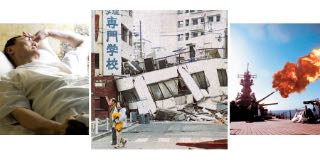
📖 📄 ➕ 11 Shèngjīng (Shèng·jīng (the) Holy · Scriptures → [the Bible] 圣经 聖經) búdàn (bú·dàn not · only 不但) zhǔnquè (zhǔn·què accurate · true 准确 準確) de (-ly 地) yùgào (yù·gào fore·told 预/豫告 預/豫告) gǔdài (gǔ·dài ancient · {replacings → [generations] → [era]} 古代) de (’s 的) lìshǐ (lì·shǐ {experienced (things) → [history]} · history → [historical] 历史 歷史) shìjiàn (shì·jiàn events · [mw] 事件), hái (also 还 還) zhǔnquè (zhǔn·què accurate · true 准确 準確) de (-ly 地) yùgào (yù·gào fore·tells 预/豫告 預/豫告) wǒmen (wǒ·men our · [pl] 我们 我們) zhèige (zhèi·ge this · [mw] 这个 這個) shídài (shí·dài {(particular) time} · {replacing → [generation] → [period]} 时代 時代) de (’s 的) xíngshì+ (xíng·shì form · situation 形势 形勢) fāzhǎn (fā·zhǎn {issuings forth → [developings]} · unfoldings → [developments] 发展 發展). Nǐ ((if) you 你) dúdu (read · read 读读 讀讀) Mǎtài Fúyīn ((Mǎtài Matthew 马太 馬太) (Fú·yīn Blessings · {Sounds → [News]} 福音) → [The Good News According to Matthew]) 24 zhāng (chapter 章) 🔗 (WOL nwtsty), Lùjiā Fúyīn ((Lùjiā Luke’s 路加) (Fú·yīn Blessings · {Sounds → [News]} 福音) → [The Good News According to Luke]) 21 zhāng (chapter 章) 🔗 (WOL nwtsty), Tímótài Hòushū ((Tímótài Timothy 提摩太) (Hòu·shū Later · {Writing → [Letter]} 后书 後/后書) → [2 Timothy]) 3:1–5, hé ({(together) with} → [and] 和 和/龢) Qǐshì‐Lù ((Qǐ·shì {Opening → [Enlightening]} · Showing 启示 啟示)‐(Lù Record 录 錄) → [The Book of Revelation]) 6:3–8 jiù kěyǐ kànchū, Shèngjīng de miáoshù duōme jīngquè+ (jīng·què {is precise} · {is true} → [is precise] 精确 精確). Zài xiàndài, yǒu yí duàn lìshǐ tèbié zhíde zhùyì. Dì‐Yī Cì Shìjiè Dàzhàn jiéshù hòu, shìjiè lǐngxiùmen chénglìle Guójì Liánméng+ ((Guó·jì Nations · {Boundaries → [Among]} → [International] 国际 國際) (Lián·méng Allied · League → [League] 联盟 聯盟) → [League of Nations]). Lǐngxiùmen shēngchēng, rénlèi yǐjing dédào cǎntòng (cǎn·tòng tragic · painful → [bitter] 惨痛 慘痛) de (’s 的) jiàoxun+ (teaching → [lesson] 教训 教訓), yǐhòu yídìng búhuì zài fāshēng shìjiè dàzhàn le. Kěshì Shèngjīng zài liǎngqiān (liǎng·qiān two · thousand 两千 兩千) nián (years 年 年/秊) qián ({before (that)} 前) jiù (then 就) yùyán+ (yù·yán {in advance} · {had said} → [had prophesied] 预言 預言), 1914 nián (year 年 年/秊) fāshēng (fā·shēng {issued forth} · {came to life} → [happened] 发生 發生) de (’s 的) shì (things 事) búguò shì “chóngchóng kǔnàn de (’ 的) kāishǐ (kāi·shǐ opening · beginning 开始 開始)”. (Mǎtài Fúyīn ((Mǎtài Matthew’s 马太 馬太) (Fú·yīn Blessings · {Sounds → [News]} 福音) → [The Good News According to Matthew]) 24:8) Shèngjīng (Shèng·jīng (the) Holy · Scriptures → [the Bible] 圣经 聖經) de (’s 的) yùyán (yù·yán {in advance} · sayings → [prophecies] 预言 預言) gēn (with 跟) shìjiè (shì·jiè {generation → [world]} · extent → [world] 世界) lǐngxiùmen de yùcè xiǎnrán bùtóng. Hòulái, Dì‐Èr Cì Shìjiè Dàzhàn ({(Dì [pref to form ordinal numbers] 第)‐(Èr Two 二) → [Second]} (Cì Time 次) (Shì·jiè {Generation → [World]} · Extent → [World] 世界) (Dà·zhàn {Big → [Great]} · War 大战 大戰) → [World War II]) guǒrán bàofā le, zhèngmíng (zhèng·míng proving · {to be clear} 证明 證明) Shèngjīng (Shèng·jīng (the) Holy · Scriptures → [the Bible] 圣经 聖經) de (’s 的) yùyán (yù·yán {in advance} · sayings → [prophecies] 预言 預言) fēicháng (fēi·cháng un·usually → [extremely] 非常) zhǔnquè+ (zhǔn·què {are accurate} · {are true} 准确 準確), rén de yùcè bìng bù kěxìn.
📖 📄 ➕ [túpiàn (tú·piàn picture · {slice → [mw]} 图片 圖片) (jw.org)]
📖 📄 ➕ Shèngjīng (Shèng·jīng (the) Holy · Scriptures → [the Bible] 圣经 聖經) zài (at 在) liǎngqiān (liǎng·qiān two · thousand 两千 兩千) duō ({more than (that)} 多) nián (years 年 年/秊) qián (ago 前) jiù (then 就) yùgào (yù·gào fore·told 预/豫告 預/豫告) wǒmen (wǒ·men our · [pl] 我们 我們) zhèige (zhèi·ge this · [mw] 这个 這個) shídài (shí·dài {(particular) time} · {replacing → [generation] → [period]} 时代 時代) de (’s 的) xíngshì+ (xíng·shì form · situation 形势 形勢) fāzhǎn (fā·zhǎn {issuing forth → [developing]} · unfolding → [development] 发展 發展)
📖 📄 ➕ 12 Jìrán (Jì·rán since · -ly 既然) Shèngjīng (Shèng·jīng (the) Holy · Scriptures → [the Bible] 圣经 聖經) de (’s 的) yùyán (yù·yán {in advance} · sayings → [prophecies] 预言 預言) dàdōu yǐjing zhǔnquè de yìngyàn le, bú jiù chōngfèn+ (chōng·fèn full · portion → [fully] 充分/份) zhèngmíng (zhèng·míng proves · {to be clear} 证明 證明) Shèngjīng (Shèng·jīng (the) Holy · Scriptures → [the Bible] 圣经 聖經) shì (is 是) láizì (lái·zì comes · from 来自 來自) Zàowù‐Zhǔ ((Zào·wù Created · Things 造物)‐(Zhǔ Master 主) → [Creator]) de ({’s (book)} 的) ma ([? ptcl for “yes/no” questions] 吗 嗎)? Zhǐyǒu (Zhǐ·yǒu (there) only · {is having → [is]} 只有) quánnéng+ (quán·néng all · able → [almighty] 全能) de (’s 的) Shàngdì (Shàng·dì Above’s · {Emperor → [God]} → [God] 上帝), cái ({only then} 才 才/纔) néng ({being able} 能) zài shìqing hái méiyǒu fāshēng zhīqián, jiù qǐshì rén xiěxià zhème (zhè·me {this (way)} · [suf for interrogatives and adverbs] 这么/末 這麼/末) jīngquè+ (jīng·què precise · reliable → [accurate] 精确 精確) de (’s 的) yùyán (yù·yán {in advance} · sayings → [prophecies] 预言 預言). (Bǐdé Hòushū ((Bǐdé Peter 彼得) (Hòu·shū Later · {Writing → [Letter]} 后书 後/后書) → [2 Peter]) 1:21)
📖 📄 ➕ Quàngào+ (Quàn·gào Advising · Telling → [Advice] 劝告 勸告) Zuì (Most 最 最/㝡) Shíyòng (Shí·yòng {Being Solid} · {to Use} → [Being Practical] 实用 實用) Zuì (Most 最 最/㝡) Yǒu (Having 有) Zhìhuì (Zhì·huì Wisdom · Intelligence → [Wisdom] 智慧) 🔼
📖 📄 ➕ 13–15. Wèi‐shénme ((Wèi for 为 為)‐(shén·me what · [suf] 什么 什/甚麼) → [why]) shuō (say 说 說/説), Shèngjīng (Shèng·jīng (the) Holy · Scriptures → [the Bible] 圣经 聖經) de (’s 的) quàngào+ (quàn·gào advising · telling → [counsel] 劝告 勸告) hé ({(together) with} → [and] 和 和/龢) zhǐyǐn (zhǐ·yǐn {(pointing with) finger → [pointing]} · guiding 指引) fēicháng (fēi·cháng un·commonly → [very much] 非常) shíyòng+ (shí·yòng {is solid} · {to be used} → [is practical] 实用 實用) bìng ({side by side with} 并 並/竝/并) chōngmǎn (chōng·mǎn {being filled} · {full with} 充满 充滿) zhìhuì (zhì·huì wisdom · intelligence → [wisdom] 智慧)?
📖 📄 ➕ 13 Jīntiān (Jīn·tiān present · {sky → [day]} → [today] 今天) zhèige (zhèi·ge this · [mw] 这个 這個) zìsī (zì·sī self · {personal → [selfish]} → [selfish] 自私)‐zìlì+ (zì·lì self · {sharpening → [benefitting]} → [thinking only of one’s own gain] 自利) de (’s 的) shìjiè (shì·jiè {generation → [world]} · extent → [world] 世界) chōngmǎnle (chōng·mǎn·le {is filled} · {full with} · {to completion} 充满了 充滿了) nántí (nán·tí difficult · topics → [problems] 难题 難題) hé ({(together) with} → [and] 和 和/龢) yālì (yā·lì pressing · forces → [pressures] 压力 壓力), bùshǎo rén dōu bèi gèzhǒng wèntí suǒ kùnrǎo+ (kùn·rǎo {surrounded → [beseiged]} · disturbed 困扰 困擾). Yǒude rén jīnglì hūnyīn (hūn·yīn {marrying → [marriage]} · marriage → [marriage] 婚姻) hé ({(together) with} → [and] 和 和/龢) jiātíng (jiā·tíng family · courtyard → [family] 家庭) nántí (nán·tí difficult · topics → [problems] 难题 難題), yǒude rén wèi jīnqián (jīn·qián {gold → [money]} · money 金钱 金錢) hé ({(together) with} → [and] 和 和/龢) jīngjì+ (jīng·jì {managing of} · {crossing of a river → [helping]} → [financial conditions] 经济 經濟) yōulǜ, niánqīng‐rén duìyú jiāoyǒu+ (jiāo·yǒu meeting · friends → [making friends] 交友), xìng (nature → [sex] 性), hējiǔ, lànyòng yàowù, děng wèntí gǎndào kùnhuò (kùn·huò {surrounded → [hard-pressed]} · bewildered 困惑). Rúguǒ Shèngjīng shì Shàngdì cìgěi quán rénlèi de zhǐnán, bú shì yīnggāi zài zhèixiē fāngmiàn gěi (give 给 給) rén (people 人) zhǐyǐn+ (zhǐ·yǐn {(pointing with) finger → [pointing]} · guiding 指引), bāngzhù (help 帮助 幫助) rén (people 人) yìngfu+ (yìng·fu {to respond to} · {to hand sth. over to} → [to cope with] 应付 應付) zhèixiē (zhèi·xiē this · {indefinite number of} → [these] 这些 這些) nántí (nán·tí difficult · topics → [problems] 难题 難題) ma ([? ptcl for “yes/no” questions] 吗 嗎)?
📖 📄 ➕ 14 Shèngjīng (Shèng·jīng (the) Holy · Scriptures → [the Bible] 圣经 聖經) díquè (dí·què really · indeed 的确 的確) néng (can 能) gěi (give 给 給) rén (people 人) yǒuyì (yǒu·yì having · benefits 有益) de (’ 的) zhǐyǐn+ (zhǐ·yǐn {(pointing with) finger → [pointing]} · guiding 指引), bāngzhù (help 帮助 幫助) rén (people 人) cóng (from 从 從) gēnběn+ (gēn·běn {roots (of plants)} · {roots or stems of plants} → [roots] 根本) shang (upon 上) jiějué (jiě·jué {untie → [solve]} · decide → [solve] 解决 解決) wèntí (wèn·tí asking · problems → [problems] 问题 問題). Shìshí shang, Shèngjīng de quàngào suīrán gēn (with 跟) yìbān (yì·bān {(as) one} · {kind of} → [general kind of] 一般) rén (people 人) de (’s 的) yìjian+ (yì·jian ideas · {seeings → [opinions]} → [opinions] 意见 意見) bùtóng (bù·tóng not · {is the same} → [is different] 不同), què (yet 却 卻) yuǎn ({by far} 远 遠) shèngguò+ (shèng·guò {wins victory over} · surpasses 胜过 勝過) shìrén (shì·rén {generation’s → [world’s]} · people 世人) de (’s 的) zhōnggào+ (zhōng·gào faithful · telling → [sincere advice] 忠告). Bǐrú zài hūnyīn fāngmiàn, měidāng yǒu nántí fāshēng, zhuānjiā wǎngwǎng tíyì shuāngfāng fēnjū+ (fēn·jū {to separate} · residence → [to separate (of a married couple)] 分居) huò (or 或) líhūn (lí·hūn {to leave} · {marrying → [marriage]} → [to divorce] 离婚 離婚), Shèngjīng què zhǐchū, hūnyīn shì yánsù (yán·sù {tight → [rigorous]} · {respectful → [solemn]} → [serious] 严肃 嚴肅) de (’ 的) chéngnuò (chéng·nuò {bearing of} · promising → [commitment] 承诺 承諾), bùkě (bù·kě (we) not · may → [(we) may not] 不可) suíbiàn+ (suí·biàn {going along with} · convenience → [casually] 随便 隨便) líhūn (lí·hūn leave · {marrying → [marriage]} → [divorce] 离婚 離婚). Shèngjīng quànmiǎn fūqī yào hùjìng‐hù’ài, bǐcǐ tǐliàng. (Yǐfúsuǒ‐Shū ((Yǐfúsuǒ Ephʹe·sus 以弗所)‐(Shū Writing → [Letter] 书 書) → [The Letter to the Ephesians]) 5:22–28) Fūqī rúguǒ shíjiàn zhèixiē quàngào, búdàn néng fángzhǐ+ (fáng·zhǐ {to prevent} · {to stop} → [to prevent] 防止) wèntí (wèn·tí asking · problems → [problems] 问题 問題) èhuà (è·huà {to be bad} · transforming → [worsening] 恶化 惡化), érqiě (ér·qiě and; {as well as}; also · moreover; further 而且) néng ({will be able} 能) jìn ({to advance} 进 進)‐yí (one 一)‐bù (step 步) cùjìn (cù·jìn {to promote} · {to advance} 促进 促進) jiātíng (jiā·tíng family · courtyard’s → [family’s] 家庭) hémù+ ({being harmonious} 和睦). Zài (at 在) jīngjì+ (jīng·jì {managing of} · {crossing of a river → [helping]} → [financial condition] 经济 經濟) fāngmiàn (fāng·miàn {direction → [side]} · face → [aspect] 方面), hěn duō rén rènwéi shōurù+ (shōu·rù received · {entered → [income]} → [income] 收入) yuè gāo nántí jiù yuè shǎo, Shèngjīng què quàn rén yào zhīzú+ (zhī·zú know · {being sufficient → [being satisfied]} → [be content] 知足), búyào (bú·yào not · must → [must not] 不要) tānxīn (tān·xīn (be with) {having insatiable desire} · heart → [be greedy] 贪心 貪心), jǐngjiè rén búyào rǎnshang xùjiǔ, dǔbó, xīyān, xīdú, děng làngfèi (làng·fèi {wave → [being unrestrained]} · expend → [waste] 浪费 浪費) jīnqián (jīn·qián {gold → [money]} · money 金钱 金錢) de (’s 的) èxí+ (è·xí bad · habits 恶习 惡習). (Tímótài Qiánshū ((Tímótài Timothy 提摩太) (Qián·shū Earlier · {Writing → [Letter]} 前书 前書) → [1 Timothy]) 6:7–10) Zài (at 在) rénjì+ (rén·jì humans · {boundaries → [among]} → [interpersonal] 人际 人際) guānxi (guān·xi {closings → [involvings]} · {tyings → [relatings]} → [relationships] 关系 關係) fāngmiàn (fāng·miàn {direction → [side]} · face → [aspect] 方面), hěn duō rén juéde néng zuòdào liángxīn (liáng·xīn good · heart → [conscience] 良心) wúkuì+ (wú·kuì {not having} · {being ashamed} 无愧 無愧) jiù gòu le, kěshì Shèngjīng shuō: “Zài yíqiè shì shàng, nǐmen xīwàng rén zěnyàng dài nǐmen, nǐmen yě děi zěnyàng dàirén.” (Mǎtài Fúyīn ((Mǎtài Matthew’s 马太 馬太) (Fú·yīn Blessings · {Sounds → [News]} 福音) → [The Good News According to Matthew]) 7:12) Díquè, bùguǎn shì zài shèqū+ (shè·qū {god of the land → [society] → [social]} · region → [community] 社区 社區), xuéxiào (xué·xiào {learning (place) → [school]} · school 学校 學校), háishi (hái·shi {still more → [or]} · is 还是 還是) zài (at 在) gōngzuò (gōng·zuò work · doing → [work] 工作) de (’s 的) dìfang (dì·fang {(section of) earth → [place]} · {direction → [place]} → [place] 地方), nǐ (you 你) rúguǒ (rú·guǒ if · {fruit → [if indeed]} 如果) zhǔdòng guānxīn biéren, jiù yídìng néng yíngdé biéren de hǎogǎn hé yǒuyì, mócā hé ({(together) with} → [and] 和 和/龢) yālì+ (yā·lì pressing · force → [pressure] 压力 壓力) yě (also 也) huì (will 会 會) jiǎnshǎo (jiǎn·shǎo {be reduced} · {to be little} 减少 減少).
📖 📄 ➕ 15 Cóng (from 从 從) yǐshàng (yǐ·shàng at · above’s 以上) jǐ (few 几 幾) fāngmiàn (fāng·miàn {directions → [sides]} · faces → [aspects] 方面) de (’ 的) lìzi (lì·zi examples · [suf for nouns] 例子), nǐ (you 你) néng (can 能) kànchū (kàn·chū see · out 看出) Shèngjīng (Shèng·jīng (the) Holy · Scriptures → [the Bible] 圣经 聖經) de (’s 的) quàngào+ (quàn·gào advising · telling → [counsel] 劝告 勸告) duōme (duō·me {(how) much} · [suf] → [how] 多么 多麼) shíyòng (shí·yòng {is solid} · {to be used} → [is practical] 实用 實用) ma ([? ptcl for “yes/no” questions] 吗 嗎)? Shìjiè (Shì·jiè {generation → [world]} · extent’s → [world’s] 世界) gèdì+ (gè·dì various · lands 各地) yǒu (have 有) xǔduō (xǔ·duō numbers · many 许多 許多) rén (people 人) yīnwei (yīn·wei {because of} · {on account of} 因为 因為) tīngcóng (tīng·cóng {listening to} · following 听从 聽從) Shèngjīng (Shèng·jīng (the) Holy · Scriptures → [the Bible] 圣经 聖經) de (’s 的) quàngào (quàn·gào advising · telling → [advice] 劝告 勸告), jiéguǒ (jié·guǒ {tied (into a knot) → [formed]} · fruit → [as a result] 结果 結果) néng ({have been able} 能) zhúbù (zhú·bù {one by one} · steps → [step by step] 逐步) jiějué+ (jiě·jué {to untie → [to solve]} · {to decide} → [to resolve] 解决 解決) shēnghuó (shēng·huó life · living 生活) de (’s 的) gèzhǒng (gè·zhǒng various · {kinds of} 各种 各種) nántí (nán·tí difficult · topics → [problems] 难题 難題). Yì běn shū rúguǒ shì Shàngdì cìgěi rénlèi de zhǐnán+ (zhǐ·nán {(points with) finger → [points]} · south (thing) → [guidebook] 指南), bú (not 不) shì (is 是) yīnggāi (should 应该 應該) yǒu ({be having} 有) shíyòng+ (shí·yòng solid · {to be used} → [practical] 实用 實用) de (’s 的) jiàzhí (value 价值 價值), bāohán chāofán de zhìhuì+ (zhì·huì wisdom · intelligence → [wisdom] 智慧) ma ([? ptcl for “yes/no” questions] 吗 嗎)? Shèngjīng (Shèng·jīng (the) Holy · Scriptures → [the Bible] 圣经 聖經) jìrán (jì·rán since · -ly 既然) chōngmǎn (chōng·mǎn {is filled} · {full with} 充满 充滿) Shàngdì (Shàng·dì Above’s · {Emperor → [God]} → [God] 上帝) de (’s 的) zhìhuì (zhì·huì wisdom · intelligence → [wisdom] 智慧), wǒmen tīngcóng qízhōng de quàngào, jiù (then 就) yídìng (yí·dìng {(with) one} · {setting fixedly} → [definitely] 一定) nénggòu (néng·gòu {will be able} · enough 能够 能夠) zhǎodào (zhǎo·dào {to look for (and)} · {arrive at} → [to find] 找到) yǒngjiǔ+ (yǒng·jiǔ everlasting · {for a long time} 永久) de (’s 的) píng’ān (píng’·ān {being flat, level, even → [being peaceful]} · {being safe, secure} (nwtsty-CHS Appx. A2 says this term mainly refers to things being smooth and stable, safe and secure, free of danger) 平安) xìngfú (xìng·fú {good fortune} · blessings → [happiness] 幸福).
📖 📄 ➕ Zàofú (Zào·fú Makes · Blessings (for) 造福) Wànguó (Wàn·guó {Ten Thousand → [All]} · Nations 万国 萬/万國) Wànzú+ (Wàn·zú {Ten Thousand → [All]} · {Ethnic Groups} 万族 萬族) de (’ 的) Rén (People 人) 🔼
📖 📄 ➕ 16–18. (Jiǎ ({1st of the 10 Heavenly Stems} → [a] 甲)) Shèngjīng (Shèng·jīng (the) Holy · Scriptures → [the Bible] 圣经 聖經) de (’s 的) dàoli (dào·li ways · reasonings → [principles] 道理) duì (towards 对 對) Huárén+ (Huá·rén {Flowery → [Chinese]} · People 华人 華人) shìyòng (shì·yòng {are suitable} · {to be used} 适用 適用) ma ([? ptcl for “yes/no” questions] 吗 嗎)? (Yǐ ({2nd of the 10 Heavenly Stems} → [b] 乙)) Nǐ (you 你) xiànzài (xiàn·zài {appearing → [presently]} · {at (now)} → [now] 现在 現在) xiāng bu xiāngxìn+ ((xiāng {each other → [it]} 相) (bu not 不) (xiāng·xìn {each other → [it]} · {do believe} 相信) → [do or do not believe]) Shèngjīng (Shèng·jīng (the) Holy · Scriptures → [the Bible] 圣经 聖經) shì (is 是) yì (one 一) běn ({root or stem of a} → [mw for books, etc.] 本) zàofú (zào·fú makes · blessings (for) 造福) quán (all 全) rénlèi (rén·lèi man·kind 人类 人類) de (’s 的) shū (writing → [book] 书 書) ne ([? ptcl] 呢)? Wèi‐shénme ((Wèi for 为 為)‐(shén·me what · [suf] 什么 什/甚麼) → [why])?
📖 📄 ➕ 16 Bùshǎo (Bù·shǎo not · few 不少) Dōngfāng‐rén+ ((Dōng·fāng East · Direction → [the Orient] 东方 東方)‐(rén people 人) → [Orientals]) yǐwéi (yǐ·wéi consider · {(the case) to be} (that) 以为 以為), Shèngjīng (Shèng·jīng (the) Holy · Scriptures → [the Bible] 圣经 聖經) shì (is 是) Xīfāng‐rén+ ((Xī·fāng West · Direction → [the West] 西方)‐(rén people 人) → [Westerners]) de (’ 的) shū (writing → [book] 书 書), qízhōng (qí·zhōng it · within 其中) de (’s 的) dàoli (dào·li ways · reasonings → [principles] 道理) wèibì (wèi·bì {have not} · necessarily 未必) shìhé (shì·hé {been suitable for} · {been closing with → [been fitting with]} 适合 適合) Dōngfāng‐rén ((Dōng·fāng East · Direction → [the East] 东方 東方)‐(rén people 人) → [Easterners]). Zhēnde ma? Qǐng xiǎngxiang, Zàowù‐Zhǔ+ ((Zào·wù Created · Things 造物)‐(Zhǔ Master 主) → [Creator]) jìrán (jì·rán since · -ly 既然) shì (is 是) chuàngzào (chuàng·zào initiated · {made, created} → [created] 创造 創造) rénlèi (rén·lèi human·kind 人类 人類) de (’s 的) Shàngdì (Shàng·dì Above’s · {Emperor → [God]} → [God] 上帝), duìyú (duì·yú towards · {with regard to} 对于 對於) suǒyǒu (suǒ·yǒu {(all) whom} · {(there) are having → [(there) are]} → [all] 所有) rén (humans 人) de (’ 的) xūyào (xū·yào needs · needed → [needs] 需要), zìrán (zì·rán naturally · so → [naturally] 自然) bǐ ({compared to} 比) shéi (whomever 谁 誰) dōu ({in all those cases} 都) yào ({(in comparison) certainly} 要) qīngchu ({(he) is (more) clear (about them)} 清楚). Yīncǐ (Yīn·cǐ {because of} · this 因此), tā (he 他) qǐshì+ (qǐ·shì {opened → [enlightened]} · showed → [inspired] 启示 啟示) de (’s 的) Shèngjīng (Shèng·jīng Holy · Scriptures → [Bible] 圣经 聖經) nénggòu (néng·gòu {is able} · enough 能够 能夠) zàofú (zào·fú {to make} · blessings (for) 造福) quán (all 全) rénlèi (rén·lèi human·kind 人类 人類). Wúlùn rén shēnghuó zài shénme zhèngzhì+ (zhèng·zhì political · governing → [political] 政治) zhìdù (zhì·dù system · extent → [system] 制度) xià, yǒu zěnyàng de wénhuà+ (wén·huà {(with) writing} · transformed → [cultural] 文化) bèijǐng (bèi·jǐng back · scene → [background] 背景), dōu néng cóngzhōng shòuyì. Jiù yǐ Zhōngguó (Zhōng·guó Central · Nation’s → [China’s] 中国 中國) wénhuà (wén·huà {(with) writing} · transformed (system) → [culture] 文化) wéi (as 为 為/爲) lì (example 例), lìdài (lì·dài {experienced → [all previous]} · {replacings’ → [generations’]} 历代 歷代) shèngxián+ (shèng·xián holy · {able and virtuous (persons)} → [sages] 圣贤 聖賢) chuán ({have passed on} 传 傳) xialai (xia·lai down · {to come} 下来 下來) de (’s 的) chǔshì wéirén zhī dào zhōng bùshǎo hěn yǒu jiàzhí, ná zhèixiē dàoli gēn Shèngjīng de dàoli bǐjiào+ ({to be compared} 比较 比較), wǒmen (wǒ·men we · [pl] 我们 我們) huì (will 会 會) fājué (fā·jué develop · {waking to → [becoming aware of} → [find] 发觉 發覺) liǎngzhě (liǎng·zhě {two → [both]} · {ones → [of them]} 两者 兩者) shífēn (shí·fēn ten · portions → [very much] 十分) xiāngsì+ (xiāng·sì {with each other} · {are similar} 相似). Yǐxià shì jǐ ge lìzi (lì·zi examples · [suf for nouns] 例子):
📖 📄 ➕ Gǔxùn+ (Gǔ·xùn ancient · teaching 古训 古訓): Zūnjìng (respect 尊敬) zhǎngbèi+ (zhǎng·bèi {grown → [elder]} · generation 长辈 長輩). Shèngjīng (Shèng·jīng (the) Holy · Scriptures → [the Bible] 圣经 聖經): “Yào ((you) must 要) zài (at 在) báifà (bái·fà (has) white · hair 白发 白髮) de (’s 的) rén (person 人) miànqián (miàn·qián face · before → [before him] 面前) qǐlì+ (qǐ·lì rise · stand 起立), yào ((you) must 要) guānhuái lǎorén, yào jìngwèi nǐ de Shàngdì. Wǒ shì Yēhéhuá.” (Lìwèi‐Jì ((Lìwèi Levi 利未)‐(Jì Record 记 記) → [The Book of Leviticus]) 19:32)
📖 📄 ➕ Gǔxùn (Gǔ·xùn ancient · teaching 古训 古訓): Xiàoshùn+ (Xiào·shùn {being filial} · obey 孝顺 孝順) fùmǔ (fù·mǔ {(your) father} · {(your) mother} 父母). Shèngjīng (Shèng·jīng (the) Holy · Scriptures → [the Bible] 圣经 聖經): “Yào xiàojìng fùmǔ (fù·mǔ {(your) father} · {(your) mother} 父母), shǐ ({to cause} 使) nǐ (you 你) zài Yēhéhuá nǐ Shàngdì cìgěi nǐ de dì shang huóde (huó·de {to live} · getting 活得) chángjiǔ+ (cháng·jiǔ {to be long} · {to be for a long time} 长久 長久).” (Chū‐Āijí‐Jì ((Chū {Going Out from} 出)‐(Āijí Egypt 埃及)‐(Jì Record 记 記) → [The Book of Exodus]) 20:12)
📖 📄 ➕ Gǔxùn (Gǔ·xùn ancient · teaching 古训 古訓): Yǐnshuǐ‐sīyuán+ ((Yǐn·shuǐ {(when) drinking} · water 饮水 飲水)‐(sī·yuán {think of} · {(its) source (of a river) → [(its) source]} 思源) → [bear in mind where your happiness comes from]). Shèngjīng (Shèng·jīng (the) Holy · Scriptures → [the Bible] 圣经 聖經): “Nǐ chèn niánshào (nián·shào {(your) years} · {are young} → [(you) are young] 年少 年/秊少) de (’s 的) rìzi (rì·zi {suns → [days]} · [suf for nouns] 日子), jiù ((you) then 就) yào (must 要) bǎ (hold 把) nǐ (your 你) Wěidà (Wěi·dà Great · {Big → [Great]} 伟大 偉大) de (’s 的) Chuàngzào‐Zhǔ+ ((Chuàng·zào Initiated · {Made, Created} → [Created] (Everything) 创造 創造)‐(Zhǔ Master 主) → [Creator]) jǐnjì zài xīn.” (Chuándào‐Shū ((Chuán·dào {To Spread} · Way 传道 傳道)‐(Shū Writing → [Book] 书 書) → [The Book of Ecclesiastes]) 12:1)
📖 📄 ➕ Gǔxùn (Gǔ·xùn ancient · teaching 古训 古訓): Jìn‐zhūzhě‐chì, jìn‐mòzhě‐hēi+ ((Jìn {(one who) is close to} 近)‐(zhū·zhě vermilion · persons 朱者)‐(chì {will be a kind of red slightly lighter than vermilion} 赤), (jìn {(one who) is close to} 近)‐(mò·zhě {ink stick/cake} · persons 墨者)‐(hēi {will be black} 黑) → [one will become like those whom one associates with]). Shèngjīng (Shèng·jīng (the) Holy · Scriptures → [the Bible] 圣经 聖經): “Gēn (with 跟) zhìhuì‐rén tóngxíng, jiù yǒu zhìhuì; tóng yúmèi‐rén láiwang, nánmiǎn (nán·miǎn {(will find it) difficult} · {to avoid} 难免 難免) chīkuī+ (chī·kuī {eating → [suffering]} · {losing → [loss]} 吃亏 吃虧).” (Zhēnyán (Zhēn·yán Admonishing · Sayings → [Proverbs] 箴言) 13:20)
📖 📄 ➕ 17 Zhíde (Zhí·de worth · getting → [deserving of] 值得) zhùyì (zhù·yì {pouring (into a container) → [concentrating]} · {thoughts → [attention]} (on) → [paying attention to] 注意) de ({’s (thing)} 的) shì (is 是), Shèngjīng (Shèng·jīng (the) Holy · Scriptures’ → [the Bible’s] 圣经 聖經) zhèixiē (zhèi·xiē this · {indefinite number of} → [these] 这些 這些) dàoli (dào·li ways · reasonings → [principles] 道理), zǎo ({early on} 早) zài (at 在) Kǒng+ ({Opening (surname)} → [abbr. for Kǒng Qiū / Kǒng Fūzǐ (Confucius)] 孔)‐Mèng+ ({Eldest Among Brothers (surname)} → [abbr. for Mèng Kē / Mèng Zǐ (Mencius)] 孟) zhī (’ 之) dào (ways 道) huò (or 或) Zhūzǐ‐Bǎijiā+ ((Zhū·zǐ Various · Masters 诸子 諸子)‐(Bǎi·jiā {Hundred → [Numerous]} · {Families → [Schools of Thought]} 百家) → [The Hundred Schools of Thought]) shèngxíng (shèng·xíng {were flourishing} · {were walking → [were circulating]} → [were current] 盛行) zhīqián (zhī·qián ’s · {before (those)} 之前), jiù (then 就) yǐ (already 已) xiě ({were written} 写 寫) zài (in 在) Shèngjīng (Shèng·jīng (the) Holy · Scriptures → [the Bible] 圣经 聖經) li (inside 里 裡/裏) le ([(at the end of a phrase/sentence) indicates a change] 了). Shèngjīng (Shèng·jīng (the) Holy · Scriptures → [the Bible] 圣经 聖經) díquè (dí·què truly · indeed 的确 的確) néng (can 能) zàofú (zào·fú make · blessings (for) 造福) wànguó (wàn·guó {ten thousand → [all]} · nations 万国 萬/万國)‐wànzú+ (wàn·zú {ten thousand → [all]} · {ethnic groups} 万族 萬族) de (’ 的) rén (people 人). Yǒule Shèngjīng, wǒmen jiù néng míngbai rén (humans 人) wèi‐shénme ((wèi for 为 為)‐(shén·me what · [suf] 什么 什/甚麼) → [why]) huó (live 活) zài (on 在) shìshang (shì·shang {generation → [world]} · upon 世上), zhīdào (zhī·dào know · {(the) way (of)} → [know] 知道) rénshēng (rén·shēng (in) human · life 人生) gāi ((we) should 该 該) zǒu (walk 走) de (’s 的) fāngxiàng (fāng·xiàng direction · {to be faced} 方向). Zhèngrú shíwù néng mǎnzú rén de shēntǐ (body 身体 身體) xūyào (xū·yào needs · needed → [needs] 需要), Shèngjīng (Shèng·jīng (the) Holy · Scriptures → [the Bible] 圣经 聖經) yě (also 也) néng (can 能) mǎnzú (mǎn·zú fill · {to be sufficient} → [satisfy] 满足 滿足) rén (people 人) de (’s 的) shǔlíng+ (shǔ·líng {(in the) category (of)} · spirit → [spiritual (nwtsty-CHS Appx. A2 notes change from “shǔlíng” to “xīnlíng”, etc.)] 属灵 屬靈) xūyào (xū·yào needs · needed → [needs] 需要). (Mǎtài Fúyīn ((Mǎtài Matthew’s 马太 馬太) (Fú·yīn Blessings · {Sounds → [News]} 福音) → [The Good News According to Matthew]) 5:3; Yuēhàn Fúyīn ((Yuēhàn John’s 约翰 約翰) (Fú·yīn Blessings · {Sounds → [News]} 福音) → [The Good News According to John]) 4:34) Wǒmen xuéxí Shèngjīng, jiù néng ({will be able} 能) qīnjìn (qīn·jìn {to be close} · {to approach} 亲近 親近) Shàngdì (Shàng·dì Above’s · {Emperor → [God]} → [God] 上帝), gēn (with 跟) tā (him 他) jiànlì (jiàn·lì {to build} · {to make to stand} → [to establish] 建立) qīnmì (qīn·mì close · {dense → [close]} → [close] 亲密 親密) de (’s 的) guānxi+ (guān·xi {closing → [involving]} · {tying → [relating]} → [relationship] 关系 關係). Wǒmen gēn Shàngdì de guānxi yuè qīnmì, shēnghuó (shēng·huó life · living 生活) jiù (then 就) huì (will 会 會) yuè ({jumping over} → [the more] 越) kuàilè ({be happy} 快乐 快樂), yuè ({jumping over} → [the more] 越) mǎnzú+ (mǎn·zú {be full} · {be sufficient} → [be satisfying] 满足 滿足).
📖 📄 ➕ [túpiàn (tú·piàn picture · {slice → [mw]} 图片 圖片) (jw.org)]
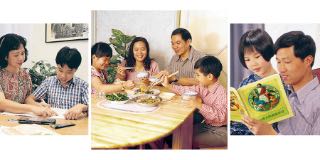
📖 📄 ➕ Shíjiàn+ (Shí·jiàn {to be solid → [to be real]} · {walking → [carrying out]} → [putting into practice] 实践 實踐) Shèngjīng (Shèng·jīng (the) Holy · Scriptures → [the Bible] 圣经 聖經) de (’s 的) dàoli (dào·li ways · reasonings → [principles] 道理) néng (can 能) gǎishàn+ (gǎi·shàn change · {to be (more) good} → [improve] 改善) wǒmen de ((wǒ·men us · [pl] 我们 我們) (de ’s 的) → [our]) shēnghuó (shēng·huó life · living 生活)
📖 📄 ➕ 18 Shèngjīng (Shèng·jīng (the) Holy · Scriptures → [the Bible] 圣经 聖經) bùjǐn (bù·jǐn not · only 不仅 不僅) bāngzhù (helps 帮助 幫助) wǒmen (wǒ·men us · [pl] 我们 我們) mùqián+ (mù·qián eyes · before → [at present] 目前) shēnghuó ({to live} 生活) měimǎn (měi·mǎn {being beautiful → [very satisfactorily]} · {being full → [fully]} 美满 美滿), gèng (moreover 更) wèi wǒmen dàilái měihǎo de xīwàng. Shèngjīng (Shèng·jīng (the) Holy · Scriptures → [the Bible] 圣经 聖經) tòulù+ (tòu·lù {(allows to) pass/seep through → [shows]} · reveals 透露), Shàngdì (Shàng·dì Above’s · {Emperor → [God]} → [God] 上帝) bùjiǔ jiù huì tōngguò tā de Wángguó (Wáng·guó King’s · Nation → [Kingdom] 王国 王國), xiāochú (xiāo·chú eliminate · {get rid of} 消除) shìshang de yíqiè zuì’è hé bùpíng+ (bù·píng not · {being level} → [injustice] 不平). Zài zhèige Wángguó tǒngzhì xià, zhěnggè dìqiú huì chéngwéi lèyuán (lè·yuán happy · garden → [paradise] 乐园 樂園), suǒyǒu (suǒ·yǒu {(all) whom} · {(there) will be having → [(there) will be]} → [all] 所有) qiānbēi (qiān·bēi modest · low → [humble] 谦卑 謙卑), zhèngzhí (zhèng·zhí upright · straight → [honest] 正直), shànliáng+ (shàn·liáng {good → [virtuous]} · good 善良) de rén, dōu huì yǒngyuǎn zài dìshang guò píng’ān (píng’·ān {flat, level, even → [peaceful]} · {safe, secure} (nwtsty-CHS Appx. A2 says this term mainly refers to things being smooth and stable, safe and secure, free of danger) 平安) xìngfú (xìng·fú fortunate · {(having) blessings} → [happy] 幸福) de shēnghuó. Búguò, nǐ yào fúhé (fú·hé {tally with → [accord with]} · {close with → [conform to/with]} 符合) shénme (shén·me what · [suf] 什么 什/甚麼) yāoqiú+ (yāo·qiú requirings · requestings → [requirements] 要求) cái néng déxiǎng zhèixiē fúfen ne? Qǐng liúyì jiēzhe de zīliào.